TL;DR
Listen free for 30 days with Audible
Thousands of audiobooks and originals — cancel anytime.
Start your free trialAs an affiliate, we earn on qualifying purchases.
Single-speed pool pumps run at one fixed speed, making them simple but energy-wasters. Regulations now limit their production, leading many owners to switch to more efficient variable-speed models, which save energy and money long-term.
Most single-speed pumps run at one fixed speed, consuming more energy than necessary.
Regulations now restrict new models above 1 HP, pushing owners towards more efficient options.
Replacing your pump with a variable-speed model can cut energy costs by up to 90%.
Smaller, below 1 HP models are still available for above-ground pools, but larger pools benefit from smarter, modern pumps.
Investing in energy-efficient pumps pays off in lower utility bills and quieter operation over time.
What Exactly Is a Single Speed Pool Pump?
A single-speed pool pump runs at one fixed motor speed — usually around 3,450 RPM — whenever it’s on. It doesn’t matter if your pool needs a gentle flow or a powerful surge; it just runs full blast or not at all. Think of it like a car stuck in one gear — no matter the road, it uses the same energy.
This simplicity means fewer parts, lower upfront costs, and easy maintenance. But it also means you can’t dial down the energy use. For example, a typical 1.5 HP pump might cost around $300–$900 a year in electricity, just because it runs at full speed every hour it’s on.
As an affiliate, we earn on qualifying purchases.
Why Are Single-Speed Pumps Still Popular — and Why Are They Disappearing?
For decades, single-speed pumps were the standard. They’re mechanically simple and cheap upfront, often costing between $200 and $600. Many older pools still rely on them, especially above-ground models.
However, recent U.S. DOE efficiency standards from July 2021 have made most single-speed pumps above roughly 1 HP illegal to manufacture or import. This means new models above that threshold are disappearing. Meanwhile, the industry shifts toward variable-speed pumps, which can cut energy bills by up to 90%.
Picture a quiet, whisper-quiet pump that adjusts its speed to your pool’s needs. That’s the future. But for now, many above-ground pools still sport those trusty, old single-speed models — even if they’re less efficient.
As an affiliate, we earn on qualifying purchases.
How Do Regulations Affect Your Pool Pump Choices?
Since July 2021, the U.S. Department of Energy set new minimum efficiency standards for pool pumps. Pumps above 1 HP must meet specific energy efficiency thresholds, known as Weighted Energy Factor (WEF).
This rule effectively bans most new single-speed pumps over 1 HP in the U.S. for residential use. Existing pumps can keep running, but replacement options are limited unless you choose a smaller or older model.
States like California and Florida have their own rules, often pushing for two-speed or variable-speed pumps. So, if you’re shopping now, expect fewer options for traditional single-speed models, especially for larger pools.
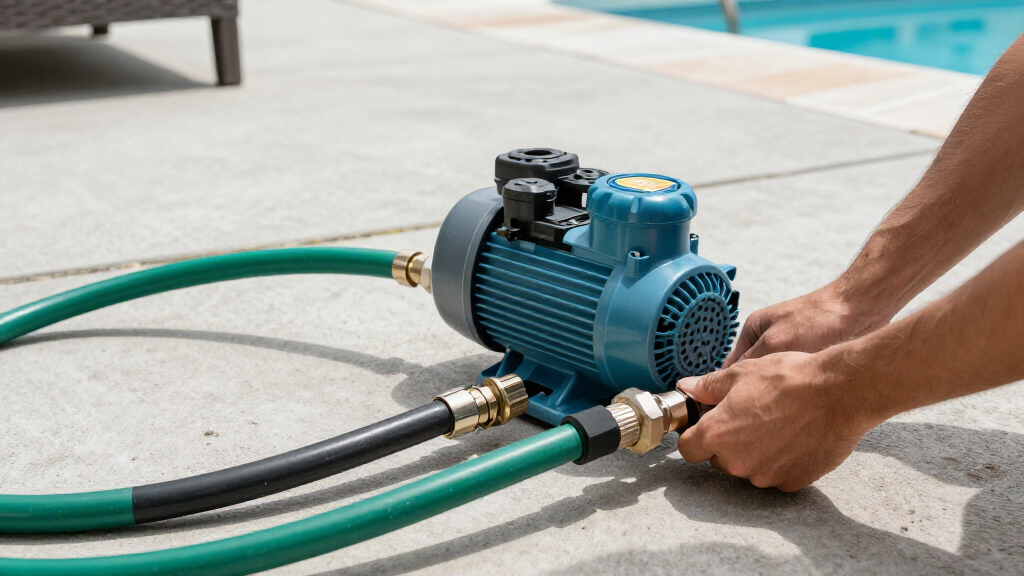
single speed pool pump replacement
As an affiliate, we earn on qualifying purchases.
As an affiliate, we earn on qualifying purchases.
Are Single-Speed Pool Pumps Still Legal to Use or Buy?
Yes, you can still own and operate existing single-speed pumps. You can also buy small, below 1 HP models for above-ground pools, as they often fall below the new standards. But for anything above 1 HP, new models are generally unavailable.
Many owners wonder if they can replace their old pump. The answer: if your pump is under 1 HP or your pool is small, you probably still can. Otherwise, you’ll need to look at newer, more efficient options.
It’s like owning a vintage car — it’s still yours, but new parts and replacements are limited or phased out.
As an affiliate, we earn on qualifying purchases.
How Much Does Running a Single-Speed Pump Cost? Real Numbers.
A typical 1.5 HP single-speed pump running 8 hours a day might consume around 1,100 watts. With average electricity rates of about $0.13 per kWh, that adds up to roughly $35–$45 per month.
Over a year, that’s about $420–$540, just for running the pump. If you upgrade to a variable-speed model that slashes energy use by 60–90%, your costs could drop to under $100 annually.
Imagine saving enough to buy a new pool cover or lighting — or just putting that money toward your family’s summer fun.
How Long Do Single-Speed Pumps Usually Last?
Most single-speed pumps last between 8 and 12 years. Their simple design means fewer parts to break, but harsh conditions like salty air or high temperatures can shorten their lifespan.
When your pump reaches the end of its life, expect signs like increased noise, decreased flow, or frequent tripping of circuit breakers. Replacing it often costs $200–$600, depending on the size and brand.
Think of it like a trusty old car that’s been through many summers — eventually, it’s time for a new ride.
Should You Keep Using Your Existing Single-Speed Pump?
If your pump is still working fine and under 1 HP, you might choose to keep it running — especially if replacing it isn’t urgent or your pool isn’t large. But remember, it’s less efficient and more costly over time.
If it’s over 1 HP, or you’re replacing a failed pump, consider options like a two-speed or variable-speed model. They might cost more upfront but save hundreds annually in energy bills.
It’s like sticking with an old flip phone — it works, but a smartphone offers so many more features and savings.
What Are Your Replacement Options Now?
For small, above-ground pools, you can still find single-speed pumps under 1 HP. For larger pools, the industry favors variable-speed pumps that adapt to your needs and slash energy costs.
Popular models include the Aquastrong 1.5HP and VIVOHOME 2.0HP. These pumps often feature self-priming, high flow rates, and energy-saving modes.
So, when shopping, compare specs like flow rate, voltage, and certifications. If you want longevity and efficiency, leaning toward variable-speed is the smarter move.
Should You Stick With a Single Speed or Go Variable Speed?
| Single-Speed Pump | Variable-Speed Pump |
|---|---|
| Runs at one fixed speed | Adjusts speed based on need |
| Cheaper upfront | Higher initial cost but saves money |
| Less efficient, higher energy bills | Up to 90% energy savings |
| Simpler, easier to repair | More complex, but more control |
If you want quick, low-cost installation, single-speed works. But if long-term savings and eco-friendliness matter, variable-speed is the clear winner.
What Should You Do Next? Simple Steps to Upgrade or Maintain
- Check your current pump’s specs — HP, voltage, flow rate.
- Decide if you want to stick with a simple single-speed or invest in a variable-speed model.
- Research rebates or incentives in your area — some utilities offer up to $400 off for energy-efficient pumps.
- Compare models based on your pool size, plumbing, and budget.
- Consult a professional if needed, especially for larger or in-ground pools.
Replacing an old pump with a new, efficient model isn’t just about compliance — it’s about smart savings and better pool performance.
Frequently Asked Questions
Are single-speed pool pumps illegal or banned?
Not to own or operate. However, most models above 1 HP can no longer be manufactured or imported for new pools in the U.S. after July 2021. Smaller models are still available for certain applications.Can I replace my old motor with a variable-speed one?
In many cases, yes, especially if your current pump is compatible. But often, a full replacement of the pump and motor ensures better efficiency and performance. Consult a professional to confirm compatibility.How much will it save me to switch to a variable-speed pump?
Switching can reduce energy costs by up to 90%. For example, a typical owner might save $200–$600 annually in electricity bills, depending on pool size and local rates.How long does a typical single-speed pump last?
Most last between 8 and 12 years with proper maintenance. Harsh conditions can shorten their lifespan, so regular checks help extend their service life.Is it worth paying extra for a variable-speed pump?
Absolutely. While the upfront cost is higher, the long-term savings, quieter operation, and energy efficiency usually outweigh the initial investment within a few years.Conclusion
Your pool deserves better than a noisy, energy-hungry pump. Upgrading to a variable-speed model isn’t just environmentally smart — it’s a smart move for your wallet. Picture your pool running smoothly, quietly, and costing less every summer — that’s the future you can create today.Fall Picks
fall essentials
As an affiliate, we earn on qualifying purchases.