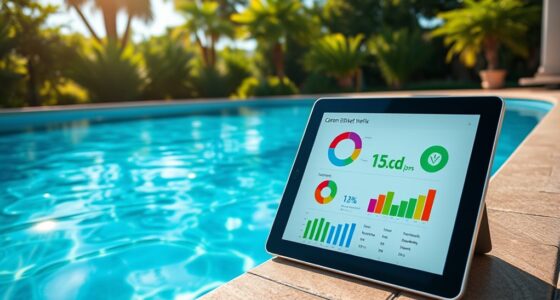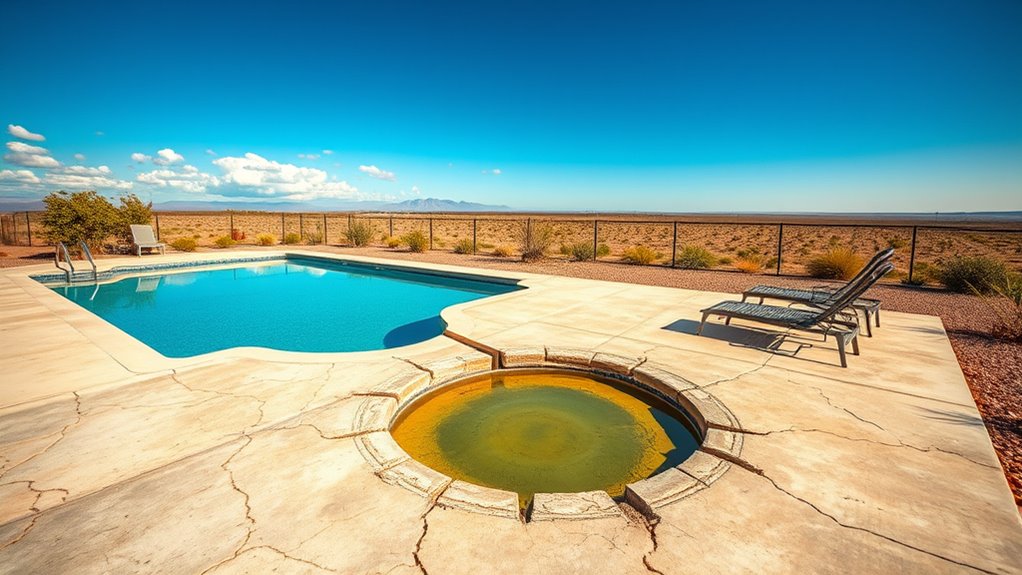

As climate change raises temperatures, you’ll notice increased pool use as more people seek relief from heat. This shift encourages sustainable pool designs, like using recycled materials, water-saving systems, and solar heating. Incorporating eco-friendly features helps minimize environmental impact and reduces energy or water consumption. If you keep exploring, you’ll find practical ways to adapt pools for a sustainable future and enjoy the benefits of a greener approach.
Key Takeaways
- Rising temperatures increase pool usage, prompting demand for energy-efficient and sustainable pool designs.
- Climate change encourages adoption of eco-friendly materials and water conservation strategies in pool construction.
- Enhanced insulation and solar heating systems help reduce energy consumption amid longer, hotter seasons.
- Natural shading and energy-efficient covers mitigate heat gain and water evaporation, conserving resources.
- Sustainable pool designs support environmental goals by lowering carbon footprints and promoting responsible resource management.
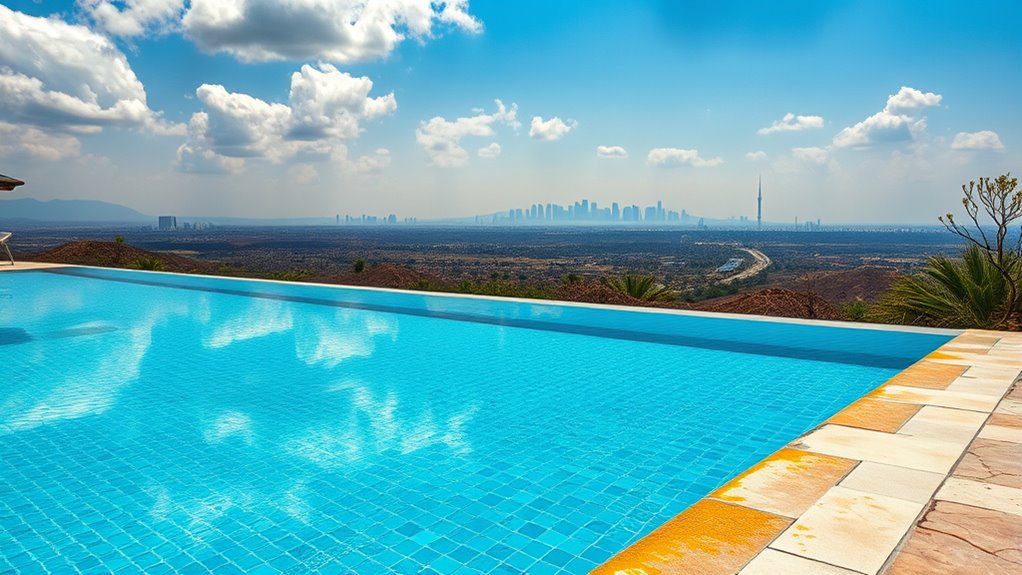
As climate change continues to raise temperatures and alter weather patterns, the way you design and use pools is changing dramatically. Rising temperatures mean more people are seeking relief from the heat by cooling off in pools, but this increased demand also puts pressure on water resources and energy consumption. To address these challenges, innovative pool designs now prioritize sustainable materials and water conservation strategies. Using sustainable materials like recycled concrete, eco-friendly tiles, or even locally sourced stone helps reduce the environmental footprint of pool construction. These materials not only lower carbon emissions associated with manufacturing and transportation but also promote durability, reducing the need for frequent repairs or replacements. When you opt for sustainable options, you’re making a conscious choice to lessen your pool’s impact on the environment while ensuring longevity and aesthetic appeal.
Water conservation becomes even more critical in a changing climate, especially as droughts and water shortages become more common. Modern pool designs incorporate features that minimize water usage without sacrificing enjoyment. For example, installing high-efficiency pumps and filtration systems can considerably reduce water waste by optimizing circulation and cleaning cycles. Covering your pool with energy-efficient, insulated covers helps prevent evaporation, which is one of the biggest sources of water loss. When you use covers, you conserve water and reduce the need for refilling, which saves both water and energy. Additionally, some pool owners are turning to innovative features like recirculating systems that reuse water, and rainwater harvesting setups that collect and filter natural rainfall for pool topping off. These measures make sure you’re doing your part to conserve water during periods of scarcity. Incorporating glycolic acid products into your skincare routine can also support skin health, especially when exposed to sun and chlorine, helping to maintain skin hydration and radiance.
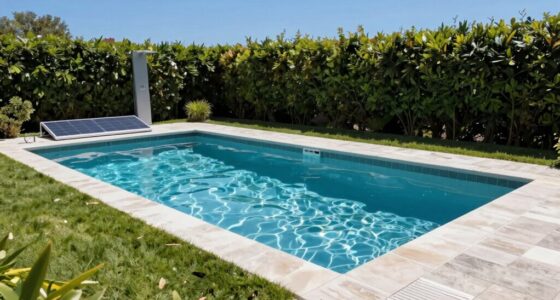
Climate change also influences the choice of pool design features aimed at reducing energy consumption. Solar heating systems, for example, harness the sun’s energy to warm the water, decreasing reliance on electric or gas heaters. Not only do these systems lower your carbon footprint, but they also cut down on operational costs over time. Plus, designing pools with natural shading elements like pergolas or trees can reduce heat gain, keeping water temperatures cooler and lessening the need for additional cooling or heating. As you adapt your pool to these eco-conscious practices, you’re not just creating a relaxing oasis—you’re actively participating in efforts to combat climate change and protect essential water resources. The shift toward sustainable materials and water-saving features represents a smarter, more responsible approach to pool use and design in an era of climate uncertainty.
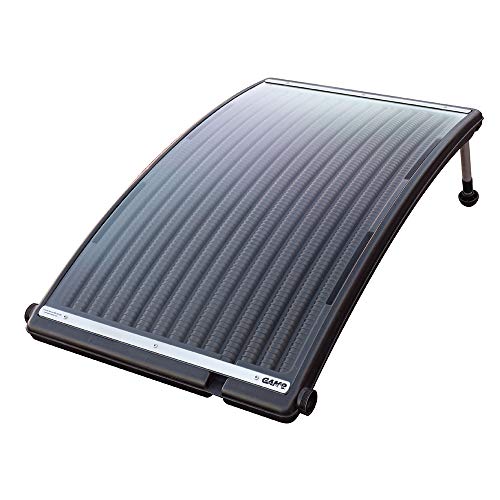
Game | SolarPRO | Curve Solar Heater for Intex & Bestway Pools
As an affiliate, we earn on qualifying purchases.
As an affiliate, we earn on qualifying purchases.
Frequently Asked Questions
How Will Climate Change Affect Pool Maintenance Costs Long-Term?
Climate change will increase your pool maintenance costs long-term through cost fluctuation and higher maintenance frequency. As temperatures rise, you’ll need to run your pool’s filtration and cooling systems more often, raising energy expenses. More frequent cleaning and chemical adjustments become necessary due to changing weather patterns and pollution. These factors cause unpredictable costs, so you should plan for ongoing higher expenses to keep your pool in ideal condition despite climate-related challenges.
What Materials Are Best for Climate-Resilient Pool Construction?
Think of building your pool as planting a resilient tree in a changing forest. Opt for eco-friendly materials like recycled steel, composite panels, and high-quality concrete, which stand firm against climate shifts. These materials offer durable construction, resisting erosion and weather extremes. By choosing sustainable options, you make certain your pool remains a sturdy oasis amid climate change’s unpredictable storms, blending strength with environmental responsibility for long-term peace of mind.
Will Climate Change Influence Pool Safety Regulations?
Yes, climate impact will influence pool safety regulations. You’ll see stricter standards to address extreme weather events, rising temperatures, and flooding risks. Regulations may require enhanced barriers, better drainage, and improved filtration systems to guarantee safety and efficiency. Staying informed about evolving pool safety regulations will help you adapt your pool design and maintenance practices to meet new climate-related safety standards effectively.
How Can Pools Adapt to Increasing Water Scarcity?
You can adapt your pool to increasing water scarcity by implementing water conservation measures, such as installing efficient filtration systems and covering your pool when not in use to reduce evaporation. Consider using drought-resistant plants around the pool area to minimize water use in landscaping. Additionally, opt for recycled or greywater for pool maintenance, and encourage responsible water use among users to help conserve this essential resource.
Are There New Pool Technologies Emerging Due to Climate Concerns?
Yes, new pool technologies are emerging due to climate concerns. You can now install solar heating systems that harness sunlight to warm your pool efficiently, reducing energy consumption. Water recycling systems are becoming more common, allowing you to reuse pool water and conserve resources. These innovations help you enjoy your pool responsibly while minimizing environmental impact, making your outdoor space both eco-friendly and cost-effective.

INTEX 28523E PureSpa Energy Efficient Spa Cover: Extra Insulation and Minimizes Heat Loss – Protects Spa from Punctures and Weather Damage – Safety Buckle – Fits 4 Person PureSpa Models – 78" x 28⅜"
- Energy Efficiency: Up to 50% more energy efficient
- Thermal Insulation: High-density thermal-resistant foam
- Puncture Protection: Puncture-resistant PVC material
As an affiliate, we earn on qualifying purchases.
As an affiliate, we earn on qualifying purchases.
Conclusion
As you consider pool design and usage, remember that temperatures have risen by nearly 1.2°F globally since 1880, encouraging more frequent swimming. Climate change will continue to influence pool features, from energy-efficient heating to innovative shading solutions. By adapting now, you can create sustainable, enjoyable pools that withstand rising temperatures. Embrace these changes to stay ahead—your pool’s future depends on it, and a smarter design today means more fun tomorrow.

20 PCS Porcelain Swimming Pool Waterline Tile, 6" x 6" Blue Glazed Tile for Pool Floor Kitchen Backsplash Bathroom (5 Sq.Ft)
- Tile Size: 6 x 6 inches
- Quantity: 20 pieces per box
- Coverage: 5 square feet
As an affiliate, we earn on qualifying purchases.
As an affiliate, we earn on qualifying purchases.

AgiiMan 850GPH Pool Cover Pump, Submersible Sump Pump above Ground
- High Flow Rate: 850 GPH drainage speed
- Power and Voltage: 110V, 75W, 60Hz
- Water Temperature Tolerance: Up to 95℉
As an affiliate, we earn on qualifying purchases.
As an affiliate, we earn on qualifying purchases.