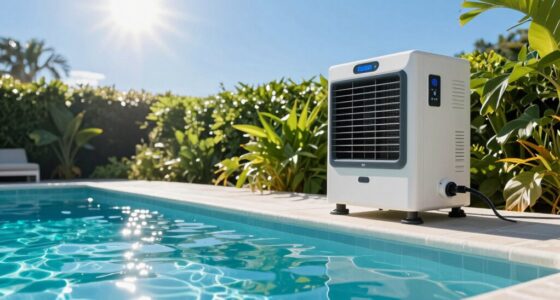
To pick the right BTU for your pool heater without overspending, start by measuring your pool’s volume and use proper formulas to calculate the needed BTUs based on your climate, pool material, and usage patterns. Larger pools, colder climates, and frequent use require higher BTUs, while smaller or sunny pools need less. If you follow these steps, you’ll optimize efficiency and save money—keep going to learn how to get it just right.
Open a free Amazon Business account
Business pricing, bulk buying and tax-exempt orders.
As an affiliate, we earn on qualifying purchases.
Key Takeaways
- Accurately measure your pool’s volume using length, width, and depth to determine the necessary BTU size.
- Consider climate and usage patterns to select a heater that maintains desired temperatures efficiently.
- Factor in pool material, shape, and surface area, which influence heat loss and required BTU capacity.
- Use covers and solar options to reduce heat loss, allowing for a smaller, more cost-effective heater.
- Consult a professional to ensure proper sizing, installation, and maintenance for optimal performance and savings.
As an affiliate, we earn on qualifying purchases.
Why Proper Pool Heater Sizing Saves Money and Energy
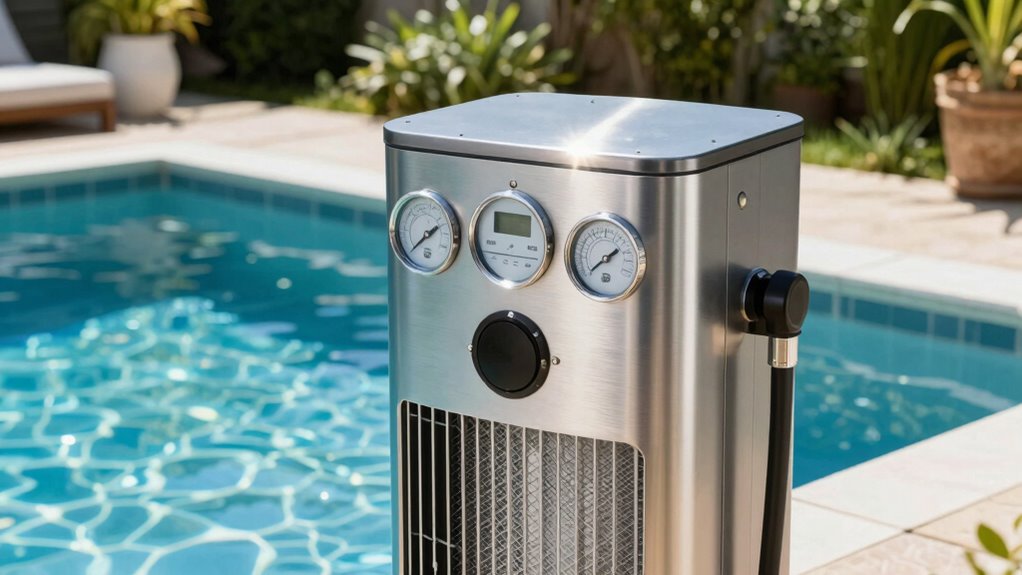
Choosing the right size pool heater is essential because an undersized unit will struggle to maintain your desired temperature, leading to longer run times and higher energy bills. When your heater is properly sized, it operates more efficiently, reducing energy consumption and lowering costs. Proper sizing also enhances pool safety by maintaining consistent water temperature, which helps prevent sudden temperature fluctuations that could cause discomfort or safety concerns. An appropriately sized heater minimizes wear and tear, extending its lifespan and avoiding unnecessary repairs. Additionally, correct heater sizing ensures optimal performance and energy efficiency, maximizing comfort while minimizing operating costs. Proper sizing also takes into account the climatic conditions of your area, ensuring your pool remains comfortable year-round. Understanding heater capacity is crucial because it directly impacts how well the heater can meet your specific needs under different weather conditions. By investing in the right size, you ensure your pool remains comfortable and safe without wasting energy or money. Ultimately, correct sizing balances energy efficiency with pool safety, making your swimming experience enjoyable and economical.
best pool heaters for large pools
As an affiliate, we earn on qualifying purchases.
As an affiliate, we earn on qualifying purchases.
How to Calculate the Right Pool Heater Size in BTUs
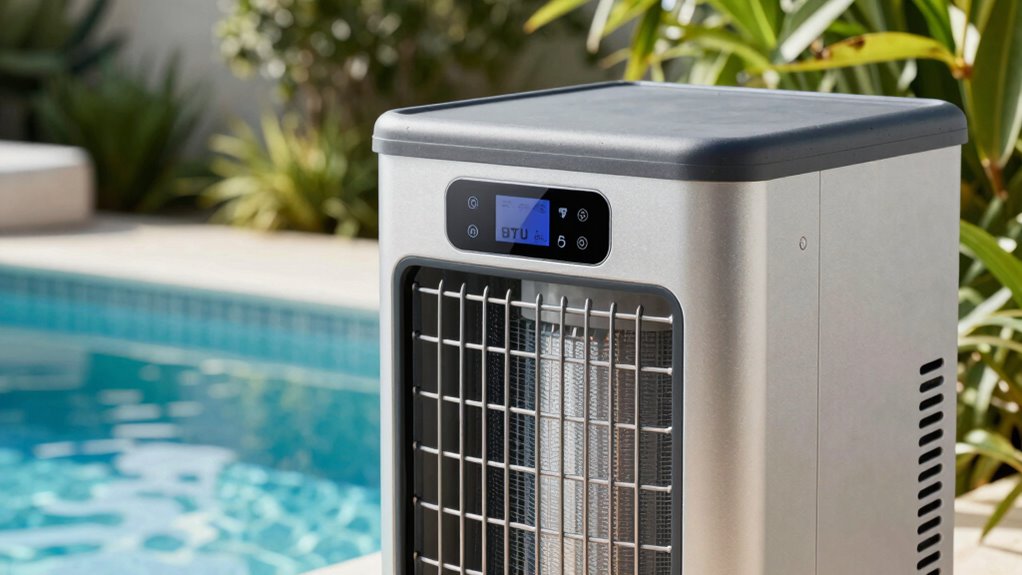
To determine the right pool heater size in BTUs, start by calculating your pool’s volume accurately. You also need to take into account your climate and how often you’ll use the pool. These factors will help you choose a heater that heats efficiently without wasting energy. Additionally, understanding pool terminology can help you communicate more effectively with specialists and ensure proper sizing. Knowing heater efficiency ratings is essential to pick a model that provides optimal performance and energy savings. Familiarity with thermal insulation properties can further enhance your ability to select an appropriately sized heater that maintains water temperature effectively. Recognizing proper installation practices can also contribute to maximizing your heater’s efficiency and longevity. Moreover, considering environmental factors such as wind and shade can influence your heater choice and overall energy consumption.
Calculate Pool Volume Accurately
Accurately calculating your pool’s volume is essential for selecting the right heater size in BTUs. Knowing your pool’s exact size helps maintain proper water temperature and ensures pool water chemistry remains balanced. To do this effectively:
- Measure the length, width, and average depth of your pool.
- Use the formula: Volume = length × width × average depth × 7.5 (for in-ground pools) or × 5.9 (for above-ground pools).
- Keep safety in mind by double-checking measurements to avoid under or oversizing heaters, which can affect pool safety measures and energy efficiency.
- Additionally, understanding pool water chemistry can help optimize heater performance and energy use.
- Remember that proper sizing prevents unnecessary energy consumption and extends the lifespan of your heater.
- Considering herbal remedies for maintenance or health support can complement your pool care routine, promoting overall wellness.
Consider Climate and Usage
Have you considered how your local climate and how often you use your pool impact the size of the heater you need? In colder climates, you’ll require a more powerful heater to maintain comfortable water temperatures, especially during winter months. Conversely, in warmer areas, a smaller heater may suffice. Your pool usage frequency also matters; frequent swimmers or extended swim seasons demand higher BTU ratings to keep the water warm. Always factor in pool chemistry to avoid issues like algae growth or corrosion, which safety regulations aim to prevent. Proper sizing guarantees efficient heating and compliance with safety standards. Additionally, understanding the watt-hours capacity of your heater helps ensure it can operate effectively for your desired duration. By understanding your climate and usage habits, you can select a heater that heats effectively without wasting energy or overspending.
As an affiliate, we earn on qualifying purchases.
What Factors Influence Your Pool Heater Size
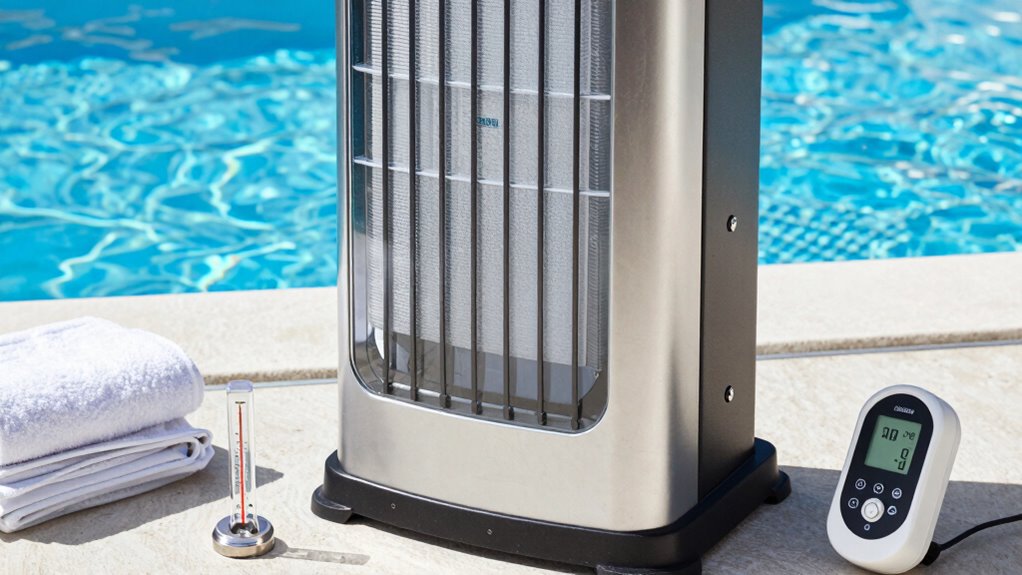
Ever wonder what determines the right size for your pool heater? Several factors come into play, affecting how much heating power you’ll need. Your pool’s material impacts heat retention—fiberglass pools tend to hold heat longer than vinyl or concrete. The pool shape also matters; irregular shapes may require more BTUs to heat evenly. Additionally, consider these key factors: heat retention properties influence how efficiently your pool maintains warmth, affecting the size of heater needed.
- Pool material: Influences heat retention and evaporation rates.
- Pool shape: Affects the surface area exposed to the elements.
- Pool size: Larger pools need more BTUs to reach your desired temperature.
As an affiliate, we earn on qualifying purchases.
Choosing the Best Type of Pool Heater for Your Pool
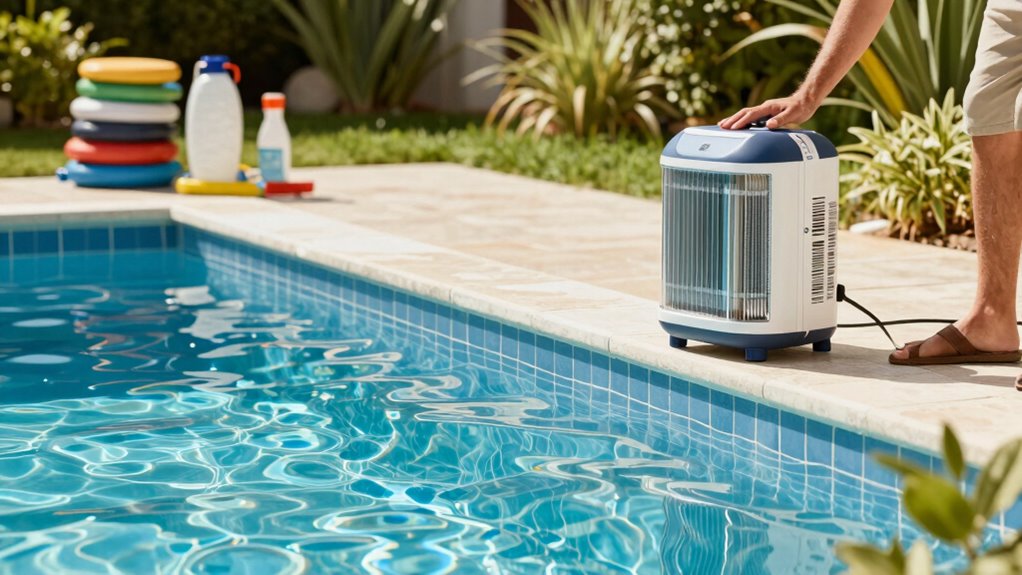
Choosing the right type of pool heater depends on your specific needs, budget, and how you plan to use your pool. Pool heater efficiency varies across options, impacting both energy costs and heating speed. For example, gas heaters heat quickly but may have higher operational costs, while heat pumps are more energy-efficient but work best in warmer climates. When considering pool material options, select a heater compatible with your pool’s surface—fiberglass, vinyl, or plaster—to prevent damage and ensure longevity. Your choice should balance efficiency, durability, and upfront costs. Additionally, understanding heater efficiency helps you select a model that maximizes performance while minimizing energy consumption. Recognizing the best gear and knife options can also help you maintain and enjoy your pool more effectively. Furthermore, choosing a heater with advanced control systems can optimize heating cycles and reduce energy waste. Incorporating proper installation practices is essential for ensuring your heater operates safely and efficiently over time. By understanding how different heater types perform and which materials suit your pool, you can pick a solution that keeps your water comfortably warm without unnecessary expenses. Proper installation and maintenance practices further ensure your system operates at peak efficiency over time.
How to Select the Correct BTU Rating for Your Pool
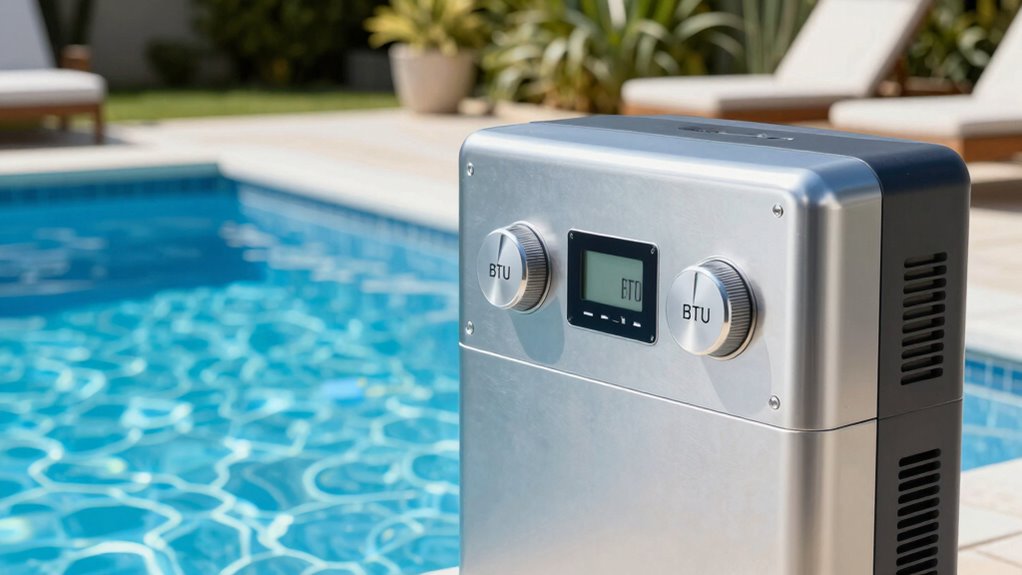
To select the appropriate BTU rating, begin by calculating your pool size and the volume of water it contains. You also need to take into account your climate, since colder weather requires more heating power. Finally, think about how often you’ll use the heater to guarantee it can keep up with your needs. Considering Free Floating features can also help optimize your pool’s heating efficiency and overall backyard comfort.
Determine Pool Size
Selecting the right pool size is vital to guarantee your heater efficiently maintains your desired water temperature. Knowing your pool’s dimensions helps determine the appropriate BTU rating, preventing under or over-sizing. Measure the length, width, and average depth to calculate the total volume. Consider using a pool cover, which reduces heat loss and lowers the required BTU. If you’re using solar heating, account for its contribution to maintaining warmth, possibly reducing heater size needs. Keep in mind that larger pools require more heating power, but overestimating can lead to unnecessary expenses. Accurately evaluating your pool size ensures you pick a heater that’s powerful enough without overspending, optimizing both performance and energy efficiency. This step is vital before choosing the right BTU rating for your pool.
Assess Climate Conditions
Understanding your local climate is crucial when determining the right BTU rating for your pool heater. If you live in a cooler area, you’ll need a higher BTU to compensate for lower outdoor temperatures, especially during spring and fall. Solar heating can supplement your pool’s warmth, reducing the need for a larger heater, but it’s less effective in cloudy or short-sunlight days. Pool covers are essential in conserving heat, especially in colder climates, by reducing heat loss overnight or during chilly weather. They help maintain a consistent temperature, meaning you might not need as high a BTU rating if you use covers regularly. Evaluating your climate conditions helps you choose a heater that efficiently extends your swimming season without unnecessary overcapacity.
Consider Usage Frequency
Your pool’s heating needs depend heavily on how often you plan to swim. If you use your pool frequently, you’ll want a higher BTU rating to maintain comfortable temperatures without stressing your pool heater. Conversely, occasional swimmers can opt for a lower BTU size, saving on energy costs. Consider how your usage impacts pool heater efficiency and energy conservation; an oversized heater may cycle on and off more often, wasting energy. To make the best choice, think about:
- How many times a week you swim
- Desired water temperature consistency
- Your focus on energy efficiency and cost savings
Balancing these factors ensures you pick a BTU rating that heats your pool effectively without overpaying on energy bills.
Common Mistakes When Sizing a Pool Heater: and How to Avoid Them
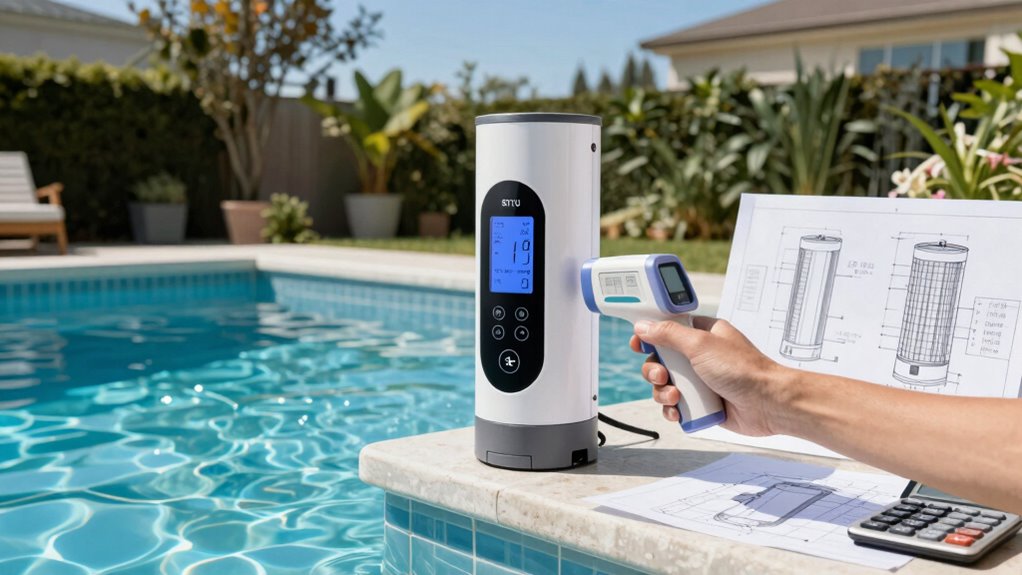
One of the most common mistakes when sizing a pool heater is choosing a unit that’s too small, which leaves your pool chilly and your heating costs high. Many people fall into the trap of making common sizing errors, often based on incorrect BTU estimates. These mistakes happen when you overlook factors like pool size, climate, and usage habits, leading to an over- or under-sized heater. An undersized heater struggles to keep the water warm, while an oversized one wastes energy and money. To avoid this, always double-check your calculations, consider your local climate, and use proper sizing formulas. Accurate sizing guarantees efficient heating, lower energy bills, and a more enjoyable swimming experience. Don’t guess—measure, calculate, and select the right BTU for your pool.
Installing and Maintaining Your Pool Heater for Maximum Efficiency
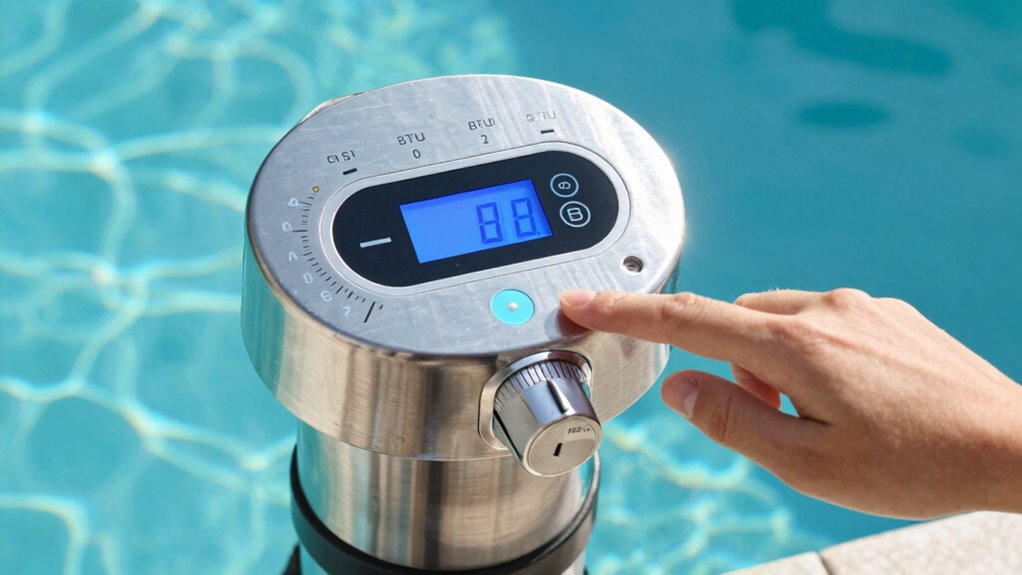
Proper installation and regular maintenance are key to ensuring your pool heater operates at peak efficiency. When installing your heater, make sure it’s level, properly connected to your pool’s plumbing, and has adequate clearance for airflow. Correct heater installation prevents leaks and maximizes performance. For ongoing pool maintenance, focus on these essentials:
- Regularly clean or replace filters to keep water flowing smoothly
- Inspect and clean the heater’s elements and vents
- Schedule annual professional check-ups to catch issues early
These steps help prevent buildup, improve energy efficiency, and extend your heater’s lifespan. Proper pool maintenance not only keeps your system running efficiently but also saves you money on energy costs and repairs. Staying proactive ensures your pool stays warm and inviting all season long.
When to Upgrade or Replace Your Pool Heater for Better Performance
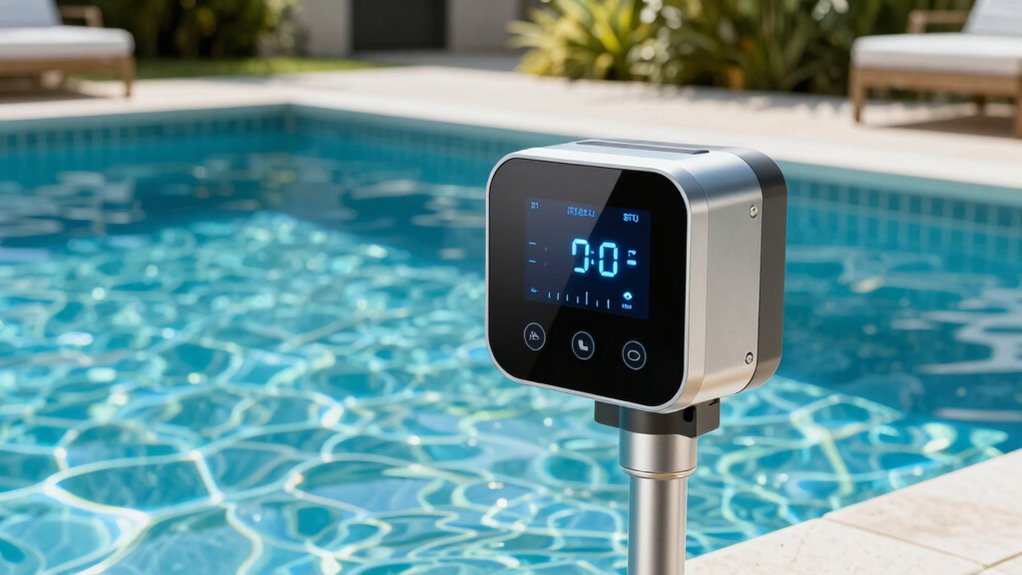
As your pool heater ages or begins to show signs of declining performance, it may be time to contemplate upgrading or replacing it. If your heater struggles to maintain your desired temperature despite proper sizing, consider the benefits of a new unit. Using a pool cover can help retain heat, reducing the workload on your heater, but if you’re still facing issues, a more efficient model might be necessary. Additionally, integrating solar heating with your existing system can boost energy efficiency and extend your swimming season. When your current heater requires frequent repairs or becomes markedly less effective, replacing it with a modern, energy-efficient unit can save you money in the long run. Upgrading ensures better performance and greater comfort for your pool experience.
Frequently Asked Questions
How Does Climate Affect Pool Heater Size Requirements?
Climate variations and regional temperatures directly impact your pool heater size needs. In colder areas with lower temperatures, you’ll require a larger BTU heater to maintain a comfortable swimming temperature. Conversely, in warmer climates, a smaller heater often suffices. You should consider your region’s typical temperature range to select a heater that efficiently heats your pool without wasting energy or overspending. Adjusting for climate guarantees ideal performance and cost savings.
Can a Larger Heater Improve Pool Heating Efficiency?
A larger heater capacity doesn’t necessarily boost heater efficiency; in fact, it can lead to wasted energy. When your heater is oversized, it cycles on and off more frequently, reducing efficiency and increasing wear. Instead, choosing a properly sized heater ensures maximum heater efficiency, maintaining consistent water temperature without overworking the system. Remember, bigger isn’t always better—matching heater capacity to your pool’s needs maximizes performance and saves energy.
What Safety Considerations Are Involved in Pool Heater Installation?
When installing a pool heater, you need to prioritize safety. Make certain proper electrical grounding to prevent shocks, and follow ventilation requirements to avoid dangerous fumes buildup. Always hire a professional to handle electrical connections and ventilation setup, and double-check local codes. These steps protect you from electrical hazards and ensure your heater operates safely and efficiently, giving you peace of mind during pool season.
How Long Does It Typically Take to Heat a Pool With the Right-Sized Heater?
If you want to heat your pool efficiently, expect it to take about 24 to 48 hours with a properly-sized heater. For example, using a pool cover can reduce heating time and energy costs, while solar heating can supplement your heater, speeding up warming. Factors like pool size, outdoor temperature, and heater wattage influence heating time, so plan accordingly for a comfortably warm swim.
Are Energy-Efficient Pool Heaters More Cost-Effective Long-Term?
Yes, energy-efficient pool heaters are more cost-effective long-term because they save you money on energy bills and reduce environmental impact. By using less energy, you’ll see significant cost savings over time, especially if you keep your pool heated frequently. Plus, eco-friendly options help lower your carbon footprint. Investing in an efficient heater guarantees you enjoy a warm pool while being kinder to the environment and your wallet.
Conclusion
Choosing the right pool heater size is like finding the perfect fit for a cozy blanket on a chilly night. When you pick the right BTU, you’re wrapping your pool in efficient warmth without wasting energy or money. Imagine a warm, inviting pool on a crisp morning, ready for you at just the right temperature. With the right size, you’ll enjoy endless swims and peace of mind, knowing you’ve made a smart, lasting investment.
NFL season / tailgating Picks
team gear
As an affiliate, we earn on qualifying purchases.