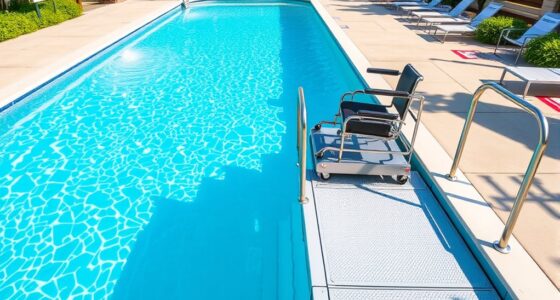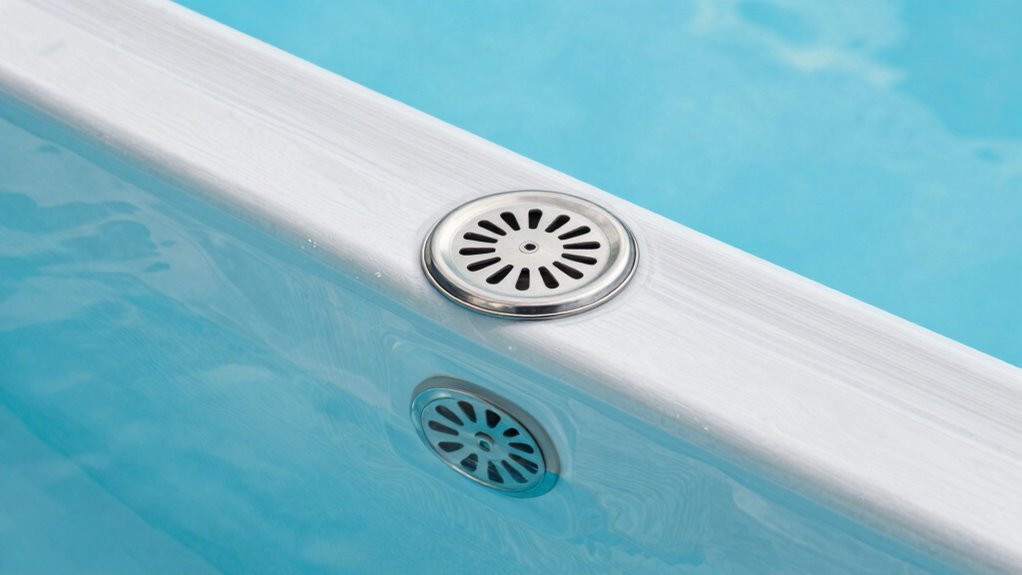

The VGB Act is a critical safety regulation that guarantees pool owners and operators use proper drain covers, dual drain systems, and anti-entrapment devices to prevent drownings and injuries. It mandates compliance with strict standards to reduce entrapment hazards caused by strong suction. Well-installed and maintained equipment helps protect swimmers, while regular inspections keep everything up to code. To ensure you’re completely prepared and understand all safety measures, continue exploring the key aspects of VGB compliance.

Get pool and patio gear delivered free — and shop member deals
- Fast, free delivery on millions of items
- Access to Prime Big Deal Days deals on October 6–7
- Prime Video, Amazon Music and more included
Key Takeaways
- The VGB Act mandates safety standards for pool drain covers, dual drains, and anti-entrapment devices to prevent hazards like entrapment and injuries.
- Dual drain systems are required to reduce strong suction forces and improve water circulation safety.
- Drain covers must meet strict safety standards, be securely installed, and regularly inspected for damage or wear.
- Anti-entrapment devices and rapid shut-off systems are essential components to enhance swimmer safety.
- Regular maintenance, record-keeping, and compliance enforcement are critical to adhere to VGB Act regulations.
As an affiliate, we earn on qualifying purchases.
What Is the VGB Act and Why Is It Critical for Pool Safety
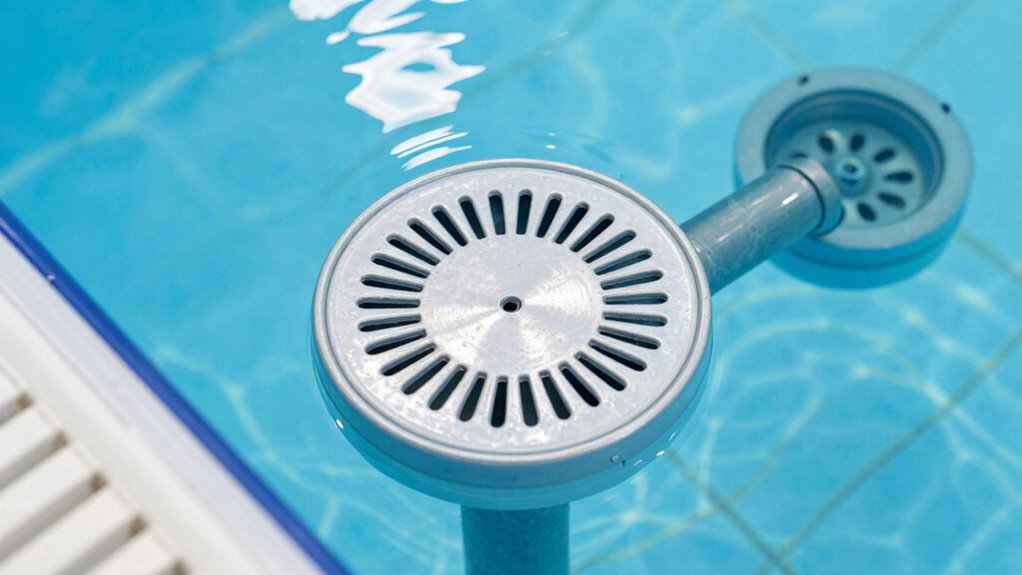
Have you ever wondered how pool safety is legally protected? The VGB Act plays an essential role in ensuring your safety by regulating pool accessories and water circulation systems. This law mandates compliance with safety standards, such as proper drain covers, to prevent entrapment hazards. It emphasizes the importance of dual drains and anti-entrapment devices, reducing the risk of accidents caused by powerful suction. By enforcing these measures, the VGB Act helps maintain safe water circulation, preventing dangerous entrapments and injuries. Additionally, understanding regional flavors and safety features can help pool owners select appropriate safety equipment tailored to their environment. As a pool owner or user, understanding the VGB Act means recognizing that safety isn’t just about your awareness—it’s about adhering to regulations designed to keep everyone safe. This law is fundamental for protecting lives and promoting responsible pool management.
dual drain safety systems for pools
As an affiliate, we earn on qualifying purchases.
As an affiliate, we earn on qualifying purchases.
Why Drain Covers Are Essential for Preventing Entrapment Hazards
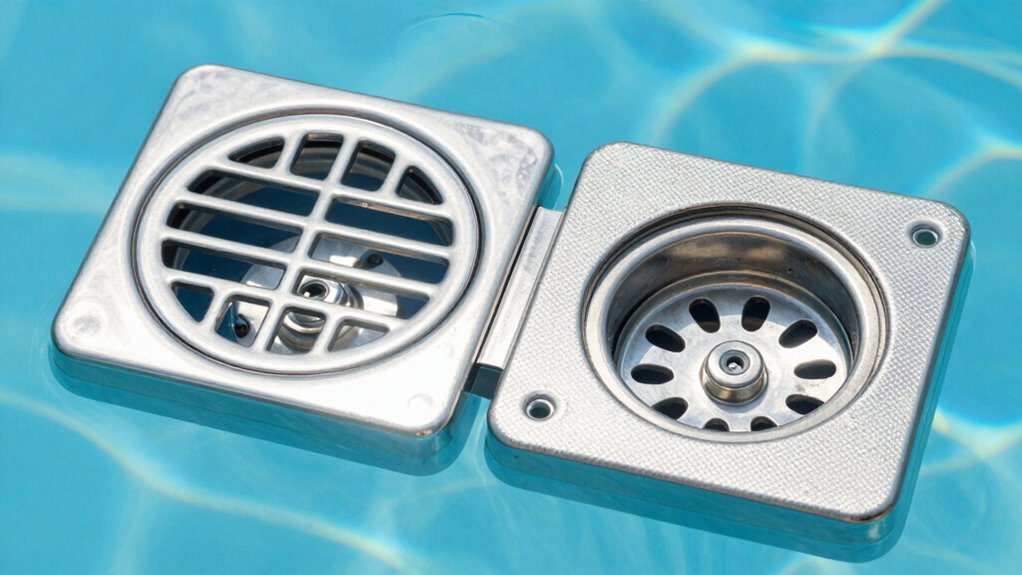
Proper drain covers are key to preventing entrapment hazards in pools. They help guarantee that powerful suction doesn’t trap swimmers or hair, reducing serious injury risks. Beyond safety, drain covers also contribute to pool aesthetics by providing a clean, finished look. Maintaining the right chemical balance is indispensable, too, because it keeps the pool environment safe and prevents corrosion or damage to the covers. When drain covers are properly installed and maintained, they serve as a crucial barrier against entrapment, giving you peace of mind while enjoying the water. Regular inspections and ensuring VGB-compliance are essential to maintaining safety standards. Neglecting these covers can lead to dangerous situations, making their role in pool safety irrefutable. Ensuring your drain covers are VGB-compliant is your best defense against entrapment hazards. Additionally, understanding pool safety regulations can help ensure comprehensive protection and compliance. Staying informed about appropriate maintenance procedures can further enhance safety and extend the lifespan of the drain covers. For example, training staff on proper inspection techniques ensures ongoing safety and compliance.
As an affiliate, we earn on qualifying purchases.
How VGB-Compliant Drain Covers Work to Keep Swimmers Safe
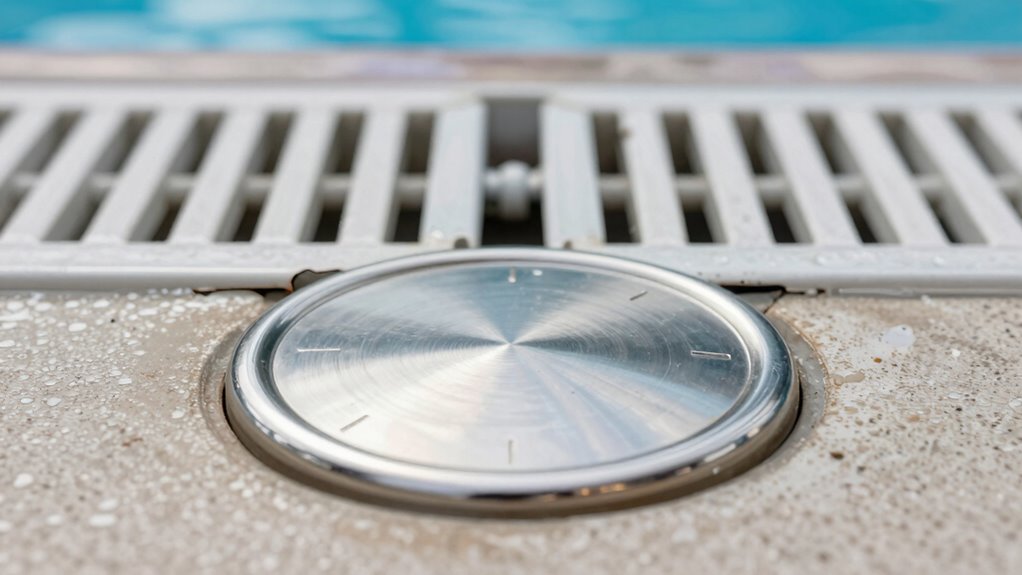
VGB-compliant drain covers are designed with strong materials that resist damage and prevent breakage. They are securely mounted to stay in place and reduce entrapment risks. Additionally, they manage water flow effectively to prevent dangerous suction forces, keeping swimmers safer. Incorporating cabling solutions such as proper mounting and leveling kits can further enhance safety measures around pool equipment and drain systems. The use of material durability ensures these covers maintain integrity over time despite exposure to pool chemicals and environmental factors. Well-designed covers also incorporate entrapment prevention features, which are essential for comprehensive swimmer safety. Regular inspections of compliance standards help ensure continued safety performance and adherence to safety regulations.
Strong Material Construction
Strong material construction is essential for guaranteeing the durability and safety of drain covers in swimming pools. You need covers made from materials that withstand constant exposure to water, chemicals, and UV rays. This ensures longevity and reliable performance. Focus on these key aspects:
- Material durability: Choose sturdy materials like stainless steel or reinforced composites that resist wear over time.
- Corrosion resistance: Opt for covers with coatings or alloys that prevent rust, maintaining strength and safety.
- Impact resistance: Ensure the material can withstand accidental impacts without cracking or breaking. Additionally, proper material selection is crucial for maintaining consistent performance under varying environmental conditions, especially considering environmental stressors that can challenge material integrity. Selecting materials with corrosion-resistant properties further enhances safety by preventing deterioration in harsh pool environments. Properly selected materials also contribute to long-term safety, ensuring the covers remain effective over their lifespan. Incorporating material testing during manufacturing can help verify these qualities and prevent potential failures.
Secure Mounting Techniques
Secure mounting techniques guarantee that drain covers stay firmly in place, preventing accidental dislodgement that could lead to dangerous situations. Proper installation involves using the right drain accessories designed for VGB compliance, ensuring a secure fit. You should verify that pool covers and drain covers are properly aligned and tightly fastened to prevent movement during pool use. Using durable mounting hardware and following manufacturer instructions is essential for maintaining safety standards. Regular inspections help identify loose or damaged components early, reducing the risk of cover failure. Remember, a secure mounting system not only keeps the drain cover intact but also minimizes entrapment hazards. Incorporating proper mounting hardware and adhering to manufacturer guidelines are crucial for effective compliance. Investing in high-quality drain accessories and adhering to proper mounting procedures are critical steps in safeguarding everyone in and around your pool. Additionally, understanding VGB regulations ensures that all safety measures meet current legal requirements and industry best practices. Staying informed about compliance standards can further enhance the effectiveness of your safety measures. Implementing these practices optimizes safety and aligns with industry-wide efforts to promote inclusive safety measures for all pool users.
Effective Water Flow Management
Effective water flow management is essential for preventing dangerous suction forces that can trap swimmers. Proper flow guarantees that drain covers function safely without creating hazardous entrapments. To achieve this, consider these key points:
- Use VGB-compliant drain covers designed to minimize suction strength while maintaining pool aesthetics.
- Regularly monitor and balance water chemistry to prevent buildup or corrosion that could compromise drain systems.
- Ensure dual drains are properly spaced and connected to reduce the risk of entrapment and facilitate better water flow.
pool drain cover inspection tools
As an affiliate, we earn on qualifying purchases.
As an affiliate, we earn on qualifying purchases.
The Importance of Dual Drain Systems in Pool Safety
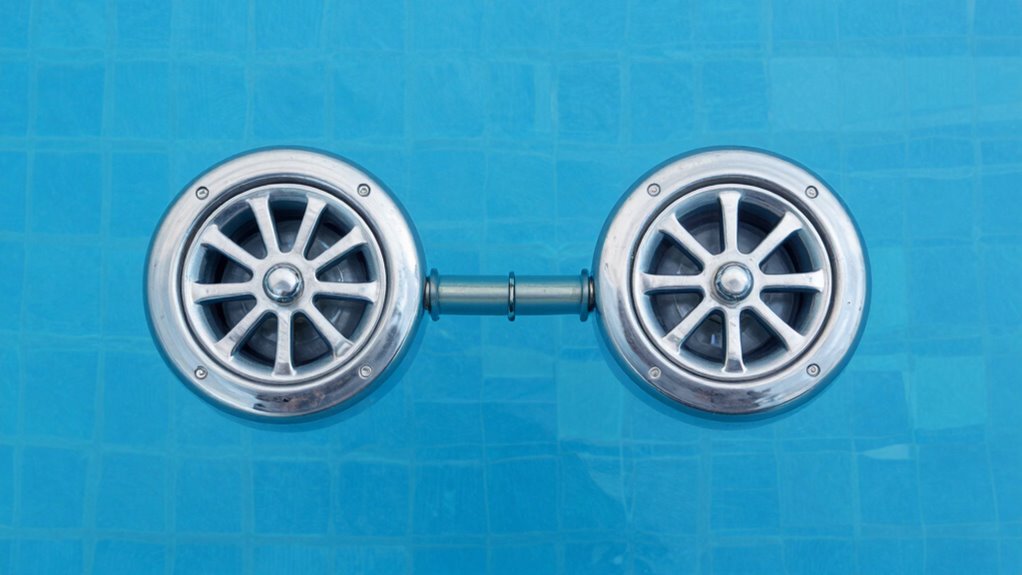
Dual drain systems are vital for preventing entrapment hazards in swimming pools, especially when the main drain becomes blocked or damaged. If one drain is compromised, the second drain guarantees water continues to flow safely, reducing suction risks. Proper pool lighting helps you monitor water flow and detect issues early, while good water chemistry maintains the clarity needed to spot potential problems quickly. When dual drains are installed correctly, they work together to prevent dangerous entrapment situations, even if one drain’s cover is damaged or obstructed. This system provides added safety, giving you peace of mind while enjoying your pool. Remember, regular inspections and maintenance of drain covers and water chemistry are essential to keeping dual drain systems effective and ensuring a safe swimming environment.
Features of Anti-Entrapment Devices and How They Protect Swimmers
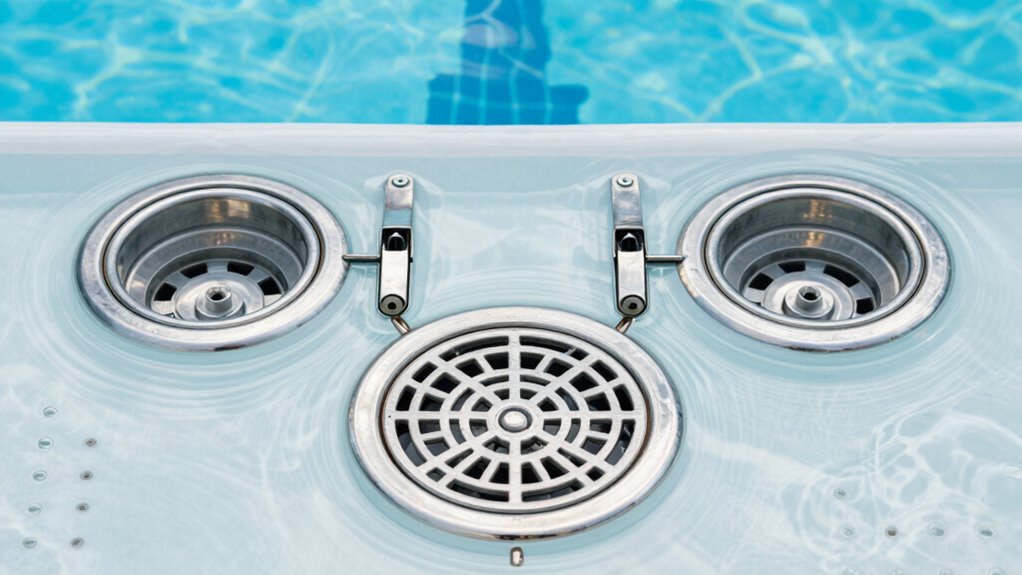
Anti-entrapment devices are designed to prevent swimmers from becoming trapped by pool drains, considerably reducing the risk of injury or drowning. These devices feature safety mechanisms like rapid shut-off systems, venting to reduce suction, and split drain covers to minimize entrapment hazards. Proper pool chemistry maintenance guarantees these devices function correctly, preventing corrosion or buildup that could compromise safety. Additionally, lifeguard training emphasizes recognizing and responding to entrapment incidents, further protecting swimmers. To maximize safety, you should:
- Regularly inspect anti-entrapment devices for damage or wear.
- Ensure pool chemistry remains balanced to prevent device malfunction.
- Keep lifeguards trained in anti-entrapment rescue techniques.
Together, these features and practices create a safer swimming environment for everyone.
How to Properly Install VGB-Compliant Drain Covers and Systems
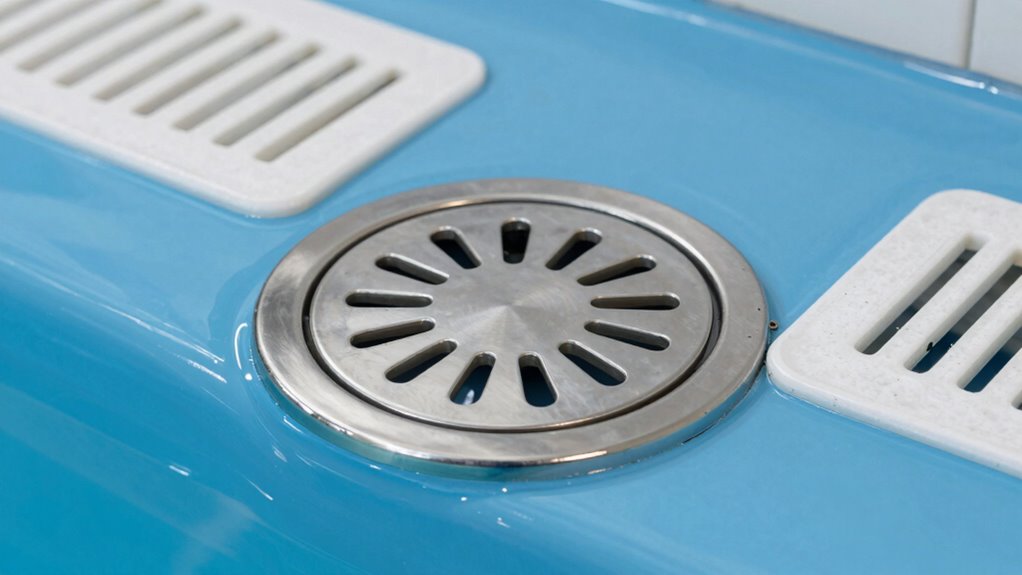
Proper installation of VGB-compliant drain covers and systems is essential to guarantee swimmer safety and meet regulatory standards. To guarantee pool safety, follow the manufacturer’s instructions carefully, securing covers tightly to prevent dislodgment. Verify that drain regulations are adhered to by using covers designed specifically for your pool’s drain type and size. Dual drain systems should be installed with proper spacing and synchronized operation to prevent suction entrapment. Regularly inspect the covers and systems for damage or wear, replacing any compromised components promptly. Proper installation not only helps prevent injuries but also ensures compliance with safety standards set by the VGB Act. Taking these steps guarantees your pool remains a safe environment for all swimmers.
Common Mistakes When Upgrading Pool Drain Safety and How to Avoid Them
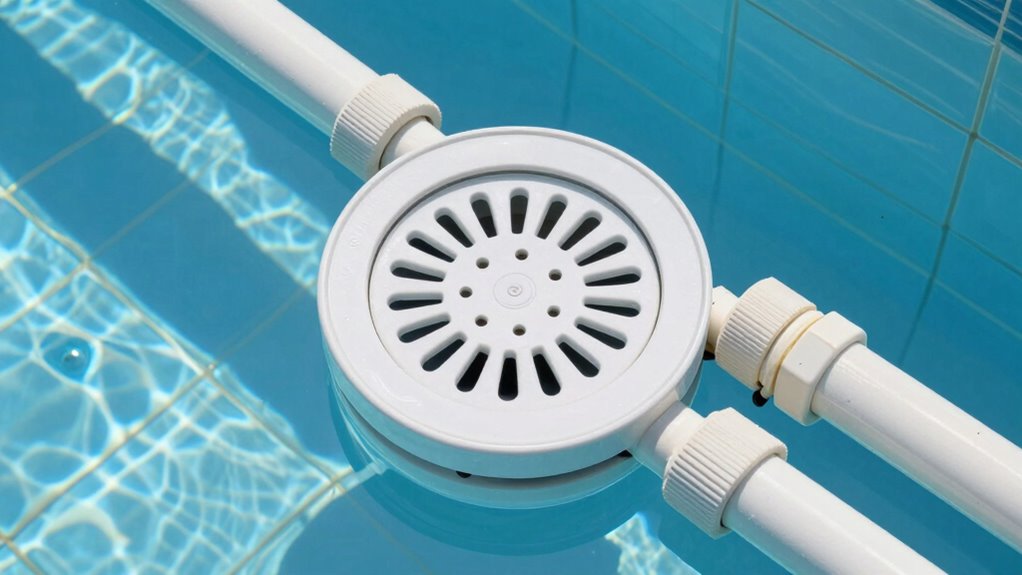
Many people upgrade their pool drain safety but overlook key issues like local regulations, proper installation, and ongoing maintenance. Skipping these steps can lead to costly mistakes and safety risks. To avoid this, stay informed and follow best practices throughout the upgrade process.
Ignoring Local Regulations
Ignoring local regulations during pool drain safety upgrades can lead to serious issues, including fines, delays, or unsafe installations. Local codes often specify requirements for drain covers, dual drains, and anti-entrapment systems. Failing to adhere to can also affect other safety aspects, like pool lighting and chemical storage. To avoid problems:
- Check local building codes and VGB Act requirements before starting upgrades.
- Ensure your pool lighting complies with safety standards to prevent electrical hazards.
- Follow regulations for chemical storage to avoid violations and ensure safe maintenance.
Overlooking Proper Installation
Even experienced installers can make mistakes during pool drain safety upgrades that compromise the system’s effectiveness. Overlooking proper installation can lead to hazards like incomplete coverage or incorrect placement of drain covers, risking entrapment. You might focus solely on the safety features without considering how installation impacts pool aesthetics, which can affect your overall design. Additionally, poor installation can disturb water chemistry by creating turbulence or dead zones, making maintenance harder. Always follow manufacturer instructions carefully, ensuring drain covers are securely attached and aligned correctly. Proper installation not only enhances safety but also maintains the pool’s visual appeal and water quality. Skipping these steps can lead to costly repairs and safety issues, so double-check every detail during the upgrade process.
Neglecting Regular Maintenance
Have you overlooked the importance of ongoing maintenance after upgrading your pool drain safety system? Neglecting regular checks can compromise safety and lead to costly issues. To keep your system effective, consider these key points:
- Regularly inspect and clean drain covers and dual drains to prevent debris buildup, especially after heavy use or storms.
- Check pool chemicals frequently to ensure proper water balance, which helps prevent corrosion or damage to safety equipment.
- Maintain proper pool lighting to ensure visibility for inspections and emergencies, reducing the risk of unnoticed damage or entrapment hazards.
Skipping these steps can lead to overlooked wear, cracks, or corrosion that compromise safety. Consistent maintenance guarantees your system remains compliant and safe for everyone.
What’s the Difference Between VGB and Non-VGB Drain Covers?
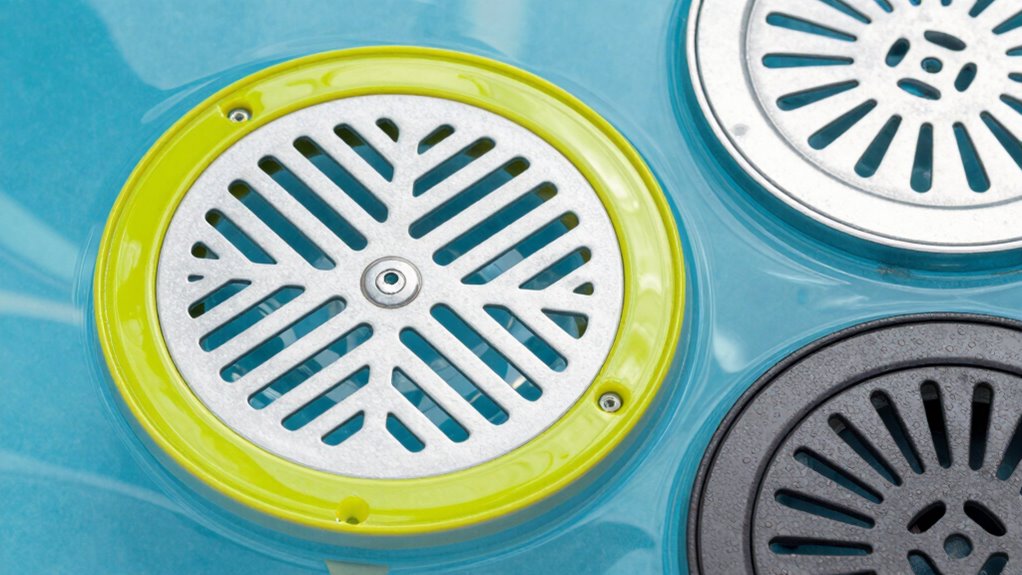
What sets VGB drain covers apart from non-VGB covers is primarily their compliance with specific safety standards designed to prevent entrapment and drownings. VGB covers meet strict requirements, such as size, strength, and design features that help prevent hair, body, or jewelry entrapment. Non-VGB covers may not adhere to these standards, increasing safety risks. When considering pool design, VGB covers are engineered to work effectively with dual drains and anti-entrapment systems, enhancing overall safety. Additionally, water chemistry influences the effectiveness of drain covers; proper circulation minimizes debris buildup that could compromise cover integrity. Choosing VGB-compliant covers ensures your pool aligns with safety regulations and provides peace of mind, especially in environments with complex pool designs or high usage.
Why Regular Maintenance Is Key to Maintaining VGB Compliance
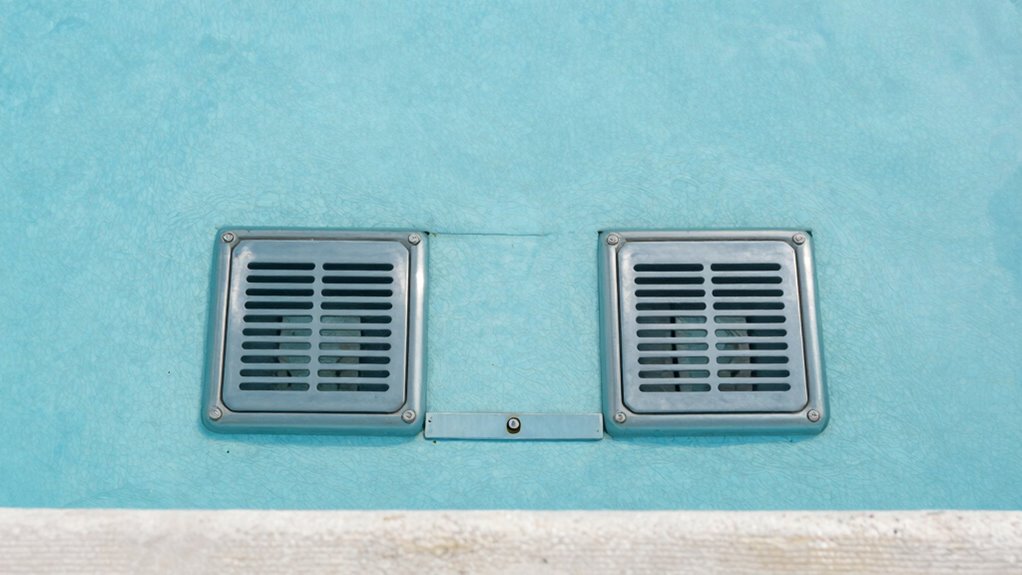
Keeping up with regular inspection routines guarantees your pool equipment stays compliant with VGB standards. When you identify issues early, you can fix them quickly with prompt repair practices. This proactive approach helps prevent accidents and keeps your pool safe for everyone.
Regular Inspection Routines
Why are regular inspection routines essential for maintaining VGB compliance? They guarantee your pool remains safe and compliant with safety standards. Consistent inspections prevent potential hazards by catching issues early. Using a thorough inspection checklist helps you verify that drain covers, dual drains, and anti-entrapment systems function correctly. Here are three key points to focus on:
- Check for cracks, corrosion, or damage on drain covers to prevent entrapment risks.
- Verify that dual drains are properly aligned and secured.
- Ensure anti-entrapment devices are operational and easily accessible.
Regular pool safety inspections keep your pool compliant and protect swimmers. Staying proactive with inspections minimizes accidents and maintains peace of mind for everyone using your pool.
Prompt Repair Practices
Regular maintenance is essential because addressing issues promptly guarantees your pool remains VGB compliant and safe for swimmers. When a drain cover shows damage or wear, fixing it immediately prevents potential entrapment hazards. Regular inspections help identify problems early, ensuring drain covers stay secure and effective. Prioritizing prompt repairs maintains ideal pool safety and keeps your facility compliant with VGB regulations. Use the table below to understand common repair priorities:
| Issue | Action Needed |
|---|---|
| Damaged drain cover | Replace immediately |
| Loose fittings | Tighten or repair |
| Cracks or corrosion | Schedule prompt replacement |
| Missing components | Restore or replace |
Staying vigilant with repair practices ensures ongoing safety and compliance, protecting swimmers and your reputation.
Who Is Responsible for Ensuring Pool Drain Safety Compliance?
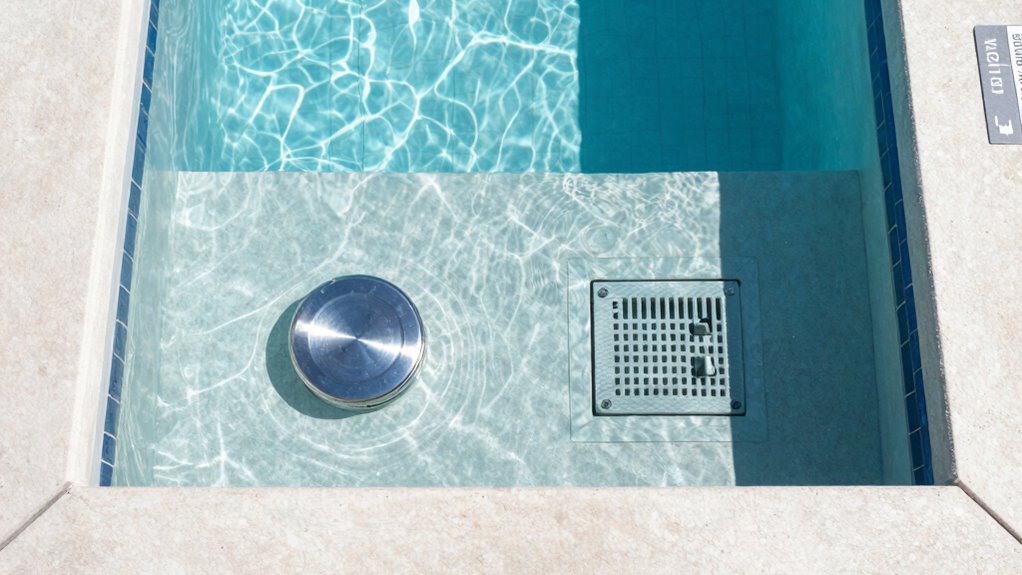
Ultimately, the responsibility for guaranteeing pool drain safety compliance falls on pool owners, operators, and manufacturers. These responsible parties must follow the VGB Act regulations to prevent entrapment hazards. Your role includes verifying that drain covers meet safety standards, installing dual drainage systems, and maintaining anti-entrapment devices. To ensure compliance enforcement, consider these key points:
- Regularly inspect and replace damaged or non-compliant drain covers.
- Keep records of safety device maintenance and upgrades.
- Educate staff and users about pool safety requirements and proper operation.
Frequently Asked Questions
How Often Should Pool Drain Systems Be Inspected for Safety Compliance?
You should inspect your pool drain systems at least quarterly as part of regular pool maintenance. Conduct safety audits during these inspections to verify all drain covers and anti-entrapment devices are secure and compliant with safety standards. Regular checks help identify potential hazards early, preventing accidents. Staying proactive with safety audits not only keeps your pool compliant but also ensures a safe swimming environment for everyone.
Are There Specific Training Requirements for Pool Staff Regarding Drain Safety?
You should guarantee your staff undergoes specific training on pool safety, including drain safety protocols. Proper staff training is essential for recognizing and preventing entrapment hazards, understanding how to maintain and inspect drain covers, and responding efficiently to emergencies. Regularly update their knowledge on safety regulations and best practices. Well-trained staff help create a safer environment, reducing risks and ensuring compliance with safety standards for all pool users.
What Are the Latest Technological Advancements in Anti-Entrapment Systems?
Think of safety as a lighthouse guiding your efforts. Today’s anti-entrapment systems harness groundbreaking technology like robotic inspection and smart monitoring, acting as vigilant guardians. These advancements allow real-time detection of issues, ensuring prompt responses and enhanced safety. You can now rely on intelligent systems that continuously oversee drain performance, reducing risks and providing peace of mind, much like a lighthouse illuminating the safest path through dark waters.
How Do Different Pool Types Affect Drain Cover and System Requirements?
You should consider that pool material and drain configuration substantially influence drain cover and system requirements. For example, concrete pools often need heavy-duty, durable covers due to their rough surfaces, while vinyl pools may require different attachment methods. Additionally, the drain configuration—such as single versus dual drains—determines the anti-entrapment system needed. Always match your drain covers and systems to your pool’s specific material and layout for safety compliance and ideal performance.
What Legal Penalties Exist for Non-Compliance With VGB Regulations?
If you don’t comply with VGB regulations, you face serious legal consequences, including hefty fines and potential shutdowns. Penalty enforcement is strict, and authorities can impose penalties for safety violations like missing or faulty drain covers. Non-compliance can also lead to lawsuits if someone gets injured. To avoid these legal issues, guarantee your pool meets all VGB requirements, and stay updated on any regulation changes.
Conclusion
By understanding and implementing VGB Act standards, you’re building a fortress of safety around your pool. Think of drain covers, dual drains, and anti-entrapment systems as your vigilant guardians, tirelessly working to keep swimmers safe from unseen dangers. Regular maintenance is your secret weapon to stay ahead of hazards. When you prioritize these safety measures, you turn your pool into a safe haven—where fun flows freely, and risks are kept at bay like shadows in the night.
Fall Picks
fall essentials
As an affiliate, we earn on qualifying purchases.