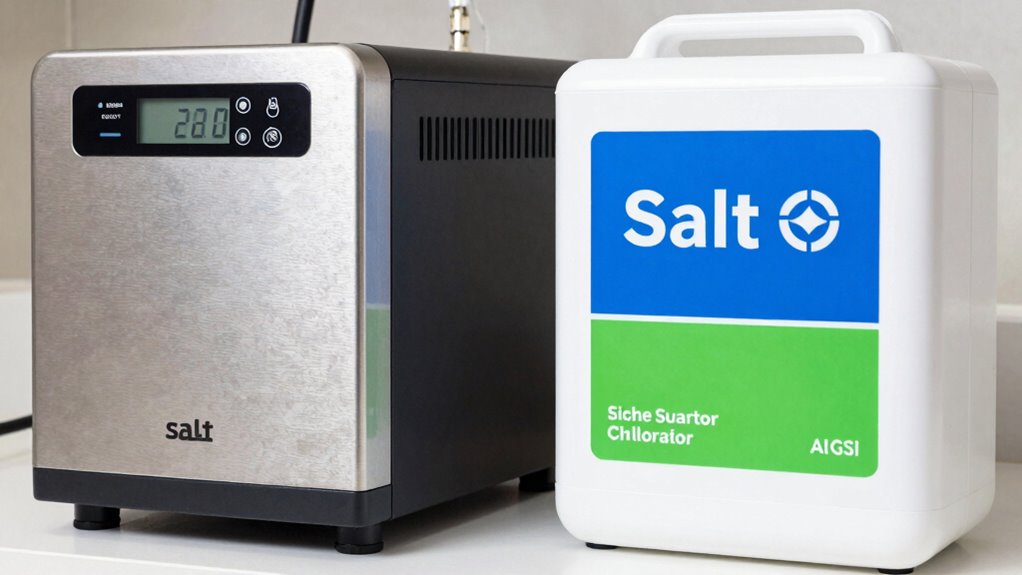

A salt system automatically produces chlorine by converting salt into sanitizer, offering continuous, hands-free chlorination and gentle water chemistry. In contrast, a tablet chlorinator relies on manually adding chlorine tablets over time, which requires regular maintenance and monitoring. Salt systems tend to have higher upfront costs but save money long-term and reduce corrosion risks. If you want consistent, low-maintenance pool care, a salt system might be the right choice. Keep going to uncover more details about each option.
Key Takeaways
- Salt systems produce chlorine continuously through electrolysis, while tablet chlorinators release solid chlorine tablets gradually.
- Salt systems are more automated, requiring less manual intervention and maintenance than manual tablet dosing.
- Salt systems are initially more expensive but cost less long-term with proper upkeep; tablets are cheaper upfront but may incur higher ongoing costs.
- Salt systems are gentler on pool equipment due to controlled salt levels, reducing corrosion risks.
- Tablet chlorinators are simple to operate but require frequent manual refilling and testing for water chemistry balance.
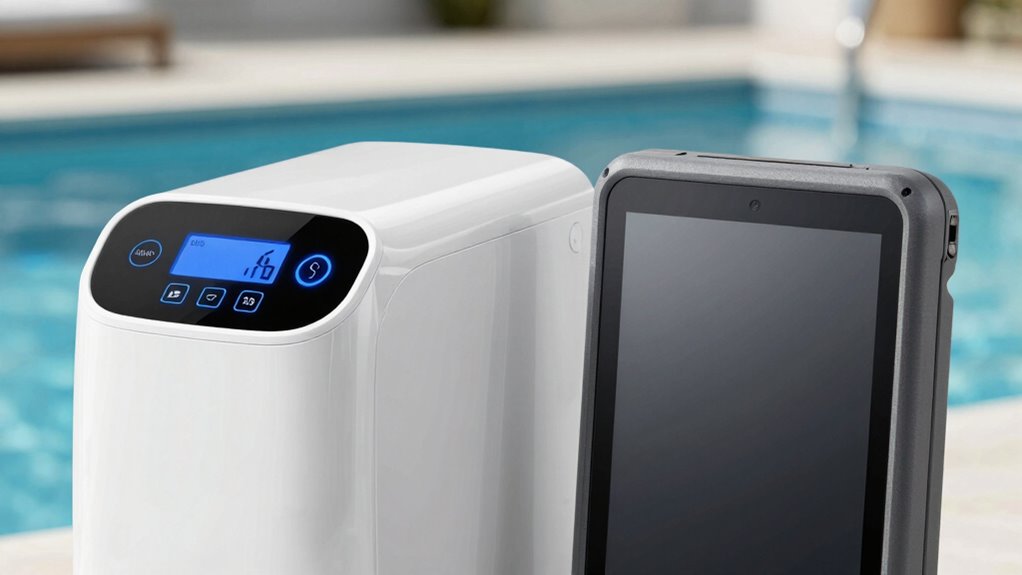
Are you unsure whether a salt system or a tablet chlorinator is the right choice for your pool? Both options generate sanitized water, but they do so in different ways, and understanding their fundamental differences can help you make an informed decision. One key aspect to contemplate is how each system handles corrosion resistance. Salt systems produce chlorine by converting salt added to your pool water through a process called electrolysis. Because of this, they tend to be gentler on pool equipment, especially metal parts, since the salt levels are carefully controlled. This can lead to better corrosion resistance over time, meaning your pool’s ladders, filters, and pumps are less likely to suffer damage compared to traditional chlorinating methods. Additionally, water chemistry plays a crucial role in maintaining the longevity of your equipment, especially when using salt systems. Proper water chemistry management can help prevent issues like scaling or corrosion, which are common concerns with salt-based systems. Regular testing and balancing of your water chemistry are essential to keep your system functioning optimally. Proper maintenance of electrolytic cells is also vital to ensure efficient operation and prevent damage that could reduce their lifespan. For example, scaling buildup can impair the cell’s efficiency if not properly cleaned and maintained. On the other hand, tablet chlorinators typically rely on adding chlorine tablets directly to a feeder, which can sometimes lead to uneven distribution of chlorine and higher localized salt levels in certain areas. This uneven exposure might accelerate corrosion in some metal components if not properly balanced and maintained.
When it comes to maintenance requirements, salt systems generally demand a bit more initial setup and ongoing monitoring. You’ll need to regularly check salt levels, test the water’s pH and alkalinity, and ensure the electrolytic cell is clean to prevent buildup. Once set up, they tend to be more automated, with systems that monitor and adjust chlorine levels, reducing manual dosing. In contrast, tablet chlorinators are simpler to operate—just add tablets periodically, and they handle the rest. However, they often require you to manually test and adjust chemical levels more frequently to maintain proper sanitation and water balance. Over time, this can mean more hands-on effort, especially if water chemistry becomes unbalanced or if you notice uneven chlorine distribution. Proper chlorine dosing is vital to avoid potential issues like over-chlorination or insufficient sanitation.
Cost is another factor to contemplate. Salt systems tend to have higher upfront costs because of the equipment and installation, but they can be more economical long-term since you’re mainly just replenishing salt and performing routine maintenance. Tablet chlorinators are generally cheaper initially but might incur higher ongoing costs for chlorine tablets and increased maintenance if water chemistry issues arise. Essentially, if you want a system that offers better corrosion resistance and less manual maintenance once properly set up, a salt system might be the better choice. But if you prefer straightforward operation with minimal initial investment, a tablet chlorinator could suit your needs better. Ultimately, choosing between the two depends on your pool’s size, your maintenance preferences, and your long-term budget considerations.

INTEX Krystal Clear QS1200 Saltwater Swimming Pool Chlorine System
- Saltwater Pool Upgrade: Suitable for above ground pools up to 15000 gallons
- Advanced Filtering System: Connects to filter pump for automatic operation
- Easy-to-Use Control Panel: Intuitive display with accessible buttons for scheduling
As an affiliate, we earn on qualifying purchases.
As an affiliate, we earn on qualifying purchases.
Frequently Asked Questions
Which System Is More Cost-Effective Long-Term?
You’ll find that a salt system is more cost-effective long-term because it generally requires less frequent chemical additions, helping you maintain better chemical balance. Plus, it tends to be more energy-efficient, saving you money on electricity bills. While the initial setup might be higher, the ongoing costs for salt and maintenance are often lower than tablet chlorinators, making it a smarter investment over time.
How Does Maintenance Differ Between the Two Systems?
You’ll find maintenance differs mainly in chemical balance and equipment durability. With a salt system, you check salt levels and maintain proper chemical balance, often needing fewer chemical additions. Its equipment tends to be durable, but you should monitor for corrosion. Tablet chlorinators require regular chemical refills and balancing, and their equipment may wear faster due to chemical exposure. Overall, both systems need regular upkeep to guarantee peak performance and longevity.
Are Salt Systems Safer for Swimmers?
Swimmers stay safer with salt systems because they create a softer, more skin-friendly pool chemistry. By maintaining a proper salt concentration, you reduce harsh chemicals and irritation. Unlike tablet chlorinators, salt systems generate chlorine naturally, minimizing chemical shocks. This gentle process lessens risks of burns or allergies, making your pool a safer, more soothing space. So, with proper maintenance, salt systems promote safer swimming environments, keeping everyone happy and healthy.
Can Existing Pools Be Upgraded to Either System?
Yes, you can upgrade your existing pool to either a salt system or tablet chlorinator. During pool installation, professionals assess your setup to guarantee compatibility. Upgrading extends equipment lifespan and improves water quality, but it might require some modifications. Consult a pool specialist to evaluate your current system and determine the best upgrade option. Proper installation ensures safety, efficiency, and longer-lasting equipment, making your swimming experience more enjoyable.
Which System Is Better for Salt-Sensitive Skin?
If you have sensitive skin, a salt system might be better because it typically produces gentler, more balanced chlorine levels, reducing skin irritation. It also helps maintain a stable pH balance, preventing harsh water conditions that can aggravate sensitive skin. Tablet chlorinators can sometimes cause fluctuations in pH, leading to irritation. So, for skin sensitivity, a salt system offers a smoother, more comfortable swimming experience.

Zelinhol Salt Chlorine Generator for Hot Tubs & Swim Spas, Titanium Salt Cell with OLED Display & Quick-Change Design, Self-Cleaning System (Up to 2500 Gallons)
- OLED Display: Real-time salt and chlorine monitoring
- Quick-Change Salt Cell: Replace without tools in seconds
- Corrosion-Resistant Titanium: Durable salt cell for long-lasting use
As an affiliate, we earn on qualifying purchases.
As an affiliate, we earn on qualifying purchases.
Conclusion
When choosing between a salt system and a tablet chlorinator, consider your pool size, budget, and maintenance preferences. Imagine you’re managing a busy summer pool party—using a salt system can provide continuous, gentle sanitization, keeping your water crystal clear effortlessly. On the other hand, tablet chlorinators are more straightforward and budget-friendly for smaller pools. Think about your lifestyle and pool needs to pick the best fit—your perfect pool experience awaits!

Hayward CL200EF in-Line Automatic Chlorine Feeder, Offline Pool Chlorinator and Chlorine Dispenser, Up to 9 lb Capacity, for In-Ground Swimming Pools
- Automatic Off-Line Chlorination: Consistent chlorine distribution for pools
- High-Capacity Chlorine Feeder: Holds up to 9 lbs of chlorine
- Corrosion-Resistant Construction: Durable, chemical-resistant housing
As an affiliate, we earn on qualifying purchases.
As an affiliate, we earn on qualifying purchases.
Hayward CL200EF in-Line Automatic Chlorine Feeder, Offline Pool Chlorinator and Chlorine Dispenser, Up to 9 lb Capacity, for In-Ground Swimming Pools
- Automatic Off-Line Chlorination: Consistent chlorine distribution for pools
- High-Capacity Chlorine Feeder: Holds up to 9 lbs of chlorine
- Corrosion-Resistant Construction: Durable, chemical-resistant housing
As an affiliate, we earn on qualifying purchases.
As an affiliate, we earn on qualifying purchases.