
You might think saltwater pools don’t need much chemical care, but they still depend on smart chlorine management to stay safe and clear. The system generates chlorine naturally, but regular testing and balancing of pH, alkalinity, and stabilizers are essential to prevent bacteria, algae, and cloudy water. Proper chlorine levels work with natural filtration to keep your pool healthy. Staying on top of these steps guarantees your pool remains safe and beautiful—discover more about making it effortless to maintain.
Key Takeaways
- Saltwater pools produce chlorine naturally, but regular testing ensures proper chlorine levels for safety and clarity.
- Maintaining balanced chemical levels, including pH and stabilizers, supports effective chlorine function.
- Natural filtration alone cannot prevent bacteria or algae without proper chlorine management.
- Overly high or low chlorine levels can cause water discomfort or unsafe conditions, requiring smart adjustments.
- Consistent chemical monitoring and balancing are essential for long-term pool health and safety.
Saltwater pools are often celebrated for their gentler feel and lower chemical smell, but managing chlorine levels remains crucial to keep the water safe and clear. While the saltwater system produces chlorine naturally through electrolysis, it doesn’t eliminate the need for careful monitoring. You still have to maintain proper chemical balance to guarantee your pool stays inviting and safe. This means checking chlorine levels regularly and adjusting as necessary, even if the system is generating chlorine continuously.
Natural filtration plays a significant role in keeping your pool water clean, but it doesn’t replace the importance of chemical management. A well-functioning filtration system removes debris, dirt, and algae, but it can’t do all the work alone. Without proper chlorine levels, bacteria and algae can still thrive, turning your pool cloudy or green. Balancing chlorine ensures that your natural filtration system works efficiently, preventing issues before they start. Regular testing of your water helps you stay ahead of imbalances, so you can add chlorine or other treatments promptly.
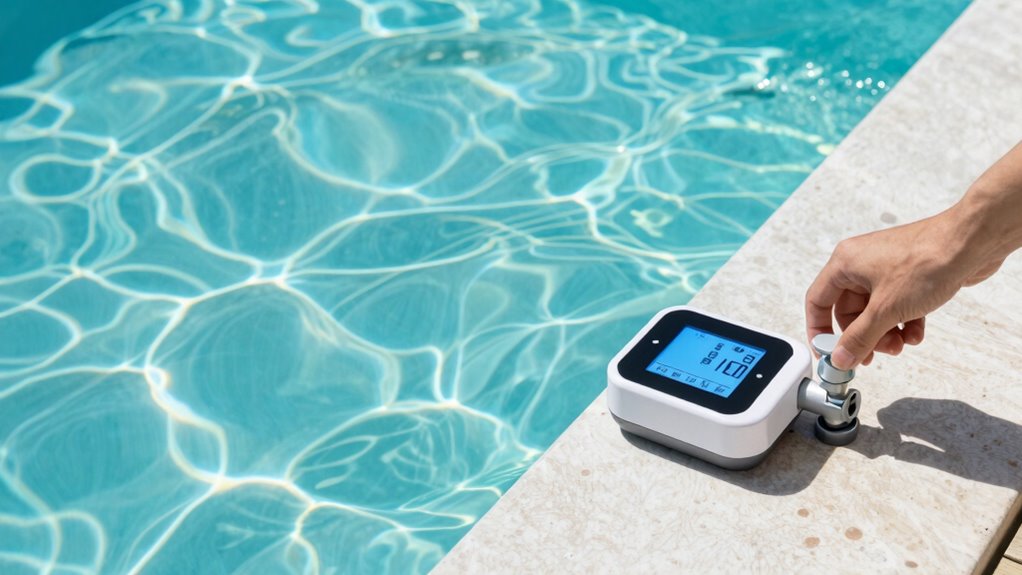
Your goal is to keep the chemical balance steady. Too little chlorine, and harmful microorganisms can multiply; too much, and your water may become harsh or irritating. Even with saltwater, you need to keep an eye on pH levels, alkalinity, and stabilizers like cyanuric acid. A balanced chemical environment supports the natural filtration process and keeps your water crystal clear. Tools like test strips or electronic testers make it easier for you to track these levels daily, helping you make quick adjustments that prevent bigger problems down the line.
Remember that saltwater pools are not entirely maintenance-free. They rely on a delicate balance of natural and chemical processes working together. If you ignore chlorine management, the pool water can become unsafe, inviting bacteria and algae that could be harmful or damaging to your equipment. Proper chlorine levels also reduce the need for harsh chemical shocks, making maintenance more straightforward and less chemical-heavy. By understanding the importance of natural filtration and keeping your chemical balance in check, you create an environment where your saltwater pool remains beautiful, safe, and enjoyable.
In addition, understanding the role of chlorine management in conjunction with natural filtration helps pool owners maintain a healthy swimming environment. In essence, even with the convenience of salt-based chlorination, you’re still responsible for smart chlorine management. It’s a crucial part of pool ownership that ensures your water stays clean and inviting. Regular testing, balancing chemicals, and understanding how your natural filtration interacts with chlorine are the keys to long-term pool health. This combination allows you to enjoy the benefits of a saltwater pool without sacrificing safety or water quality.
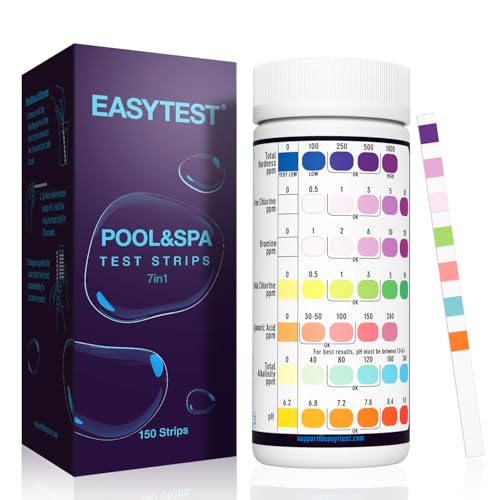
EASYTEST 7-Way Pool Test Strips, 150 Strips Water Test for Hot tub and Spa
- 150 Test Strips: Affordable water testing kit with 150 strips
- Quick and Accurate: Results in 15 seconds with color comparison
- 7-in-1 Testing: Measures Bromine, pH, Chlorine, Alkalinity, Hardness, Cyanuric Acid
As an affiliate, we earn on qualifying purchases.
As an affiliate, we earn on qualifying purchases.
Frequently Asked Questions
How Often Should I Test Saltwater Pool Chlorine Levels?
You should test your saltwater pool’s chlorine levels at least twice a week to maintain proper chemical balance. Regular testing helps you catch fluctuations early and adjust your maintenance routines accordingly. Keep an eye on other chemicals like pH and alkalinity too, as they influence chlorine effectiveness. Consistent testing guarantees your pool stays safe, clean, and inviting, reducing the risk of algae growth and other issues.
Can Smart Chlorine Systems Prevent Algae Growth?
Smart chlorine systems act like vigilant guards, preventing algae growth before it takes hold. By maintaining proper chemical balance and consistent chlorine levels, they effectively deter algae. These systems automatically adjust chlorine output, ensuring your pool stays clear and algae-free. Regular monitoring and smart management are your best tools for algae prevention, allowing you to enjoy clean, inviting water without the headache of algae blooms.
What Are Signs of Improper Chlorine Balance?
You’ll notice signs of improper chlorine balance through cloudy water, strong chemical odors, or skin and eye irritation. Chemical imbalance and pH fluctuations often cause these issues, making your pool uncomfortable and unsafe. If your chlorine levels are inconsistent or your pH swings frequently, it’s time to check your sanitizer and adjust the chemicals. Regular testing and smart management help prevent these problems and keep your pool sparkling clean.
Do Smart Systems Reduce Overall Chlorine Costs?
Smart systems can reduce your chlorine costs by up to 50% through precise chlorine automation, ensuring you only use what’s necessary. By maintaining ideal chlorine levels, they prevent overuse and waste. This improves cost efficiency and keeps your pool safer and cleaner. With these systems, you’ll save money while avoiding the hassle of manual adjustments, making pool maintenance more convenient and economical over time.
How Do Weather Changes Affect Chlorine Management?
Weather fluctuations and pool evaporation directly impact your chlorine management. Hot, sunny days increase evaporation, reducing water levels and concentration, so you need to adjust chlorine levels accordingly. Cooler or cloudy weather slows evaporation but can lead to algae growth if not monitored. Smart chlorine management systems help you adapt quickly to these changes, ensuring your saltwater pool maintains *best* chlorine levels despite weather variations.
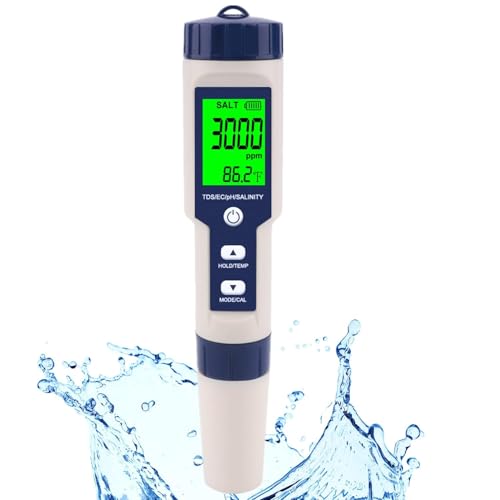
Pool Salt Tester & PH Meter, Hofun Digital Salinity Meter and PH Tester for Aquarium and Pool Saltwater Water, 5 in 1 Salinity PH Temp EC and TDS Meter, Aquarium Swimming Pool Hot Tub, High Accuracy
- Wide Application PH Meter: Suitable for pools, aquariums, and more
- Three Salinity Display Modes: PPM, PPT, and percentage options
- Automatic Unit Conversion: Switches between ppm and ppt automatically
As an affiliate, we earn on qualifying purchases.
As an affiliate, we earn on qualifying purchases.
Conclusion
Just like a skilled captain steers a ship through calm and stormy seas, managing your saltwater pool’s chlorine levels keeps your oasis sparkling and inviting. Even with advanced salt systems, you’re still the navigator, adjusting and monitoring to prevent problems before they surface. Remember, a well-managed pool isn’t just a reflection of your efforts — it’s a haven where every swim feels like a revitalizing voyage. Keep steady, and your pool will always be ready for adventure.

Smart Saltwater Pool Chlorinator System for 26,500 Gallons Above Ground Pool, Automated Salt Chlorine Generator with APP Control, Titanium Cell, One-Touch Operation & Low Maintenance
- High Chlorine Output: 20g/h for large pools up to 26,500 gallons
- App-Controlled Automation: Remote chlorine adjustment and monitoring via WiFi
- Salinity Monitoring: Tracks salinity levels from 2500-5000ppm
As an affiliate, we earn on qualifying purchases.
As an affiliate, we earn on qualifying purchases.
EASYTEST 7-Way Pool Test Strips, 150 Strips Water Test for Hot tub and Spa
- 150 Test Strips: Affordable water testing kit with 150 strips
- Quick and Accurate: Results in 15 seconds with color comparison
- 7-in-1 Testing: Measures Bromine, pH, Chlorine, Alkalinity, Hardness, Cyanuric Acid
As an affiliate, we earn on qualifying purchases.
As an affiliate, we earn on qualifying purchases.