
Knowing the difference between alkalinity and pH is key to fixing water problems effectively. pH measures acidity or alkalinity, but it doesn’t reveal mineral content or stability issues. Alkalinity, on the other hand, buffers pH and prevents sudden changes. If you focus only on pH, you risk causing damage or ineffective treatments. To maintain healthy water, you need to test both and understand their roles—continuing on will reveal how to get it right.
Key Takeaways
- Alkalinity buffers pH changes, so focus on alkalinity levels to maintain water stability, not just pH readings.
- Relying solely on pH ignores mineral content and can lead to misdiagnosing issues like corrosion or scaling.
- Proper testing of both alkalinity and pH prevents unnecessary chemical treatments and stabilizes water chemistry.
- Adjusting alkalinity with buffering agents stabilizes pH, avoiding swings that harm equipment and water quality.
- Monitoring water mineral content and hardness ensures holistic treatment, preventing problems caused by treating only pH.
As an affiliate, we earn on qualifying purchases.
What’s the Difference Between Alkalinity and pH?
Understanding the difference between alkalinity and pH is essential for managing water quality. Alkalinity measures your water’s ability to neutralize acids, primarily influenced by substances like calcium hardness. It acts as a buffer, preventing sudden pH changes that can harm your pool or system. Buffer capacity is a key factor in how well alkalinity performs this role. pH, on the other hand, indicates how acidic or basic your water is, with a scale from 0 to 14. Water with high calcium hardness often has increased alkalinity, which helps maintain stable pH levels. If your water is too soft, it may lack sufficient alkalinity, making pH levels more prone to fluctuations. Recognizing these distinctions allows you to better understand how water chemistry interacts, ensuring proper treatment and preventing issues like corrosion or scaling. Understanding water chemistry interactions is crucial for effective water management, especially when considering water treatment adjustments.
pH and alkalinity testing strips
As an affiliate, we earn on qualifying purchases.
As an affiliate, we earn on qualifying purchases.
Why pH Doesn’t Show the Whole Water Quality Picture
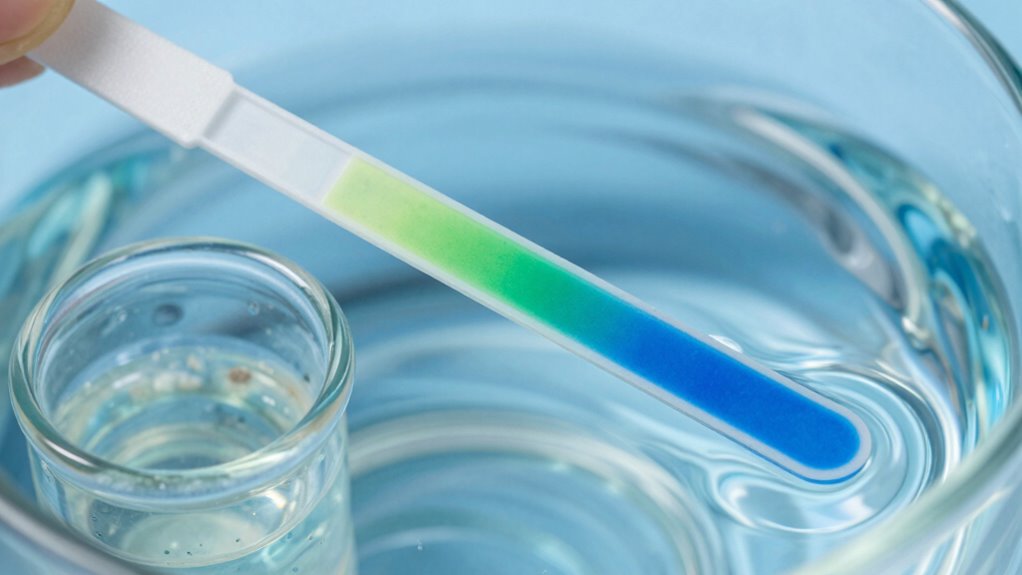
While pH levels are important for evaluating water quality, they don’t provide the full picture. pH indicates how acidic or basic your water is but doesn’t reveal other critical factors like alkalinity, mineral content, or contaminants. Relying solely on pH can lead to chemical misdiagnosis, causing you to treat the wrong problem or overlook issues like equipment corrosion. Consider the differences shown below:
| Aspect | What It Reveals |
|---|---|
| pH | Acidity or alkalinity |
| Alkalinity | Buffering capacity and stability |
| Mineral Content | Hardness and trace elements |
| Contaminants | Harmful substances in water |
| Overall Water Quality | Complete health and safety profile |
Understanding water chemistry is essential for accurate assessment and effective treatment strategies, ensuring you address the right issues and maintain optimal water safety and equipment lifespan.
As an affiliate, we earn on qualifying purchases.
How Alkalinity Buffers Water Against pH Fluctuations
Alkalinity acts as a natural buffer, helping water resist sudden pH changes. Its purpose is to neutralize acids or bases that enter your water, preventing sharp pH fluctuations. When alkalinity levels are adequate, they maintain pH stability, allowing your water to stay within a healthy range. Without proper alkalinity, even small disturbances, like adding chemicals or natural shifts, can cause pH swings that harm aquatic life or affect water quality. By ensuring your water has enough alkalinity, you create a buffer zone that absorbs these changes. This buffering capacity is essential for maintaining consistent, stable pH levels, making your water safer and easier to manage. Remember, alkalinity doesn’t change pH directly but protects it from sudden, potentially damaging shifts. Proper alkalinity levels are vital for effective water quality management and long-term aquatic health. Additionally, monitoring alkalinity helps prevent corrosive water conditions that can damage plumbing and equipment. Regular testing of alkalinity levels ensures you maintain an optimal buffer capacity, preventing unwanted pH fluctuations.
As an affiliate, we earn on qualifying purchases.
Signs You’re Treating the Wrong Water Chemistry Issue
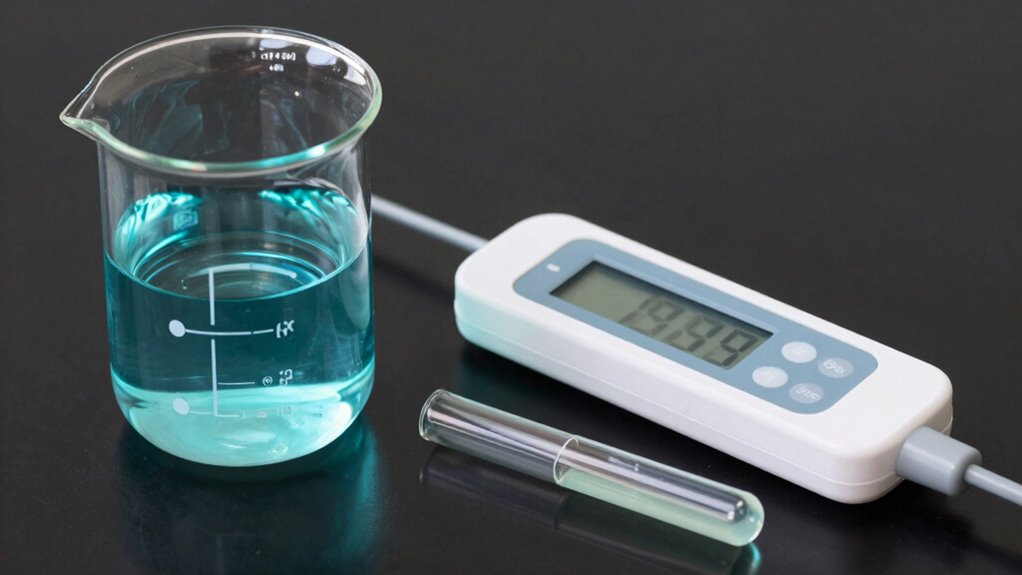
If your water chemistry issues persist despite your efforts, you might be treating the wrong problem altogether. Many overlook the significance of alkalinity, focusing solely on pH levels, which leads to misconceptions about water balance. Signs you’re addressing the wrong issue include frequent pH swings, scaling, or corrosion despite adjusting pH alone. These symptoms often stem from low alkalinity, which buffers water against pH fluctuations. If you ignore alkalinity’s importance, you risk misdiagnosing the problem and wasting time and resources. Recognizing these signs helps you understand that alkalinity, not just pH, plays an essential role in maintaining stable water chemistry. Properly balancing water components ensures a healthier and more stable aquatic environment. Additionally, understanding the role of buffer capacity in water chemistry is crucial for effective treatment. When alkalinity is low, water becomes more susceptible to rapid pH changes, making it essential to address alkalinity levels directly. Correctly identifying the real issue ensures you implement effective treatments and avoid unnecessary troubleshooting. Moreover, understanding how alkalinity interacts with pH can help you develop more targeted solutions for water stability.
How to Test and Interpret pH and Alkalinity in Water
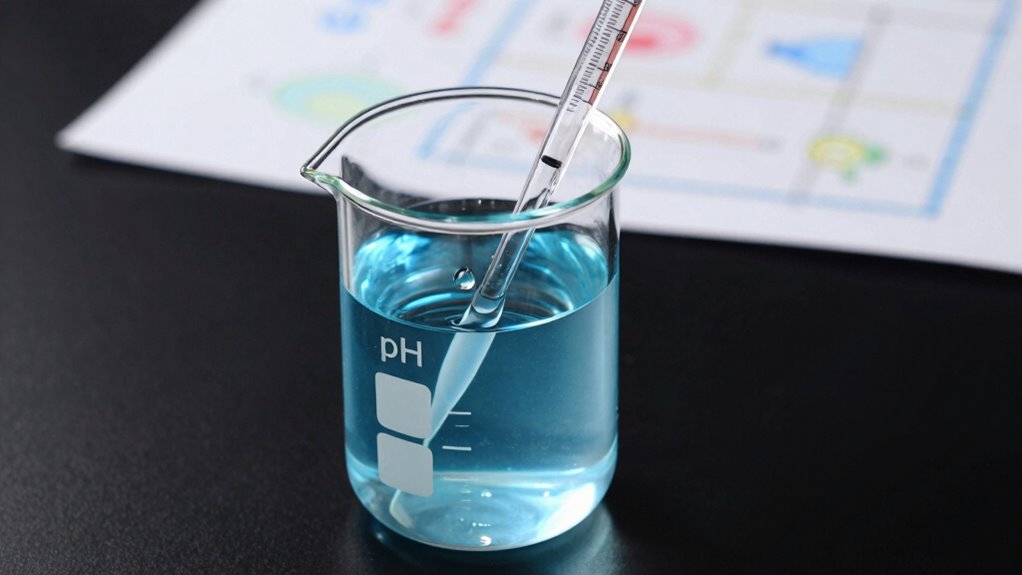
Accurately testing and interpreting pH and alkalinity levels is key to maintaining proper water chemistry. You can use water test kits or pH meters to get precise readings. Test kits are simple and affordable, while pH meters offer quick, accurate results. Once you have your readings, compare them to ideal ranges to determine if adjustments are needed. Here’s a quick reference:
| pH Level | Alkalinity Level | |
|---|---|---|
| Too low | Causes corrosion | Feel worried? |
| Too high | Leads to scaling | Concerned? |
| Ideal | Stable water chemistry | Confident! |
Interpreting these results helps you decide whether to take action, ensuring your water remains safe and balanced. For accurate adjustments, understanding water chemistry and lubricant specifications is essential. Additionally, monitoring system performance can help prevent costly failures and optimize treatment strategies. Regular testing and proper water treatment methods are crucial for maintaining the longevity of your water system. Being aware of alkalinity levels can also help prevent issues like pH swings that affect system stability.
When Should You Adjust pH in Water Systems?
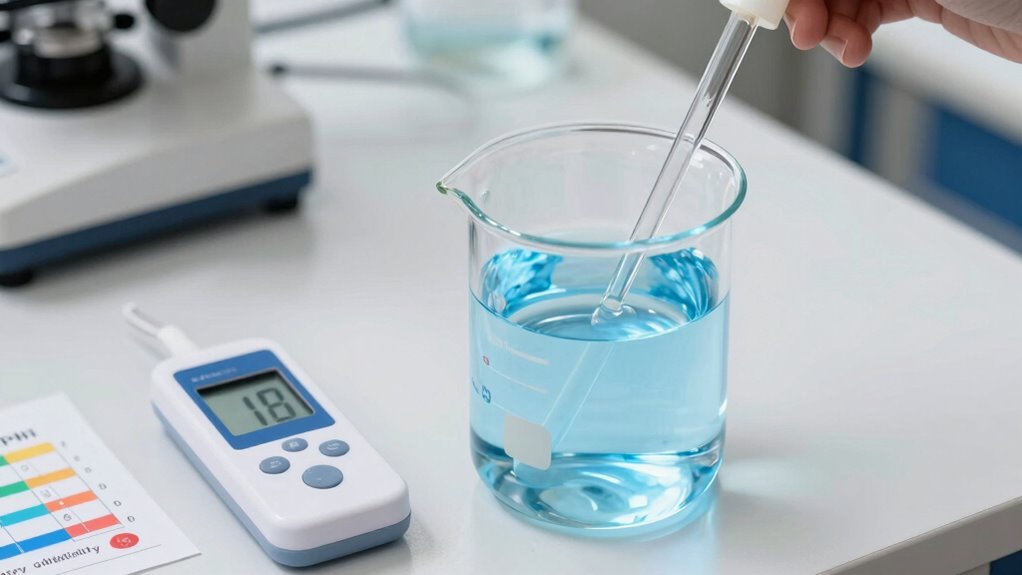
You should calibrate pH when your water’s levels fall outside the ideal range for your system’s needs. Regularly monitoring water conditions helps you spot these changes early. Knowing when to make adjustments ensures your system runs smoothly and stays balanced. Additionally, understanding solar system safety principles can prevent potential hazards during water treatment processes.
When To Adjust pH
Knowing when to adjust pH is crucial for maintaining water quality and system efficiency. You should consider pH control when levels fall outside the ideal range for your system, typically between 7.2 and 7.6. If pH drops too low, acid addition may be necessary; if it rises too high, alkalinity adjustment can help bring it back into balance. Adjustments should be made proactively, especially before scaling or corrosion issues arise. Waiting too long can lead to equipment damage or compromised water quality. Regular testing helps determine when pH levels drift from the target range, signaling the need for intervention. Proper timing ensures your system remains efficient and your water remains safe, avoiding more complex problems caused by untreated pH imbalances.
Monitoring Water Conditions
Wondering when to adjust pH in your water system? Monitoring water conditions is key. Regular testing helps you spot imbalances before they cause issues. Use a reliable pH meter or test strips to check your water’s pH levels frequently. If your readings fall outside the ideal range, it’s time for chemical balancing. Proper water filtration can also influence pH, removing contaminants that cause fluctuations. Adjusting pH prematurely can do more harm than good, so wait until tests show a consistent imbalance. Staying vigilant ensures your system remains stable, protecting equipment and maintaining water quality. Remember, consistent monitoring guides effective adjustments, preventing unnecessary chemical additions and optimizing water filtration for healthier, clearer water.
How to Increase Alkalinity Without Changing pH Too Much

To raise alkalinity without substantially changing pH, you should consider using buffering agents that stabilize the water. Adjusting alkalinity levels carefully allows you to improve water quality while minimizing pH shifts. Additionally, minimizing pH fluctuations helps maintain consistent water conditions, making your adjustments more effective.
Use Buffering Agents
Buffering agents are effective tools for increasing alkalinity without causing significant shifts in pH. These agents work by neutralizing acids and stabilizing the water’s pH, helping maintain water clarity and overall stability. Calcium hardness is a key component in buffering, as it naturally enhances alkalinity and supports a balanced environment. When you add buffering agents, you improve the water’s ability to resist pH changes, making it easier to keep conditions consistent. This approach minimizes the risk of sudden pH swings that can harm your water quality or aquatic life. By carefully selecting and applying buffering agents, you can raise alkalinity smoothly and sustain clearer, healthier water without overly affecting the pH level.
Adjust Alkalinity Levels
When you want to increase alkalinity without considerably raising the pH, it’s important to choose methods that target alkalinity specifically. Many alkalinity myths, like adding baking soda, can temporarily raise both alkalinity and pH, fueling pH misconceptions. To adjust alkalinity without a significant pH shift, consider adding sodium bicarbonate in small doses or using proprietary alkalinity increasers designed for precise control. Avoid oversimplified solutions that ignore the complex relationship between alkalinity and pH. Instead, focus on incremental adjustments, testing frequently to monitor changes. This approach helps prevent overcorrection and reduces the risk of misinterpreting your water chemistry. By understanding the difference between alkalinity myths and actual needs, you can maintain stable water conditions without unintentionally complicating your pH balance.
Minimize pH Fluctuations
Increasing alkalinity without causing significant pH swings requires careful, incremental adjustments. To stabilize pH while raising alkalinity, focus on managing calcium hardness and overall water hardness. Use buffering agents that gently raise alkalinity without increasing pH sharply.
| Action | Result |
|---|---|
| Add sodium bicarbonate | Boosts alkalinity, minor pH change |
| Adjust calcium hardness | Stabilizes pH, prevents swings |
| Monitor water hardness | Ensures consistent conditions |
| Make gradual adjustments | Avoids abrupt pH fluctuations |
How to Correct pH Imbalances Without Ignoring Alkalinity
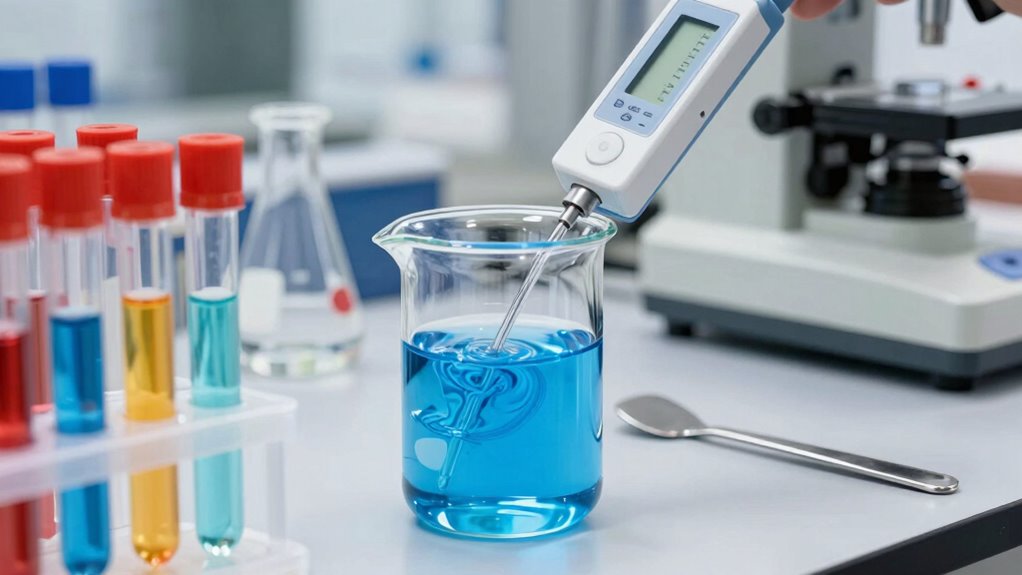
Maintaining proper pH levels requires more than just adjusting acidity; you also need to contemplate alkalinity because it influences how your water responds to changes. Many alkalinity myths lead people to believe that raising or lowering pH alone fixes everything, but that’s a pH misconception. Ignoring alkalinity can cause pH swings that make water unstable, leading to scaling or corrosion. To correct pH imbalances properly, test both pH and alkalinity first. If alkalinity is low, add baking soda or other alkalinity increasers to stabilize the buffer capacity. When alkalinity is high, consider acid treatments carefully to avoid rapid pH drops. Understanding the relationship between alkalinity and pH helps you make informed adjustments, ensuring your water remains balanced and preventing future problems.
Risks of Treating Water Chemistry Without Proper Testing
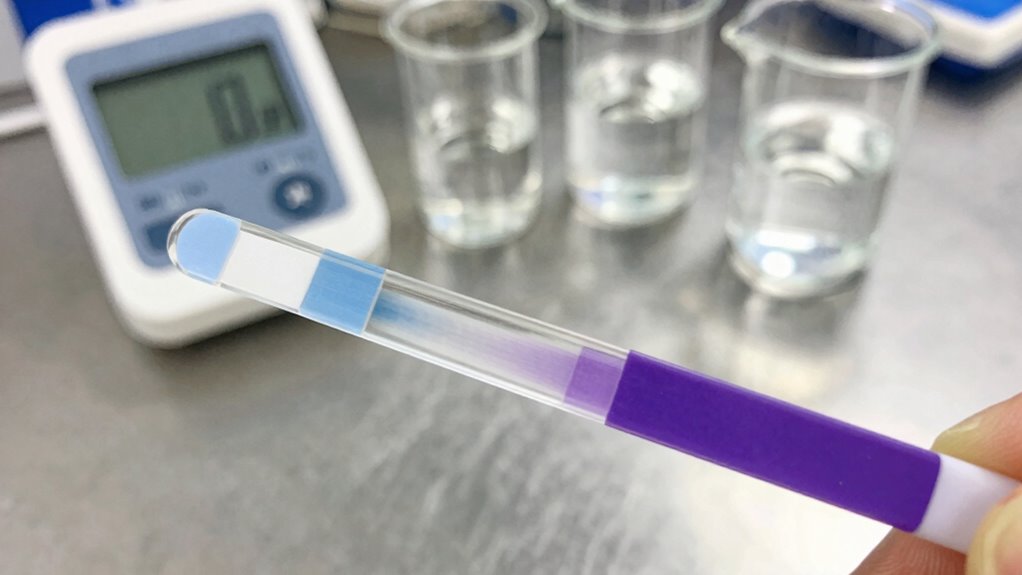
Treating water chemistry without proper testing can lead to inaccurate water balance, causing your system to become unstable. You might add chemicals that don’t address the real issues, which can worsen problems instead of fixing them. Without correct testing, there’s also a risk of damaging your equipment, leading to costly repairs.
Inaccurate Water Balance
Without proper testing, attempting to balance water chemistry can lead to dangerous inaccuracies that compromise your pool’s health. These inaccuracies often stem from chemical misconceptions and can disrupt water stability. If you don’t test correctly, you might add chemicals that don’t address the real issues, causing imbalances instead of fixing them.
Consider these risks:
- You might overcorrect pH or alkalinity, leading to corrosion or scale buildup.
- Inaccurate readings can mask issues, making you think water is balanced when it’s not.
- Without proper testing, you risk creating unsafe conditions that promote algae growth or equipment damage.
Proper testing guarantees you understand your water’s true chemistry, helping you maintain water stability and avoid costly mistakes.
Misguided Chemical Additions
When you don’t have accurate water test results, adding chemicals based on guesswork can do more harm than good. Chemical misconceptions often lead to unnecessary or improper treatments, creating more problems than solutions. Without proper testing, you risk falling into treatment pitfalls, like overdosing pH adjusters or adding algaecides unnecessarily. These actions can destabilize your water chemistry, causing imbalances that are harder to correct later. Relying on assumptions rather than data increases the chance of compound issues, waste, and potential damage. Instead, always test your water first. Accurate readings guide effective, targeted treatments that address the real problem instead of masking symptoms with misguided chemical additions. Proper testing saves money, prevents complications, and keeps your water chemistry stable.
Potential Equipment Damage
Neglecting proper water testing before making chemical adjustments can quickly lead to equipment damage. Without accurate data, you risk increasing corrosion risks, which weaken and degrade your equipment over time. Improper chemical levels can cause metal components to rust faster, reducing equipment durability. To avoid these issues, be aware of the potential hazards:
- Corrosion Accelerations: Incorrect pH or alkalinity levels can corrode pumps, filters, and heaters, leading to costly repairs.
- Reduced Equipment Lifespan: Continuous exposure to imbalanced water chemistry shortens the operational life of your equipment.
- Unnecessary Replacement Costs: Damage from corrosion or scale buildup forces premature equipment replacement, increasing expenses.
Proper testing guarantees you treat the right problem, protecting your investment and maintaining reliable operation.
Tips for Maintaining Balanced Water Chemistry Long-Term
Maintaining balanced water chemistry over the long term requires consistent monitoring and proactive adjustments. Regularly test your water’s pH, alkalinity, and mineral content to prevent imbalances. Keep an eye on water hardness, as high mineral content can affect pH stability and equipment lifespan. Use a reliable test kit and record results to spot trends early. Adjust mineral levels with appropriate treatments, such as water softeners or remineralizers, to maintain ideal conditions.
| Water Hardness | Mineral Content |
|---|---|
| Affects pH stability | Influences alkalinity |
| Can cause scaling | Impacts water clarity |
| Needs monitoring | Requires tailored treatment |
Frequently Asked Questions
Can Alkalinity Affect Water Clarity or Taste?
Yes, alkalinity impact can affect water clarity and taste. High alkalinity levels can cause water to appear cloudy or murky, reducing clarity. It can also alter the taste, making it slightly bitter or metallic. You might notice these changes if alkalinity isn’t properly managed, as it influences how minerals and other substances react in your water. Monitoring alkalinity helps maintain clear, good-tasting water and prevents long-term issues.
How Do Temperature Changes Influence pH and Alkalinity?
Think of your water as a delicate dance, where temperature fluctuations are like changing music tempos. As water warms or cools, pH levels can shift because gases like CO₂ become more or less soluble. Alkalinity stability helps buffer these changes, keeping the dance smooth. So, temperature changes influence both pH and alkalinity, and maintaining alkalinity stability guarantees your water stays balanced despite temperature swings.
Are There Natural Methods to Adjust Alkalinity in Water?
Yes, you can naturally modify alkalinity in water through natural remedies like mineralization. Adding mineral-rich substances such as crushed coral, limestone, or dolomite slowly releases calcium and carbonate ions, which increase alkalinity. These methods are eco-friendly and cost-effective, helping you balance your water’s alkalinity without chemicals. Just ensure you monitor levels regularly to avoid over-adjustment and maintain ideal water quality for your needs.
What Equipment Is Best for Precise Water Chemistry Testing?
For precise water chemistry testing, you should use digital meters and reagent kits. Digital meters offer quick, accurate readings of pH and alkalinity levels, making them ideal for regular monitoring. Reagent kits are reliable for detailed tests and help you understand specific water parameters. Combining both tools guarantees you get an accurate picture of your water quality, so you can make informed adjustments without guesswork.
How Often Should Water Chemistry Be Re-Tested After Adjustments?
You should re-test your water chemistry every 24 to 48 hours after making adjustments. This testing frequency helps confirm your pH and alkalinity levels stabilize and stay within desired ranges. Adjustments can take time to fully influence water chemistry, so monitoring regularly allows you to act promptly if levels shift. Consistent re-testing and proper adjustment timing prevent overcorrection and maintain ideal water quality for your system.
Conclusion
Understanding the difference between alkalinity and pH is like knowing the roots and leaves of a plant—you need both to keep it thriving. Don’t just chase quick fixes or treat the surface problems; dig deeper with proper testing and balanced adjustments. When you address the right issue at its core, your water stays healthy and stable—like a sturdy tree weathering any storm. Keep learning, testing, and treating wisely to protect your water’s true health.