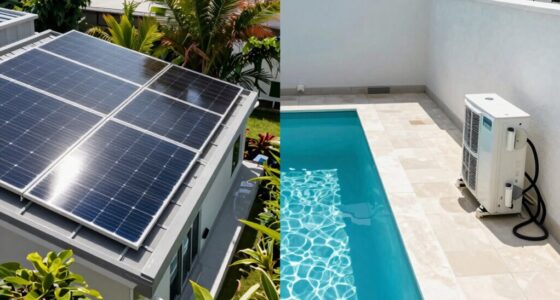

Your pool heat can disappear faster than expected because external factors like wind, air temperature, and humidity accelerate heat loss. Inadequate insulation and cracks allow heat to escape more quickly. Older, inefficient heaters also contribute to faster cooling. Using a cover and proper insulation can greatly slow this process, but many overlook these details. To uncover how to keep your pool warmer longer, explore some simple solutions that could make a big difference.

Get pool and patio gear delivered free with Prime
- Fast, free delivery on millions of items
- Prime Video, Amazon Music and more included
- Member-only deals all year
Key Takeaways
- Inadequate insulation and poor pool cover usage allow rapid heat loss through surface evaporation and conduction.
- Wind and external air temperature significantly accelerate heat dissipation from the pool surface.
- Structural leaks, cracks, or gaps enable heat to escape more quickly than anticipated.
- Old or inefficient heating systems require more energy and lose effectiveness, reducing heat retention.
- Lack of regular maintenance and failure to implement windbreaks or enclosures increase heat loss.
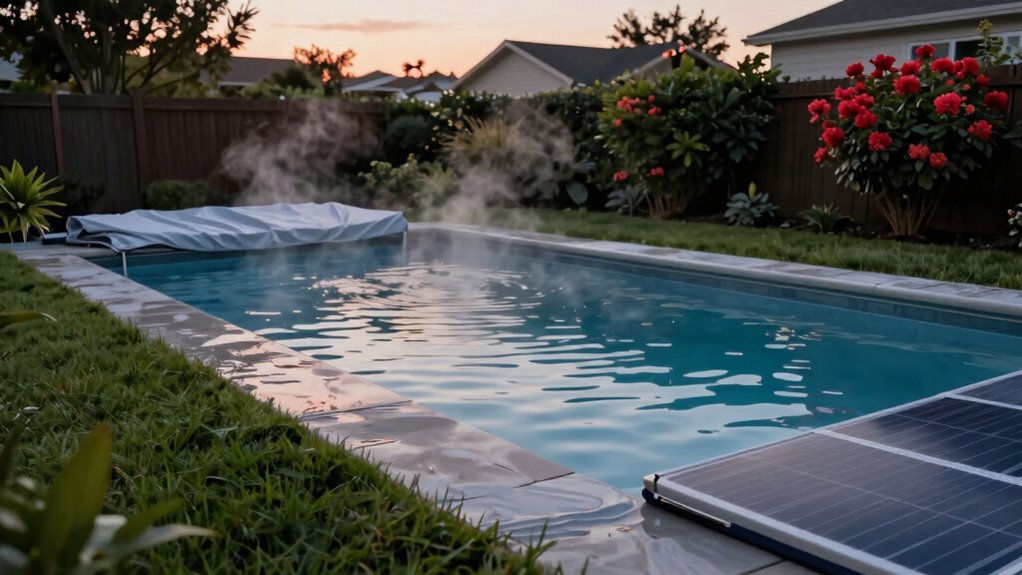
If you’ve been surprised by how quickly your pool heat vanishes, you’re not alone. Many pool owners find themselves puzzled when their heated water cools down faster than expected, especially during the shoulder seasons. The good news is that understanding what’s behind this rapid heat loss can help you take effective steps to improve efficiency and extend your swimming season.
One of the main reasons your pool loses heat faster than anticipated is due to inadequate insulation and poor heat retention. Without proper insulation around the pool and plumbing, heat escapes into the surrounding air and ground more quickly. This problem is compounded if your pool’s cover isn’t doing its job or if it’s not used consistently. Using an energy efficient cover can considerably slow down heat loss, making your heating system work less hard and saving you money. Seasonal maintenance also plays a crucial role here; inspecting and repairing leaks, cracks, or gaps in your pool’s structure ensures that heat isn’t escaping through those pathways. Regular maintenance keeps your pool well-sealed and maximizes heat retention throughout the year. Additionally, proper pool insulation can help trap heat more effectively, further reducing heat loss. Ensuring that the pool’s cover and insulation work together optimally can dramatically improve heat retention.
Proper insulation, a good cover, and regular maintenance are key to retaining heat and saving energy.
External factors like wind, air temperature, and humidity can accelerate heat loss, especially if your pool is exposed or not shielded properly. Wind, in particular, strips away heat from the surface, making it necessary to invest in windbreaks or enclosures. These barriers improve heat retention and can reduce your pool’s reliance on continuous heating, further enhancing your energy efficiency. Additionally, monitoring your pool’s water temperature and adjusting your heater accordingly helps prevent unnecessary energy consumption, which contributes to quicker heat loss if left unchecked. Effective pool insulation can also play a significant role in reducing heat loss and maintaining a consistent temperature. Implementing windbreaks or enclosures can be an effective strategy for heat retention.
Your choice of heating system also affects how long your pool retains heat. Older, inefficient heaters tend to lose effectiveness and require more energy to maintain the desired temperature. Upgrading to a modern, energy-efficient model can make a notable difference. Remember, seasonal maintenance isn’t just about cleaning; it’s about ensuring your entire system functions at its best. Regularly checking filters, valves, and the heater itself helps identify issues early before they cause excessive heat loss. Proper pool insulation can significantly enhance your pool’s ability to hold onto heat. Moreover, ensuring that all parts of your system are properly insulated helps maximize overall heat retention.
All these factors combined—proper insulation, consistent use of energy efficient solutions, and diligent seasonal maintenance—are key to keeping your pool warmer longer. When you pay attention to these details, you’ll find your pool stays heated more effectively, reducing your energy bills and frustration. With a proactive approach, you can enjoy a comfortably warm pool throughout the season without constantly battling rapid heat loss.
Products Worth Considering

eufy Security eufyCam C37 4-Camera Kit with 360° Pan and Tilt

LG C2 Series 65-Inch OLED evo 4K Smart TV (OLED65C2PUA, 2022)

eufy E25 Robot Vacuum and Mop Combo with HydroJet Roller Mop
As an affiliate, we earn on qualifying purchases.
Frequently Asked Questions
How Can I Tell if My Pool Heater Is Working Efficiently?
You can tell if your pool heater is working efficiently by checking its performance regularly. Guarantee proper pool heater maintenance by cleaning filters and inspecting for leaks. Keep an eye on energy efficiency by monitoring energy bills and temperature consistency. If the heater struggles to maintain your desired temperature or runs excessively, it’s time for a professional tune-up. Proper maintenance boosts efficiency, saves energy, and keeps your pool comfortably heated.
Does Weather Impact How Quickly Pool Heat Disappears?
Weather patterns and sun exposure act like invisible hands, tugging at your pool’s warmth. Cooler weather and windy days whisk heat away faster, while overcast skies let your pool’s heat slip silently into the air. Sunny days, on the other hand, act like a warm hug, helping your pool stay cozy longer. So, yes, weather considerably impacts how quickly your pool heat disappears, making it essential to adjust your heating strategies accordingly.
Can Pool Cover Type Affect Heat Retention?
Yes, the type of pool cover affects heat retention. Cover insulation varies depending on material permeability; thicker, well-insulated covers trap more heat and reduce energy loss. Solid covers with low permeability prevent heat from escaping, while mesh covers allow some heat to escape, making them less effective. Selecting a cover with high insulation and low permeability guarantees your pool retains heat longer, saving you energy and money.
Are There Specific Times of Day When Heat Loss Is Faster?
You might notice heat loss peaks around late afternoon and early evening. Studies show evaporation rates increase when the sun’s rays are strongest, typically midday, causing significant heat loss. Sunlight absorption during peak sunlight hours warms the water, but as the sun sets, heat escapes more quickly. To minimize this, consider using a cover during these times, trapping heat and reducing evaporation, keeping your pool warmer longer.
How Often Should I Check for Leaks to Prevent Heat Loss?
You should check for leaks regularly as part of your pool maintenance routine, ideally once a month. Frequent leak detection helps prevent unnecessary heat loss, saving energy and money. Look for wet spots around the pool, decreased water levels, or unusual costs. If you notice anything suspicious, address it promptly to maintain efficient heating. Consistent leak detection guarantees your pool stays warm and reduces the risk of costly repairs down the line.
Conclusion
So, if your pool heat seems to vanish faster than your favorite ice cream on a hot day, don’t panic—you’re not losing your mind! It’s probably just the sneaky effects of wind, evaporation, or tiny temperature leaks that are draining your warmth like a thief in the night. Keep a close eye, insulate well, and maybe invest in a cover. Otherwise, you’ll be swimming in chilly waters before you know it—faster than you can say, “Where did my heat go?”