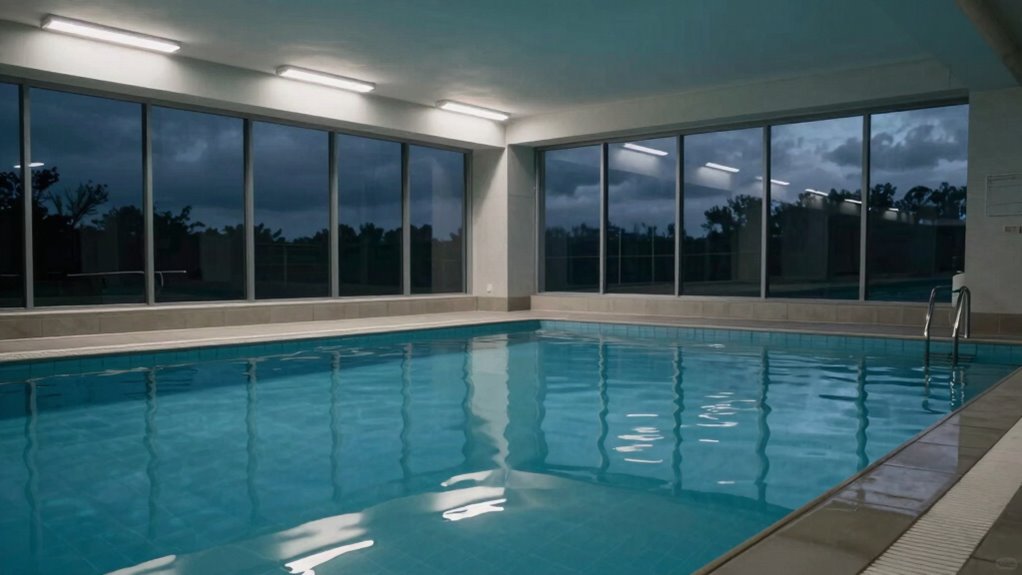
Indoor pools have unique energy issues because keeping the right temperature and humidity requires advanced ventilation, insulation, and heating systems. You need to control moist air while preventing heat loss, which can make your energy bills skyrocket. Inefficient ventilation or poor insulation forces heaters to work harder, wasting energy. If you want to discover how these challenges can be managed effectively, there’s more to uncover below.

Get pool and patio gear delivered free — and shop member deals
- Fast, free delivery on millions of items
- Access to Prime Big Deal Days deals on October 6–7
- Prime Video, Amazon Music and more included
Key Takeaways
- Indoor pools require continuous heating and humidity control, leading to high energy consumption compared to outdoor pools.
- Efficient ventilation is critical to prevent humidity buildup, but often results in heat loss and increased energy use.
- Maintaining a comfortable indoor environment demands substantial insulation and sealing, adding to energy challenges.
- Dehumidification systems are energy-intensive, especially without optimized ventilation and insulation strategies.
- Balancing air quality, humidity, and temperature indoors creates complex energy management issues unique to indoor pools.
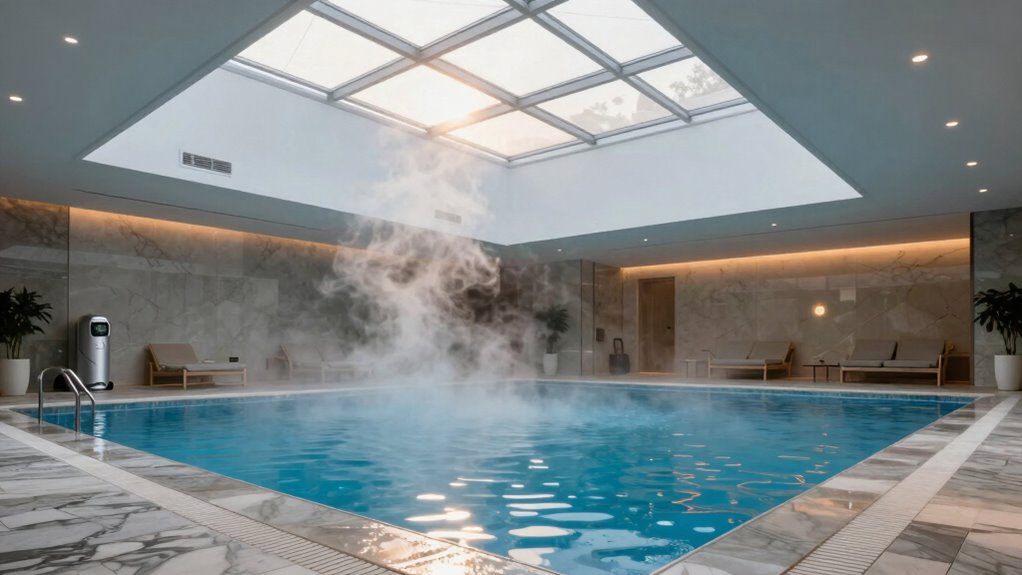
Indoor pools offer the convenience of swimming year-round, but they also come with significant energy challenges. Maintaining a comfortable environment inside the pool area demands a lot of heating, ventilation, and humidity control. Without proper attention to ventilation efficiency, the entire system can become inefficient, wasting energy and increasing costs. You need to guarantee that moist air is effectively exchanged with fresh, dry air to prevent humidity buildup, which can strain your heating system and create discomfort. An inefficient ventilation system forces your heater to work harder to maintain the desired temperature, leading to unnecessary energy consumption.
One of the most effective ways to combat this is by investing in high-quality ventilation efficiency. Properly designed ventilation systems extract humid air without letting heat escape, striking a balance between air quality and energy use. This way, you reduce the workload on your heating system, saving energy and lowering your bills. You should also pay close attention to insulation techniques when building or renovating your indoor pool. Good insulation traps heat, reducing the amount of energy needed to keep the space warm. Walls, ceilings, and floors need to be insulated effectively to prevent heat loss. Without proper insulation, your heating system works overtime, which increases energy consumption and operational costs. Incorporating insulation techniques can significantly improve overall energy performance, especially when combined with airtight sealing strategies.
Beyond insulation, you can improve energy efficiency by sealing gaps and leaks around windows, doors, and ventilation ducts. These small leaks can lead to significant heat loss over time, making your heating system work harder than necessary. Additionally, consider using energy-efficient heating systems such as heat pumps or solar pool heaters, which can dramatically cut your energy use. Pairing these with advanced insulation techniques ensures your indoor environment stays warm without excessive energy input. Implementing smart controls can also optimize system operation by adjusting heating and ventilation based on real-time conditions, further enhancing efficiency.
It’s also important to recognize that humidity plays a critical role in your indoor pool’s energy profile. High humidity levels require constant dehumidification, which can be energy-intensive. Installing dehumidifiers that are appropriately sized for your space helps reduce the overall energy burden. When combined with effective ventilation and insulation strategies, these measures create a more sustainable and cost-effective indoor pool environment. Furthermore, integrating biodiversity-conscious technologies can enhance the sustainability of your indoor pool setup by reducing its overall environmental impact.
In the end, the key to tackling the unique energy problems of indoor pools lies in optimizing ventilation efficiency and implementing robust insulation techniques. These measures work together to reduce heat loss, minimize humidity-related energy drain, and lower your overall operating costs. By paying attention to these details, you’ll enjoy your indoor pool comfortably and economically year-round.
As an affiliate, we earn on qualifying purchases.
Frequently Asked Questions
How Do Indoor Pools Impact Indoor Air Quality?
Indoor pools can negatively impact your indoor air quality by releasing chemical fumes from disinfectants like chlorine into the air. These fumes can cause respiratory issues, eye irritation, and allergies over time. Poor ventilation worsens the problem, trapping fumes and moisture. To protect your health, make certain proper ventilation, use alternative sanitizers, and regularly maintain your indoor pool system. This helps keep the air cleaner and safer for everyone.
What Are the Best Energy-Efficient Heating Options for Indoor Pools?
You should consider using high-efficiency heat pumps or solar pool heaters, as they offer excellent heating efficiency. Proper pool insulation is essential—insulating the pool and surrounding areas reduces heat loss, saving energy. Covering your pool when not in use also helps retain heat. Combining these options guarantees your indoor pool stays warm efficiently, minimizes energy costs, and reduces environmental impact.
How Does Humidity Affect Indoor Building Structures?
Humidity impacts indoor building structures by causing moisture to penetrate building materials, leading to wood warping, mold growth, and deterioration. As you control moisture effectively, you protect your building from these issues. Proper moisture control techniques, like dehumidifiers and vapor barriers, help maintain stable humidity levels, safeguarding your structure. Using appropriate building materials designed for high-humidity environments further reduces damage, ensuring your indoor space remains durable and healthy.
Are There Eco-Friendly Ventilation Systems for Indoor Pools?
Think of eco-friendly ventilation systems for indoor pools as the lungs of a building, breathing in fresh air and filtering out moisture. You can choose systems with eco-friendly filtration and incorporate sustainable materials to reduce environmental impact. These systems efficiently manage humidity and indoor air quality, cutting energy use. By opting for sustainable options, you create a healthier environment while lowering your carbon footprint, making your indoor pool more environmentally friendly.
What Maintenance Practices Reduce Energy Consumption in Indoor Pools?
You can reduce energy consumption in indoor pools by maintaining proper chemical balance and optimizing water circulation. Regularly testing and adjusting pH levels prevents unnecessary filtration work, saving energy. Efficient water circulation ensures even heating and reduces the workload on your pool’s heating system. Additionally, cleaning filters regularly and checking equipment for leaks or inefficiencies helps keep energy use low, making your indoor pool more eco-friendly and cost-effective.
As an affiliate, we earn on qualifying purchases.
Conclusion
So, while indoor pools might seem like a cozy retreat, they do come with their own subtle energy quirks. By understanding these gentle challenges, you can find smarter ways to enjoy your aquatic space without overburdening your energy bills. Embracing some simple upgrades and mindful habits can turn your pool into a more harmonious part of your home. After all, a little extra care goes a long way in keeping your indoor oasis both beautiful and efficient.
As an affiliate, we earn on qualifying purchases.
insulation for indoor swimming pool
As an affiliate, we earn on qualifying purchases.
As an affiliate, we earn on qualifying purchases.
Fall Picks
fall essentials
As an affiliate, we earn on qualifying purchases.