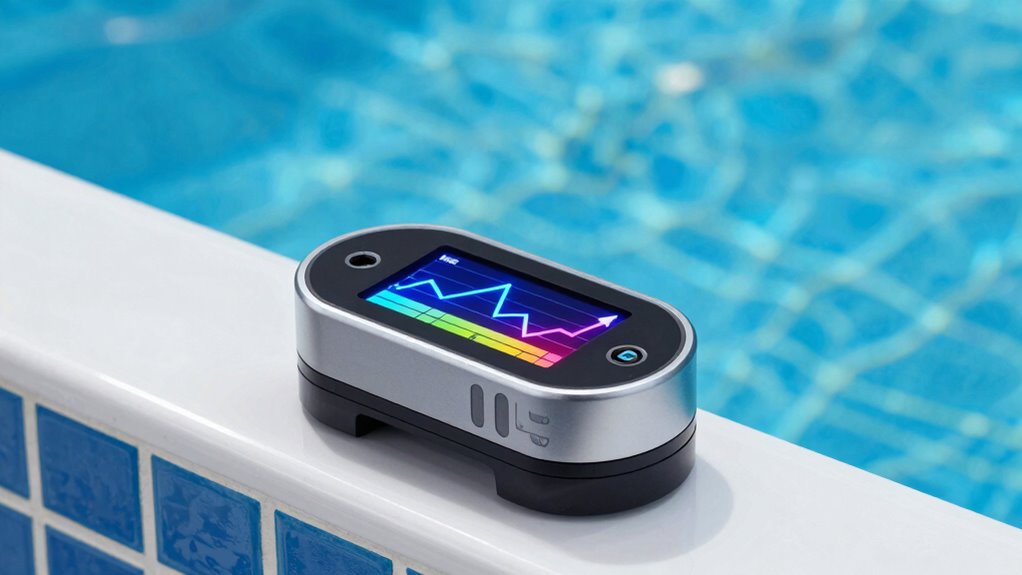
To interpret trend lines from digital pool sensors like a pro, focus on the overall shape and pattern of the data. Consistent, smooth lines indicate stable water chemistry, while jagged or irregular patterns suggest issues requiring attention. Look for sudden spikes or dips, which could signal imbalances or equipment problems. Regularly calibrated sensors provide trustworthy data, making it easier to spot deviations. Keep an eye on preset thresholds to catch problems early—if you keep going, you’ll uncover expert tips to optimize your pool maintenance.

Get pool and patio gear delivered free — and shop member deals
- Fast, free delivery on millions of items
- Access to Prime Big Deal Days deals on October 6–7
- Prime Video, Amazon Music and more included
Key Takeaways
- Ensure sensors are properly calibrated to obtain accurate and trustworthy trend data.
- Observe the overall shape and pattern—smooth lines indicate stability, jagged lines suggest fluctuations.
- Identify sudden spikes or dips as potential issues requiring immediate attention.
- Compare current data against normal parameter ranges to detect abnormalities.
- Use consistent baseline readings and preset thresholds to interpret changes and decide on maintenance actions.
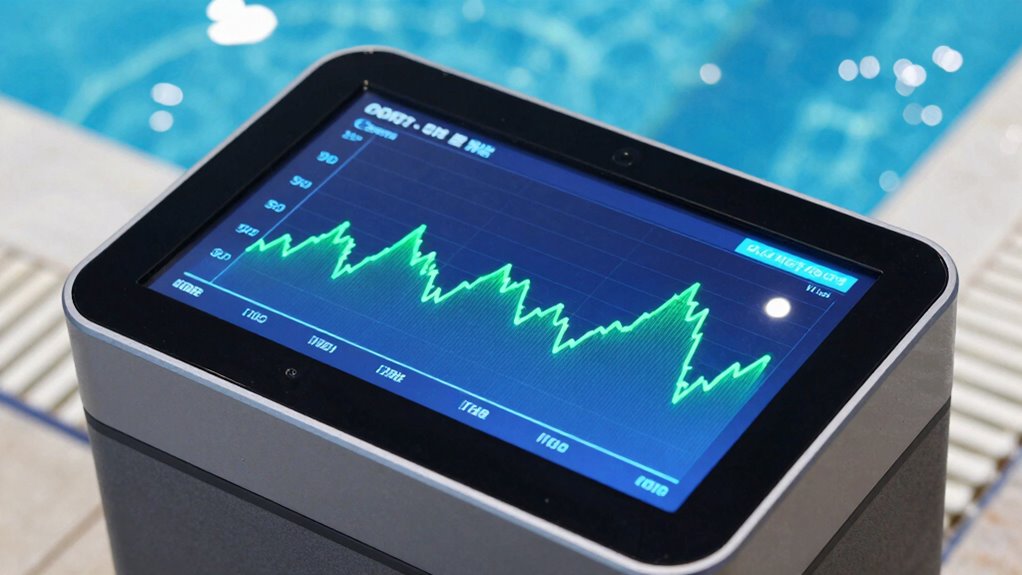
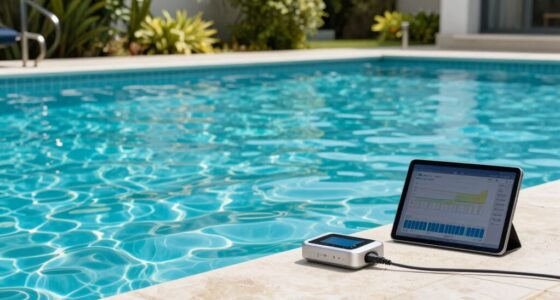
Understanding how to read trend lines from digital pool sensors can considerably improve your pool maintenance routine. These trend lines display real-time data that shows how your pool’s water parameters fluctuate over days or weeks. When you interpret these lines correctly, you gain valuable insights into your pool’s health, helping you identify issues before they become costly problems. To do this effectively, you need to grasp the importance of sensor calibration and data interpretation. Sensor calibration ensures that your digital sensors provide accurate readings, which is crucial for reliable trend analysis. If your sensors aren’t properly calibrated, the data might be skewed, leading you to make unnecessary adjustments or overlook real problems. Regular calibration involves following your sensor manufacturer’s instructions, often requiring you to compare sensor readings against known standards or reference solutions. Once calibrated, your sensors will track parameters like pH, chlorine levels, alkalinity, and temperature more accurately, making your trend lines trustworthy. Additionally, understanding sensor calibration as a fundamental step is key to ensuring your data stays reliable over time. Properly calibrated sensors also help in establishing accurate baseline readings, which are essential for detecting meaningful changes in your water chemistry. Recognizing the importance of data consistency can help you avoid misinterpreting fluctuations caused by calibration drift or environmental factors.
When you look at the trend lines, start by examining the overall shape and pattern of the data. Are the readings steady, or do they fluctuate wildly? Consistent, smooth lines indicate stable water chemistry, while jagged or irregular lines suggest that something’s off. Pay attention to sudden spikes or dips, as they can signal a problem—perhaps a chemical imbalance, equipment malfunction, or contamination. The key is to interpret these patterns within the context of your maintenance routine. For instance, if your pH trend line shows a gradual increase over several days, you know it’s time to add pH reducer. Conversely, if chlorine levels suddenly drop, it might mean your sanitizer is depleting faster than usual, prompting you to check your chlorinator or shock your pool. Recognizing normal parameter ranges helps you better understand when your data indicates an issue rather than normal fluctuation. Data interpretation also involves understanding the normal range for each parameter and recognizing deviations. Many digital sensors come with preset thresholds, but customizing these to your pool’s specific needs yields more precise trend analysis. If you notice the trend line approaching or crossing these thresholds, it’s a cue to take action. Over time, consistent data interpretation helps you predict future issues, allowing preventive measures rather than reactive fixes. Fundamentally, your goal is to read the trend lines not just as numbers but as signals of your pool’s overall condition. With proper sensor calibration and a keen eye for data interpretation, you transform raw data into a powerful tool for maintaining crystal-clear water and extending your pool’s lifespan.
digital pool sensor calibration kit
As an affiliate, we earn on qualifying purchases.
As an affiliate, we earn on qualifying purchases.
Frequently Asked Questions
What Are the Common Mistakes to Avoid When Interpreting Trend Lines?
When interpreting trend lines, avoid common mistakes like ignoring sensor drift, which can skew data accuracy over time. Don’t overlook the importance of data smoothing; it helps you see true patterns rather than noise. Also, avoid jumping to conclusions based on short-term fluctuations. Regularly calibrate sensors and analyze long-term trends to guarantee your readings are reliable. Staying vigilant about these factors improves your understanding and decision-making.
How Often Should I Review My Pool Sensor Trend Data?
You should review your pool sensor trend data at least weekly to keep up with changing conditions, especially during peak swimming seasons. Regular reviews help guarantee ideal pool maintenance and sensor accuracy. About 60% of pool owners find that consistent monitoring prevents costly issues. By staying on top of your data, you catch problems early, maintain water quality, and extend your sensor’s lifespan, ultimately saving you time and money.
Can Trend Lines Predict Future Pool Water Issues?
Trend lines can help predict future pool water issues by showing patterns in water temperature and pool chemical levels. If you notice a steady rise in water temperature or fluctuations in chemical levels, it indicates potential problems ahead. By monitoring these trends regularly, you can proactively adjust chemicals or manage water temperature, preventing issues like algae growth or pH imbalance, ensuring your pool stays clean and healthy.
What Tools Are Best for Analyzing Sensor Data?
You should use tools that prioritize sensor accuracy and data visualization, like advanced software platforms designed for pool management. For example, digital dashboards often feature real-time graphs that make it easy to interpret sensor data. An interesting stat: 85% of pool professionals find visual data analysis helps them predict issues early. These tools enable you to spot trends quickly, ensuring your pool stays clean and safe with minimal effort.
How Do Sensor Calibration Errors Affect Trend Line Accuracy?
Sensor calibration errors, often caused by sensor drift or inaccuracies in calibration, can considerably impact the accuracy of trend lines. When calibration isn’t precise, data points may shift, leading you to misinterpret water quality or system performance. To maintain trend line reliability, regularly check calibration accuracy and address sensor drift promptly, ensuring your sensor data remains consistent and trustworthy for making informed decisions.
As an affiliate, we earn on qualifying purchases.
Conclusion
By mastering how to read trend lines from your digital pool sensors, you’ll confidently monitor your pool’s health and catch issues early. Don’t let the data overwhelm you; instead, picture yourself quickly spotting a rising pH level or dropping chlorine — and taking action before problems escalate. With a little practice, you’ll turn complex graphs into clear insights, ensuring your pool stays pristine and inviting all season long.
As an affiliate, we earn on qualifying purchases.
As an affiliate, we earn on qualifying purchases.
Fall Picks
fall essentials
As an affiliate, we earn on qualifying purchases.