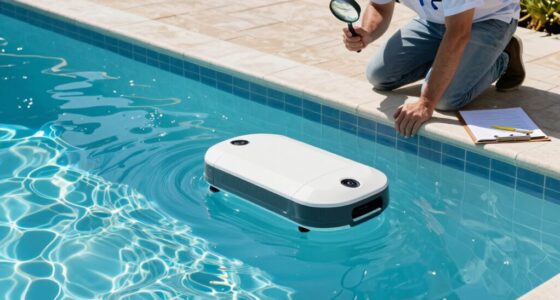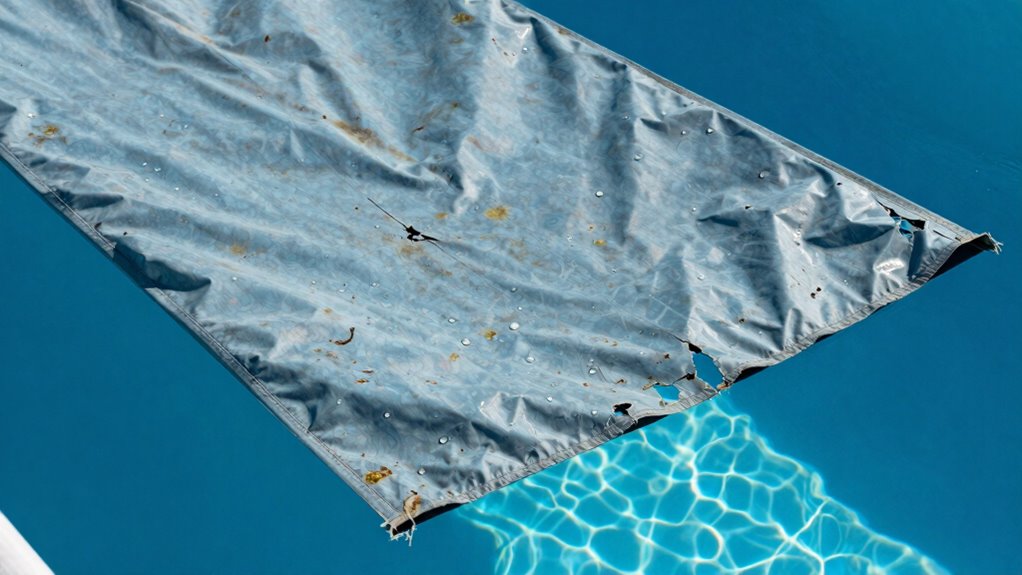

To prevent your pool cover from wearing out quickly, avoid neglecting chemical balance, regular cleaning, and proper storage. Failing to check chlorine and pH levels can weaken materials, while dirt and debris cause mold and tears. Rough handling and improper folding during off-season storage lead to rips and cracks. Skipping inspections or ignoring signs of damage also shortens its lifespan. Keep these mistakes in mind, and you’ll find tips to extend your cover’s durability if you keep exploring.
Key Takeaways
- Neglecting regular water chemistry checks can weaken cover materials and promote deterioration.
- Failing to clean debris and address tears promptly accelerates cover wear and damage.
- Improper storage, such as exposure to weather or rough folding, shortens cover lifespan.
- Skipping routine inspections leads to missed early damage signs and costly repairs.
- Rough handling during installation, removal, or storage causes unnecessary stress and tears.
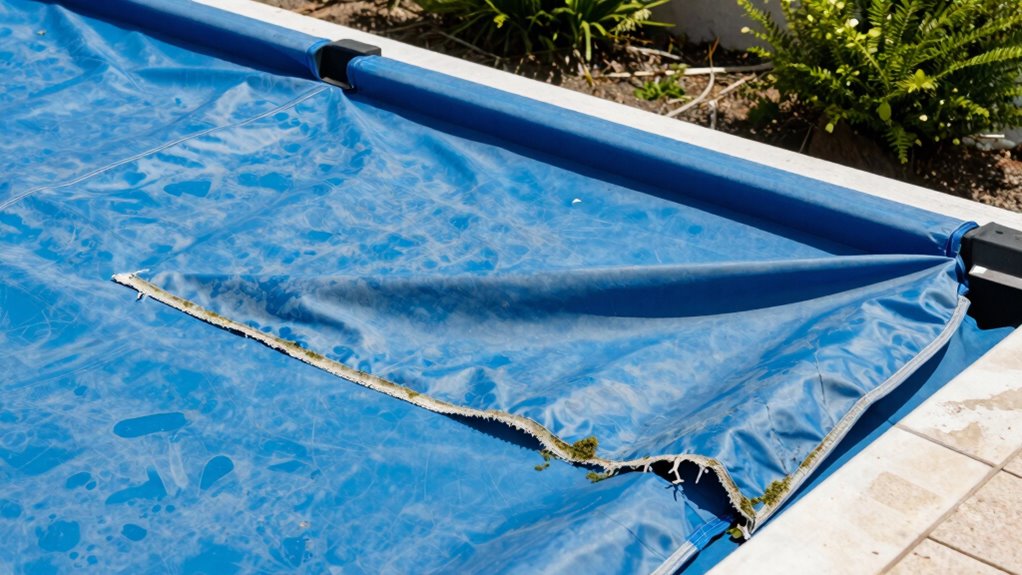
Are you making common mistakes with your pool cover that could lead to costly repairs or safety hazards? Many pool owners overlook the importance of proper cover maintenance, which can drastically shorten the lifespan of your cover. One of the biggest mistakes is neglecting to regularly check and maintain the chemical balance of your pool water. An unbalanced chemical environment can cause the pool cover material to degrade faster, especially if you’re dealing with high levels of algae, bacteria, or mineral buildup. When chlorine or pH levels are off, they can weaken the fabric or plastic, leading to tears, cracks, and premature deterioration. Keeping the water properly balanced isn’t just about clean water; it’s a key step to extending your cover’s life. Proper water chemistry management plays a crucial role in preserving the integrity of your cover material. Additionally, maintaining consistent chemical levels can prevent corrosion and other damage to the cover’s components.
Another common error is failing to clean your cover regularly. Dirt, leaves, and debris accumulate on the surface, trapping moisture underneath. This trapped moisture can promote mold growth and cause the cover to deteriorate more quickly. Regular cover maintenance involves removing debris and rinsing the cover with water to prevent buildup. Additionally, if you notice any tears or signs of wear, address them immediately. Small issues can escalate into bigger problems if left unchecked, forcing you to replace the entire cover much sooner. Routine cleaning also helps identify problems early, saving money and prolonging the life of your cover.
Many people also underestimate the importance of proper cover storage during the off-season. Leaving your cover exposed to harsh weather conditions can accelerate wear and tear. When you’re not using your cover, make sure it’s thoroughly cleaned and dried before storing it in a cool, dry place. Proper storage helps protect the material from UV damage and extreme temperature fluctuations, which can weaken it over time. Also, avoid dragging or folding the cover roughly, as this can cause unnecessary stress points that lead to rips and tears. Using appropriate storage techniques minimizes damage during the off-season and extends your cover’s lifespan.
A significant mistake is ignoring the importance of routine inspections. Skipping regular checks can mean missing early signs of damage or chemical imbalance issues. By inspecting your cover weekly, you can catch problems before they become costly repairs. This proactive approach allows you to spot loose straps, tears, or areas where the cover might be failing and take corrective action promptly. Regular inspections also help you stay aware of the overall condition of your cover, preventing unexpected failures.
Ultimately, neglecting cover maintenance and ignoring the importance of chemical balance can shorten your pool cover’s lifespan dramatically. Invest time in routine cleaning, chemical testing, and inspections, and handle your cover with care during storage and use. Doing so not only saves you money but also ensures your pool remains safe, clean, and protected year-round. Proper care and maintenance are essential to maximize your cover’s durability and safety.

In The Swim Pool Basic Opening Chemical Start Up Kit – Above Ground and In-Ground Swimming Pools – Up to 7,500
- Dual-Purpose Use: Start-up or all-season water balancing
- Includes Sodium Dichlor: 99% sodium dichlor for clean water
- Water Clarifier: Keeps water crystal clear and filters efficiently
As an affiliate, we earn on qualifying purchases.
As an affiliate, we earn on qualifying purchases.
Frequently Asked Questions
How Often Should I Replace My Pool Cover?
You should replace your pool cover every 5 to 10 years, depending on the pool cover types and how well you perform cover maintenance. Regularly inspect for tears, mold, or fading, and clean it as recommended. Proper maintenance extends its lifespan, but exposure to harsh weather or UV rays can shorten it. Keep up with cover care, and you’ll get the most out of your investment before replacement becomes necessary.
Can Improper Storage Damage the Cover?
Yes, improper storage can damage your pool cover. If you don’t store it correctly, the cover material can tear, crack, or become moldy. Always clean the cover thoroughly and dry it before storage. Keep it in a cool, dry place away from direct sunlight and extreme temperatures. Good storage conditions help extend your cover’s lifespan and maintain its effectiveness for future seasons.
Are There Specific Covers Better for Winter?
Ever wondered which cover stands up best to winter’s chill? For winter, you should choose seasonal cover options designed specifically for harsh conditions. These covers often have thicker materials and better UV resistance, boosting seasonal cover longevity. Investing in the right winter cover helps protect your pool during the cold months, ensuring it stays in good shape and lasts longer. Are you prepared to select the best cover for your winter needs?
How Does Chemical Imbalance Affect the Cover?
Chemical imbalance can profoundly impact your pool cover’s lifespan by accelerating cover deterioration. When the chemical balance is off, such as high chlorine or pH levels, it can weaken the material, causing tears or brittleness over time. You should regularly monitor and adjust your pool’s chemical levels to maintain proper balance, which helps preserve your cover’s integrity and extends its life, saving you money and effort in the long run.
What’s the Best Way to Clean My Pool Cover?
To clean your pool cover effectively, focus on proper pool cover maintenance through gentle cleaning techniques. Remove debris with a leaf blower or soft brush, then wash the cover with a mild detergent mixed with water. Avoid harsh chemicals or abrasive tools that can damage the material. Rinse thoroughly and allow it to air dry. Regular cleaning like this prolongs your cover’s lifespan, keeping it functional and in good condition longer.

BioGuard Stow Away Cleaner & Deodorizer for Pool Cover, 1 Quart, Single
- Cleans and deodorizes pool covers: Prepares covers for storage and prevents sticking
- Removes stains and soil: Extends the life of pool covers and accessories
- Versatile for poolside items: Suitable for solar covers, umbrellas, and more
As an affiliate, we earn on qualifying purchases.
As an affiliate, we earn on qualifying purchases.
Conclusion
So, you’ve learned the mistakes that can quickly shorten your pool cover’s life. Ironically, it’s often the little things—neglecting regular maintenance or choosing the wrong cover—that do the most damage. Think you’re saving time now? In reality, ignoring these tips might cost you far more in replacements later. Don’t let avoidable mistakes turn your pool cover into a short-lived investment. A little care today could save you big bucks tomorrow—don’t let irony be your downfall!

Adnee Pool Safety Cover Stowaway Bag with 4 Carry Handles,48×57 Inch Waterproof Pool Cover Storage Bag, Pool Cover Stowaway Bags for Pool Covers Packing
- Large Capacity: 48×57 inch pool cover storage bag
- Convenient Handles: Four sturdy carry handles for easy transport
- Secure Closure: Zipper closure and drawstring for security
As an affiliate, we earn on qualifying purchases.
As an affiliate, we earn on qualifying purchases.

T-REX Waterproof and Pool Repair Tape – Patch Pool Liner No Kit Needed, Permanent, Works Underwater, Sticks to Wet Surfaces – Clear, 1.88" x 30 ft. (Pack of 1)
- Versatile Repair Tape: Clear, suitable for various surfaces
- Flex-to-Fit Technology: Provides maximum stretch and conformability
- Waterproof and Underwater Use: Seals leaks instantly underwater
As an affiliate, we earn on qualifying purchases.
As an affiliate, we earn on qualifying purchases.