TL;DR

Get pool and patio gear delivered free with Prime
- Fast, free delivery on millions of items
- Prime Video, Amazon Music and more included
- Member-only deals all year
Planet Natural describes a 30-minute first pass for sorting garden tools, cleaning sound equipment and identifying repairs before storage. The time limit is not a promise that tools will dry or repairs and disinfectant treatments will be finished; unsafe tools should be tagged and kept out of use.
Planet Natural has outlined a 30-minute first pass for putting garden tools away: sort them by their condition, clean equipment that is safe to handle and make a repair list for the rest. The guide says the session is an initial assessment, not a guarantee that tools will dry, be repaired or complete any required disinfectant treatment before the half-hour ends.
The guide recommends beginning with a stable, well-lit work surface and basic supplies: a stiff brush, cloths, mild detergent, water and the maintenance instructions for cutting tools. It advises wearing hand protection around sharp edges, using eye protection when brushing rust or debris, and keeping children and pets away from the work area. Tools are sorted into those ready for cleaning and storage, those needing repair or sharpening, and those that should be replaced or assessed later.
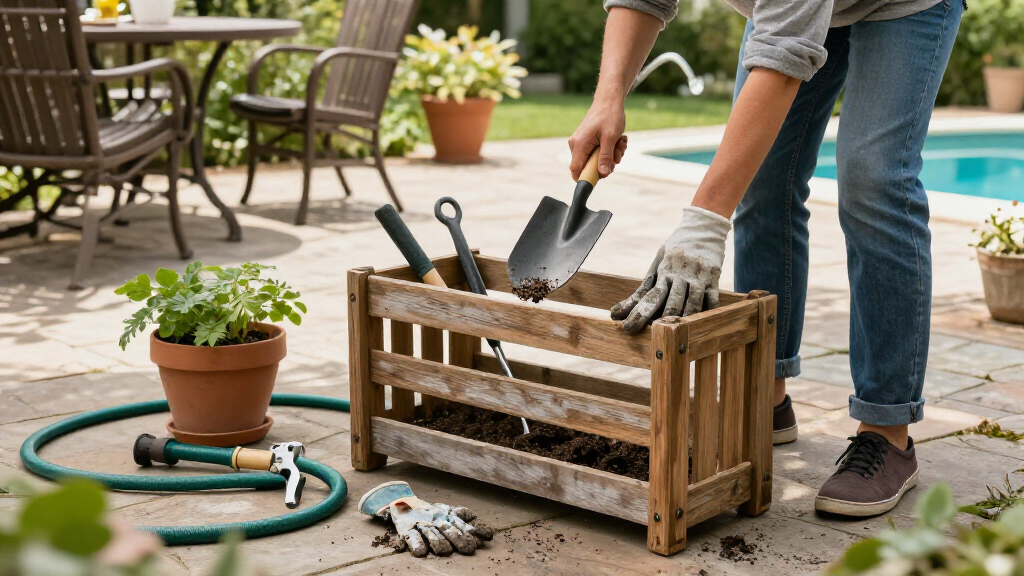
For a soil-covered spade, the report says to remove dry dirt, including material packed around the blade’s socket, wash remaining grime as needed and dry the tool thoroughly. Light surface rust may be removed with a suitable brush or abrasive, but deep pitting or weakened metal calls for assessment rather than cosmetic work. Once dry, metal can be protected with a light application of suitable tool oil, following the maker’s directions and wiping away excess.
For pruners, the guide recommends cleaning plant debris and sap from the cutting head and pivot before inspecting the blades, spring and latch. Use a cleaner compatible with the tool and follow its label and the manufacturer’s service instructions. A failed latch, chipped blade or excessive play may require service or parts. A fork with a loose connection, cracked handle or damaged tines should be removed from circulation until assessed; the guide says not to test a questionable handle by levering against a heavy object.
Preventing Unsafe Tools From Returning
Sorting tools before storage can help prevent a loose-handled fork or faulty pruner from being mistaken for ready-to-use equipment next season. Planet Natural recommends tagging unsafe tools, such as with a “Do not use loose handle” label, and storing them apart from sound equipment. The report says repairable tools should remain out of circulation while their condition is unsafe.
The guide also distinguishes ordinary cleaning from disinfection. Removing visible soil or sap does not establish that a tool is free of plant pathogens. Disinfection may be relevant after work on diseased plants or when moving tools between garden sites, and should follow an appropriate disease-specific method and product instructions. The report notes that required contact time may exceed the 30-minute session.
Products Worth Considering

Dyson Big Ball Multi Floor Canister Vacuum, Yellow

Bose TV Speaker Compact Soundbar with Bluetooth and HDMI-ARC, Black

Roborock Q7 L5 Robot Vacuum and Mop Combo
As an affiliate, we earn on qualifying purchases.
A First Pass, Not a Full Overhaul
The source presents the half-hour as a way to organize the work, not as a universal maintenance schedule or a promise that every tool can be put away immediately. Its sequence begins with triage, followed by cleaning and inspection; sharpening, part replacement and more involved repairs can be scheduled for later. Wet tools need time to dry, and cleaning alone does not address damaged handles or metal.
Planet Natural points readers to University of Minnesota tool-disinfection guidance for further information on removing debris and choosing a disinfectant. It also advises checking the specific product label for compatible surfaces, concentration, application method, wet contact time, rinsing, protective equipment, ventilation and disposal. The source does not provide a single chemical recipe for every tool or plant disease.
Repairs and Treatment Times Vary
The report does not set out a single repair procedure for every tool or identify the condition of any particular reader’s equipment. Whether a handle, blade, socket or fastener is safe depends on its damage and the maker’s instructions; uncertain or structural defects should be assessed rather than concealed with tape or tested under load. The source also gives no universal disinfectant or contact time, because products and disease-control methods differ.
The supplied report does not identify when the article was published. It presents the 30-minute figure as a limit for a first pass, not a measured guarantee that a particular set of tools can be fully cleaned, disinfected, repaired and stored within that period.
Label Repairs Before Storage
After the first pass, keep sound, clean and dry tools separate from equipment awaiting repair or assessment. Make a specific list of needed parts, sharpening or service, and label tools that must not be used. Follow each manufacturer’s maintenance directions, and complete any disinfectant treatment according to its product label, including the required contact time and any rinsing or disposal instructions.
Before returning questionable tools to use, inspect the repaired parts and confirm that latches, handles and working components are secure. The source sets no later deadline for these repairs; it recommends recording outstanding work rather than treating the end of the 30-minute session as proof that every tool is ready.
Key Questions
Does the 30-minute session include every repair and drying time?
No. Planet Natural describes 30 minutes as a first-pass limit. It says drying, replacing damaged handles and completing disinfectant contact times may take longer.
What should happen to a tool with a loose or cracked handle?
Remove it from use, label it clearly and keep it apart from ready-to-use tools. Follow the maker’s repair method or have the tool assessed; do not test a questionable handle by levering against a heavy object.
Does cleaning a pruner disinfect it?
No. The report distinguishes removing visible dirt and sap from disinfection. If disease risk makes disinfection appropriate, use a suitable method and follow the product label, including its required wet contact time.
Can bleach be used to soak all garden tools?
Planet Natural warns that bleach can corrode cutting edges and says it is not an automatic soak for a whole tool collection. Check tool and product guidance for a suitable method, and never mix disinfectants with other cleaners or chemicals.
Source: planetnatural.com