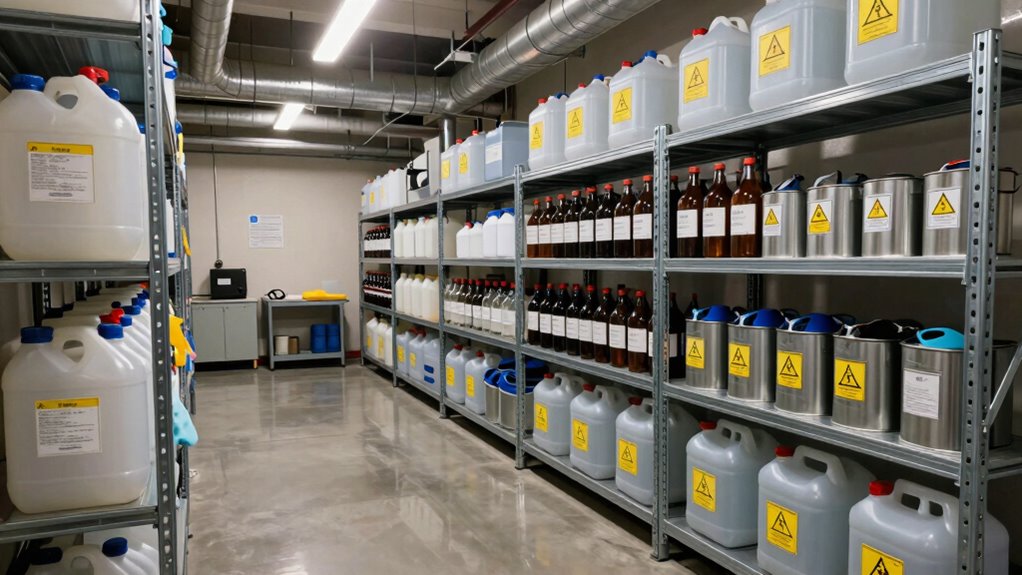

Chemical storage rules influence more property owners than you might think, not just industrial sites or big factories. If you store cleaning supplies, pesticides, or small hazardous chemicals, these regulations still apply. They’re designed to prevent accidents, contamination, and legal trouble. Failing to comply can lead to hefty fines and safety risks for everyone on your property. Understanding how these rules affect you helps keep your property safe and legal—keep going to find out what you might be missing.
Key Takeaways
- Regulations apply to all property owners, including those with small quantities of chemicals, not just industrial or large facilities.
- Non-compliance can lead to significant legal fines and safety hazards, affecting property owners beyond large businesses.
- Proper chemical storage practices are essential for landlords, property managers, and even residential owners to prevent accidents.
- Staying updated on regulations ensures all owners maintain safe environments and avoid costly penalties.
- Implementing safety protocols and equipment benefits a wide range of owners by reducing risks and ensuring legal compliance.
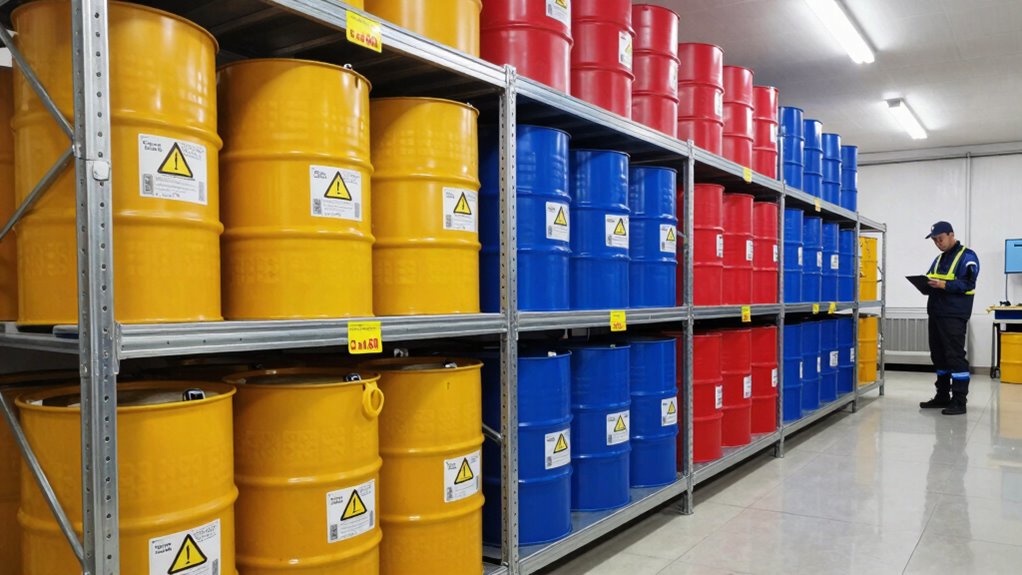
Many property owners overlook how strictly chemical storage regulations affect them, even if they don’t handle hazardous materials regularly. You might think that these rules only apply to industrial sites or large manufacturing facilities, but that’s not the case. Local, state, and federal regulations set specific safety protocols and storage regulations designed to prevent accidents, contamination, and legal issues. These rules impact anyone who stores chemicals—whether it’s cleaning supplies, pesticides, or small quantities of hazardous substances in a workshop or storage closet. Ignoring these regulations can lead to hefty fines, liability issues, or dangerous situations for tenants, employees, or visitors. Recognizing regulatory compliance as a crucial aspect of property management can help you avoid costly mistakes.
Chemical storage rules apply to all property owners, regardless of the quantity of hazardous materials stored.
Understanding how chemical storage rules influence your property involves recognizing the significance of safety protocols. These are detailed procedures meant to minimize risks associated with storing chemicals. Safety protocols include proper labeling, secure containers, adequate ventilation, and appropriate segregation of incompatible substances. If you fail to follow these protocols, you risk chemical spills, fires, or health hazards that could harm anyone on your property. Even small-scale storage must adhere to these safety standards to avoid accidental releases or exposure. Additionally, staying informed about updates to chemical storage regulations can help you maintain compliance and ensure ongoing safety. Being aware of storage requirements can also help you implement effective safety measures from the start. Moreover, understanding how proper storage techniques can reduce risks is essential for comprehensive safety management. Furthermore, using appropriate safety equipment can significantly mitigate potential hazards associated with chemical storage.

VEVOR Flammable Cabinet, 18" x 18" x 35", Yellow
- Construction Material: Double-walled cold-rolled steel
- Fire-Resistant Design: 1-1/2 inch air space for fire resistance
- Durability: Galvanized steel resists rust and dents
As an affiliate, we earn on qualifying purchases.
As an affiliate, we earn on qualifying purchases.
Frequently Asked Questions
Are Home-Based Businesses Affected by Chemical Storage Regulations?
Yes, as a home-based business owner, chemical storage regulations directly impact you. Proper storage is essential for home safety and guarantees your business stays compliant with local laws. Failing to follow these rules could lead to penalties or accidents. You need to understand the specific requirements for storing chemicals safely and securely, so you protect your home, your business, and everyone around you. Staying informed helps you maintain business compliance and a safe environment.
How Often Should Chemical Storage Areas Be Inspected for Compliance?
You should inspect your chemical storage areas at least monthly to guarantee compliance with chemical safety standards. Regular inspections help you identify potential hazards early and verify that storage protocols are properly followed. Keeping a detailed log of inspections can also demonstrate your commitment to safety. Consistent checks protect your property, employees, and the environment, ensuring that chemical storage remains safe and compliant with all regulations.
Do Storage Rules Differ for Expired Versus Active Chemicals?
Storage rules differ for expired versus active chemicals, primarily because expired chemicals no longer meet safety standards, have surpassed their chemical shelf life, and pose increased risks. You should store them separately, label them clearly, and dispose of them according to regulations. Active chemicals require proper, secure storage to maintain their effectiveness, while expired chemicals demand special handling to prevent hazards. Proper storage guarantees safety, compliance, and minimizes environmental impact.
What Penalties Exist for Violating Chemical Storage Regulations?
If you violate chemical storage regulations, you face penalties like hefty fines, legal actions, or even shutdowns. These penalties aim to enforce chemical safety and guarantee storage compliance, protecting both people and the environment. Non-compliance increases risks of accidents, spills, and health hazards. Staying compliant with storage rules safeguards your property, employees, and community, and helps you avoid costly penalties that come with neglecting chemical safety protocols.
Are There Specific Guidelines for Storing Chemicals Outdoors?
Yes, there are specific guidelines for storing chemicals outdoors to guarantee safety. You should prioritize outdoor safety by choosing a secure, well-ventilated area away from direct sunlight and ignition sources. Weather considerations are vital—protect containers from rain, snow, and temperature extremes to prevent leaks or reactions. Use proper containment, like bunds or secondary containment, and make sure the storage area is clearly labeled and accessible only to authorized personnel.

ASEVAT 16.9oz/500ml HDPE Darkroom Chemical Storage Bottles Photographic Plastic Containers with lids Empty Liquid Container for Film Photo Developing Processing Equipment, Laboratories (3pcs)
- Light-Blocking and Durable Material: Black HDPE for UV protection and reuse
- Versatile Chemical Storage: Suitable for various photographic chemicals and samples
- Leak-Proof Screw Cap: Secure seal with aluminum foil liner
As an affiliate, we earn on qualifying purchases.
As an affiliate, we earn on qualifying purchases.
Conclusion
Understanding chemical storage rules is like revealing a hidden map—what you don’t know can lead you astray. By staying informed and compliant, you’re not just avoiding penalties; you’re steering clear of potential disasters. These rules are the guardrails on your journey, guiding you safely through the twists and turns. Don’t let ignorance be the anchor that holds you back. Embrace the knowledge, and keep your operations running smoothly, like a well-oiled machine.

AWF PRO 20 Gallon Universal Spill Kit, 59 Pieces
- Spill Response Kit: Contains absorbent pads, socks, pillows, and accessories
- High Absorbency: Absorbs up to 19.6 gallons of liquids
- Universal Sorbents: Captures oils, fuels, coolants, and chemicals
As an affiliate, we earn on qualifying purchases.
As an affiliate, we earn on qualifying purchases.

NFPA 704 Chemical Hazard Labels SDS Stickers for Safety Data
- Targeted for safety professionals: Ideal for labs, warehouses, and small businesses
- NFPA 704 color-coded system: Displays health, flammability, instability, hazards
- Customizable labeling: Write-in spaces for chemical details
As an affiliate, we earn on qualifying purchases.
As an affiliate, we earn on qualifying purchases.