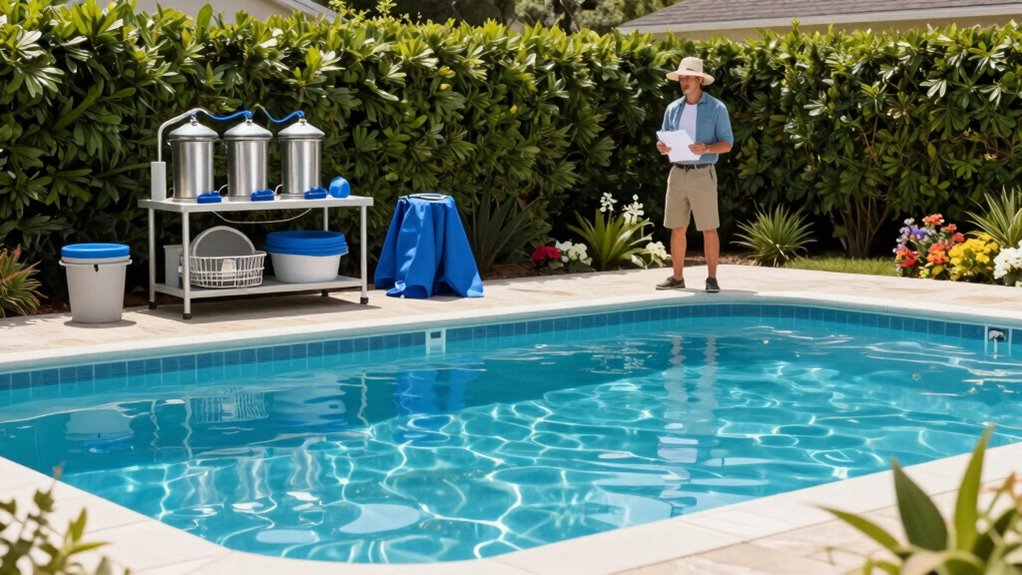

To prepare for a pool inspection without panic, focus on thorough cleaning, checking safety equipment, and verifying chemical levels. Create a detailed maintenance checklist to stay organized and guarantee everything is in order. Confirm fencing, gates, and safety gear are functional and accessible. Keep clear records of water tests and maintenance activities, and stay updated on local safety regulations. If you keep these steps in mind, you’ll feel more confident and ready for anything the inspector asks about.

Get pool and patio gear delivered free with Prime
- Fast, free delivery on millions of items
- Prime Video, Amazon Music and more included
- Member-only deals all year
Key Takeaways
- Review and update all maintenance records to demonstrate proper upkeep and compliance.
- Conduct a thorough visual inspection to identify and fix visible issues proactively.
- Verify all safety equipment and features are functional, accessible, and compliant with regulations.
- Calmly walk through the inspection process, familiarizing yourself with local safety standards.
- Keep the area tidy, organized, and free of hazards to create a confident, inspection-ready environment.
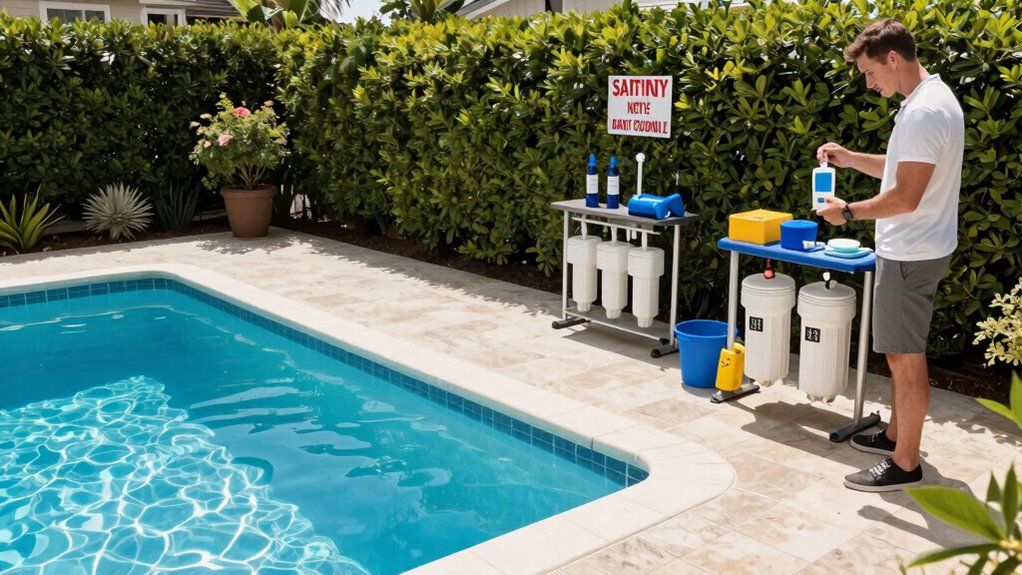
Preparing for a pool inspection can seem intimidating, but with the right steps, you can guarantee everything is in order. The key is to stay organized and proactive, assuring your pool meets all safety standards. Start by creating a thorough maintenance checklist. This checklist should include routine tasks like checking the chemical levels, cleaning filters, skimming debris, and inspecting the overall condition of your pool equipment. Doing this regularly not only keeps your pool safe but also makes the inspection process smoother, as you’ll already have documentation of proper upkeep.
Staying organized with a maintenance checklist ensures a smooth, safe pool inspection process.
Next, focus on pool safety. Inspect all safety features, such as fencing, gates, and locks, ensuring they’re secure and comply with local regulations. Check that safety covers and alarms are functional. Make sure pool ladders and handrails are sturdy and properly installed. If you have life-saving equipment like a floatation device or a first aid kit, verify they’re easily accessible and in good condition. Keeping safety gear up-to-date and visible shows inspectors that you prioritize safety, which can positively influence their assessment.
Review your chemical levels before the inspection. Properly balanced water not only maintains a clean pool but also demonstrates your adherence to safety standards. Test the pH, chlorine, alkalinity, and stabilizer levels, then adjust as needed. If you’re unsure about how to interpret the results, consult your pool maintenance manual or a professional to ensure everything is within the recommended range. Maintaining clear records of these tests can serve as proof that you’re committed to ongoing pool safety and maintenance.
Additionally, check for any visible issues like leaks, broken tiles, or damaged pool surfaces. Repair these problems beforehand to prevent delays during the inspection. Make sure your pool area is tidy — remove clutter, secure loose items, and ensure walkways are clear. A well-kept environment not only makes a good impression but also minimizes hazards. Incorporating proper maintenance procedures will help you stay consistent and prepared for inspections. Staying informed about local regulations and updates can further streamline your preparation process. Being aware of common safety violations can help you address issues proactively and avoid potential penalties.
Furthermore, understanding the proper maintenance procedures ensures you are consistently meeting safety and cleanliness standards, making future inspections even easier. Staying informed about local regulations and updates can further streamline your preparation process.
Finally, familiarize yourself with local pool safety regulations. Knowing what inspectors will be looking for helps you prepare more effectively. Walk through your pool area as if you were the inspector, noting any areas that might raise questions. By staying organized, keeping up with your maintenance checklist, and prioritizing pool safety, you’ll reduce stress and approach the inspection with confidence. Remember, being prepared shows that you care about safety and maintains your pool’s integrity, making the process seamless and less overwhelming.
As an affiliate, we earn on qualifying purchases.
Frequently Asked Questions
What Are Common Reasons for Failed Pool Inspections?
Common reasons for failed pool inspections include safety issues like inadequate fencing or missing safety equipment, and poor equipment maintenance such as malfunctioning pumps or broken filters. You might overlook small safety hazards or delay routine maintenance, which can cause inspection failure. To avoid this, regularly check your pool’s safety features and keep equipment in top condition, ensuring compliance with local regulations and keeping your pool safe and ready for inspection.
How Early Should I Schedule My Pool Inspection?
You should schedule your pool inspection at least a month in advance, giving yourself plenty of time to guarantee pool safety and address any issues. Early scheduling helps you catch maintenance tips before the inspector arrives, avoiding last-minute stress. It also allows for repairs or improvements, making the process smoother. By planning ahead, you create a calm environment, proving that proactive preparation is key to passing with flying colors.
Can I Be Present During the Inspection?
Yes, you can be present during the pool inspection. It’s encouraged to observe the process, but follow pool inspection protocols and inspection safety tips to stay safe. Your presence allows you to ask questions and understand any issues. Be respectful of the inspector’s procedures, stay out of the way, and listen carefully. This proactive approach helps guarantee a smooth inspection and gives you peace of mind about your pool’s safety.
What Documents Should I Prepare Beforehand?
You should prepare your pool safety documents, including proof of recent maintenance and safety checks. Have a thorough maintenance checklist handy to demonstrate your ongoing upkeep. This includes records of chemical levels, filter cleaning, and safety equipment inspections. Being organized shows your commitment to safety and helps the inspector verify your compliance effortlessly. Ensuring these documents are ready can ease your nerves and streamline the inspection process.
How Long Does a Typical Pool Inspection Take?
A typical pool inspection usually takes about one to two hours, but it can vary depending on the pool’s size and condition. As the inspector evaluates pool safety and equipment maintenance, stay attentive and ready for questions or requests. The process moves quickly, so being prepared and organized helps make certain everything runs smoothly. Remember, a thorough check means a safer pool for everyone, so stay calm and cooperative throughout.
As an affiliate, we earn on qualifying purchases.
Conclusion
Remember, staying calm and prepared is key—think of it like having your own personal TARDIS ready for any surprise inspection. Keep your pool clean, check your equipment, and have your paperwork on hand. By taking these simple steps, you’ll walk into the inspection feeling confident, not like a knight unarmed before a dragon. With a little prep, you’ll pass with flying colors and enjoy your pool without worry, just like a well-oiled machine in a steampunk world.
As an affiliate, we earn on qualifying purchases.
As an affiliate, we earn on qualifying purchases.
Columbus Day / Indigenous Peoples' Day Picks
long weekend sales
As an affiliate, we earn on qualifying purchases.