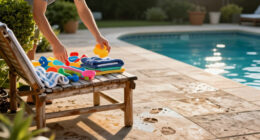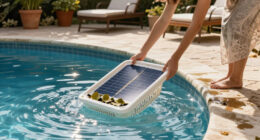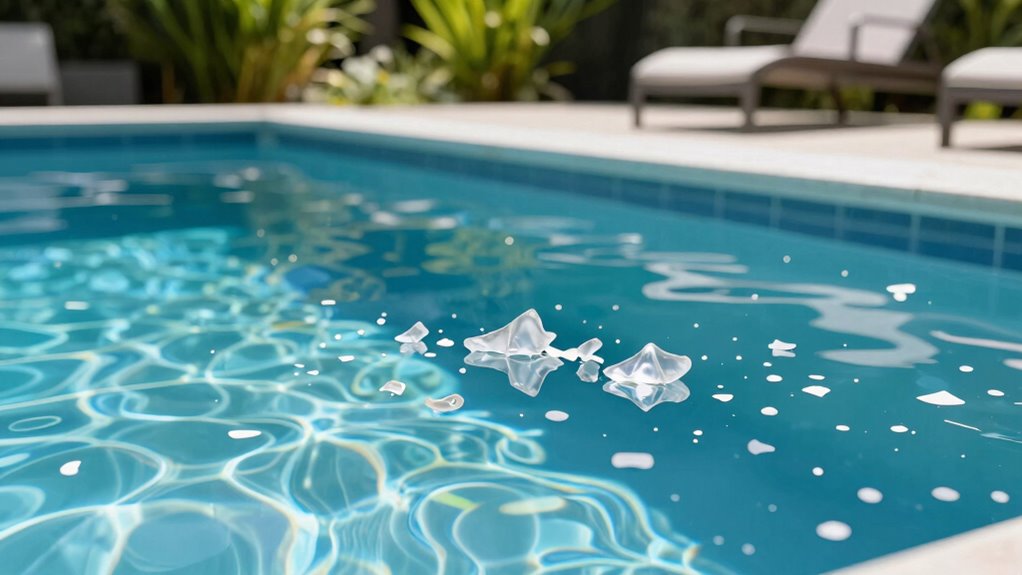

As a pool owner, you should know that covers and accessories made of plastic can shed microplastics over time due to sunlight, water, and wear. These tiny particles often escape filtration and end up in waterways, harming the environment. Regularly inspecting and replacing damaged equipment, using eco-friendly materials, and upgrading to advanced filters can help reduce this pollution. If you want to discover effective ways to minimize microplastic shedding, there’s more to take into account.

Get pool and patio gear delivered free with Prime
- Fast, free delivery on millions of items
- Prime Video, Amazon Music and more included
- Member-only deals all year
Key Takeaways
- Microplastics shed from pool covers, liners, and accessories through wear, tear, and exposure to sunlight and water.
- Damaged or old equipment releases tiny plastic particles that can bypass filtration systems.
- Microplastics from pools can enter waterways and oceans, contributing to environmental pollution.
- Upgrading to advanced filtration systems, like microplastic-specific filters, reduces plastic debris release.
- Regular inspection and eco-friendly replacements help minimize microplastic shedding and environmental impact.
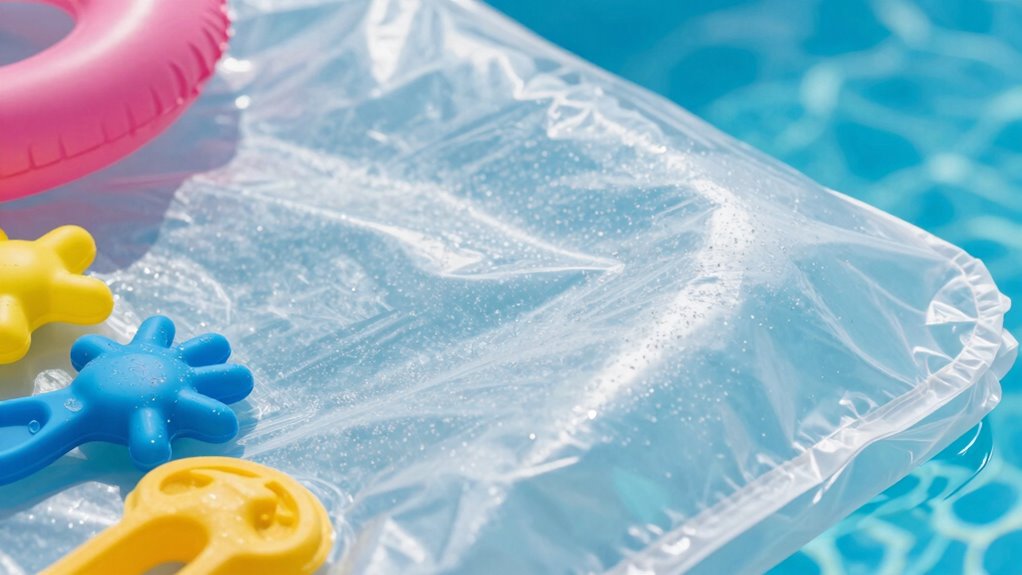
If you own a pool, you might not realize that your covers and accessories can be sources of microplastics entering the environment. Every time you handle or clean your pool equipment, tiny plastic particles can shed from covers, liners, and other accessories. These microplastics are so small that they often go unnoticed, but their environmental impact is considerable. When they wash into your pool’s filtration system, some of these particles can bypass filters, eventually ending up in nearby waterways or even the ocean. Understanding how microplastics escape from pool equipment is essential to reducing their presence and protecting the environment.
The primary concern lies in the shedding of microplastics from pool covers, liners, and accessories made from plastic materials. Over time, exposure to sunlight, water, and physical stress causes these plastics to break down gradually. As a result, tiny particles are released into the water. When you backwash or clean your pool, these particles can be dislodged and dispersed into the environment. While some of these particles are captured by your pool’s filtration methods, many slip through, especially if your system isn’t designed to effectively trap microplastics. This is why understanding and improving filtration methods is critical. Modern filtration systems with finer mesh filters or specialized microplastic filters can substantially reduce the amount of plastic debris that escapes into the environment. Enhanced filtration techniques are becoming increasingly important in combatting microplastic pollution from household sources.
To minimize your pool’s contribution to microplastic pollution, you should regularly inspect your covers and accessories for signs of wear and tear. Replacing damaged equipment promptly prevents excessive shedding of microplastics. Additionally, consider using covers and accessories made from eco-friendly, biodegradable materials—these tend to shed fewer microplastics and break down more safely in the environment. Upgrading your filtration system can also make a notable difference. Look for filtration methods that target tiny particles, such as cartridge filters or advanced microplastic filters, which can trap smaller plastic debris before they exit your system. Routine maintenance, including backwashing and cleaning, should be done carefully to avoid dislodging microplastics and dispersing them into your yard or local water sources. Regularly checking for microplastic shedding from your equipment can help identify when replacements are necessary and prevent larger environmental impacts. Additionally, adopting environmentally friendly practices around pool maintenance can help further reduce your ecological footprint.
Products Worth Considering
LG C2 Series 65-Inch OLED evo 4K Smart TV (OLED65C2PUA, 2022)

Dyson Ball Animal 2 Plus Corded Vacuum

Samsung 42-Inch Class OLED S90F 4K Smart TV (2025)
As an affiliate, we earn on qualifying purchases.
Frequently Asked Questions
Can Microplastics From Pool Covers Affect Nearby Wildlife?
Microplastics from pool covers can indeed affect nearby wildlife. When microplastics shed into the environment, animals may ingest them, risking health issues like blockages or toxicity. This ingestion can disrupt local ecosystems, harming species that rely on clean water sources. As a pool owner, you should be aware that microplastics can contribute to wildlife ingestion and ecosystem impact, emphasizing the importance of using durable, eco-friendly covers and disposing of microplastic debris responsibly.
Are There Eco-Friendly Alternatives to Traditional Pool Covers?
Yes, eco-friendly materials and biodegradable options are available as alternatives to traditional pool covers. These eco-friendly options often use natural fibers or plant-based materials, reducing plastic waste and microplastic pollution. While they may be less durable than conventional covers, advancements in biodegradable technology are making them more practical. By choosing these options, you help protect the environment and minimize the microplastic impact on nearby wildlife.
How Can I Test My Pool Water for Microplastic Contamination?
You can test your pool water for microplastic contamination through specialized water testing kits or laboratory analysis. Look for kits that include filters or filters with small pore sizes to capture microplastics during sampling. Contamination detection involves filtering your water, then examining the filter under a microscope or sending it to a lab for detailed analysis. Regular testing helps you monitor pollution levels and take action if microplastics are present.
Do Microplastics From Covers Pose Health Risks to Swimmers?
Imagine tiny microplastics floating in your pool, quietly posing health risks. These particles can be ingested during swimming or cause skin irritation if they come into contact with your skin. While there’s limited evidence on severe health effects, microplastic ingestion and skin irritation are concerns, especially with frequent exposure. To stay safe, consider regular water testing and using covers that minimize microplastic shedding, protecting both your health and your pool experience.
What Regulations Exist for Microplastic Emissions From Pool Accessories?
Regulations for microplastic emissions from pool accessories are still evolving. You should focus on ensuring your pool’s filtration system effectively captures microplastics, which is essential for regulatory compliance. Look for accessories that meet industry standards for microplastic filtration, and stay updated on local regulations. By choosing eco-friendly products and maintaining proper filtration, you can minimize microplastic release and adhere to current guidelines.
Conclusion
By staying vigilant about microplastics from covers and accessories, you’re like a captain steering through a storm—focused on the horizon and protecting your pool’s health. Regular cleaning and choosing eco-friendly products are your compass, guiding you away from hidden hazards. With these small steps, you can keep your pool sparkling and safe, ensuring that microplastics don’t become the shipwreck lurking beneath the surface. Keep your eye on the goal, and enjoy worry-free swimming!