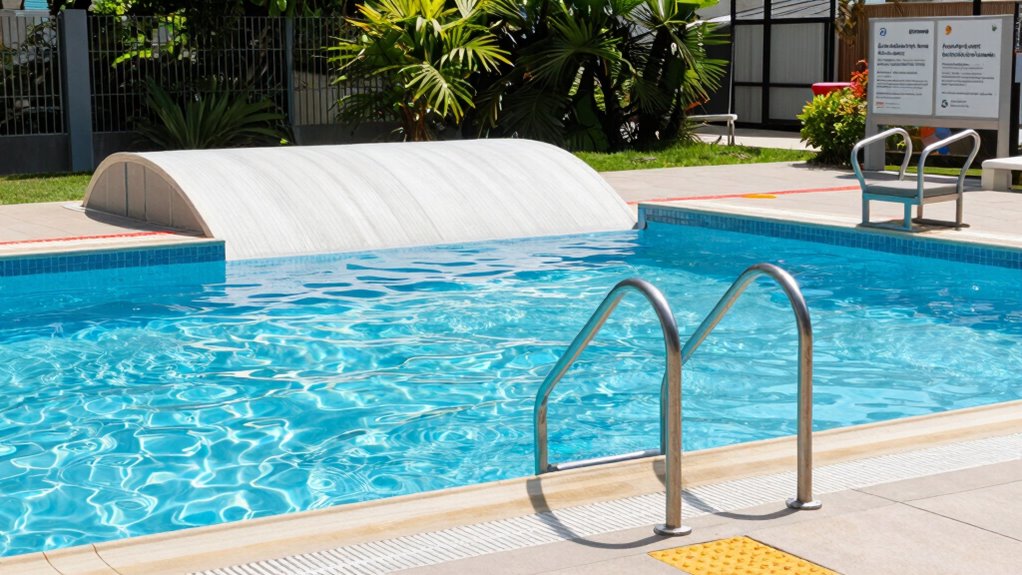
Public pools go beyond minimum standards by adding ramps, textured surfaces, and lifts to guarantee everyone can access the water independently. They also offer specialized programs like aqua therapy, supported by trained staff who know inclusive practices and communication techniques. Design improvements focus on universal accessibility, with clear pathways and adaptable features for all. These efforts foster a welcoming environment that encourages participation and inclusion. If you keep exploring, you’ll discover more ways pools create truly inclusive experiences.
Key Takeaways
- Public pools incorporate advanced features like lifts and zero-entry points to facilitate independent access beyond basic requirements.
- They offer specialized programs such as aqua therapy with trained staff and adaptive equipment for diverse needs.
- Staff receive ongoing training in inclusive practices, sign language, and safety techniques for various disabilities.
- Facilities adopt universal design principles, ensuring clear pathways and accessible signage for all users.
- Many pools actively promote an inclusive culture, encouraging community participation and setting industry standards.
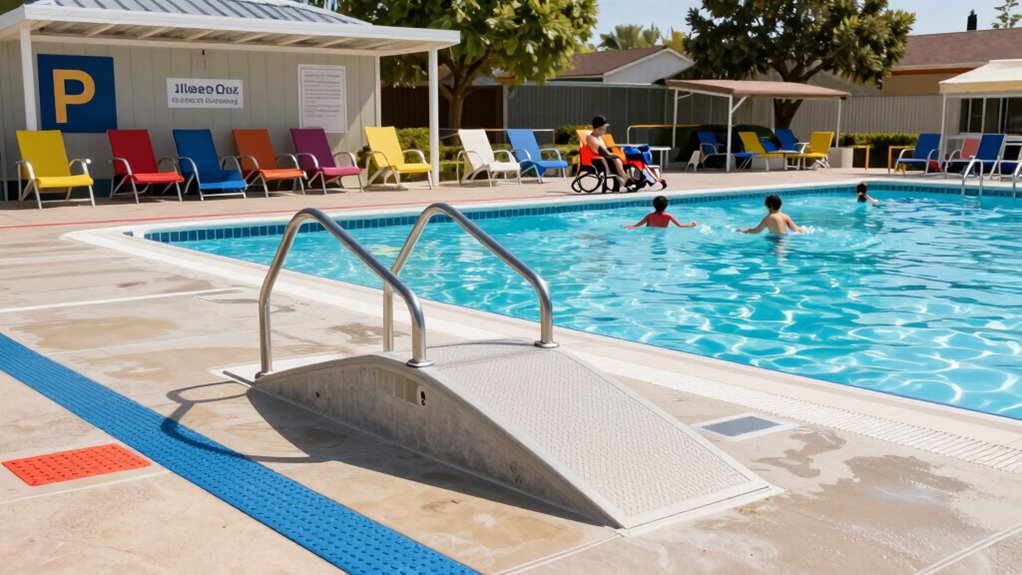
While many public pools meet basic accessibility standards, going beyond the minimum can considerably improve the experience for all users. You’ll notice that some pools incorporate features like ramps, wider entrances, and textured surfaces to help individuals with mobility challenges. But truly inclusive pools do more than just tick boxes—they create environments where everyone feels comfortable and supported. For example, some facilities offer aqua therapy sessions, recognizing the importance of water-based rehabilitation for people recovering from injuries or managing chronic conditions. These sessions often require specialized equipment and trained staff, which goes beyond standard accessibility measures but significantly enhances the pool’s usability for a broader community.
You might also see pools investing in advanced features such as lifts or zero-entry points, making it easier for wheelchair users or those with limited strength to access the water independently. Such features demonstrate a commitment to inclusivity that benefits everyone. In addition, pools that prioritize accessibility often ensure that the surrounding areas are designed with clear, unobstructed pathways, and provide ample space for maneuvering. This not only benefits individuals with disabilities but also families with strollers or elderly patrons who need more space to move comfortably. Incorporating accessible design principles can further improve navigation and overall usability. Furthermore, adopting universal design principles can help ensure that the pool environment accommodates a wide range of needs effortlessly. Additionally, continuous staff training on inclusive practices plays a vital role in maintaining an accessible and welcoming atmosphere for all visitors. Recognizing the importance of ongoing training programs can help staff stay updated on best practices for assisting diverse patrons.
Beyond physical infrastructure, pools that go above and beyond often focus on staff training. Lifeguard training now emphasizes not just rescue techniques but also understanding how to assist patrons with different needs. Lifeguards educated in inclusive practices can identify when someone might need extra help and respond appropriately, creating a safer and more welcoming environment. Some pools also train staff in basic sign language or other communication methods to better serve patrons with hearing impairments, fostering a more inclusive community. Additionally, investing in inclusive design can further promote a truly inclusive environment that accommodates diverse needs.
Investing in these enhancements shows that a pool values accessibility as an ongoing priority, not just a regulatory obligation. The result is a space where individuals seeking aqua therapy can enjoy tailored sessions with trained personnel, and everyone can feel confident that their safety and comfort are prioritized. You’ll notice that pools going beyond the minimum standards create a ripple effect—encouraging other facilities to follow suit and promoting a culture of inclusivity. So, when you visit these pools, you’ll experience a more accommodating environment, where accessibility is integrated into every aspect of the pool’s design and operation, making the aquatic experience better for everyone.
As an affiliate, we earn on qualifying purchases.
Frequently Asked Questions
How Do Pools Train Staff to Assist Differently-Abled Swimmers?
You’re trained to prioritize staff sensitivity and adapt techniques to support differently-abled swimmers. Your instruction involves understanding diverse needs and practicing adaptive techniques, like using specialized equipment or communication methods. You learn to approach each swimmer with patience and empathy, ensuring safety and comfort. Regular workshops and simulations help you stay aware of best practices, so you can respond confidently and effectively, making the swimming experience inclusive and enjoyable for everyone.
What Innovative Technologies Improve Accessibility Beyond Legal Requirements?
Innovative assistive technologies like motorized pool lifts and floating transfer benches make swimming more accessible, going beyond legal requirements. Inclusive design incorporates features like braille signage and tactile paving, ensuring everyone can navigate safely. You’ll find smart apps that help locate accessible routes and real-time assistance. These advancements actively enhance accessibility, empowering differently-abled swimmers to enjoy pools independently and comfortably, fostering a truly inclusive aquatic environment.
How Do Pools Gather Feedback From Disabled Patrons?
You might think pools don’t prioritize feedback from disabled patrons, but many actually do. They gather input through surveys, focus groups, and direct conversations, especially about sensory accommodations and adaptive swim equipment. Staff often observe and ask for suggestions during visits to improve accessibility. This ongoing dialogue helps pools identify what works well and what needs improvement, ensuring everyone feels welcome and comfortable in the water.
Are There Dedicated Accessible Facilities in All Public Pools?
Not all public pools have dedicated accessible facilities, but many go beyond the basics. You’ll often see accessible signage guiding you to features like ramps and pool lifts, along with adaptive equipment such as flotation devices designed for varied needs. These pools aim to create inclusive environments where everyone can enjoy swimming comfortably. If you’re unsure, check with the facility beforehand to confirm the availability of specific accessible features.
How Is Accessibility Maintained During Pool Renovations?
During pool renovations, accessibility is like maintaining a delicate bridge—carefully preserved despite construction. You’ll see accessible signage clearly marked to guide you, and staff sensitivity remains a priority, ensuring you feel supported throughout. Staff is trained to address your needs, making adjustments as necessary, so your access isn’t interrupted. This proactive approach keeps your experience smooth, even amidst changes, reaffirming the pool’s commitment to inclusive recreation.
As an affiliate, we earn on qualifying purchases.
Conclusion
By going beyond the minimum, you turn a public pool into a welcoming oasis for everyone. When you prioritize true accessibility, you create ripples of inclusion that spread far beyond compliance. It’s not just about meeting standards; it’s about making sure no one feels left out. Like a gentle tide, your efforts lift spirits and foster community. Keep pushing boundaries—your dedication transforms pools into places where everyone can jump in with confidence.
As an affiliate, we earn on qualifying purchases.
As an affiliate, we earn on qualifying purchases.