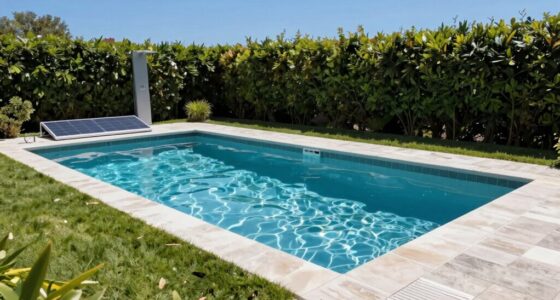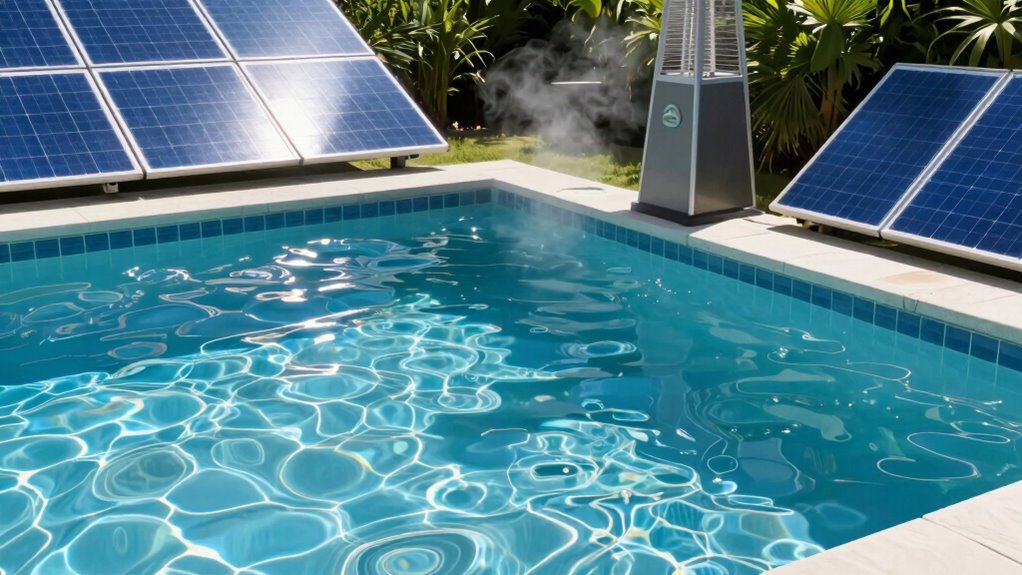

Your choice of pool heating impacts your environmental footprint considerably. Solar heaters are the most eco-friendly, using renewable energy with no emissions, but they may cost more upfront. Electric heat pumps are efficient and produce fewer emissions than gas heaters, which burn fossil fuels and increase carbon output. If you want to reduce your pool’s environmental impact, consider these options carefully. Keep exploring to find out how your choices can make a difference.

Get pool and patio gear delivered free — and shop member deals
- Fast, free delivery on millions of items
- Access to Prime Big Deal Days deals on October 6–7
- Prime Video, Amazon Music and more included
Key Takeaways
- Solar heating systems produce no emissions, significantly reducing the pool’s overall carbon footprint.
- Electric heat pumps are more energy-efficient than gas heaters, lowering emissions, especially when paired with renewable energy.
- Gas heaters have higher emissions due to fossil fuel combustion, increasing the pool’s carbon footprint.
- Choosing high-efficiency systems and renewable energy sources further minimizes environmental impact.
- Overall, solar and electric heat pumps offer the lowest carbon footprint compared to gas heating options.
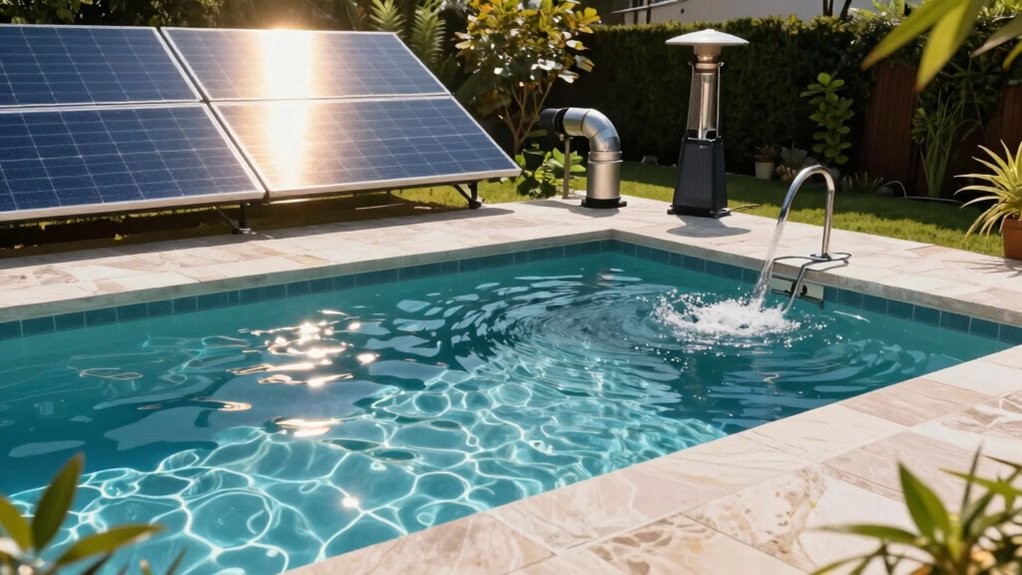
Heating your pool can substantially impact its environmental footprint, especially as more homeowners seek sustainable options. The way you choose to heat your pool directly affects how much energy it consumes and, consequently, the amount of carbon emissions generated. If you’re aiming to reduce your ecological impact, understanding how different heating options influence your pool’s carbon footprint is vital.
One of the most effective ways to lower your environmental impact is to contemplate solar heating systems. Solar heaters harness the sun’s energy, making them highly efficient in terms of solar efficiency. Since they rely on natural sunlight, they don’t produce emissions during operation, considerably reducing your pool’s carbon footprint. The upfront investment can be higher, but the long-term energy savings are substantial. You’ll notice lower utility bills because you’re not relying on gas or electric heaters, which consume more energy and contribute more to greenhouse gas emissions.
Solar heating reduces your pool’s carbon footprint with long-term savings and eco-friendly energy use.
Electric heat pumps are another popular choice, especially for those looking to balance efficiency and cost. They work by extracting heat from the air and transferring it to your pool water. While they do consume electricity, they are generally more energy-efficient than traditional gas heaters, especially in moderate climates. This means you’ll use less energy overall, leading to energy savings that translate into fewer emissions. However, their efficiency drops during colder months, so they may not be the best option if you want to extend your swimming season year-round. Additionally, renewable energy sources can further enhance their sustainability. Incorporating energy-efficient equipment can also help maximize their performance and reduce environmental impact. To further improve their eco-friendliness, pairing heat pumps with solar power can significantly reduce reliance on grid electricity. Moreover, selecting high-efficiency models can help minimize energy consumption and emissions even further.
Gas heaters, whether fueled by natural gas or propane, tend to have a larger carbon footprint because they burn fossil fuels directly. They can heat your pool quickly, but at the cost of higher energy consumption and increased emissions. If environmental considerations are a priority, relying solely on gas heating isn’t ideal, though it may still be necessary in colder regions or for rapid heating needs. You can offset some impact by using more efficient models and integrating solar cover systems to reduce heat loss.
Ultimately, your choice of heating method shapes your pool’s environmental impact. Solar heating offers the best solar efficiency and energy savings, making it the most sustainable option. Electric heat pumps provide a more efficient electric alternative, especially in milder climates. Gas heaters, while effective, tend to increase your pool’s carbon footprint due to their reliance on fossil fuels. By carefully weighing these options, you can select a heating system that aligns with your environmental values and helps you enjoy your pool with a lighter ecological footprint.
As an affiliate, we earn on qualifying purchases.
Frequently Asked Questions
How Do Pool Covers Affect Overall Energy Consumption?
Pool covers greatly reduce your overall energy consumption by trapping heat and minimizing evaporation. Using a cover improves pool insulation, keeping the water warmer with less energy. Regular cover maintenance ensures it functions efficiently and lasts longer. By covering your pool when not in use, you cut down on heating costs and energy use, making your pool more eco-friendly and cost-effective in the long run.
What Are the Long-Term Costs of Eco-Friendly Heating Options?
Opting for eco-friendly heating options like solar or heat pumps may seem like a big step, but they offer substantial long-term benefits. By embracing renewable technology, you’ll enjoy significant energy savings over time, reducing your overall costs. Although the initial investment might be higher, the ongoing savings and environmental perks make it a wise choice. With patience, your commitment to green heating pays off, keeping your pool warm and your conscience clear.
Can Solar Heaters Work Effectively in Cold Climates?
Yes, solar heaters can work effectively in cold climates with proper cold climate adaptation. You should consider alternative heat sources like solar collectors designed for lower temperatures and insulation to maximize efficiency. When you adapt your system for cold weather, it captures and retains heat better, allowing your pool to stay warm even during chilly seasons. Proper installation and maintenance are key to ensuring consistent performance in colder environments.
How Does Pool Size Influence Heating Efficiency?
You’ll find that larger pools take longer to heat because of their volume, impacting heating system efficiency. To optimize efficiency, guarantee your pool has good insulation, reducing heat loss. Proper insulation helps retain warmth and makes your heating system work less, saving energy and lowering carbon footprint. Smaller pools heat up faster and require less energy, but for larger pools, investing in quality insulation and an efficient heating system is essential to keep energy use in check.
Are There Government Incentives for Sustainable Pool Heating?
Yes, you can take advantage of government rebates and eco-friendly grants for sustainable pool heating. These incentives aim to encourage eco-conscious choices, making solar, heat pump, or other green technologies more affordable. By applying for these programs, you reduce upfront costs and lower your pool’s carbon footprint. Check local and federal programs to see what’s available in your area, and confirm you meet the eligibility requirements to maximize your savings.
As an affiliate, we earn on qualifying purchases.
Conclusion
By choosing the right heating option, you can slash your pool’s carbon footprint to almost zero—imagine turning a giant, smoky dragon into a tiny, eco-friendly hummingbird! Your decision can transform your backyard into a shining example of sustainability, saving the planet one splash at a time. Don’t underestimate the power of your choice—your pool’s future and the environment are counting on you to make the biggest, boldest, most eco-champion decision today!
As an affiliate, we earn on qualifying purchases.
eco-friendly pool heating system
As an affiliate, we earn on qualifying purchases.
As an affiliate, we earn on qualifying purchases.
Fall Picks
fall essentials
As an affiliate, we earn on qualifying purchases.