TL;DR

Get pool and patio gear delivered free — and shop member deals
- Fast, free delivery on millions of items
- Access to Prime Big Deal Days deals on October 6–7
- Prime Video, Amazon Music and more included
Inflatable pool floats for adults fall into six main types — loungers, tubes, hammocks, ride-on novelty floats, and multi-person islands — and the right choice depends on whether you want to relax, party, or cool off. Buy based on PVC thickness, weight capacity (150 to 500+ lbs), and pump compatibility, because giant floats can take 20+ minutes to inflate by mouth. Floats are toys, not life-saving devices: never rely on one in open water, and always supervise when kids are around.
Your lungs are not a pump. That’s the first thing nobody tells you about buying a giant inflatable swan — the box shows a glamorous adult drifting on turquoise water, not the same adult hyperventilating on the pool deck twenty minutes later.
Inflatable pool floats for adults have quietly become a whole category of their own, with everything from $12 donut tubes to $150 floating islands with built-in coolers and Bluetooth speakers. The options are fun. The differences between them are real.
In this guide, you’ll learn the six float types and who each one suits, the three specs that actually predict whether a float lasts past Labor Day, how to inflate and repair them without losing an afternoon, and the safety line most adults casually ignore.
Match the float type to your actual use: hammock for cooling off, lounger for tanning, tube for lazy rivers, island for groups, novelty floats for photos.
Vinyl thickness and weight capacity (150 to 500+ lbs) predict lifespan far better than price or brand — mid-range floats ($25–60) are the value sweet spot for…
Buy a $15–30 electric pump before you buy a second float; giant floats take 20+ minutes to inflate by mouth.
Inflate to about 90% firmness: air expands in sun and contracts in cold water, and over-inflation is the fastest way to pop a seam.
Floats are toys, not life jackets — never rely on one in open water, and supervise constantly when children are near the pool.
Rinse after chlorine or saltwater exposure, dry fully, patch with rounded-corner patches, and store deflated in a cool, dark place to get multiple seasons from…
The 6 Types of Adult Pool Floats (and Who Each One Is Actually For)
Inflatable pool floats for adults come in six main types: loungers and rafts, tubes, hammock floats, novelty and ride-on floats, floating islands, and convertible multi-use designs. Each one solves a different problem, and picking the wrong type is the #1 reason floats end up deflated in a garage by July.
Think of it like choosing a chair. A hammock float and a giant swan both float, the way a recliner and a bar stool both sit — but you’d never confuse the two on a Sunday afternoon.
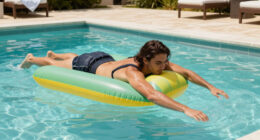
- Loungers and rafts — Flat or reclined designs, often with cupholders and headrests. Best for tanning, napping, reading. The classic adult choice.
- Tubes — Simple donuts. Cheap ($10–25), durable, great for pools, lakes, and lazy rivers. You sit in the water, not on it.
- Hammock/mesh floats — These suspend you partially in the water, so your back and legs stay cool while your head and knees stay dry. The most underrated category for hot climates.
- Novelty and ride-on floats — Swans, unicorns, flamingos, pizza slices, dragons. The giant swan and unicorn became cultural icons around 2016–2017, and they’re still the life of the party. Photogenic, but slow to inflate and bulky to store.
- Floating islands — Multi-person platforms for 4–8 people, sometimes with built-in coolers. These are social venues, not relaxation devices. Expect $80–150+.
- Convertible floats — Designs that turn into air mattresses, loungers, or even snow sleds. Smart if you want year-round use from one purchase.
Here’s the quick match: relaxing alone? Hammock or lounger. Hosting friends? An island. Floating a lazy river with a drink? A tube with cupholders. Chasing likes? The swan. No judgment.
Cheap vs. Premium Floats: What Your Money Actually Buys
The difference between a $15 float and a $90 float is rarely the shape — it’s the PVC vinyl thickness, seam quality, and UV resistance. Premium brands use thicker, phthalate-free, UV-resistant vinyl that survives a full season of sun; budget vinyl often starts cracking at the seams within weeks of daily exposure.
Here’s the comparison that matters at checkout:
| Feature | Budget ($10–25) | Mid-Range ($25–60) | Premium ($60–150+) |
|---|---|---|---|
| Vinyl thickness | Thin, single-layer | Medium, better seams | Thick, UV-resistant |
| Weight capacity | ~150–200 lbs | ~200–300 lbs | 300–500+ lbs |
| Cupholders/features | None or one | Cupholders, headrest | Coolers, backrests, canopies |
| Expected lifespan | One season (maybe) | 1–2 seasons | Multiple seasons |
| Patch kit included | Sometimes | Usually | Almost always |
One honest note: for a tube you’ll use five times a summer, budget is fine. For anything you’ll inflate weekly — or float with a partner — the mid-range tier is where value peaks. The jump from $15 to $40 buys real durability; the jump from $90 to $150 mostly buys prestige and coolers.
Buy cheap for occasional use, mid-range for weekly floating, and premium only when weight capacity or features demand it.
How to Inflate a Giant Float Without Wasting Your Afternoon
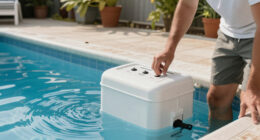
To inflate a large float quickly, use an electric pump ($15–30) with a compatible valve — mouth-inflating a giant float can take 20+ minutes of steady blowing and leaves you dizzy before you’ve floated an inch. This is the single best accessory purchase in the entire hobby.
The process, in order:
- Lay the float flat in a clean, debris-free spot. A stray twig is a puncture waiting to happen.
- Open all valves and identify the type — most quality floats use 2-way valves that let air in but not out.
- Pump to about 90% firmness. Vinyl expands in the sun and contracts in cold water, so a rock-hard float at noon can stress its seams by 3 PM.
- Top off by mouth for the final 10% — that’s manageable even for giant floats.
- Cap the valves tightly and listen for thirty seconds. Hissing means a valve seal problem, which is fixable; a slow leak elsewhere is a different story.
A friend of mine bought a four-person island, inflated it by mouth once, and ordered an electric pump from his phone while still catching his breath. Learn from him. Some newer floats even ship with solar-powered pumps and rapid-inflation valves that cut setup to a few minutes.
Why Your Float Deflates in the Shade (It’s Probably Not Broken)
Inflatable floats deflate slightly in cooler water or evening air because of thermal contraction — the air inside shrinks as temperature drops. This is normal physics, not a leak. A float that’s firm at 2 PM will feel softer at 7 PM even with zero holes.
The rule of thumb: air volume changes roughly with temperature. Sun-warmed vinyl at 95°F holds noticeably more expanded air than the same float dropped into 75°F pool water. That’s why over-inflating in the hot sun is the fastest way to pop a seam — the air keeps expanding after you walk away.
A real leak behaves differently. You’ll notice progressive softening within an hour, wet patches on one side, or bubbling when you press the float underwater. To find a small hole, coat suspicious areas with soapy water and watch for bubbles forming in a fine, growing ring.
Firm in the morning, soft by evening, same every day? Physics. Softer every hour? Leak.
Make Your Float Last: Repair, Cleaning, and Storage That Works
Most inflatable pool floats die from neglect, not punctures — sun exposure, chlorine, and bad storage degrade vinyl faster than any twig. With basic care, a quality float lasts multiple seasons; without it, even a premium one fades and cracks in a single summer.
Follow this maintenance routine:
- Rinse after every use in chlorine or saltwater. Both chemicals slowly break down vinyl — saltwater is the harsher of the two.
- Dry completely before storing. Trapped moisture grows mold that stains and weakens the material from the inside.
- Patch punctures immediately with the included kit: deflate, clean and dry the area, round the patch corners (square corners peel), apply adhesive, press for 60 seconds, and wait 24 hours before reinflating.
- Store deflated in a cool, dry, dark place — a closet or bin, not a sunny garage shelf or a hot car trunk.
- Never leave it inflated and outdoors all summer if you can avoid it. UV is the slow killer.
Budget for reality: always keep a repair kit in your pool bag. Patch kits cost a few dollars and turn a season-ending tear into a ten-minute fix. Bring a dry bag for your phone too — the float has a cupholder, not a warranty plan.
The Safety Line Most Adults Cross Without Thinking
Inflatable floats are not life-saving devices — they are toys, and they should never substitute for a life jacket, especially in open water. In lakes, rivers, and the ocean, wind and currents can carry a float (with you on it) away from shore faster than you can swim back.
The riskiest real-world scenario is also the most common one: an adult, a float, a drink, and a lake. Alcohol plus floating is a well-documented drowning risk factor, because a relaxed float masks how far you’ve drifted and how compromised your reaction time is. Add cold water below and a slip off the edge, and even strong swimmers get hurt.
And if kids are anywhere near the water — even when the float is “for the adults” — constant adult supervision is non-negotiable. An upside-down inflatable is an entrapment hazard for a child, not a toy. Designate a watcher who isn’t drinking and isn’t on their phone.
- Pools: Fine for lounging floats — you’re never far from an edge.
- Lakes and lazy rivers: Acceptable with a life jacket on, in calm, designated areas.
- Ocean: Skip the float entirely. Currents don’t negotiate.
Rule of thumb: if you couldn’t swim to shore without the float, don’t go farther than you can swim back.
What’s New: Heavier Duty Floats, Eco Materials, and Float Parties
Adult floating has matured into what some call floaticulture — a lifestyle trend driven by Instagram and TikTok that now includes adult-only floating events, lazy river rentals, float parties at venues, and Float Fest-style gatherings. The float isn’t pool equipment anymore; it’s a social prop and a photo backdrop.
Three trends worth knowing as a buyer. First, heavy-duty and plus-size options have expanded — more brands now offer 300–500 lb capacity floats, which are also simply more stable and comfortable for everyone. Second, eco-conscious materials are appearing: phthalate-free PVC and, in a few lines, recycled vinyl. Third, feature inflation (pun intended): built-in coolers, Bluetooth speakers, cupholder arrays, canopies, and rapid-inflation valves.
The practical takeaway? The party features are fun but add failure points — a speaker is one more thing to break and one more seam to leak. If durability is your priority, a plain thick-vinyl lounger with two cupholders will outlive the floating sound system next door.
Frequently Asked Questions
How long do inflatable pool floats last?
A quality float lasts multiple seasons with proper care; a budget one often dies within a single summer. The main killers are UV exposure, chlorine and saltwater residue, and damp storage — not punctures. Rinse after each use, dry completely, and store deflated in a cool, dark place.
What’s the weight limit on adult pool floats?
Capacity ranges from about 150 lbs on budget tubes to 500+ lbs on heavy-duty models. Always check the label — and if you’re close to the limit, size up, because operating at maximum capacity makes floats tippy and stresses seams. Plus-size and 300–500 lb options are now widely available.
Are inflatable floats safe in lakes, rivers, or the ocean?
They’re acceptable in calm lakes and lazy rivers with a life jacket on, but never in the ocean — currents and wind can carry a float away faster than you can swim back. Floats are toys, not life-saving devices. Avoid combining floating with alcohol, which is a leading risk factor in adult drownings.
Why does my float deflate when I put it in the water?
Usually thermal contraction — the air inside shrinks when a sun-warmed float hits cooler water, so it feels softer within minutes. That’s normal. A true leak gets progressively softer every hour and shows bubbles when you press the float underwater. Inflate to about 90% to leave room for expansion.
How do I repair a hole in an inflatable float?
Deflate the float, clean and dry the area, cut a patch with rounded corners (square corners peel), apply adhesive from your patch kit, press firmly for 60 seconds, and let it cure for 24 hours before reinflating. To find a tiny leak, coat suspect areas with soapy water and watch for a growing ring of bubbles.
Conclusion
If you remember one thing, make it this: buy for how you actually float, not how you’ll photograph. The swan is a great guest and a bad daily driver. The hammock you inflate in two minutes will get used fifty times; the island that needs a pump, two friends, and twenty minutes will get used five.
Spend $30 on the pump, $40 on a thick-vinyl lounger with cupholders, keep a patch kit in the bag — and you’ll be the person still floating in September while the swan deflates sadly in someone’s garage. Choose your float like you’d choose a summer: comfortable, repeatable, and easy to pack up.
Fall Picks
fall essentials
As an affiliate, we earn on qualifying purchases.