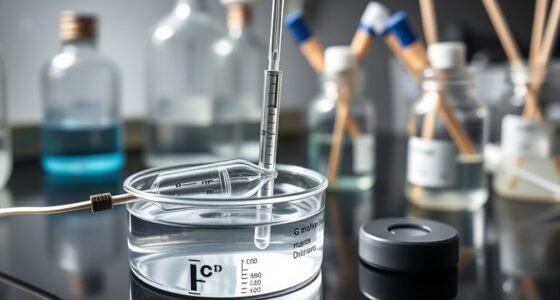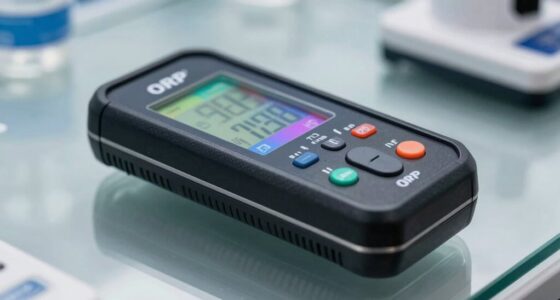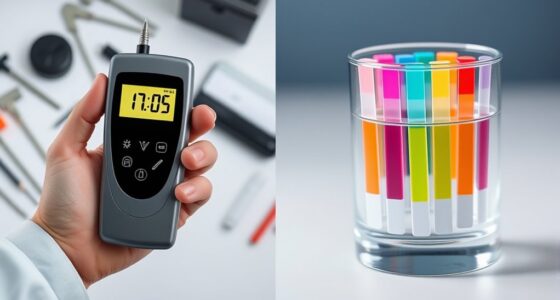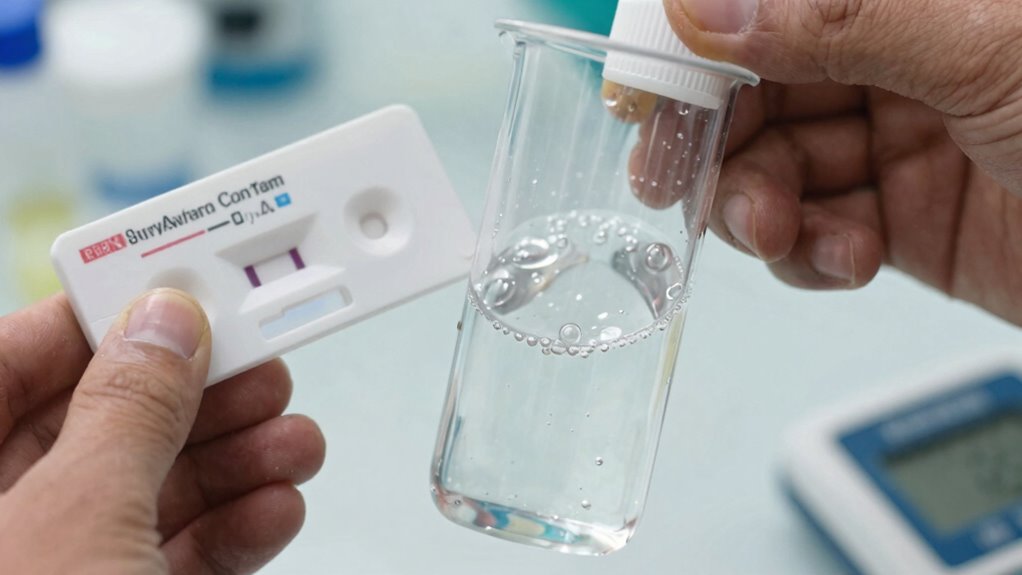
Even with a good water testing kit, your results can be inaccurate because sampling errors, fluctuating contamination levels, and limited detection abilities can mislead you. If the sample isn’t collected properly or if contamination spikes after testing, you might get a false sense of safety. Testing only once or for certain pollutants also leaves gaps in understanding water quality. Keep exploring to uncover how to get more reliable results and protect your water supply.

Get pool and patio gear delivered free with Prime
- Fast, free delivery on millions of items
- Prime Video, Amazon Music and more included
- Member-only deals all year
Key Takeaways
- Single tests may not capture intermittent or fluctuating contamination levels, leading to false negatives.
- Improper sample collection or handling can introduce errors, skewing test results.
- Testing sensitivity might be insufficient to detect low pollutant concentrations.
- Limited testing scope can miss contaminants not included in the kit, providing an incomplete safety assessment.
- Environmental factors and incorrect procedures during testing can compromise accuracy even with a good kit.
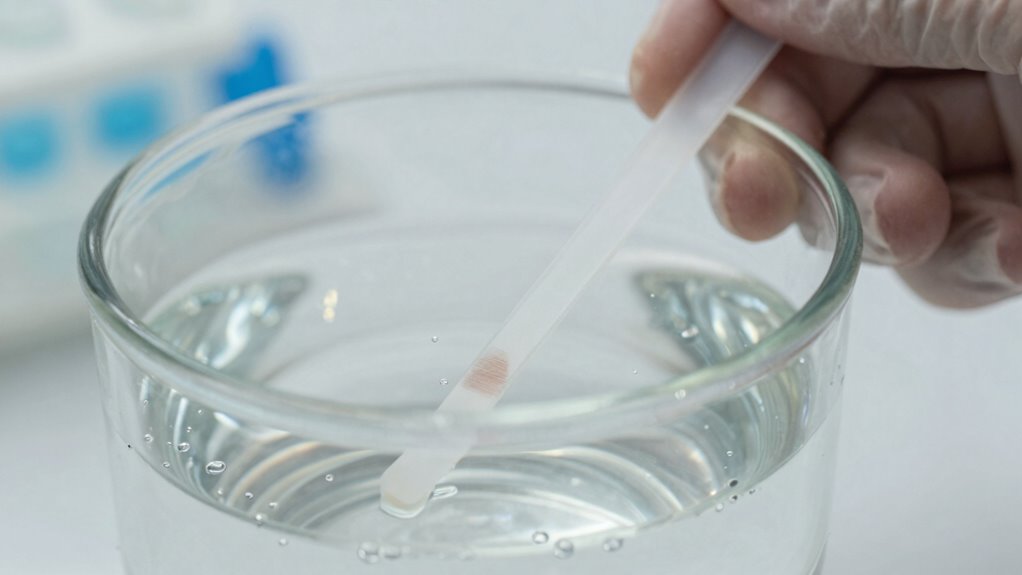
Water testing is supposed to guarantee your safety, but when it goes wrong, the consequences can be serious. Even with a good testing kit, you might find yourself misled about the true state of your water quality. This misinterpretation can cause you to overlook dangerous contaminants or waste money on unnecessary treatment. Contamination sources are everywhere, and pinpointing them isn’t always straightforward. Your water could be contaminated by bacteria, heavy metals, pesticides, or other pollutants from various sources like aging pipes, runoff, or nearby industrial activity. If these sources are intermittent or localized, a single test might not reflect the ongoing risk. For example, bacteria levels could spike after a storm or during certain times of day, but your test might not catch this if it’s not timed correctly. This inconsistency can give you a false sense of security, especially if the test results show safe levels, even though contamination sources are present nearby. Understanding testing accuracy is crucial because even minor errors in sample collection or handling can drastically alter results. testing accuracy can also be compromised by how you perform the test or handle the samples. Even the best kits require precise steps—correct sample collection, proper storage, and timely testing. If you don’t follow instructions carefully, your results can be skewed. For instance, testing in contaminated containers or not testing within the recommended time frame can cause false readings. Additionally, environmental factors like temperature or exposure to sunlight can alter test outcomes. Properly calibrating your testing equipment and understanding testing procedures can help mitigate some of these issues. It’s also important to recognize that testing frequency impacts your overall water safety; occasional testing may not be enough to catch fluctuating contamination levels. Sometimes, the test’s sensitivity isn’t enough to detect low levels of pollutants, making it seem like your water is safe when it’s not. Moreover, understanding testing limitations** can help you better interpret your results and avoid false reassurance. The limitations of the testing method itself can lead to inaccuracies. Some kits are designed to detect only certain contaminants, leaving others unnoticed. If you’re only testing for bacteria, you might miss heavy metals or chemical pollutants that pose serious health risks. This incomplete picture can be dangerous because it relies on assumptions about what’s present, based solely on what the test measures. In the end, even with a good water testing kit, you need to understand that contamination sources and testing accuracy play vital roles in the reliability of your results. A single test isn’t always enough to guarantee your water is safe, especially if you don’t consider the timing, sampling techniques, and the specific contaminants that matter most in your area. Being aware of these pitfalls can help you interpret results** more critically and take additional steps if necessary to protect your health.
water testing kit with multiple pollutant detection
As an affiliate, we earn on qualifying purchases.
As an affiliate, we earn on qualifying purchases.
Frequently Asked Questions
Can Testing Errors Occur Even With Professional Laboratory Analysis?
Yes, testing errors can happen even with professional laboratory analysis. Contamination concerns might arise if samples aren’t handled properly, leading to inaccurate results. Additionally, equipment calibration issues can skew data, making it seem like your water quality is different from reality. To avoid these problems, guarantee proper sample collection, strict contamination control, and regular calibration of lab equipment. This way, your results stay reliable and trustworthy.
How Does Water Storage Impact Test Accuracy?
Did you know that improper water storage can skew test results by up to 50%? When you store water in contaminated containers or at incorrect temperatures, it impacts test accuracy. Container contamination introduces pollutants, while storage temperature fluctuations can alter chemical readings. To guarantee reliable results, always use clean containers and keep water at a consistent, recommended temperature, preventing false readings and ensuring your tests truly reflect water quality.
Do Environmental Factors Affect Test Kit Reliability?
Environmental factors definitely affect test kit reliability. Contamination interference can occur if your water sample isn’t properly stored, leading to inaccurate results. Temperature fluctuations also play a big role; extreme heat or cold can alter chemical reactions within the kit, skewing readings. To guarantee accurate testing, keep samples at stable temperatures and avoid contamination, so your results truly reflect your water’s quality.
What Role Does User Training Play in Testing Accuracy?
Your user technique plays a vital role in testing accuracy. Proper training helps you follow instructions precisely, ensuring consistent testing results. When you understand how to handle reagents, measure samples accurately, and time your tests correctly, you improve testing consistency. This reduces errors, making your water quality readings more reliable. Inadequate training can lead to mistakes, even with a good kit, so investing in proper user education greatly boosts your testing accuracy.
Are There Specific Water Contaminants Harder to Detect?
Imagine testing for pesticides, but chemical interference from other substances skews your results. Certain contaminants, like heavy metals or volatile organic compounds, are harder to detect because sample contamination or chemical interference can mask their presence. You need precise sampling techniques and awareness of potential interferences to avoid false negatives. Being cautious about sample handling and understanding chemical interactions are key to accurately identifying these tricky contaminants.
water sample collection containers
As an affiliate, we earn on qualifying purchases.
As an affiliate, we earn on qualifying purchases.
Conclusion
Think of water testing like steering a vast ocean with a sturdy ship. Even if your vessel is solid, misreading the stars or ignoring hidden currents can lead you astray. The kit might be reliable, but if you overlook proper procedures or environmental factors, your results will be off course. To truly find safe waters, pay attention to the subtle signals and trust your steering skills—your journey to pure water depends on it.
As an affiliate, we earn on qualifying purchases.
water test kit for bacteria and heavy metals
As an affiliate, we earn on qualifying purchases.
As an affiliate, we earn on qualifying purchases.
Fall Picks
fall essentials
As an affiliate, we earn on qualifying purchases.