
As a new pool owner, you should keep your equipment in top shape by regularly cleaning skimmer baskets and filters, checking for leaks or unusual noises, and monitoring water levels. Maintaining proper water chemistry—balancing pH between 7.2-7.6 and chlorine at 1-3 ppm—is key to safe, clear water. Schedule weekly checks, backwash filters when needed, and follow safety guidelines for chemical handling. Stay proactive, and you’ll find plenty of tips to keep your pool running smoothly.

Get pool and patio gear delivered free with Prime
- Fast, free delivery on millions of items
- Prime Video, Amazon Music and more included
- Member-only deals all year
Key Takeaways
- Regularly inspect and clean skimmer baskets, pump filters, and hoses to prevent debris buildup and ensure optimal circulation.
- Monitor and maintain proper water chemistry, especially pH (7.2-7.6) and chlorine levels (1-3 ppm), for safe swimming.
- Backwash or clean the filter when pressure rises or flow slows to maintain efficient filtration.
- Check for leaks, unusual noises, or equipment malfunctions early to prevent costly repairs.
- Keep a maintenance schedule and review equipment manuals regularly for proper operation and troubleshooting.
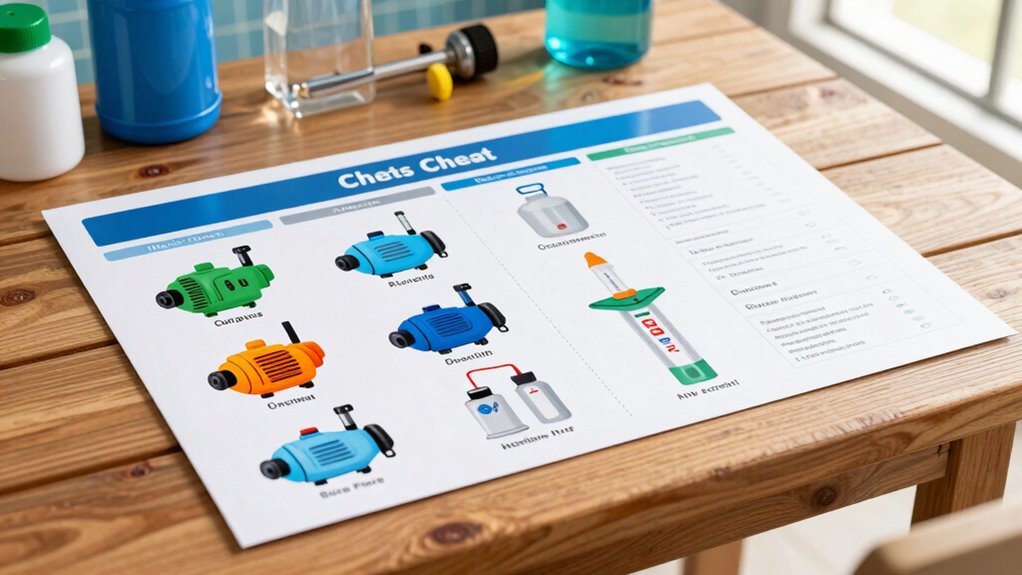
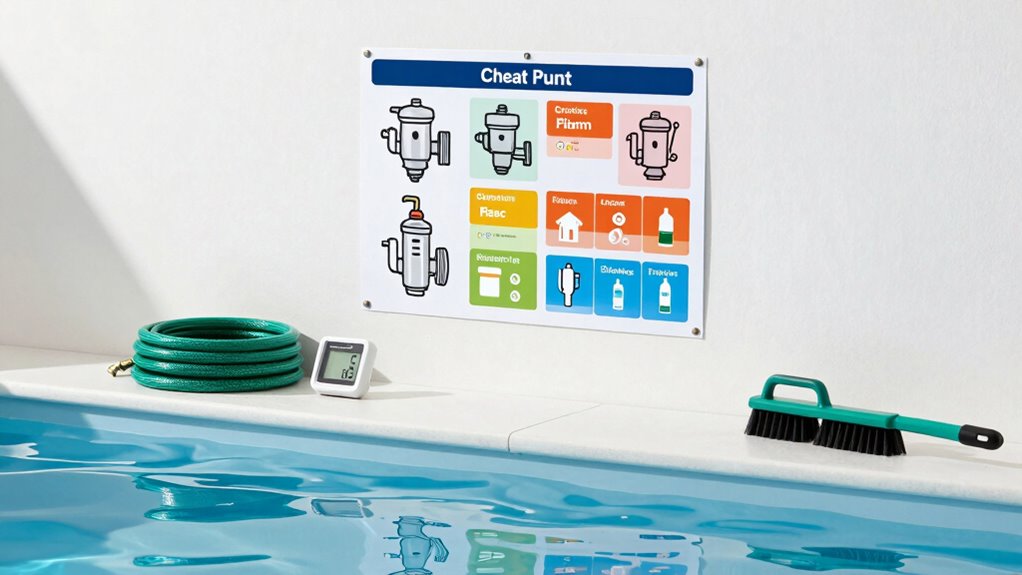
Have you ever felt overwhelmed trying to keep your pool clean and functioning properly? It’s common for new owners to feel this way, especially when faced with maintaining the right pool chemical balance and managing equipment maintenance routines. The key is knowing what to prioritize and having a clear plan in place. Without a cheat sheet, it’s easy to overlook small but crucial steps that keep your pool safe and inviting.
Start by understanding that maintaining proper pool chemical balance is essential. You want your pH levels between 7.2 and 7.6, which helps prevent algae growth and skin irritation. Regularly testing your water with a reliable test kit is your first step. If your pH is too high, add pH decreaser; if it’s too low, use pH increaser. Chlorine levels should stay between 1 and 3 ppm to keep bacteria at bay. Shock your pool weekly or after heavy usage to keep water crystal clear and free from contaminants. Balancing chemicals correctly not only ensures safe swimming but also prolongs the life of your pool equipment.
Maintaining proper pH (7.2-7.6) and chlorine levels (1-3 ppm) is key to a safe, clear, and healthy pool.
Alongside chemical management, establishing consistent equipment maintenance routines saves you trouble down the line. Regularly clean your skimmer baskets and pump filters to prevent debris buildup that can strain your pump and reduce circulation. Check your pump and filter for leaks or unusual noises—these are signs you need to troubleshoot or replace parts. Inspect your pool’s pump basket and clean it as needed, especially after storms or heavy debris. Keep an eye on your pool’s water level; it should be roughly halfway up the skimmer opening to maintain proper skimming and filtration. Additionally, understanding pool equipment operation helps you identify issues early before they escalate. Gaining a basic understanding of water chemistry also aids in troubleshooting chemical imbalances more effectively. Being familiar with the filter pressure and flow rates can help you catch problems before they become costly repairs. Regularly reviewing your equipment’s manual can also reinforce your understanding of proper maintenance techniques. Developing a routine maintenance schedule ensures that tasks are consistently completed and nothing is overlooked.
You should also familiarize yourself with your equipment’s manual. Knowing how each component works helps you spot problems early. For example, if your pool’s circulation seems sluggish, it might be time to backwash your filter or check the pressure gauge. Regularly inspecting hoses, valves, and gauges prevents minor issues from becoming costly repairs. A good rule of thumb is to schedule weekly maintenance tasks and keep a checklist so nothing gets overlooked. Staying informed about pool chemical safety is equally important to prevent accidents and ensure safe handling of chemicals.
In the end, your success as a pool owner hinges on staying proactive. Balance your chemicals consistently, follow simple equipment routines, and stay observant. With a little effort and a handy cheat sheet, you’ll keep your pool sparkling clean, safe, and ready whenever you want to jump in. It’s all about creating a routine that fits your schedule, so pool maintenance becomes a seamless part of your summer fun rather than a stressful chore.
As an affiliate, we earn on qualifying purchases.
Frequently Asked Questions
How Often Should I Replace My Pool Filter?
You should replace your pool filter every 3 to 5 years to maintain excellent equipment durability and guarantee your pool stays clean. Regularly check your pool chemistry to prevent buildup that can strain the filter. If you notice decreased flow or frequent backwashing, it may be time for a replacement sooner. Proper maintenance helps extend your filter’s lifespan, keeping your pool sparkling and your equipment running smoothly.
What’s the Best Way to Winterize My Pool Equipment?
To winterize your pool equipment, start by cleaning your filter and skimming debris. Use an automated cover to keep out dirt and protect your pool. Drain and store your pump and heater, especially if you have a heat pump, to prevent freezing. Add winterizing chemicals, then run your system briefly to circulate them. Finally, make certain your automated cover is securely closed, and disconnect any outdoor equipment for added protection.
How Do I Troubleshoot Uneven Water Flow?
Oh no, your pool’s water flow is as uneven as a rollercoaster? Time for some pump troubleshooting! First, check for blockages or debris clogging the skimmer or pump basket. Then, adjust the flow using the flow adjustment valve—sometimes just a simple turn solves the chaos. If it persists, inspect the impeller for obstructions. With a little patience, you’ll have smooth, even water flow in no time!
Can I Upgrade My Pool Pump Myself?
Yes, you can upgrade your pool pump yourself if you’re comfortable with basic plumbing and electrical work. First, turn off the power and drain the system. Then, disconnect the old pump, remove it, and install the new one, ensuring it matches your pool filter’s specifications. An equipment upgrade can improve water flow and efficiency, but double-check compatibility and follow manufacturer instructions for safety and best performance.
What Safety Precautions Are Needed for Pool Equipment Maintenance?
You should always wear gloves and goggles to protect against chemical splashes when maintaining pool equipment. Turn off power before starting any work to prevent electrical shocks. Follow chemical safety guidelines closely, storing chemicals properly and avoiding mixing them. Familiarize yourself with emergency procedures, like shutting off power quickly if needed or contacting emergency services. These precautions keep you safe during routine maintenance and help prevent accidents.
As an affiliate, we earn on qualifying purchases.
Conclusion
Now that you’ve got this cheat sheet, managing your pool becomes much easier. Imagine noticing cloudy water and quickly checking your filter and chemical levels—just like a seasoned pro. With these tips, you’ll keep your pool sparkling all season long. Remember, staying proactive saves time and money. So, keep this cheat sheet handy, trust your instincts, and enjoy the clear, inviting pool you deserve this summer!
automatic pool filter backwash valve
As an affiliate, we earn on qualifying purchases.
As an affiliate, we earn on qualifying purchases.
As an affiliate, we earn on qualifying purchases.
Halloween Picks
halloween
As an affiliate, we earn on qualifying purchases.