

Understanding your pool equipment labels and specifications is vital for safe and efficient operation. These labels provide key info about the equipment’s purpose, capacity, safety guidelines, and chemical compatibility. They also indicate energy use and maintenance requirements. Properly interpreting these labels helps prevent accidents, extend equipment lifespan, and save energy. If you want to make certain your pool runs smoothly and safely, exploring these details further can make a big difference.
Key Takeaways
- Read labels carefully to identify equipment purpose, capacity, and safety instructions for proper operation.
- Check chemical compatibility information to prevent dangerous reactions and ensure safe chemical use.
- Use energy efficiency indicators on labels to optimize settings and reduce power consumption.
- Follow installation and maintenance instructions to keep equipment functioning safely and effectively.
- Refer to troubleshooting tips on labels to address common issues and maintain system reliability.
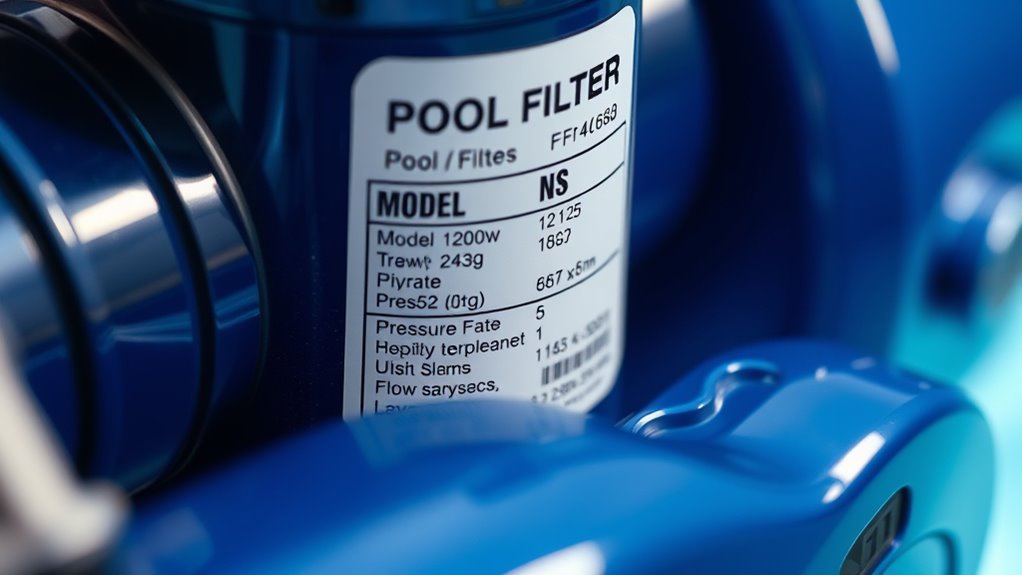
Have you ever wondered why clear and accurate labels are essential for your pool equipment? It’s because these labels serve as vital guides that help you operate your pool safely and efficiently. When you understand what the labels indicate, you can ensure proper chemical safety and maximize energy efficiency. Labels contain crucial information about the equipment’s purpose, capacity, and safety guidelines, which prevent accidents and prolong the lifespan of your pool system. Without proper labels, it’s easy to misuse equipment or overlook important safety precautions, risking injury or damage. Proper interpretation of labels also aids in installation planning, ensuring your system is set up correctly from the start. Chemical safety is a top concern when managing pool equipment. Labels specify the types of chemicals that are compatible with particular pumps, filters, or sanitizers. They also warn against mixing incompatible substances, which could cause dangerous reactions or damage to the equipment. For instance, some pumps or filters may be sensitive to certain chemicals, and failing to adhere to these labels can compromise safety. By paying close attention to these labels, you help prevent chemical spills, leaks, or hazardous fumes, protecting both your health and your pool environment. Proper chemical management guarantees your pool remains clean and safe, reducing the risk of illness or equipment failure. Energy efficiency is another critical aspect highlighted on many pool equipment labels. These labels often include information about power consumption, operational modes, and ideal settings that help you minimize energy use. For example, labels on pumps might specify the optimal flow rate or suggest energy-saving features. By understanding these markings, you can set your equipment to operate at peak efficiency, reducing energy bills and environmental impact. Efficient operation also means less wear and tear on your equipment, which translates into fewer repairs and replacements over time. Paying attention to energy-related details on labels enables you to run your pool system sustainably without sacrificing performance. In addition to safety and efficiency, labels provide installation instructions and maintenance schedules. These details help you keep your equipment in top condition, preventing issues caused by improper setup or neglect. Clear labels also make troubleshooting easier, as they point out common problems and recommended solutions. Ultimately, your ability to interpret these labels empowers you to manage your pool more effectively, ensuring a safe, cost-efficient, and enjoyable swimming environment. Understanding pool equipment labels isn’t just about reading a few words; it’s about recognizing that each label is a tool designed to help you operate your pool responsibly. By paying close attention to the information provided, especially regarding chemical safety and energy efficiency, you safeguard your pool, your family, and your investment. Accurate labeling acts as your first line of defense against mishaps, making your pool experience safer, more efficient, and more enjoyable.

Aquastrong Variable Speed Pool Pump, 2 HP, 220V, 10566GPH, In/Above Pool Pump, Energy Efficient, High Flow, Powerful Self Primming Swimming Pool Pumps with Filter Basket
- Variable Speed Range: 1200 to 4000 RPM for customizable flow
- High Flow Rate: 10566 GPH for powerful circulation
- Energy Efficient: Reduces energy use by up to 80%
As an affiliate, we earn on qualifying purchases.
As an affiliate, we earn on qualifying purchases.
Frequently Asked Questions
How Often Should Pool Equipment Labels Be Updated?
You should update your pool equipment labels whenever you perform major maintenance or when certification updates are required. Regularly reviewing your maintenance schedules guarantees labels stay accurate, especially if parts are replaced or specifications change. Keeping labels current helps you and others understand equipment requirements, enhances safety, and ensures compliance. Aim to review and update labels at least annually or after significant repairs, so all information remains precise and reliable.
Are There Eco-Friendly Labeling Options for Pool Equipment?
Yes, you can find eco-friendly labeling options for pool equipment. Look for eco label certifications that guarantee the product meets environmental standards, and opt for sustainable material labels made from recycled or biodegradable materials. These labels help you identify equipment with minimal environmental impact. By choosing products with eco label certifications and sustainable labels, you’re making a conscious decision to support eco-friendly practices and reduce your pool’s carbon footprint.
Can Labels Indicate Compatibility With Different Pool Chemicals?
Yes, labels often indicate chemical compatibility by using specific symbols or color codes. You can quickly identify if equipment is suitable for different pool chemicals by checking these label symbols, which show whether the materials can withstand harsh chemicals like chlorine or pH adjusters. Always read these symbols carefully to guarantee you’re using compatible chemicals, preventing damage and maintaining safety and efficiency in your pool system.
How Do I Interpret Multi-Language Labels on Equipment?
You’ll find that multilingual translation on pool equipment labels makes understanding easier, especially if you spot familiar label symbols. Coincidentally, these symbols often convey vital info at a glance, transcending language barriers. To interpret them, look for universal icons like warning signs or flow arrows, which guide you on proper use. Recognizing these symbols quickly helps you make certain safe operation and compatibility, even when labels are in multiple languages.
What to Do if a Label Is Damaged or Unreadable?
If a label is damaged or unreadable, you should prioritize safety by replacing it with a new label to guarantee all information is clear. If immediate identification is needed, use emergency labeling to communicate essential details. Contact the equipment manufacturer or supplier for a proper label replacement, and avoid operating the equipment until the new label is securely in place, so you stay informed of safety and operational guidelines.

Clorox® Pool&Spa™ Swimming Pool Algaecide and Clarifier, Prevents and Treats Pool Algae, Clears Water, 128 Fl Oz (Pack of 1)
- Pool Algae Treatment: Treats and prevents algae growth
- Maintains Clear Water: Kills all types of pool algae
- Non-Foaming Formula: Reduces maintenance time
As an affiliate, we earn on qualifying purchases.
As an affiliate, we earn on qualifying purchases.
Conclusion
By understanding pool equipment labels and specifications, you’re holding the key to a crystal-clear oasis. Think of each label as a map guiding you through a lush, well-tended garden, where every component plays an essential role. When you decode these symbols, you’re tending to your backyard paradise with confidence and care. Embrace this knowledge as your compass, ensuring your pool remains a shimmering sanctuary—bright, inviting, and perfectly maintained, just like a hidden treasure waiting to be discovered.

CDXHOME Swimming Pool Equipment Identification Labels – 20PCS Heavy Duty UV-Resistant Waterproof Labels for Swimming Pool, Plumbing, & Piping Parts, Pool Maintenance
- Complete Label Set: Includes 20 heavy-duty labels for pool system components
- Clear Pipe Identification: High-contrast white ink on black labels for visibility
- Waterproof and Durable: Resistant to water, UV, rust, and weather conditions
As an affiliate, we earn on qualifying purchases.
As an affiliate, we earn on qualifying purchases.

In The Swim Pool Basic Opening Chemical Start Up Kit – Above Ground and In-Ground Swimming Pools – Up to 7,500
- Dual-Purpose Use: Start-up or all-season water balancing
- Includes Sodium Dichlor: 99% sodium dichlor for clean water
- Water Clarifier: Keeps water crystal clear and filters efficiently
As an affiliate, we earn on qualifying purchases.
As an affiliate, we earn on qualifying purchases.


![Bukit Bintang Hicks Flat: DBKL Orders Cleanup After Viral Video Exposes Dirty Conditions [WATCH] - NST Online](https://poollexicon.com/wp-content/uploads/2026/08/bukit-bintang-hicks-flat-dbkl-orders-cleanup-after-viral-video-exposes-dirty-con-featured-1-260x140.jpg)