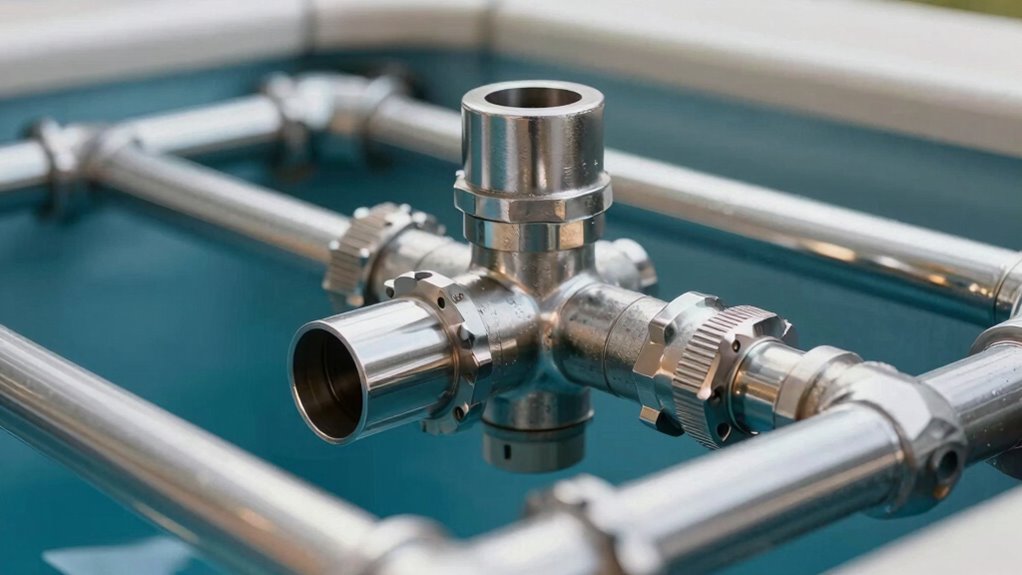

Choosing the right pipe size helps your pool system run quietly by preventing excessive turbulence and noise caused by undersized or oversized pipes. Proper sizing guarantees smooth water flow, reducing vibrations and preventing banging or whistling sounds. When pipes are correctly matched to your system’s needs, it lowers pressure fluctuations that cause noise and keeps operation peaceful. If you want to discover more about designing a quiet, efficient pool system, there’s plenty of useful info ahead.

Get pool and patio gear delivered free with Prime
- Fast, free delivery on millions of items
- Prime Video, Amazon Music and more included
- Member-only deals all year
Key Takeaways
- Proper pipe size ensures smooth water flow, reducing turbulence that causes noise and disturbances.
- Correct sizing minimizes pressure fluctuations, preventing banging or whistling sounds in the system.
- Appropriately sized pipes maintain steady flow rates, decreasing flow-related noise during operation.
- Proper pipe diameters reduce stress on fittings, lowering the risk of leaks and associated noise.
- Optimized pipe sizing prevents excessive turbulence, resulting in quieter pool system performance.
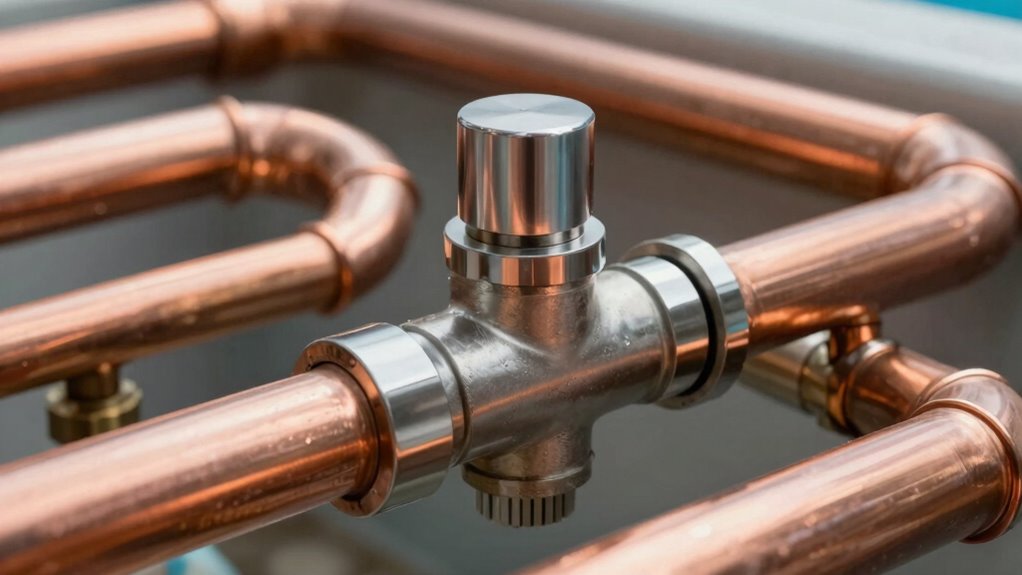
Choosing the right pipe size is essential because it directly impacts your pool system’s performance. When you select the proper diameter, you ensure that water flows smoothly, maintaining optimal pump efficiency. If the pipe’s too narrow, your pump has to work harder to push water through, which can strain the system, increase energy costs, and reduce the lifespan of your pump. Conversely, if the pipe is too wide, water may flow too quickly, leading to turbulence and noise, but it generally won’t harm the system. The goal is to find that perfect balance where water moves efficiently without unnecessary strain.
Choosing the right pipe size ensures smooth water flow, optimal pump efficiency, and a balanced, quiet pool system.
Pump efficiency is closely linked to pipe size. When your pipes are appropriately sized, your pump doesn’t have to exert extra effort to move water through the system. This means less energy consumption and lower utility bills. Properly sized pipes help maintain steady flow rates, ensuring your pool’s circulation system keeps the water clean and properly filtered. Efficient flow minimizes dead spots and stagnation, which can lead to algae growth and water quality issues. Overly small pipes cause increased pressure, which can damage fittings or cause leaks over time, while oversized pipes may reduce pressure and flow rate, impairing filtration and heating performance. Additionally, pipe size can influence the overall longevity of your pool equipment by reducing wear and tear caused by improper flow dynamics. Choosing the correct pipe size also helps optimize system efficiency, saving you money in the long run.
Another key factor influenced by pipe size is corrosion resistance. Choosing pipes that are compatible with your pool environment is vital. PVC pipes, for example, are resistant to corrosion, making them a popular choice for pool systems. When you stick with the correct pipe size, you reduce the risk of pressure buildup that could lead to leaks or pipe failure. Properly sized pipes also help prevent undue stress on fittings and joints, which are common failure points in pool plumbing. This not only preserves the integrity of your system but also means less maintenance and fewer costly repairs down the line. Properly sized pipes can also help prevent pressure-related issues, which are often caused by improper pipe selection. Additionally, using appropriately sized pipes can improve water flow consistency, leading to a more stable and reliable system overall. Using properly sized pipes can also contribute to a more energy-efficient system, reducing operational costs over time.
In addition, correct pipe sizing contributes to quieter operation. When water flows at a suitable rate, you avoid the whistling or banging noises caused by water rushing through undersized pipes or turbulence in oversized ones. Quiet, smooth operation creates a more comfortable experience when you’re by the pool. Ultimately, choosing the right pipe size isn’t just about fitting dimensions; it’s about optimizing your entire pool system’s efficiency, durability, and quiet performance. When you pay close attention to this detail, you’ll enjoy a smoother, more reliable, and energy-efficient pool experience for years to come.
Products Worth Considering

eufy Security SoloCam S340 3K Dual-Lens Solar Security Camera

Bose Lifestyle Ultra Speaker

Dyson V15 Detect Cordless Stick Vacuum
As an affiliate, we earn on qualifying purchases.
Frequently Asked Questions
How Does Pipe Material Affect Pool System Performance?
Pipe material affects your pool system performance through pipe installation and material durability. Durable materials like PVC resist corrosion, guaranteeing smooth water flow and reducing pump strain. Proper installation prevents leaks and pressure drops, maintaining efficiency. If you choose the right material, your system runs quietly and effectively, saving energy and minimizing maintenance. The right pipe material ensures your pool stays clean, safe, and enjoyable for years to come.
What Are Signs of Incorrect Pipe Sizing in Pools?
You might notice reduced water flow or inconsistent circulation, which are signs of incorrect pipe sizing. Typically, about 85% of pool system issues stem from improper pipe diameter, leading to flow restrictions. If your pool’s flow rate drops or if equipment sounds louder than usual, it indicates your pipes may be too narrow, causing flow restriction. Addressing these signs early guarantees your pool runs efficiently and saves energy costs.
How Often Should Pool Pipes Be Inspected or Replaced?
You should inspect your pool pipes annually and replace them if you notice signs of wear, leaks, or corrosion. Regularly check the pool pipe insulation and verify it’s intact, as damaged insulation can affect performance. Keep an eye on pipe color coding to identify any discoloration or damage quickly. Replacing pipes before they fail minimizes system issues, maintains efficiency, and prolongs your pool’s lifespan.
Can Pipe Size Influence Pool Water Chemistry?
Imagine the water in your pool flowing smoothly like a gentle stream; your pipe size plays a subtle role in this dance. Yes, it influences water chemistry by affecting flow rates, which impact chemical distribution. If pipes are too small, inconsistent flow can throw off pH levels and chemical balance, causing cloudy water or algae. Proper pipe sizing guarantees even chemical dispersion, keeping your pool crystal clear and chemically balanced.
What Tools Are Used to Measure Pipe Flow Rates?
You use flow measurement tools like flow meters or flow sensors to determine pipe flow rates. These tools help you assess how much water moves through your pool system. Pipe calibration is essential to guarantee accurate readings, adjusting the system for precise measurements. Regularly checking flow rates with these tools helps you optimize pool performance, prevent issues, and maintain proper circulation, ensuring your pool stays clean and balanced.
Conclusion
As you select the right pipe size, imagine the flow of water like a gentle river, unobstructed and steady, whispering secrets of efficiency. When the pipes are just right, your pool system hums smoothly, like a well-tuned orchestra. Smaller pipes can choke the current, while larger ones invite a sluggish crawl. Choose wisely, and let your pool’s performance flow seamlessly, like a tranquil stream, quietly transforming your backyard into a peaceful oasis.