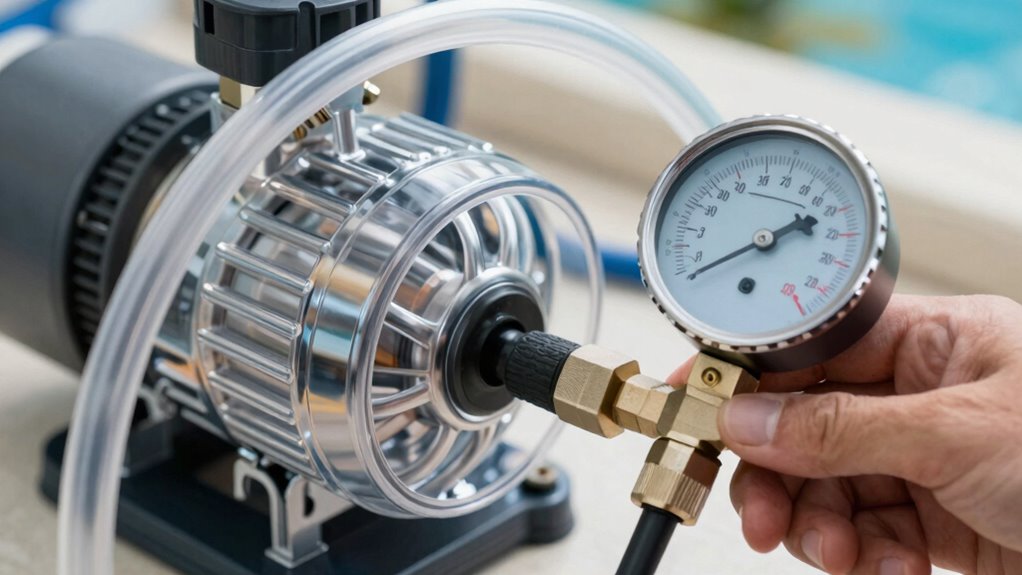

To calculate head loss before upgrading your pool equipment, start by measuring the pipe length, diameter, and flow rate. Use the Darcy-Weisbach equation or friction factor charts to estimate pressure drops caused by pipe roughness and velocity. Consider pipe material, as it impacts resistance and head loss. Upgrading to larger or smoother pipes can reduce loss. If you want to know more about precise calculations and system optimization, you’ll find useful tips below.
Get ready for Prime Big Deal Days — try Prime free
Exclusive member deals on October 6–7, plus fast free delivery. Cancel anytime.
As an affiliate, we earn on qualifying purchases.
Key Takeaways
- Measure flow velocity and pipe diameter to determine velocity head and initial flow conditions.
- Use Darcy-Weisbach equation or friction factor charts to calculate head loss based on pipe properties.
- Gather pipe length, material, and roughness data to accurately assess resistance and pressure drops.
- Consider existing pump performance and system pressure requirements to evaluate energy efficiency.
- Use calculated head loss values to identify potential improvements before upgrading pool equipment.
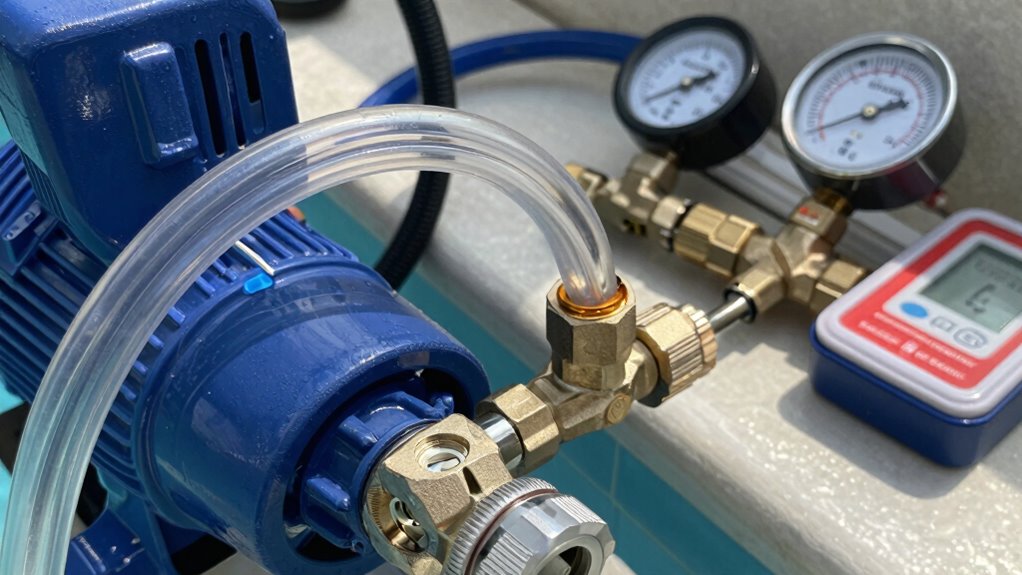
Ever wondered how to determine the energy loss in a piping system? Understanding head loss is essential before you upgrade your pool equipment, as it helps you decide whether your current setup is efficient or if improvements are needed. One key factor influencing head loss is pump efficiency. When your pump isn’t operating at ideal efficiency, it consumes more energy to move water through the pipes, resulting in increased head loss. An inefficient pump may seem like the culprit, but often, the pipe material also plays a considerable role in the overall energy expenditure. Some materials create more resistance, causing greater pressure drops and reducing flow rates.
Pump efficiency and pipe material significantly impact energy loss in your pool system.
To accurately calculate head loss, you first need to evaluate the pump’s efficiency. A pump running below its rated efficiency will require more power to generate the same flow, meaning you’re losing energy in the process. Check your pump’s specifications and compare actual performance data to its rated efficiency. If it’s outdated or underperforming, replacing it with a more efficient model can considerably reduce head loss and save energy over time. However, even the best pump can be hampered by the piping system’s design and materials, so don’t overlook this aspect.
Next, consider the pipe material. Different materials offer varying levels of resistance to water flow. For example, PVC pipes typically have lower friction loss compared to metal pipes like steel or copper. The roughness of the pipe’s interior surface directly influences head loss: smoother surfaces create less resistance, allowing water to flow more easily. If your current pipes are made of a rougher material or have become corroded or scaled over time, they increase the head loss, making your pump work harder to maintain proper flow. Upgrading to a smoother, more suitable pipe material can help reduce resistance and improve overall efficiency. Additionally, understanding the pipe roughness and how it affects flow resistance can help you select the right materials for your needs. Incorporating pipe sizing considerations, such as increasing pipe diameter, can significantly decrease velocity and head loss, further enhancing system performance.
Furthermore, selecting appropriate pipe installation practices and ensuring proper connections can also mitigate unnecessary head loss. To quantify head loss caused by pipe material, you can use the Darcy-Weisbach equation or refer to published friction factor charts for different pipe types and sizes. These calculations take into account flow velocity, pipe diameter, pipe length, and roughness. Keep in mind that proper system design can greatly influence the overall efficiency of your piping network. If you find that your current pipes are contributing notably to head loss, replacing them with lower-resistance materials or larger diameters can make a marked difference.
In short, to determine whether your piping system needs an upgrade, assess your pump’s efficiency and the pipe material’s impact on flow resistance. Doing so allows you to pinpoint the primary sources of energy loss and make informed decisions about upgrading your pool equipment for better performance and energy savings.
As an affiliate, we earn on qualifying purchases.
Frequently Asked Questions
What Tools Are Needed to Measure Head Loss Accurately?
To measure head loss accurately, you’ll need a flow meter to determine the flow rate and a manometer or pressure gauge to measure pressure differences. Make sure you know the pipe diameter, as it affects calculations. By recording flow rate and pressure at different points, you can accurately assess head loss. These tools help you identify if your current pool equipment meets your needs or if an upgrade is necessary.
How Often Should I Check for Head Loss in My Pool?
You should check for head loss in your pool monthly during routine pool maintenance, especially if you’ve recently upgraded equipment. Regular monitoring helps identify efficiency issues early, preventing equipment strain or failure. If you notice decreased flow or increased noise, verify more often. Consistent head loss assessments ensure your pool system runs smoothly, prolongs equipment life, and confirms your upgrades are performing as intended.
Can Incorrect Pipe Fittings Affect Head Loss Calculations?
Incorrect pipe fittings definitely impact head loss calculations. If your pipe size or fitting types are wrong or mismatched, they can cause unexpected pressure drops, making your system less efficient. You might underestimate head loss if fittings aren’t properly accounted for, leading to equipment that’s underpowered or overworked. Always double-check that your pipe size and fitting types match your system requirements to verify accurate head loss calculations and ideal pool performance.
What Signs Indicate High Head Loss in My Pool System?
If you notice your pool’s flow rate drops or your pump runs longer than usual, these are signs of high head loss. You might also see inadequate water circulation or cloudy water, indicating poor equipment efficiency. Regular pool maintenance helps identify these issues early, ensuring your equipment operates smoothly. Addressing head loss promptly keeps your pool system efficient, saves energy, and maintains clean, healthy water.
How Does Pipe Material Impact Head Loss Measurements?
Your pool’s pipe material drastically impacts head loss measurements—you might be surprised how much! Durable pipes like PVC have low friction, reducing head loss, while metal pipes prone to corrosion increase resistance, amplifying head loss. Choosing a material with high pipe durability guarantees smoother water flow, less energy expense, and longer-lasting equipment. So, don’t underestimate how your pipe’s material can make or break your pool system’s efficiency!
As an affiliate, we earn on qualifying purchases.
Conclusion
Calculating head loss is like charting a course through a stormy sea; it guides you safely to your destination. By understanding the pressure drops in your pool system, you can upgrade confidently, knowing your equipment will perform at its best. Don’t let unseen obstacles sink your efforts—measure, calculate, and plan ahead. With this knowledge, your pool’s circulation will flow smoothly, just like a gentle river, ensuring sparkling water and happy swimmers all season long.
As an affiliate, we earn on qualifying purchases.
As an affiliate, we earn on qualifying purchases.
Evergreen bestsellers Picks
bestsellers
As an affiliate, we earn on qualifying purchases.