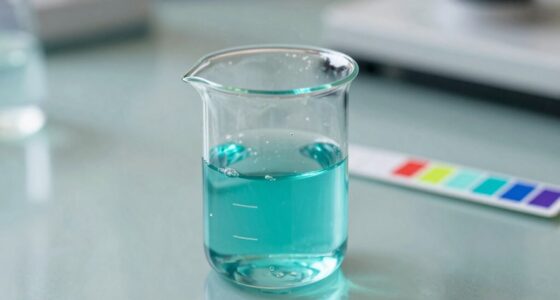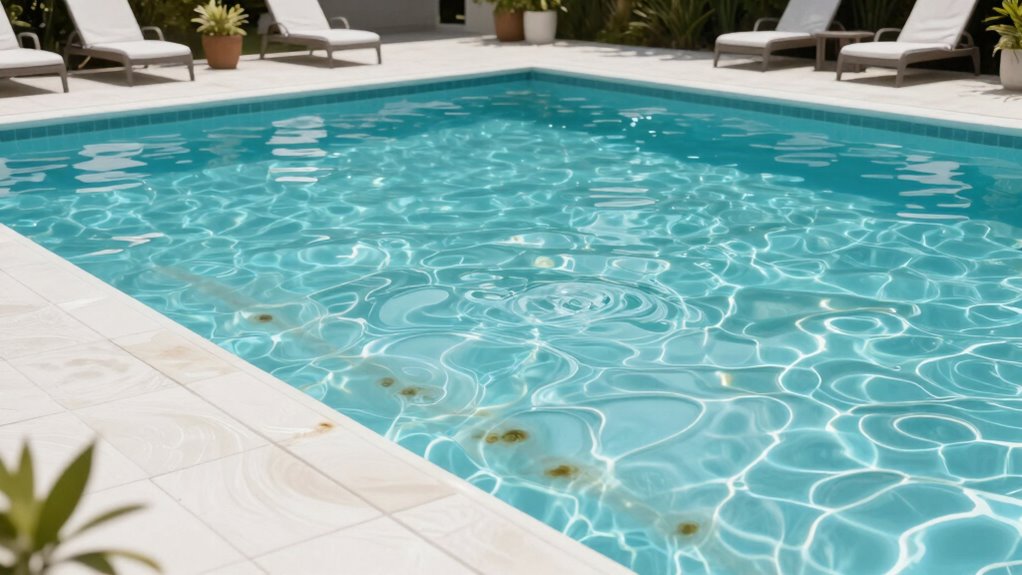

Even in pools that seem well-maintained, combined chlorine can gradually increase because it forms when chlorine reacts with organic materials like sweat, oils, and skin cells. Factors like pH imbalance, high bather load, and poor filtration can accelerate this process. Algae spores and contaminants also contribute to chloramine buildup, making water cloudy and less safe. To keep your pool clear and healthy, understanding these reactions and tips can help you stay ahead of the problem.
Key Takeaways
- Organic contaminants from swimmers react with chlorine, forming chloramines even in well-maintained pools.
- Fluctuations in pH levels can reduce chlorine effectiveness, promoting chloramine buildup.
- Inadequate filtration allows organic matter to accumulate, increasing the formation of combined chlorine.
- High bather loads introduce more contaminants, overwhelming the sanitizer and raising chloramine levels.
- Algae presence consumes free chlorine faster, leading to increased combined chlorine formation.
Have you ever wondered why chlorine is a staple in swimming pools? It’s because it plays a critical role in maintaining the pool’s chemical balance and preventing algae growth. However, even in pools that seem well-maintained, you might notice the appearance of combined chlorine, which can cause that unpleasant chloramine smell and cloudy water. That’s because maintaining proper pool chemical balance is more complex than just adding chlorine regularly. Factors like pH levels, water temperature, and bather load influence how quickly chlorine gets “used up” or converted into combined chlorine. When the pH is too high or too low, chlorine becomes less effective at sanitizing, and this imbalance creates an environment where chloramines can form more easily. These chloramines are the result of chlorine reacting with organic materials—sweat, oils, skin cells, and other contaminants introduced into the water. Even if you’re diligent about testing and adjusting chemicals, these reactions can still happen, especially if the pool isn’t circulated properly or if the water isn’t filtered frequently enough. Additionally, understanding the importance of water chemistry helps in maintaining optimal conditions and preventing the buildup of combined chlorine. Proper filtration practices are essential because inadequate filtration can allow contaminants to accumulate and react with chlorine, leading to higher combined chlorine levels. Another reason why combined chlorine can creep up is the ongoing challenge of algae growth prevention. Algae spores are almost always present in outdoor environments, and if the chemical balance isn’t maintained precisely, they can bloom rapidly. When algae starts to grow, it consumes chlorine at a faster rate, which can lead to a decline in free chlorine levels. As free chlorine drops, chloramines form more readily because the available chlorine is reacting with organic matter rather than disinfecting the water. This cycle makes it difficult to keep the water crystal clear and safe, even in pools that look clean on the surface. Regular shocking—adding a high dose of chlorine—can help break this cycle, but only if the pool’s chemical balance is properly calibrated beforehand. To further prevent chloramine formation, it’s important to keep the water well-circulated and maintain appropriate chemical levels consistently. Maintaining proper chlorine levels is fundamental because fluctuations can contribute to the formation of chloramines and other chemical imbalances. Ultimately, the presence of combined chlorine in a well-maintained pool isn’t necessarily a sign of neglect. It’s often a sign that the water chemistry needs closer attention, especially pH and filtration practices. To keep chloramines at bay and prevent algae growth, you need to monitor your pool’s chemistry consistently and adjust as needed. Proper circulation, timely shocking, and maintaining ideal pH levels all work together to keep your water clear and safe. Recognizing the subtle signs of chemical imbalance allows you to act quickly, ensuring your pool stays inviting and healthy for every swimmer.
pool water test kit for chlorine and pH
As an affiliate, we earn on qualifying purchases.
As an affiliate, we earn on qualifying purchases.
Frequently Asked Questions
How Does Combined Chlorine Affect Swimmer Health?
Combined chlorine can harm your health by causing eye and skin irritation, respiratory issues, and allergic reactions. It forms through chemical reactions between free chlorine and organic contaminants like sweat or urine. For swimmer safety, it’s essential to monitor and maintain proper chlorine levels, as elevated combined chlorine indicates poor water quality. Regular testing helps prevent these issues, ensuring a safer, more comfortable swimming environment for everyone.
Can Sunlight Increase Combined Chlorine Levels?
Sunlight can increase combined chlorine levels through sunlight degradation of free chlorine, leading to more chloramines. Imagine a summer pool party where the sun’s UV rays break down chlorine, causing evaporation and reducing free chlorine, but leaving chloramines behind. This process allows combined chlorine to build up, making the water smell and irritate eyes. So, yes, sunlight exposure can contribute to higher combined chlorine levels in your pool.
What Role Do Pool Temperature and pH Play?
Pool temperature and pH balance are key to controlling combined chlorine levels. Higher temperatures speed up chemical reactions, making it easier for chlorines to form combined chlorine. If your pH is off, it can reduce the effectiveness of chlorine, leading to buildup. Maintaining proper pool chemistry and pH balance helps prevent the growth of chloramines, keeping your pool cleaner, clearer, and safer for swimmers.
How Often Should Pool Water Be Tested for Combined Chlorine?
You should test your pool water for combined chlorine at least twice a week as part of your regular pool maintenance. Chemical reactions from contaminants like sweat, oils, and organic matter cause combined chlorine to increase, even in a well-maintained pool. Regular testing helps you catch rising levels early, allowing you to adjust chlorine levels promptly and guarantee safe, clean water for swimmers.
Are Certain Pool Materials More Prone to Chlorine Buildup?
Certain pool materials, like vinyl liners or porous plaster, are more prone to chlorine buildup because they absorb chlorine more readily than smooth, non-porous surfaces like fiberglass or painted concrete. You should be aware that porous materials can trap chloramines and other contaminants, making it harder to maintain proper chlorine levels. Regular testing and proper water chemistry management help prevent excessive chlorine buildup, regardless of your pool’s material.
As an affiliate, we earn on qualifying purchases.
Conclusion
Just like a garden’s weeds can sneak in unnoticed, combined chlorine can quietly build up in your pool despite regular maintenance. I once saw a pool that looked pristine, but hidden behind the scenes, chloramines were lurking, causing irritation. It’s a reminder that even the most carefully maintained pools need vigilant testing and treatment. Keep a close eye on your water, because small unchecked issues can bloom into bigger problems—don’t let hidden combined chlorine spoil your swim!
As an affiliate, we earn on qualifying purchases.
As an affiliate, we earn on qualifying purchases.