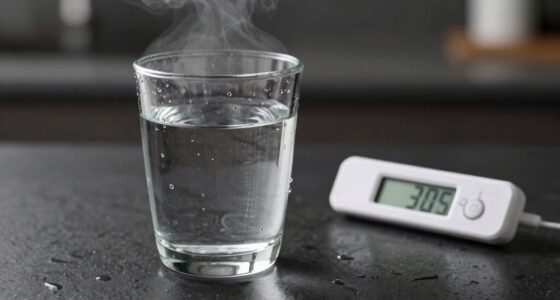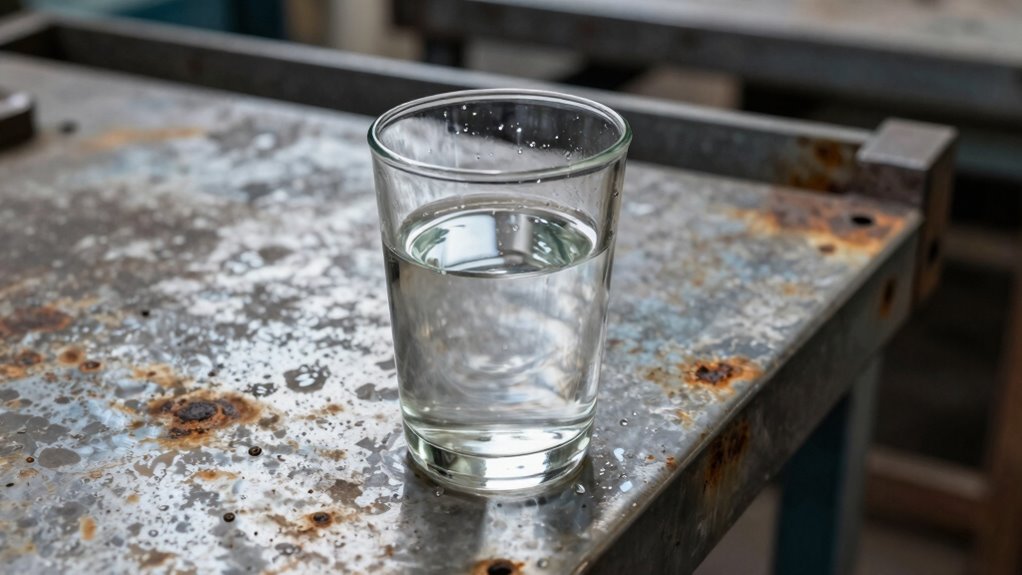

Metal ions in fill water, like iron, copper, and manganese, can cause problems before you notice any equipment wear. These metals accelerate corrosion, damaging pipes and systems over time. Early presence of metals triggers a chain of issues, compromising water quality and safety. Addressing this early is vital to prevent costly repairs and system failure. Keep going to discover how analyzing water composition can help you stay ahead of these hidden threats.
Key Takeaways
- Metal ions like iron and copper in fill water initiate corrosion, damaging pipes and equipment over time.
- Early metal presence in water can trigger a chain of system deterioration and water quality issues.
- Regular water testing identifies metal levels before they cause significant equipment damage.
- Understanding water composition allows for targeted corrosion prevention measures.
- Addressing metal content in fill water improves system longevity and reduces maintenance costs.
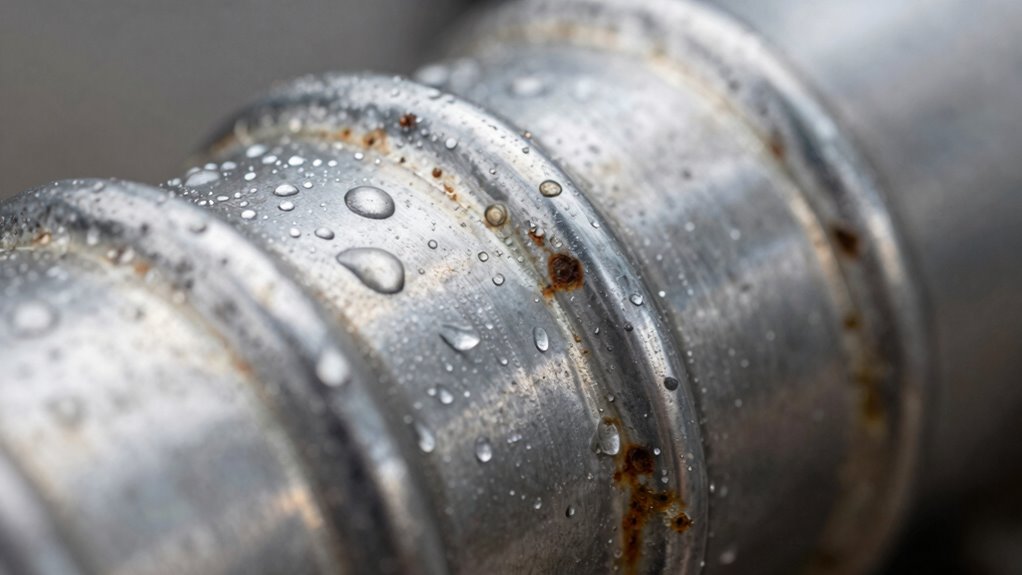
When you fill a container with water that contains even trace amounts of metals, those metals can begin to cause problems right from the start. The presence of metals like iron, copper, or manganese in your fill water might seem insignificant initially, but they can set off a chain of issues that compromise your entire system. Metal ions in the water accelerate corrosion, which damages pipes, fittings, and equipment over time. That’s why corrosion prevention measures are so vital from the outset. You need to understand the quality of your water before it ever reaches your system, and water quality analysis is your best tool for this. Regular testing helps you identify metal concentrations early, allowing you to implement targeted solutions before costly damage occurs.
Early water testing reveals metal levels, preventing corrosion and costly system damage from the start.
Corrosion prevention isn’t just about applying coatings or using corrosion-resistant materials—it begins with understanding what’s in your water. If your analysis shows elevated metal levels, you can take proactive steps, such as adjusting pH levels or adding corrosion inhibitors, to mitigate risks. These measures slow down or even prevent the corrosive processes that metals can trigger. Ignoring these early signs often results in increased maintenance costs, equipment failures, and compromised water quality, which can threaten health and safety. So, investing in water quality analysis is a smart move that pays off in long-term savings and system longevity. Recognizing the importance of water quality analysis can significantly enhance your corrosion prevention strategies.
Furthermore, the importance of early water testing extends beyond detecting metals. It helps you understand the overall composition of your water, including dissolved solids, pH, and potential contaminants. Armed with this data, you can tailor your corrosion prevention strategies precisely, rather than applying generic solutions that might not be effective. For instance, if your water analysis indicates high acidity, adjusting the pH can greatly reduce metal corrosion. Conversely, if metals are present in high concentrations, complex filtration or chemical treatment may be necessary. Regular water testing also highlights other water quality issues, enabling comprehensive maintenance planning. This proactive approach ensures your system remains efficient and safe over time. Additionally, understanding the specific mineral content can aid in selecting appropriate filtration systems that target problematic metals effectively.
As an affiliate, we earn on qualifying purchases.
Frequently Asked Questions
How Can I Test My Fill Water for Metal Content?
To test your fill water for metal content, you should start with a water purity test, which can be done using a home testing kit or by sending a sample to a lab. These tests detect metal presence and help guarantee safe, clean water. Metal detection is vital to identify any contaminants that could cause corrosion or affect equipment performance. Regular testing keeps your water quality in check and prevents potential metal-related issues.
Are Certain Water Sources More Prone to Metal Contamination?
Just like the varied landscapes of a painter’s palette, water sources differ in metal contamination risks. Well water and surface water often have higher source variability, making them more prone to metal contamination. To prevent issues, test these sources regularly and consider filtration systems. By understanding your water’s origin, you can better safeguard your equipment and guarantee the quality of your water, keeping corrosion and metal buildup at bay.
What Are the Long-Term Effects of Metal Buildup in Equipment?
Long-term metal buildup can lead to corrosion, weakening your equipment and causing costly failures. It may also impair performance and reduce lifespan. To prevent this, you should focus on corrosion prevention strategies, such as using metal filtration systems that remove metals from water before they accumulate. Regular maintenance and monitoring help catch buildup early, ensuring your equipment stays efficient and durable over time.
Can Water Treatment Remove All Types of Metals Effectively?
Water treatment can effectively remove many metals through metal filtration and chemical analysis, but it doesn’t eliminate all types completely. You need to assess each metal’s properties, the treatment methods available, and the water’s chemical composition. Regular chemical analysis helps identify remaining metals, guiding adjustments in filtration or chemical treatments. So, while water treatment considerably reduces metals, some stubborn or specific metals may require specialized solutions for complete removal.
How Often Should I Check Fill Water for Metal Issues?
You should check fill water regularly, ideally every three to six months, to guarantee it meets water quality standards and prevent corrosion. Consistent testing helps you identify metal issues early, allowing for timely corrosion prevention measures. If your water source varies, increase testing frequency. Maintaining proper water quality standards is essential for protecting equipment and ensuring longevity, so stay proactive with your monitoring schedule.
corrosion inhibitor for water systems
As an affiliate, we earn on qualifying purchases.
As an affiliate, we earn on qualifying purchases.
Conclusion
Remember, a problem that starts with fill water isn’t just about equipment—it’s about your approach. By paying attention to water quality and maintenance, you prevent costly damage before it begins. Don’t wait until it’s too late; as the old saying goes, “A stitch in time saves nine.” Act now, and you’ll keep your metal equipment running smoothly, saving time and money in the long run. Prevention truly is better than cure.
As an affiliate, we earn on qualifying purchases.
As an affiliate, we earn on qualifying purchases.