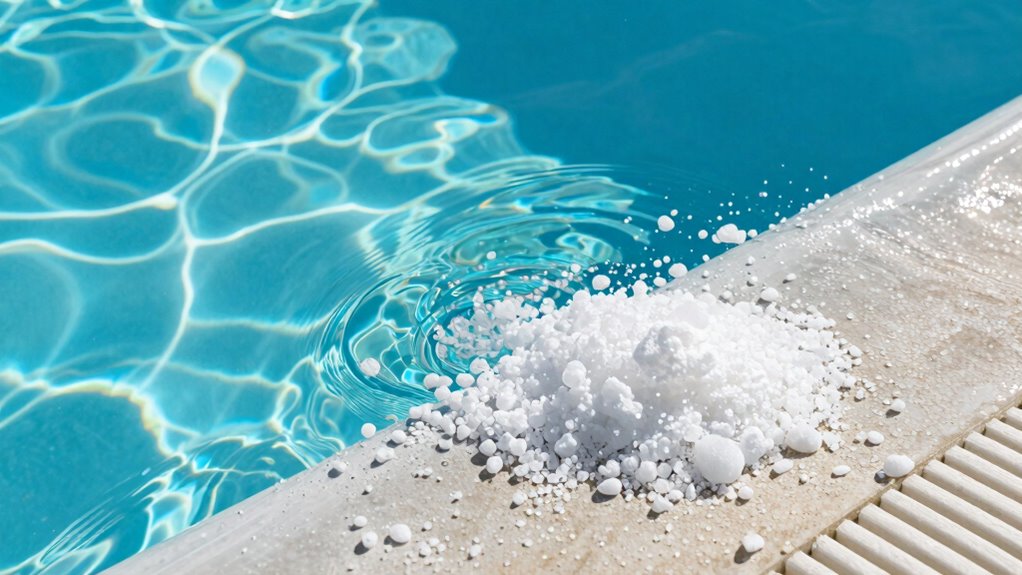
Cyanuric acid protects your chlorine from sunlight, helping to keep your pool sanitized longer and reducing chemical costs. However, if levels are too high, it can actually block chlorine’s effectiveness, making your water less safe. Conversely, too little leaves chlorine vulnerable to rapid breakdown. Balancing cyanuric acid is key to a healthy pool—too much or too little can cause problems. Keep exploring, and you’ll discover how to manage it for the best results.

Get pool and patio gear delivered free with Prime
- Fast, free delivery on millions of items
- Prime Video, Amazon Music and more included
- Member-only deals all year
Key Takeaways
- Cyanuric acid stabilizes chlorine, extending its effectiveness but can also reduce sanitizer potency if levels become too high.
- Proper levels protect chlorine from UV degradation, but excess cyanuric acid can hinder chlorine’s ability to sanitize effectively.
- Maintaining optimal cyanuric acid balances chemical stability with sanitation efficiency, preventing rapid chlorine loss or reduced disinfection.
- Imbalanced levels can lead to increased maintenance efforts, either through frequent chemical adjustments or water dilution.
- When managed correctly, cyanuric acid enhances pool safety; mismanagement, however, can compromise water quality and safety.
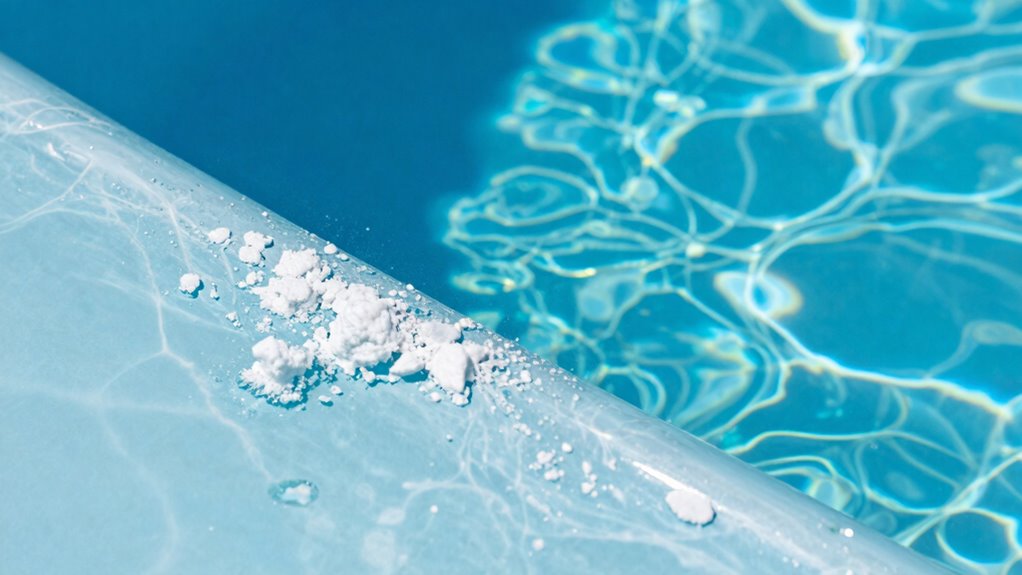
Have you ever wondered why cyanuric acid is a common additive in swimming pools? It’s because it plays a significant role in pool maintenance, especially when it comes to protecting chlorine from the sun’s ultraviolet rays. Without cyanuric acid, your pool’s chlorine can break down quickly, forcing you to add chemicals more frequently. By stabilizing the chlorine, cyanuric acid helps maintain a consistent sanitizer level, making your pool safer and easier to manage. This chemical stability is essential for keeping bacteria at bay and preventing algae growth. When you add cyanuric acid, you’re effectively shielding the chlorine from sunlight, which extends its lifespan and reduces the need for constant chemical adjustments. It’s a simple yet powerful way to improve pool efficiency and reduce chemical costs over time. Additionally, understanding the chemical interactions between cyanuric acid and chlorine can help you optimize your pool maintenance strategy. That’s why regular testing is necessary to keep cyanuric acid within appropriate ranges—usually between 30 and 50 parts per million. If you ignore this, the very chemical meant to help your pool maintenance can turn into a hindrance, making your water unsafe and increasing your workload. Monitoring cyanuric acid levels is crucial to prevent these issues. Regular testing helps ensure that your water chemistry stays balanced and effective.
Cyanuric acid protects chlorine from sunlight, extending its lifespan and making pool maintenance easier and more cost-effective.
Managing cyanuric acid levels requires a delicate balance. Too little, and your chlorine isn’t protected from sunlight, leading to rapid depletion. Too much, and you risk reducing the overall effectiveness of your sanitizer. Understanding how it influences chemical stability enables you to make smarter decisions about when and how much to add. It’s also important to note that once cyanuric acid reaches a high level, diluting the water might be necessary to bring it back to a safe range. This involves partially draining your pool and replacing it with fresh water, which can be inconvenient but necessary for proper pool maintenance. Water dilution techniques are often employed in such cases to restore proper chemical balance. An awareness of pool chemistry can significantly improve your ability to maintain a safe and healthy environment.
In the end, cyanuric acid is a double-edged sword. When used correctly, it simplifies pool maintenance and enhances chemical stability. But if you overlook its levels or misuse it, it can compromise your pool’s sanitation and increase your efforts. Keeping a close eye on cyanuric acid ensures you harness its benefits without falling victim to its pitfalls. Proper management and understanding of cyanuric acid’s role can make all the difference in keeping your pool safe, clean, and healthy.
Cyanuric acid test kit for pools
As an affiliate, we earn on qualifying purchases.
As an affiliate, we earn on qualifying purchases.
Frequently Asked Questions
How Does Cyanuric Acid Affect Different Types of Pool Disinfectants?
Cyanuric acid affects different pool disinfectants by stabilizing chlorine, helping maintain a steady disinfectant level in the pool. However, it can also hinder the effectiveness of free chlorine by reducing its ability to kill bacteria and algae, disrupting pool chemistry. You need to monitor cyanuric acid levels carefully to keep the disinfectant balance right. Too much cyanuric acid can cause disinfectant inefficiency, so balance is key for a healthy, safe pool.
Can Cyanuric Acid Levels Fluctuate Naturally Over Time?
Yes, cyanuric acid levels can fluctuate naturally over time. For example, if you don’t regularly test and adjust your pool’s chemical balance, sunlight can break down cyanuric acid, causing levels to drop. This impacts pool water stability and chemical balance, making it harder to maintain proper disinfection. You need to monitor cyanuric acid regularly to keep your pool safe, ensuring consistent water quality and preventing unexpected fluctuations.
What Are the Signs of Cyanuric Acid Overdose in Pools?
If you notice your pool’s cyanuric acid overdose, you’ll see signs like cloudy water, persistent algae, and difficulty maintaining proper chemical balance. High cyanuric acid disrupts pool chemistry, making chlorine less effective and causing imbalanced water. You might also experience skin irritation or cloudy water. Regular testing helps you catch overdose symptoms early, allowing you to adjust chemical balancing promptly and keep your pool safe and clean.
Is Cyanuric Acid Safe for All Pool Users?
Cyanuric acid is generally safe for most pool users when used correctly, but it’s essential to ensure pool safety. Too much can cause chemical instability, leading to cloudy water or reduced sanitizer effectiveness. Always monitor cyanuric acid levels and follow recommended guidelines. Proper balance ensures your pool remains safe and healthy, minimizing risks for swimmers. If levels get too high, it might compromise your pool’s safety and water quality.
How Does Climate Influence Cyanuric Acid’s Effectiveness?
Climate considerably impacts cyanuric acid’s effectiveness, especially in sunny regions where UV stability becomes a concern. You’ll find that higher outdoor temperatures and increased sunlight reduce cyanuric acid’s ability to protect chlorine. Its interaction with pH levels also varies with climate; in warmer, sunnier environments, maintaining proper pH is vital to prevent degradation. So, adjusting your cyanuric acid levels based on climate guarantees your pool stays balanced and safe.
As an affiliate, we earn on qualifying purchases.
Conclusion
Understanding cyanuric acid’s dual role can be eye-opening. While it protects your pool from UV damage, overuse can diminish chlorine’s effectiveness, risking unsafe water. Did you know that nearly 70% of pool owners unknowingly add too much cyanuric acid, unknowingly compromising their water’s safety? Stay informed and balance its use carefully. Proper management ensures your pool remains clean, safe, and enjoyable, so you can relax without worry.
As an affiliate, we earn on qualifying purchases.
Pool water test strips for cyanuric acid
As an affiliate, we earn on qualifying purchases.
As an affiliate, we earn on qualifying purchases.
Halloween Picks
halloween
As an affiliate, we earn on qualifying purchases.