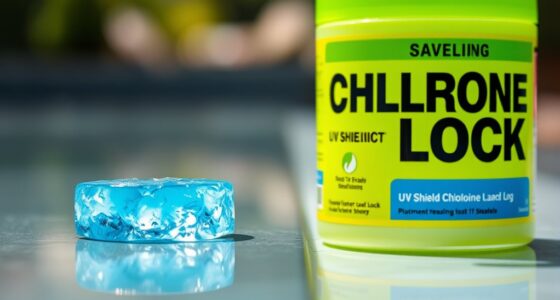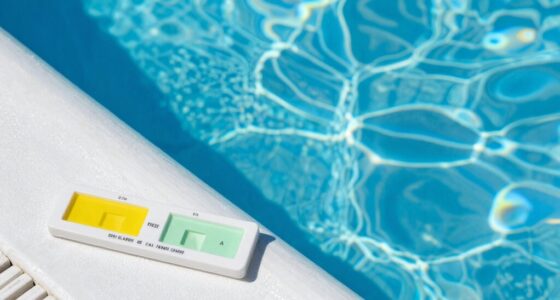

To protect your surfaces and swimmers, maintain a proper water balance by keeping pH between 7.2 and 7.6, alkalinity around 80-120 ppm, and chlorine levels at 1-3 ppm. Use stabilizers like cyanuric acid to shield chlorine from UV rays, extending its effectiveness. Regularly test and calibrate your equipment to guarantee accuracy, preventing damage and health issues. Staying on top of these steps helps keep your pool safe, clear, and well-maintained—learn more to optimize your pool care.
Key Takeaways
- Maintain pH levels between 7.2 and 7.6 to prevent surface damage and skin irritation.
- Regularly test and adjust alkalinity to stabilize pH and avoid fluctuations.
- Use cyanuric acid to stabilize chlorine, prolonging disinfection and protecting swimmers.
- Ensure proper equipment calibration for accurate chemical readings and balanced water chemistry.
- Consistently monitor chlorine and stabilizer levels to prevent bacterial growth and surface erosion.
Have you ever wondered how to keep your pool water crystal clear and balanced? Maintaining the perfect water chemistry isn’t just about adding chemicals — it’s about understanding the precise balance that protects both your pool’s surfaces and the swimmers. The pool water balance formula is your key tool here, guiding you through the essential steps to keep water safe and inviting. First, you need to focus on chemical stabilization. This process involves adding stabilizers, like cyanuric acid, which shield chlorine from the sun’s UV rays, ensuring it lasts longer and works more efficiently. When chlorine remains effective longer, you won’t need to add as much, saving money and reducing chemical overload. Proper chemical stabilization maintains a steady disinfectant level, preventing algae growth and bacterial contamination that can damage pool surfaces and harm swimmers.
Chemical stabilization with cyanuric acid protects chlorine, extending its effectiveness and keeping your pool safe and crystal clear.
Equally important is equipment calibration. You want your pool equipment—chlorinators, pH meters, and sensors—to be precisely calibrated. Accurate readings mean you’re adding the right amount of chemicals at the right time, avoiding over- or under-treatment. Regular calibration ensures your pH levels stay within the ideal range of 7.2 to 7.6, promoting comfort for swimmers and preventing corrosion or scaling on surfaces. When your equipment is calibrated correctly, it automatically maintains the correct chemical balance, reducing manual adjustments and minimizing chemical waste. This precision helps keep your water balanced, clear, and safe. Additionally, understanding the pool water chemistry is essential for effective maintenance, as it provides the foundation for all other testing and adjustments. It’s also important to recognize the role of chemical stabilization in protecting your pool’s surfaces and swimmers from harmful effects of unbalanced water. Keeping an eye on testing procedures ensures you catch imbalances early before they escalate into costly repairs.
The core of the water balance formula involves monitoring free chlorine, pH, alkalinity, and stabilizer levels regularly. You should test your water at least twice a week to catch imbalances early. When chlorine drops too low, bacteria and algae can thrive, risking surface damage and health issues. If pH is too high or low, it can lead to cloudy water, scaling, or corrosion. Balancing alkalinity stabilizes pH levels, making sure they don’t fluctuate wildly. When these levels are aligned correctly, your pool water remains inviting and safe for swimmers, and your surfaces stay protected from etching or staining.
Incorporating proper chemical stabilization and equipment calibration into your routine is essential for maintaining that perfect pool water balance. It’s a proactive approach that helps prevent problems before they start, saving you time, money, and headaches. When you consistently monitor and adjust your water chemistry with these principles, you’ll enjoy a sparkling, healthy pool that’s safe for everyone to use. The pool water balance formula isn’t just about numbers; it’s about creating an environment where your pool’s surfaces and swimmers stay protected, and your enjoyment is maximized. Developing a preventative maintenance schedule based on these guidelines can further enhance your pool’s longevity.
As an affiliate, we earn on qualifying purchases.
Frequently Asked Questions
How Often Should I Test My Pool Water Chemistry?
You should test your pool water chemistry at least 2-3 times a week during peak season and weekly during the off-season. Regular water testing is essential for proper pool maintenance, ensuring chemicals stay balanced and preventing issues like algae growth or corrosion. Keep a testing kit handy, and adjust the water chemistry as needed to protect your pool surfaces and swimmers. Consistent testing helps maintain a safe, clean, and inviting pool environment.
What Are Signs of Imbalanced Pool Water?
You’ll notice your pool’s chemistry is off when algae growth suddenly blooms or equipment starts corroding—ironic, isn’t it? Cloudy water, strong chemical odors, or skin irritation also hint at imbalance. If your swimmers complain about itchy eyes or the water looks murky, it’s time to check your levels. These signs point to issues that could ruin your pool’s beauty and longevity if ignored. Stay vigilant!
Can Balancing Chemicals Harm Pool Surfaces?
Balancing chemicals properly rarely harms pool surfaces; in fact, it helps prevent damage. Overusing chemicals, like excessive pH adjusters or chlorine, can cause chemical corrosion, leading to pool surface damage over time. Always follow manufacturer instructions and monitor your water’s pH, alkalinity, and sanitizer levels. Proper water balance safeguards your pool surfaces from deterioration and ensures safe, clean swimming conditions without risking chemical corrosion or surface damage.
How Does pH Affect Swimmer Comfort?
You’re hitting the nail on the head—pH levels directly impact swimmer comfort. When pH is balanced, it guarantees pH stability, preventing irritation to eyes and skin, making swimming more enjoyable. If pH is too high or low, it can cause discomfort and compromise swimmer safety. Keeping the pH level in the proper range maintains a comfortable environment, helps prevent skin and eye irritation, and promotes a safe, pleasant swimming experience for everyone.
What Tools Are Best for Measuring Water Balance?
You should use reliable chemical testing tools like test strips or digital testers to measure water balance accurately. These tools help you monitor pH, alkalinity, and sanitizer levels, ensuring ideal water quality. Regular testing allows you to catch imbalances early, keeping the water safe and comfortable for swimmers. Invest in high-quality testing kits for consistent, precise results, and maintain your pool’s health by staying on top of chemical adjustments.
As an affiliate, we earn on qualifying purchases.
Conclusion
Keeping your pool’s water balanced is essential for protecting surfaces and swimmers alike. By understanding and applying the right formula, you reduce the risk of corrosion, scaling, and skin irritation. Did you know that improper water chemistry can cause surface damage within just a few weeks? Regular testing and adjustments guarantee a safe, inviting environment. Stay vigilant with your pool maintenance, and you’ll enjoy crystal-clear water and a healthier swimming experience all season long.
As an affiliate, we earn on qualifying purchases.
As an affiliate, we earn on qualifying purchases.