LSI (Langelier Saturation Index) helps you predict whether water will cause scaling or corrosion before it happens. It works by analyzing water chemistry, checking if the water is likely to deposit calcium carbonate (scale) or corrode your equipment. By monitoring LSI and spotting data patterns early, you can make small adjustments to keep your system stable and prevent costly damage. Keep exploring to discover how to effectively use LSI for proactive maintenance.
Key Takeaways
- LSI measures water’s tendency to scale or corrode by evaluating calcium carbonate saturation levels.
- A high LSI indicates water is likely to form scale deposits; low LSI suggests risk of corrosion.
- Monitoring LSI helps predict potential problems before visible damage occurs.
- Adjusting water chemistry based on LSI readings prevents scaling and corrosion proactively.
- Regular LSI assessment enables early intervention, protecting equipment and ensuring system longevity.

Varify 17in1 Complete Drinking Water Test Kit – 100 Strips + 2 Bacteria Tester Kits – Well, Tap, Home, City Water Testing Strip for Lead, Alkaline, Chlorine, Hardness, Iron, Fluoride, Copper & More
17 IMPORTANT PARAMETERS: The Varify Premium Drinking Water Test Kit offers an unrivaled, complete analysis of your drinking…
As an affiliate, we earn on qualifying purchases.
As an affiliate, we earn on qualifying purchases.
What Is LSI and How Can It Help Predict Scaling and Corrosion?

Have you ever wondered how experts predict when scaling or corrosion might occur in a system? One key tool is the Langelier Saturation Index (LSI), which helps assess water stability. By calculating LSI, you can determine if water is likely to cause corrosion or scale buildup. This information is crucial for corrosion prevention and effective scale management. A high LSI indicates water is supersaturated with calcium carbonate, increasing the risk of scale formation. Conversely, a low LSI suggests water is undersaturated, making corrosion more likely. Monitoring LSI allows you to adjust water chemistry proactively, reducing equipment damage and downtime. Understanding water chemistry is essential for accurately interpreting LSI results and implementing appropriate treatment strategies. In short, understanding and applying LSI helps you predict and prevent issues before they happen, ensuring your system operates smoothly and efficiently. Additionally, maintaining proper water chemistry balance can significantly improve the accuracy of LSI predictions and the longevity of your system.

FreshWater Smart Monitoring Sensor – Smart Water Monitor for Spas & Hot Tubs – Smart Monitoring Sensor for Salt Systems – Sensor with Hourly Water Testing to Help Maintain Clean, Natural-Feeling Water
Soft & Natural-Feeling Water: This FreshWater IQ water monitoring sensor is designed to help you maintain clean, natural-feeling…
As an affiliate, we earn on qualifying purchases.
As an affiliate, we earn on qualifying purchases.
How Data Patterns Signal Early Signs of Equipment Issues

Monitoring data patterns is essential for detecting early signs of equipment issues before they escalate. By analyzing trends in flow dynamics and chemical reactions, you can spot anomalies indicating potential problems. Look for signs such as fluctuating pressure, temperature changes, or irregular flow rates, which often signal underlying issues. These patterns may reveal shifts in chemical reactions that could lead to scaling or corrosion if left unchecked. Recognizing subtle deviations early helps you prevent costly breakdowns. Pay attention to:
- Sudden drops or spikes in flow rates
- Unusual temperature fluctuations
- Changes in chemical composition
- Vibration patterns indicating mechanical stress
Understanding data analysis techniques can further enhance your ability to identify these early warning signs effectively. Additionally, corrosion prediction models can utilize historical data to forecast future equipment failures, enabling proactive maintenance strategies. Incorporating predictive analytics into your monitoring processes provides a proactive approach to maintaining equipment integrity.

API TAP WATER CONDITIONER Aquarium Water Conditioner 16-Ounce Bottle
Contains one (1) API TAP WATER CONDITIONER Aquarium Water Conditioner 16-Ounce Bottle
As an affiliate, we earn on qualifying purchases.
As an affiliate, we earn on qualifying purchases.
Using LSI to Detect Scaling and Corrosion Before They Cause Problems

Using LSI (Logarithmic Strain Index) provides a proactive way to identify scaling and corrosion issues early on. By analyzing data patterns, you can detect signs of chemical buildup that lead to scaling and material degradation that signals corrosion. LSI helps you monitor subtle changes in equipment performance, revealing underlying issues before they become severe. When you spot increasing strain levels, it indicates potential problem areas needing attention. This early detection enables you to implement targeted interventions, reducing downtime and repair costs. Instead of waiting for visible damage, you use LSI to catch looming problems, giving you a vital advantage in maintaining system integrity. Ultimately, applying LSI helps you stay ahead of scaling and corrosion, preserving equipment longevity and operational efficiency.

VIVOSUN Digital pH and TDS Meter Kits, 0.01pH High Accuracy Pen Type pH Meter ± 2% Readout Accuracy 3-in-1 TDS EC Temperature Meter for Hydroponics, Pool and Aquarium, Yellow Blue, UL Certified
Application: Great for all home and laboratory TDS & pH testing applications including aquariums, swimming pools
As an affiliate, we earn on qualifying purchases.
As an affiliate, we earn on qualifying purchases.
Benefits of Applying LSI for Proactive Maintenance

Applying LSI for proactive maintenance offers significant advantages by enabling you to identify potential equipment issues before they escalate. This early detection helps you reduce unplanned downtime and maintenance costs, positively impacting your economic bottom line. Additionally, it supports environmental considerations by minimizing waste and resource use through targeted interventions. The key benefits include:
- Reduced repair costs by addressing problems early
- Extended equipment lifespan through timely maintenance
- Lower environmental footprint by preventing unnecessary replacements
- Improved safety by avoiding sudden equipment failures
Practical Steps to Integrate LSI Into Your Monitoring System
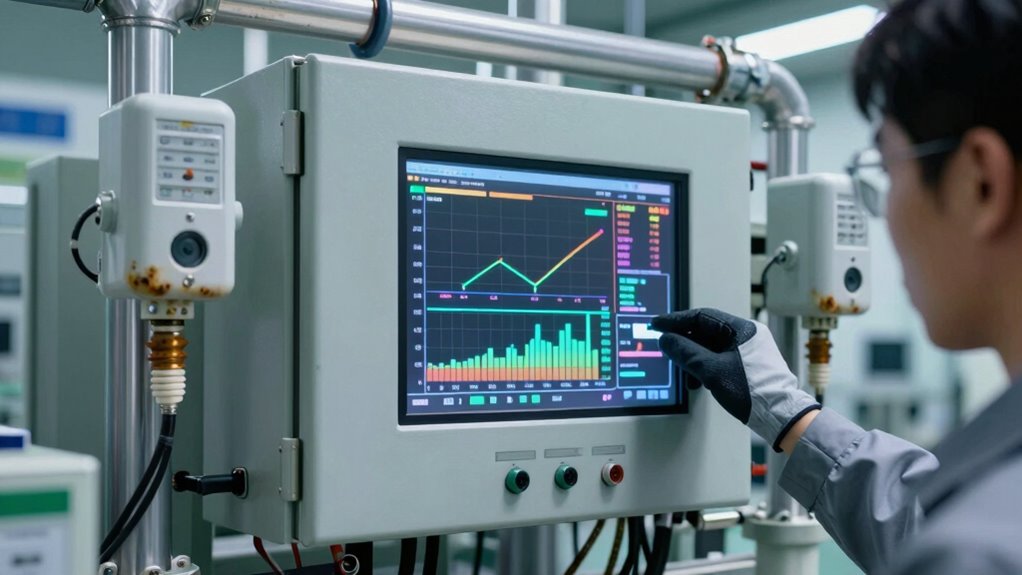
To effectively incorporate LSI into your monitoring system, you need to choose the right sensors that capture relevant data. Next, set clear monitoring protocols to guarantee consistent and accurate analysis. These steps help you make the most of LSI insights for proactive maintenance.
Selecting Appropriate Sensors
Choosing the right sensors is a crucial first step in effectively integrating LSI into your monitoring system. You need sensors suited for the specific parameters affecting scaling and corrosion, such as pH, temperature, and ionic content. Make certain your sensors are properly calibrated to provide accurate readings; regular sensor calibration is essential for reliable data. When selecting sensors, consider their durability in harsh environments and ease of maintenance. Data validation processes help confirm sensor accuracy over time, preventing false alarms. Look for sensors with robust construction and compatibility with your data acquisition system. Prioritize devices offering clear calibration procedures and proven long-term stability. Proper sensor selection, combined with ongoing calibration and data validation, ensures your monitoring system effectively predicts and prevents scaling and corrosion. Additionally, understanding comogenic ratings can help you choose materials less likely to contribute to skin or material issues in related applications. Implementing sensor longevity strategies can further enhance your system’s reliability and reduce maintenance costs over time. Ensuring compatibility with environmental conditions is also vital to maintain sensor performance in diverse operational settings, and selecting sensors with high accuracy ensures the precision necessary for early detection of potential issues.
Establishing Monitoring Protocols
Establishing effective monitoring protocols is essential for successfully integrating LSI into your system. Clear protocols enable you to detect scaling and corrosion early, ensuring regulatory compliance and supreme performance. Start by defining key parameters like pH, temperature, and LSI levels. Use industrial automation to automate data collection and analysis, reducing manual errors. Regularly review and adjust your protocols based on system feedback. To streamline communication, consider this protocol overview:
| Step | Action |
|---|---|
| Data Collection | Automate sensor readings |
| Data Analysis | Use software to identify anomalies |
| Response Planning | Develop action plans for deviations |
| Regulatory Checks | Ensure compliance documentation is maintained |
| Protocol Review | Schedule periodic protocol evaluations |
Additionally, understanding battery capacity and how it affects system performance can help optimize your monitoring strategies. These steps help maintain system stability and meet regulatory standards efficiently, especially when considering corrosion prevention techniques to prolong equipment lifespan. Incorporating proper maintenance practices can further enhance the longevity of your system components. Moreover, implementing predictive analytics based on monitoring data trends can preemptively address potential issues before they escalate.
Overcoming Challenges and Ensuring Accurate LSI Predictions

To get reliable LSI predictions, you need to focus on calibration and data validation. Regularly check your models and make certain your data is accurate and relevant. These steps help you overcome common challenges and improve prediction accuracy. Additionally, incorporating user feedback can help refine your models and adapt to changing conditions. Paying attention to data quality ensures the integrity of your predictions and reduces errors. Investing in ongoing model evaluation can also help identify potential issues early and maintain prediction reliability. Incorporating chemical data and industry-specific parameters further enhances the model’s accuracy and applicability. Ensuring model robustness by testing across diverse scenarios can further improve prediction outcomes.
Calibration for Accuracy
Ensuring that Latent Semantic Indexing (LSI) models produce accurate predictions can be challenging because of the complexities involved in capturing the true meaning behind words. Proper calibration is essential to maintain data accuracy and reliable results. To improve calibration, you should:
- Regularly perform sensor calibration to minimize measurement errors
- Use high-quality, consistent data inputs for better model performance
- Adjust parameters based on feedback to refine the model’s understanding
- Continuously monitor data consistency to detect discrepancies early
Data Validation Techniques
Accurate LSI predictions depend heavily on the quality and validity of the input data. To achieve this, you should perform thorough chemical analysis of the water and materials involved. This helps verify data accuracy and identify potential sources of error. Incorporate corrosion inhibitors into your analysis to assess their effectiveness and understand their impact on LSI calculations. Regularly validate data by cross-checking measurements with laboratory results and using reliable sensors. Be cautious of outliers or inconsistent readings, which can distort predictions. Document all data validation steps to ensure transparency and reproducibility. By maintaining rigorous data validation techniques, you minimize errors, improve prediction reliability, and better anticipate scaling and corrosion issues before they arise.
Frequently Asked Questions
How Does LSI Compare to Other Predictive Maintenance Techniques?
You find that LSI, combined with machine learning and data analysis, offers more accurate predictions of scaling and corrosion than traditional techniques. Unlike reactive methods, LSI analyzes complex data patterns early, helping you identify issues before they happen. This proactive approach reduces downtime and maintenance costs, making it superior to conventional scheduled inspections. Overall, LSI’s ability to process vast data sets makes it a powerful tool for predictive maintenance.
What Industries Benefit Most From Lsi-Based Scaling and Corrosion Prediction?
You’ll find the oil and gas industry benefits greatly from LSI-based scaling and corrosion prediction, helping prevent costly downtime and equipment failure. Power generation plants also gain from this technology, as it allows you to anticipate and mitigate scaling and corrosion issues early. By using LSI, you can optimize maintenance schedules, reduce operational risks, and improve overall efficiency in these high-stakes industries.
Can LSI Detect Issues in Complex or Multi-Variable Systems?
Yes, LSI can detect issues in complex systems through multi-variable analysis, helping you identify problems that aren’t obvious at first glance. By analyzing multiple factors simultaneously, LSI uncovers hidden patterns, correlations, and potential failures. This makes it ideal for monitoring complex systems, where numerous variables interact. You gain early warnings, improved reliability, and proactive maintenance, ensuring your operations stay smooth and issues are addressed before they escalate.
What Are Common Pitfalls When Implementing LSI Algorithms?
When implementing LSI algorithms, watch out for model overfitting, which can cause your model to perform poorly on new data. Also, poor data quality can lead to inaccurate predictions, so guarantee your data is clean and relevant. Avoid relying solely on complex models without proper validation, and always test your system on diverse datasets. Failing to do so can reduce the effectiveness of your LSI applications.
How Often Should LSI Models Be Recalibrated for Accuracy?
You should recalibrate your LSI models every 6 to 12 months to maintain accuracy. For example, if a manufacturing plant relies on LSI for corrosion prediction, neglecting model updating could lead to missed early warnings, causing costly damage. The calibration frequency depends on factors like data variability and process changes. Regular updates guarantee your model stays relevant, reducing false alarms and improving predictive reliability.
Conclusion
Now that you know how LSI can spot trouble before it strikes, imagine your equipment sipping a secret smoothie of data signals, hiding its impending meltdown like a sneaky ninja. With LSI’s keen eye, you’ll catch those silent villains—scaling and corrosion—before they turn your system into a rusty, leaky mess. So go ahead, give those machines a crystal ball, and keep your operations smooth, hassle-free, and (almost) foolproof.