Metals like copper and iron can enter your pool water through source water or corrosion of metal parts. Copper causes bluish-green stains, while iron creates reddish-brown spots. These metals oxidize and settle on surfaces, especially when the water chemistry is unbalanced. To prevent stains, regularly test your water, use sequestrants, and maintain proper pH and alkalinity. If you want to learn how to remove existing stains and keep your pool pristine, keep exploring this guide.
Key Takeaways
- Copper and iron enter pool water through source water, corrosion, or metal-based chemicals, leading to staining over time.
- Metal ions react with chlorides, carbonates, and sulfates, forming insoluble compounds that cause blue-green or reddish-brown stains.
- Imbalanced pH and water chemistry accelerate metal leaching and oxidation, increasing stain formation.
- Regular testing and use of sequestrants help bind metals, preventing deposits and discoloration.
- Proper water balance and routine maintenance are essential to prevent and control existing metal stains.

Clorox® Pool&Spa™ Swimming Pool Scale, Metal & Stain Control, Prevents Metal Stains and Scale Formation, Removes Metal Stains, 1 Quart (Pack of 1)
Metal & Stain Control: Clorox Pool&Spa Swimming Pool Scale, Metal & Stain Control is your solution to preventing…
As an affiliate, we earn on qualifying purchases.
As an affiliate, we earn on qualifying purchases.
How to Recognize Metal Stains in Your Pool

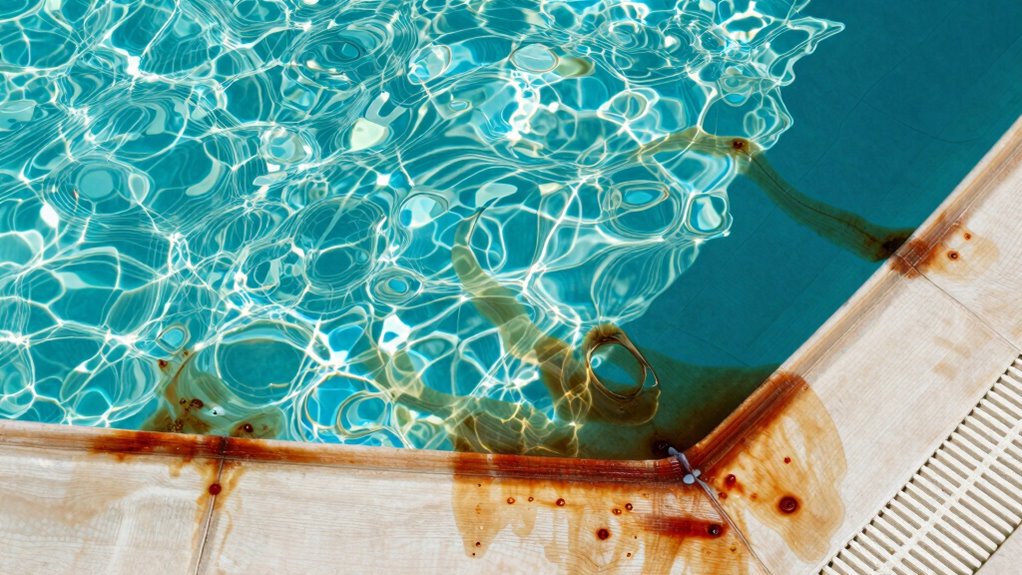
Ever wonder how to tell if your pool has metal stains? Look for discoloration that doesn’t wipe away easily. Metal stains often appear as rust-colored or greenish spots on the pool’s surface or walls. These stains can develop even if you’ve been diligent with your pool shock treatments and algae prevention. Pay attention to areas where algae tends to grow, as minerals can settle there, causing staining over time. Metal stains may also cause your water to look cloudy or murky, even if your chemical levels are balanced. Regularly inspecting your pool helps catch stains early. If you notice persistent discoloration despite proper shock and algae prevention, it’s a sign that metals like copper or iron might be present, requiring further treatment. Proper testing and metal detection methods can help identify the specific minerals causing the stains. Understanding the causes of metal contamination in pool water can also guide you in preventing future staining issues. Additionally, water source analysis can identify potential metal sources before problems develop. Conducting metal testing regularly can help monitor metal levels and prevent staining before it becomes visible. Incorporating metal removal techniques into your maintenance routine can further reduce the risk of staining and keep your pool water clear.

Pool Mate 1-Quart Concentrated Metal Out Stain and Mineral Inhibitor, Pool Metal Remover, Stain Remover, Made in USA
1 quart per 10,000 gallons of water
As an affiliate, we earn on qualifying purchases.
As an affiliate, we earn on qualifying purchases.
What Causes Copper and Iron to Enter Your Pool Water

Copper and iron can enter your pool water through various sources, like corroding pipes or metal fixtures. Water chemistry plays a big role, as pH and oxidation-reduction potential influence metal leaching. Understanding these factors helps you prevent unwanted metal contamination. Additionally, regular testing of your water’s metal levels can help detect early signs of contamination before stains form. Implementing proper water balance techniques can further minimize the risk of metal buildup in your pool.
Sources of Metal Leaching
Metal leaching into your pool water often results from the materials and conditions within your pool system. Common metal sources include corroding pipes, fittings, and metal equipment that release copper or iron into the water. The pool environment itself can accelerate this process—high chlorine levels, low pH, or aggressive water conditions can corrode metal components, causing metals to leach out. For example, aging plumbing made of copper or iron is more prone to deterioration, especially if maintenance isn’t consistent. Additionally, metal-based algaecides or certain pool minerals can introduce metals directly into the water. Understanding these sources helps you identify potential risks and take steps to prevent metal contamination, keeping your pool safe and stain-free.
Water Chemistry Factors
Water chemistry plays a crucial role in determining whether copper and iron will leach into your pool. Fluctuations in pH levels can accelerate metal corrosion, especially if pH drops below 7.2 or rises above 7.8. High mineral content, including metals like copper and iron, increases the likelihood of staining when conditions change. Maintaining balanced water chemistry minimizes metal release. Additionally, airborne contaminants can introduce pollutants that react with metals, further contributing to staining and corrosion.
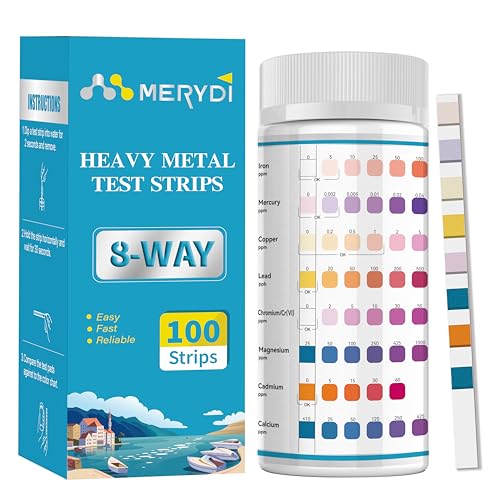
Heavy Metals Water Test Strips (8 Tests) – 100ct Home Water Testing Kit for Iron, Mercury, Copper, Lead, Chromium, Magnesium, Cadmium, Calcium-Well Home Tap City Drinking Water Testing Kit
100 WATER TEST STRIPS:Each pack contains 100 strips, offering ample tests for continuous monitoring and added peace of…
As an affiliate, we earn on qualifying purchases.
As an affiliate, we earn on qualifying purchases.
Understanding How Metals Stain Your Pool Water
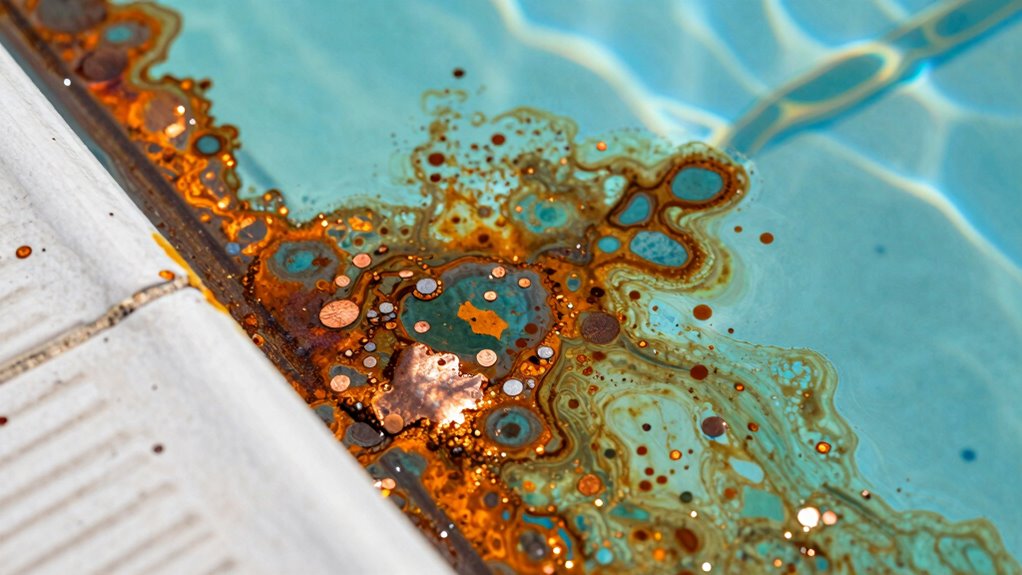
When metals like iron and copper enter your pool, they can react with chemicals and minerals, leading to unsightly stains. These stains result from metal ion interactions, where metal ions combine with chlorides, carbonates, or sulfates, forming insoluble compounds. The staining mechanisms depend on factors like pH, alkalinity, and oxidizing agents, which influence how these metals precipitate out of solution. Copper tends to create blue-green stains, while iron causes reddish-brown discoloration. Recognizing that metal ion behavior in water varies under different conditions helps explain why metals can settle on surfaces or remain suspended in water, affecting both appearance and water quality. Metal oxidation processes are also influenced by the presence of oxidizing agents, which can change how quickly stains form. Understanding these processes helps explain why metals can settle on surfaces or remain suspended in water, affecting both appearance and water quality. Recognizing how these interactions occur allows you to better anticipate staining and take steps to minimize their impact. Proper water testing and treatment can help prevent the formation of these stubborn stains, especially when you understand how metal ions behave in different water conditions.
Pool Mate 1-Quart Concentrated Metal Out Stain and Mineral Inhibitor, Pool Metal Remover, Stain Remover, Made in USA
1 quart per 10,000 gallons of water
As an affiliate, we earn on qualifying purchases.
As an affiliate, we earn on qualifying purchases.
Simple Ways to Prevent Metal Stains in Your Pool
To keep metal stains at bay, you should regularly test your pool water to catch any issues early. Using metal sequestrants can also help prevent metals from settling out and causing stains. These simple steps make it easier to maintain a clear, stain-free pool. Incorporating natural filtration systems can further reduce the need for chemical treatments and support a healthier swimming environment. Regular maintenance and understanding metal levels are essential for long-term pool health. Monitoring water chemistry helps ensure that metal concentrations stay within safe limits and prevents staining before it begins. Additionally, understanding the effects of metals on pool water can help you tailor treatment strategies more effectively. Implementing proper water testing protocols ensures timely detection of metal imbalances, thereby minimizing the risk of staining.
Regular Water Testing
Regular water testing is essential for preventing metal stains in your pool. By routinely performing pool water testing, you can catch metal levels early and avoid costly stains. Using effective metal detection techniques helps identify copper and iron before their concentrations become problematic. Regular testing also ensures your chemical balance stays in check, reducing corrosion risks. Keep an eye on pH and alkalinity, as imbalances can accelerate metal release. Incorporate these practices:
- Schedule weekly water tests during peak swimming months
- Use test kits designed for detecting metals
- Record results to track trends over time
- Adjust chemical levels promptly based on results
- Consult with pool professionals if metal levels rise unexpectedly
Staying proactive with water testing empowers you to maintain a stain-free pool and extend its lifespan. Metal level management is crucial for maintaining water quality and preventing stains caused by copper and iron. Additionally, maintaining proper water chemistry standards helps minimize the risk of metal corrosion and stain formation.
Use Metal Sequestrants
Have you considered using metal sequestrants to prevent stains in your pool? Metal sequestrants are chemicals that bind to metals like copper and iron, keeping them in solution and preventing them from depositing as stains on your pool surfaces. By adding these agents regularly, you can effectively control the metal levels in your water, reducing the risk of unsightly discoloration. Proper stain prevention starts with maintaining balanced water chemistry and using the right sequestrants consistently. They work by chelating metals, which means they surround the metal particles and keep them from reacting with chlorine or other chemicals that cause staining. Incorporating metal sequestrants into your routine is a simple, proactive step to keep your pool sparkling clean and free of unsightly stains.
Effective Methods to Remove Existing Metal Stains
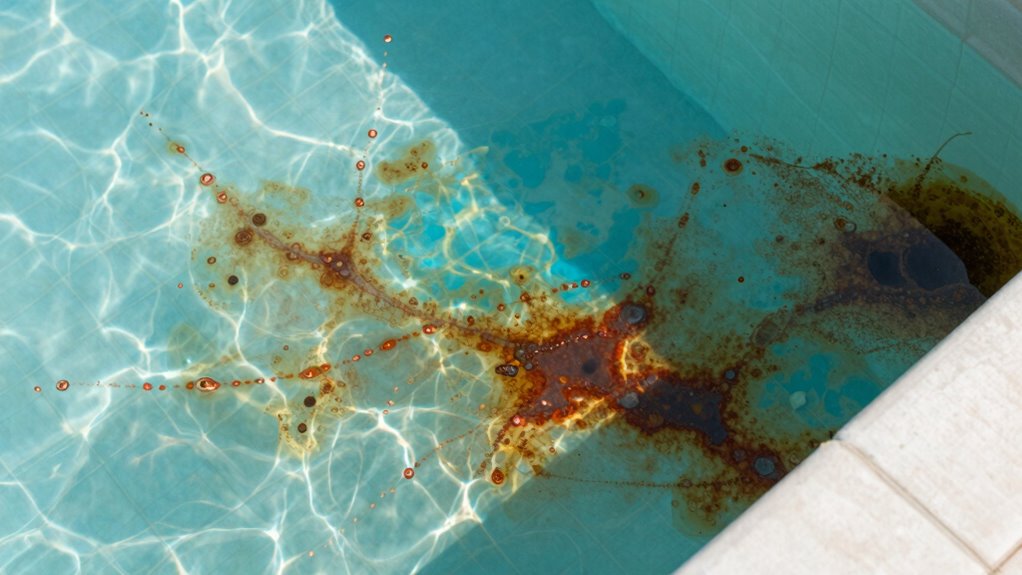
Removing existing metal stains from your pool water requires targeted treatments that effectively break down and lift the discoloration. Chemical treatments are your best option for quick, effective removal, especially if you prefer DIY removal. Start by testing your water’s pH and adjusting it to the proper level, as this enhances treatment effectiveness. Use a metal stain remover designed specifically for pools, following the manufacturer’s instructions. Regular brushing of stained areas can help dislodge deposits. Additionally, filter your water thoroughly after treatment to remove loosened particles. Consider the following:
- Use a metal stain remover formulated for pools
- Adjust pH levels before treatment
- Brush stained areas regularly
- Conduct thorough filtration post-treatment
- Follow manufacturer instructions carefully
These steps will help you restore your pool’s clarity and prevent further staining.
How to Keep Your Water Balanced to Minimize Metal Stains
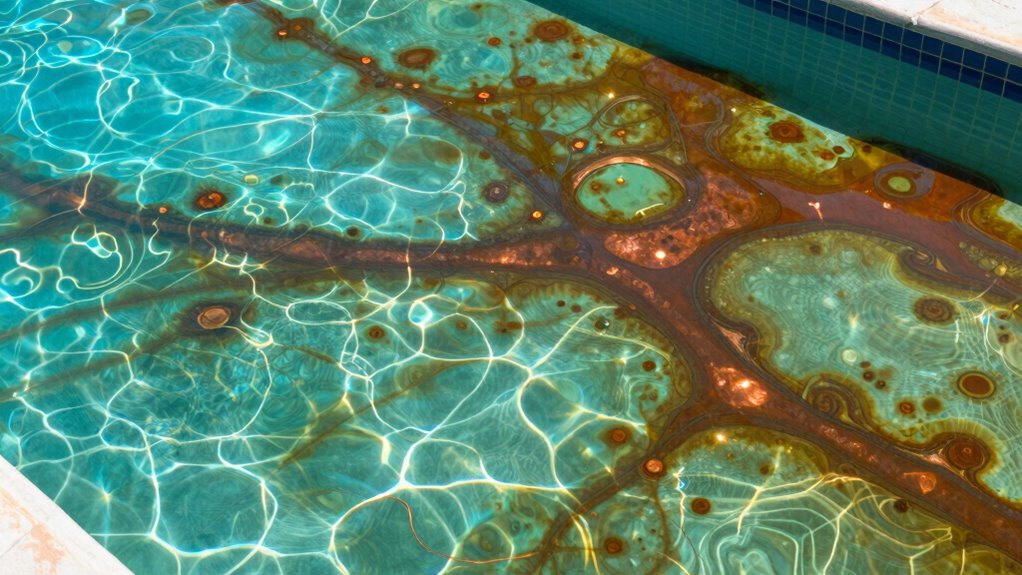
Maintaining a balanced pool water chemistry is essential to prevent metal stains from forming in the first place. When your water’s pH, alkalinity, and calcium hardness are properly calibrated, you reduce the risk of pool corrosion, which can cause metals like copper and iron to leach into the water. Stable water chemistry also minimizes metal absorption by pool surfaces and equipment, preventing stains before they appear. Regular testing and adjusting of water parameters ensure metals stay dissolved and don’t settle as stains on your pool walls or floor. Using a good water conditioner or sequestrant can further bind metals, protecting your pool’s surfaces. By keeping your water balanced, you create an environment that’s less hospitable to metal deposits and stains.
When to Call a Pool Professional for Metal Stain Issues
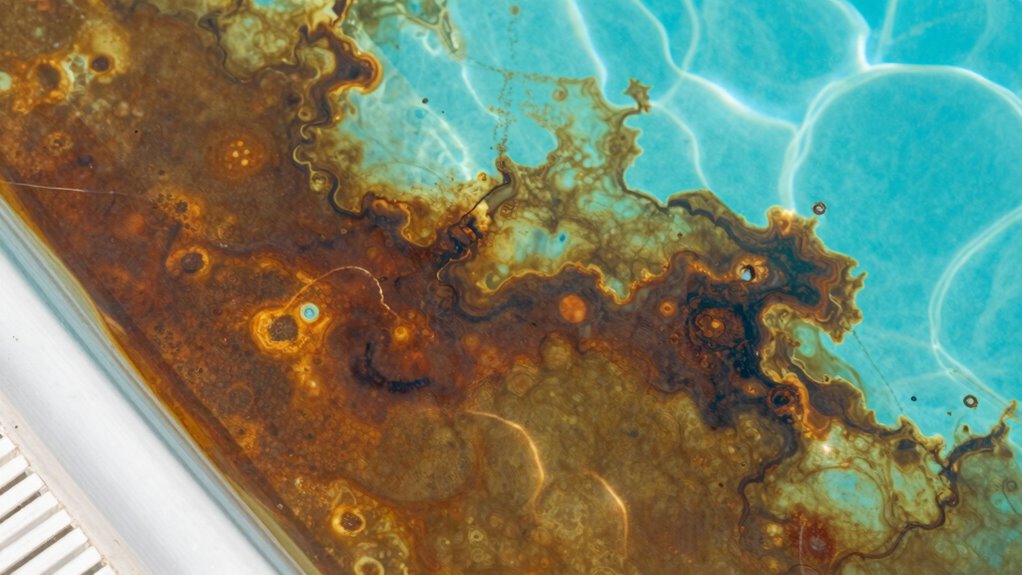
Sometimes, metal stains in your pool require professional intervention to fully resolve. If attempts at stain removal don’t work or your pool chemistry is off, it’s time to call in experts. Professionals can accurately diagnose the type of metal stain and adjust your pool’s chemistry to prevent future issues.
When stain removal fails or chemistry is off, consult professionals to protect your pool’s health and beauty.
Consider calling a pool pro if:
- Stains persist despite regular cleaning
- Metal levels are difficult to control
- Your water chemistry is hard to balance
- Stains keep reappearing after treatment
- You’re unsure about safe stain removal methods
A professional can perform a thorough stain assessment, optimize pool chemistry, and recommend appropriate treatments. Knowing when to seek help ensures your pool stays beautiful and safe, avoiding costly damage from unresolved metal stains.
Frequently Asked Questions
Can Metal Stains Harm Swimmers’ Health?
Metal stains in your pool don’t typically harm swimmers’ health, but they can affect pool safety and aesthetics. Iron and copper can cause discoloration, making it harder to see clearly. To guarantee safe swimming, regularly test and treat your water to prevent metal buildup. If stains appear, perform stain removal promptly. Keeping water balanced and clean helps maintain a safe environment and preserves your pool’s appearance.
Are Metal Stains More Common in Certain Types of Pools?
Ever wonder if some pools are more prone to metal stains? You might be surprised to learn that natural mineralization and pool type considerations play a big role. Metal stains are more common in outdoor pools with well water or mineral-rich sources, and certain pool materials like plaster or concrete are more susceptible. By understanding your pool’s water source and material, you can take steps to prevent these stains effectively.
How Often Should I Test My Pool Water for Metals?
You should test your pool water for metals at least once a month through metal testing and water analysis. Regular testing helps catch metal levels early, preventing stains and damage. If you notice staining or cloudy water, increase testing frequency. Using test kits or professional services guarantees accurate results, so you can take corrective actions promptly. Consistent water analysis keeps your pool clean and safe for swimmers.
Do Metal Stains Affect the Pool’s Chemical Balance?
Did you know that even small metal stains can disrupt your pool water chemistry? Metal stains don’t directly alter pH or sanitizer levels, but they can hide signs of chemical imbalance. Using metal detection methods helps you identify and remove these metals early. Ignoring stains might lead to corrosion or cloudy water, so addressing them keeps your pool’s chemistry balanced and your water crystal clear.
Can Regular Pool Maintenance Prevent Metal Buildup?
Regular pool maintenance can effectively prevent metal buildup if you consistently perform pool water treatment and use metal removal techniques. Test your water regularly, adjust pH and alkalinity, and add metal sequestrants as needed. Using metal removers like iron and copper removers helps keep metals at bay. By staying proactive with these measures, you’ll minimize staining, protect pool equipment, and keep your water crystal clear all season long.
Conclusion
So, next time your pool’s turning green or brown, don’t blame it on mermaids or underwater goblins. Instead, remember that copper and iron are just doing their best to add some color—by staining your water. Keep your metals in check, and your pool will stay sparkling. Or, if all else fails, call a pro before your pool turns into a science experiment. Because, really, who wants a swimming pool that looks like a rusty pond?