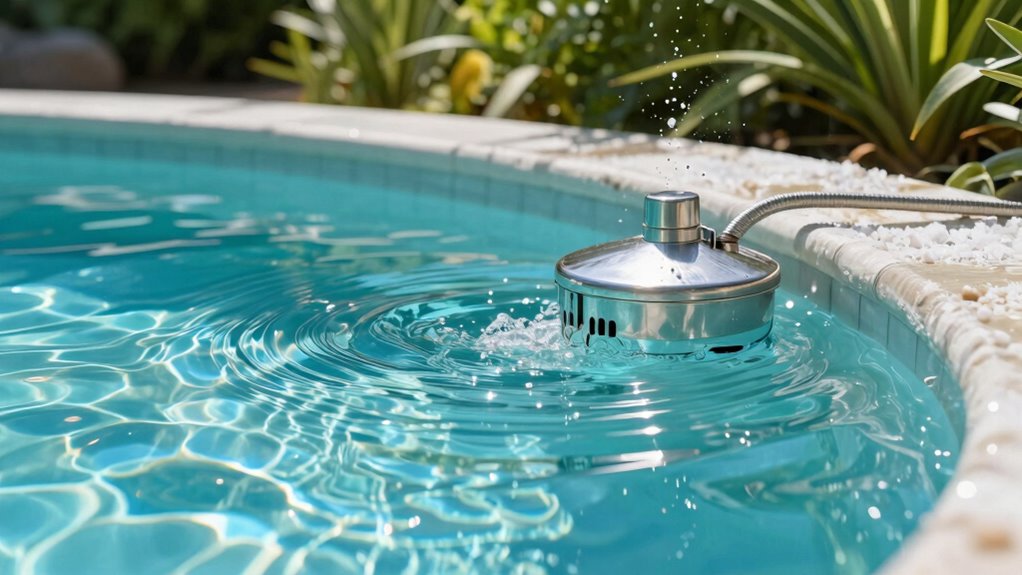

In your saltwater pool, salt is converted into chlorine through electrolysis, which continuously sanitizes the water. Maintaining proper salt levels—around 2700 to 3400 ppm—is essential for effective chlorine production. Additionally, keeping your pH between 7.2 and 7.6 guarantees chlorine works efficiently and water stays clear. Understanding how these chemical balances interact helps prevent issues like cloudy water or system damage. If you want to discover more about how all these elements work together, keep exploring.

Get pool and patio gear delivered free with Prime
- Fast, free delivery on millions of items
- Prime Video, Amazon Music and more included
- Member-only deals all year
Key Takeaways
- Saltwater pools generate chlorine continuously through electrolysis, relying on proper salt levels for effective sanitation.
- Maintaining optimal pH (7.2–7.6) is crucial for chlorine efficiency and water comfort.
- Excess or insufficient salt can damage equipment or hinder chlorine production.
- Water chemistry stability prevents scaling, corrosion, and cloudy water, extending system lifespan.
- Regular testing and adjustments of salt, pH, and alkalinity are essential for safe, balanced pool water.
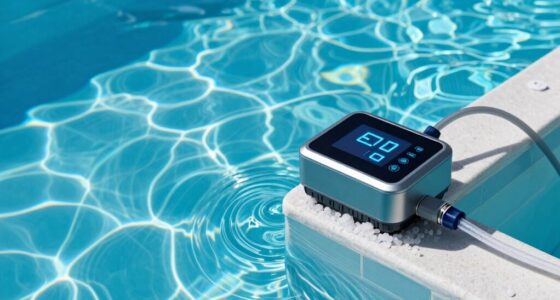
Saltwater pools are popular for their softer feel and lower chemical odor, but maintaining the right chemistry is essential for safe and clear water. At the heart of this is understanding how pool sanitization works in a saltwater system. Instead of adding chlorine manually, your saltwater pool uses a process called chlorine generation. A salt cell, installed in your system, converts the salt dissolved in the water into chlorine through electrolysis. This continuous production keeps the water sanitized, effectively killing bacteria and algae while reducing the need for frequent chemical additions.
Saltwater pools use chlorine generation via electrolysis, providing continuous sanitization for clearer, safer water.
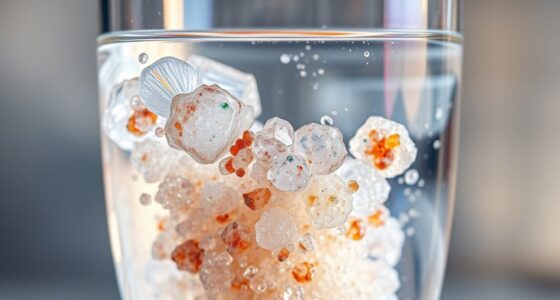
However, just having a salt cell isn’t enough. You need to monitor and adjust the salt levels regularly to guarantee the chlorine generation process functions efficiently. Too little salt, and the system can’t produce enough chlorine; too much salt can damage the equipment and lead to cloudy water. Ideally, you’re aiming for a salt concentration around 2700 to 3400 parts per million (ppm), which is roughly the salinity of seawater. Maintaining this balance is critical because it directly impacts your pool’s sanitation, safety, and clarity.
Chemical balance goes beyond just salt and chlorine. You also need to keep pH levels in check—ideally between 7.2 and 7.6—since pH affects chlorine efficiency and water comfort. When pH gets too high or low, chlorine becomes less effective, and water can become cloudy or irritate your skin and eyes. Total alkalinity and calcium hardness are other factors that influence water stability and prevent scaling or corrosion of pool components. Proper pool chemistry involves regular testing and adjustments, which is indispensable for the longevity of your saltwater system. Understanding how water chemistry interacts with salt levels can help you better manage your pool’s health. Additionally, understanding chemical interactions can help prevent common issues like scaling or corrosion. Regular testing and adjustments are vital to prevent imbalances that can compromise your system’s efficiency and longevity.
Many pool owners overlook the importance of understanding how their system maintains sanitation. The chlorine generated in a saltwater pool is constantly produced and consumed, which means you don’t need to add chlorine manually as often. Yet, this process depends heavily on maintaining the right chemical balance. If the salt level, pH, or alkalinity drift out of range, chlorine generation becomes less effective, risking bacterial growth or algae blooms. Proper maintenance and understanding of pool chemistry are essential for keeping your system functioning optimally. Being aware of how chlorine generation works can also help you troubleshoot issues more effectively when problems arise.
As an affiliate, we earn on qualifying purchases.
Frequently Asked Questions
How Often Should Salt Levels Be Tested in a Saltwater Pool?
You should test your salt levels at least once a month for proper pool maintenance. During testing, focus on salt level calibration to guarantee the sanitizer generator functions correctly. Regular testing helps prevent issues like low salt, which can cause poor sanitation, or high salt, which may damage equipment. Adjust salt levels as needed based on test results, and consider more frequent checks during heavy use or after adding fresh water.
What Are Common Causes of Salt Level Fluctuations?
Salt level fluctuations often happen because of salt imbalance caused by regular water evaporation, splash-out, or backwashing, which concentrate the salt. Mineral interference from other pool chemicals or debris can also affect the salt reading, making it seem like your salt levels are changing. To keep things accurate, regularly test your salt levels, especially after heavy use or chemical adjustments, and watch for signs of salt imbalance or mineral interference.
Can Saltwater Pools Be Used Immediately After Chemical Adjustments?
Yes, you can use your saltwater pool immediately after chemical adjustments, but it’s best to give the pool some time for proper pool maintenance and chemical stability. Test the water to confirm the pH, alkalinity, and chlorine levels are within ideal ranges. This helps prevent issues like skin irritation or corrosion, and guarantees your salt system functions efficiently. Always wait until the chemicals are fully mixed and stabilized before swimming.
How Does Temperature Affect Saltwater Pool Chemistry?
Imagine the sun warming your saltwater pool—temperature plays a key role in salt stability and chemistry. Higher temperatures can speed up chemical reactions, affecting pH and chlorine levels, while cooler temps slow them down. That’s why temperature calibration is essential; it helps you maintain proper salt levels and prevents imbalances. When you adjust for temperature changes, you guarantee your pool remains balanced, safe, and inviting all season long.
Are There Long-Term Effects of Salt Buildup on Pool Equipment?
Yes, salt buildup can lead to salt corrosion, which may damage your pool equipment over time. As salt accumulates, it accelerates corrosion of metal parts like pumps and filters, potentially shortening their lifespan. Regular maintenance, such as monitoring salt levels and cleaning components, helps prevent long-term damage. By managing salt concentrations, you can safeguard your equipment’s longevity and ensure your saltwater pool remains efficient and durable for years to come.
As an affiliate, we earn on qualifying purchases.
Conclusion
So, savvy swimmer, understanding the science of saltwater pool chemistry keeps your pool pristine and perfectly pH-balanced. By balancing bromine, chlorine, and stabilizers, you prevent problems and prolong your pool’s life. Remember, regular checks and careful chemistry create a crystal-clear, carefree oasis. Stay sharp, stay savvy, and let science serve your summer soaks. Simple steps and smart solutions turn your saltwater pool into a splendid, sparkling sanctuary you’ll love diving into every day!
As an affiliate, we earn on qualifying purchases.
pool water chemistry test strips
As an affiliate, we earn on qualifying purchases.
As an affiliate, we earn on qualifying purchases.
Halloween Picks
halloween
As an affiliate, we earn on qualifying purchases.