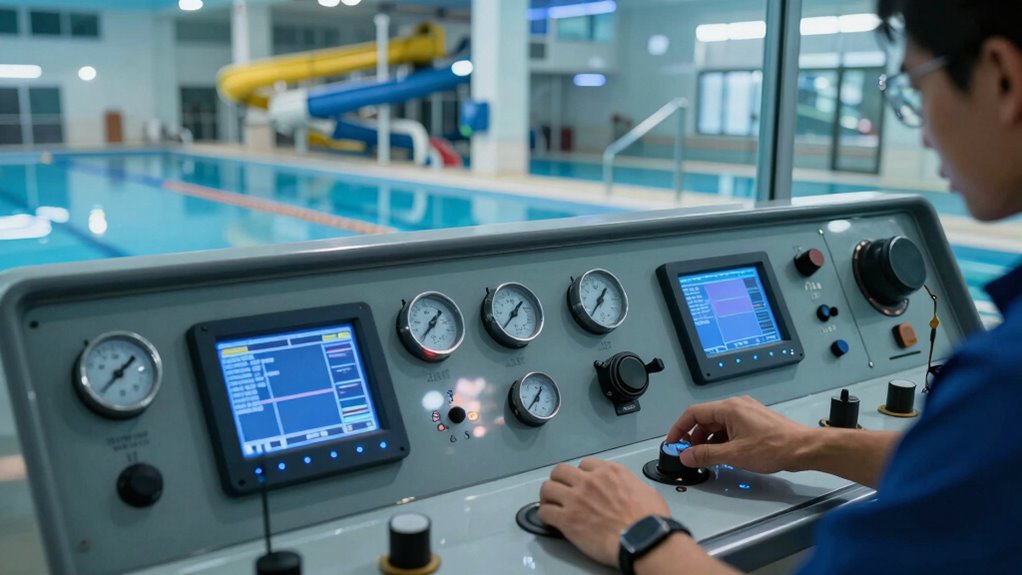

You may not realize it, but hidden costs like chemical overuse, inefficient staff training, and equipment maintenance quietly drain your aquatic facility’s budget. Poor chemical management leads to waste and higher expenses, while outdated training can cause costly mistakes. Small issues with filters or pumps often go unnoticed until they become expensive repairs. Staying on top of these silent cost centers saves money and keeps operations smooth—if you keep exploring, you’ll find ways to control these expenses more effectively.

Get pool and patio gear delivered free — and shop member deals
- Fast, free delivery on millions of items
- Access to Prime Big Deal Days deals on October 6–7
- Prime Video, Amazon Music and more included
Key Takeaways
- Chemical overuse and improper handling lead to wasted resources and increased costs.
- Inefficient staff training and lack of ongoing education cause operational inefficiencies and higher expenses.
- Equipment breakdowns due to poor maintenance result in costly repairs and downtime.
- Underutilized or redundant digital tools can increase administrative costs without improving efficiency.
- Silent budget drains include energy consumption, water waste, and unmonitored chemical imbalances.

Have you ever wondered how aquatic facilities manage their expenses efficiently? One of the biggest factors is controlling operating cost centers that often go unnoticed but can quietly drain your budget. Two of these are pool chemical management and staff training programs. Both are essential for safety and quality, yet if not handled carefully, they can become significant sources of unnecessary spending.
Pool chemical management is a prime example. Properly maintaining the balance of chemicals in your pool is indispensable for swimmer safety and water clarity. However, improper handling or overuse can lead to wasted chemicals and higher costs. You might find yourself purchasing excess chlorine, pH adjusters, or algaecides that aren’t needed if chemical levels aren’t regularly monitored. Investing in reliable testing equipment and establishing strict protocols can help you avoid over-application and reduce waste. Automated dosing systems are another option to guarantee precise chemical use, preventing costly errors. Regular staff training on chemical management is equally essential. When your team understands the importance of precise measurements and safe handling procedures, you minimize chemical waste and avoid costly mistakes, such as over- or under-chemical treatment that can lead to water quality issues or equipment damage.
Proper chemical monitoring and staff training prevent waste, ensure safety, and reduce costs in aquatic facility operations.
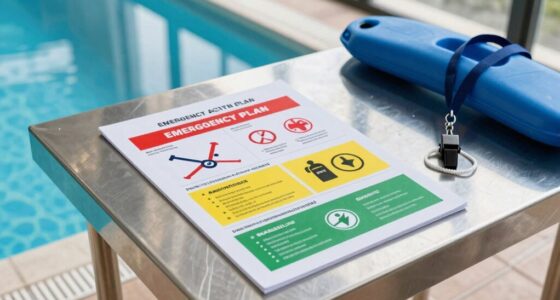
Additionally, incorporating biodiversity-friendly practices into chemical management can promote a more sustainable approach, reducing reliance on harsh chemicals. Staff training programs also play a key role in controlling costs. Well-trained staff are more efficient and capable of preventing issues before they escalate into expensive repairs or safety incidents. For instance, if your staff knows how to properly operate filtration and chemical systems, they’ll reduce the likelihood of equipment breakdowns caused by neglect or misuse. Training also extends to emergency response and routine maintenance, which can save you money by avoiding costly repairs or replacements down the line. Investing in ongoing education ensures your team stays up-to-date with best practices, which directly impacts your bottom line. Moreover, utilizing training programs aligned with industry standards can streamline your staff’s learning process and improve overall safety and efficiency. Cross-training staff to handle multiple roles can improve operational flexibility and reduce staffing costs during off-peak hours. Incorporating cost-effective training methods, like online modules or hands-on workshops, can further optimize your training budget. To further enhance cost control, implementing digital management tools can help track chemical usage and staff performance more accurately, leading to better resource allocation.
Ultimately, managing these cost centers requires a proactive approach. Regular audits of chemical use and employee performance, combined with targeted training, can substantially cut unnecessary expenses. When you prioritize proper chemical handling and invest in extensive staff training programs, you create a more efficient, safer, and financially sustainable operation. These efforts might seem small at first, but they have a ripple effect that can save your facility thousands of dollars annually. In the end, controlling these silent budget drains keeps your aquatic facility running smoothly without sacrificing safety or quality.
automatic chemical dosing system for pools
As an affiliate, we earn on qualifying purchases.
As an affiliate, we earn on qualifying purchases.
Frequently Asked Questions
How Can Facilities Reduce Utility Costs Effectively?
To reduce utility costs effectively, focus on improving energy efficiency and water conservation. You can install energy-efficient lighting, pool covers, and variable speed pumps to cut electricity use. Emphasize water-saving measures like leak detection, low-flow fixtures, and efficient filtration systems. Regular maintenance guarantees equipment runs smoothly. These steps help lower operational expenses, conserve resources, and make your aquatic facility more sustainable and cost-effective over time.
What Staffing Costs Are Often Underestimated?
Like shadows lurking in the water’s depths, staffing inefficiencies often go unnoticed, quietly draining your budget. You might underestimate overtime expenses, but they can quickly add up, especially during busy periods. These costs symbolize missed scheduling opportunities and inadequate planning. By actively monitoring staffing patterns and adjusting schedules, you can reduce these hidden expenses, ensuring your facility runs smoothly without sacrificing quality or overspending.
Are Maintenance Expenses Predictable or Variable?
Maintenance expenses are a mix of predictable expenses and variable costs. You can usually forecast routine maintenance, like scheduled repairs or routine equipment checks, making them predictable expenses. However, unexpected issues, such as sudden equipment breakdowns or emergency repairs, are variable costs that can fluctuate considerably. To manage your budget effectively, it’s crucial to account for both predictable expenses and potential variable costs, planning for unexpected repairs.
How Does Equipment Lifespan Impact Budgets?
Think of equipment lifespan as the ticking time bomb in your budget; when it reaches zero, expenses explode. Equipment depreciation accelerates costs as gear ages, forcing you to allocate more for repairs or replacements. Proper lifespan budgeting prevents financial chaos by estimating when equipment will need replacing, saving you from surprise costs. Ignoring this can turn your aquatic facility’s finances into a sinking ship, sinking your profits with unpredictable expenses.
What Hidden Costs Arise From Safety Compliance?
Safety compliance costs sneak up through regular safety audits and ongoing compliance training. You might overlook expenses like updating safety equipment, staff time for training sessions, or fixing hazards identified during audits. These hidden costs guarantee your facility meets regulations but can strain your budget if not planned for. Staying proactive with safety measures helps prevent costly fines, lawsuits, or closures, ultimately saving you money and keeping your visitors safe.
As an affiliate, we earn on qualifying purchases.
Conclusion
By understanding these hidden cost centers, you can identify where your aquatic facility’s budget silently slips away. You can monitor energy consumption, optimize staffing, and maintain equipment efficiently. You can prevent unnecessary expenses, improve operational efficiency, and extend your facility’s lifespan. Recognize these cost centers early, address them promptly, and manage them proactively. Mastering these areas isn’t just about saving money—it’s about ensuring your aquatic facility thrives for years to come.
pool filter pump maintenance tools
As an affiliate, we earn on qualifying purchases.
As an affiliate, we earn on qualifying purchases.
staff training programs for aquatic facilities
As an affiliate, we earn on qualifying purchases.
As an affiliate, we earn on qualifying purchases.
Evergreen bestsellers Picks
bestsellers
As an affiliate, we earn on qualifying purchases.