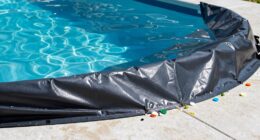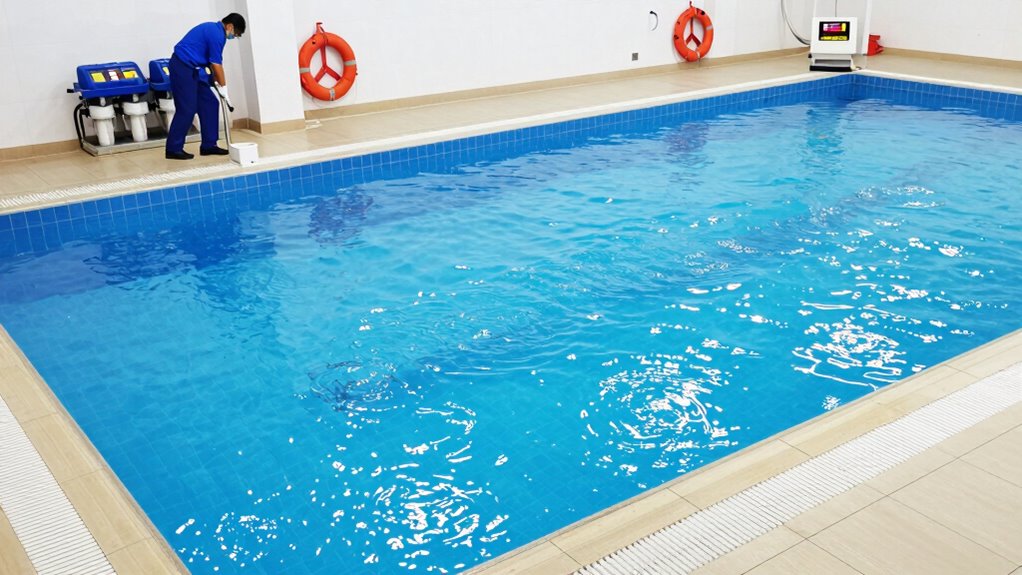
Before opening your commercial pool, inspect all equipment, filtration systems, and the pool’s structure to catch issues early. Test and balance water chemistry, ensuring safe chlorine levels and proper disinfection. Check pumps, filters, and plumbing for leaks or blockages. Set up control systems and record your start-up procedures. Taking these steps helps prevent downtime and keeps your pool running smoothly. Continue exploring for detailed steps to keep your facility operational and safe.
Key Takeaways
- Conduct thorough inspection of all equipment, structural elements, and safety systems before opening.
- Test and adjust water chemistry, disinfection levels, and chemical balance to ensure safe, clear water.
- Verify filtration, pump, plumbing, and automation systems are operational and properly calibrated.
- Document initial water tests, chemical adjustments, and system checks for ongoing maintenance.
- Perform final system checks, safety sign placement, and schedule routine monitoring to prevent operational downtime.
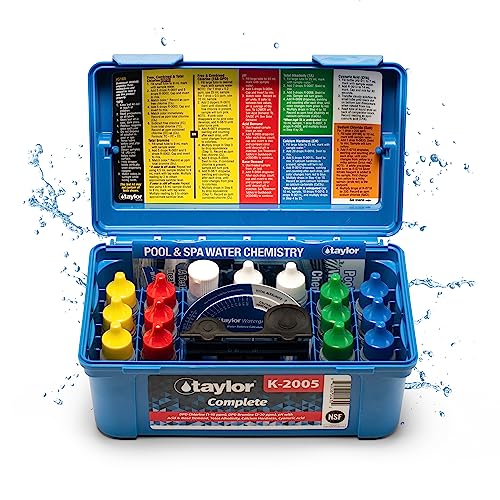
Taylor K2005 High Range Swimming Pool Total and Free Chlorine Bromine Alkalinity Calcium Hardness Base and Acid Demand pH DP Test Kit
Includes .75 oz reagent bottles
As an affiliate, we earn on qualifying purchases.
As an affiliate, we earn on qualifying purchases.
Evaluate Your Pool Equipment and Water Systems Before Opening
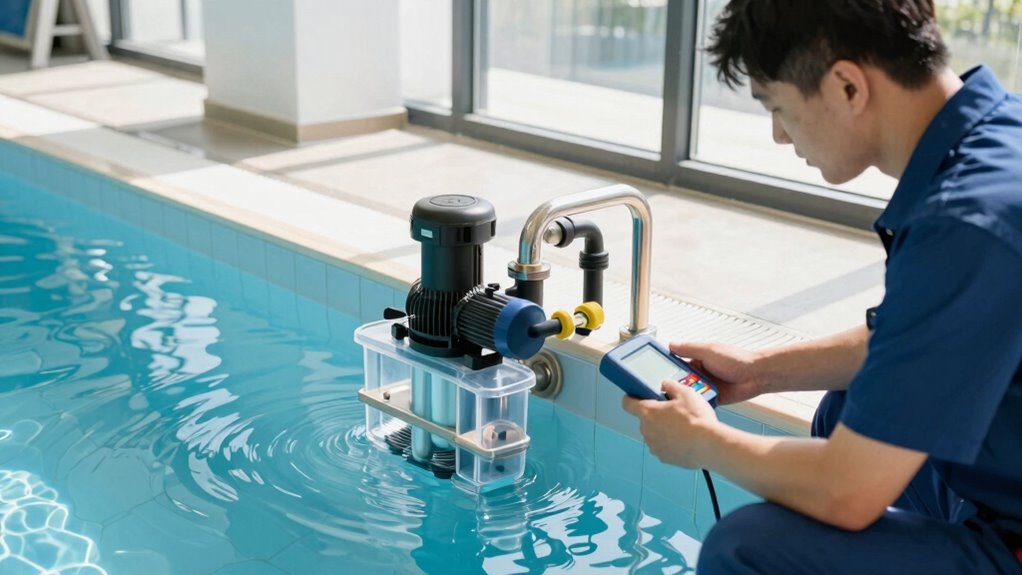
Before opening your pool, it’s essential to thoroughly evaluate your equipment and water systems to guarantee everything is functioning properly. Start by inspecting your pool equipment, including pumps, filters, and heaters, ensuring they operate efficiently without leaks or damage. Check the water systems for proper flow and pressure, making sure there are no blockages or broken components. Verify that chemical feeders and dosing systems are calibrated correctly for consistent water quality. Test all control panels and sensors to confirm they respond accurately. Address any issues immediately to prevent future breakdowns or safety hazards. Properly functioning pool equipment and water systems are critical for maintaining safe, clean water and avoiding costly downtime once your pool opens. Additionally, performing a comprehensive system check can help identify hidden problems before they escalate. Regular preventive maintenance is essential to sustain optimal performance and extend the lifespan of your equipment. Keeping detailed maintenance logs can also facilitate troubleshooting and ensure timely repairs, reducing the risk of unexpected failures. Incorporating proper testing accuracy with reliable measurement tools can further improve water quality management and system reliability.

CCH Endurance Commercial Pool Chemical Feeder 73100
Easy to install and service
As an affiliate, we earn on qualifying purchases.
As an affiliate, we earn on qualifying purchases.
Inspect the Pool Structure, Clean Debris, and Check Safety Gear
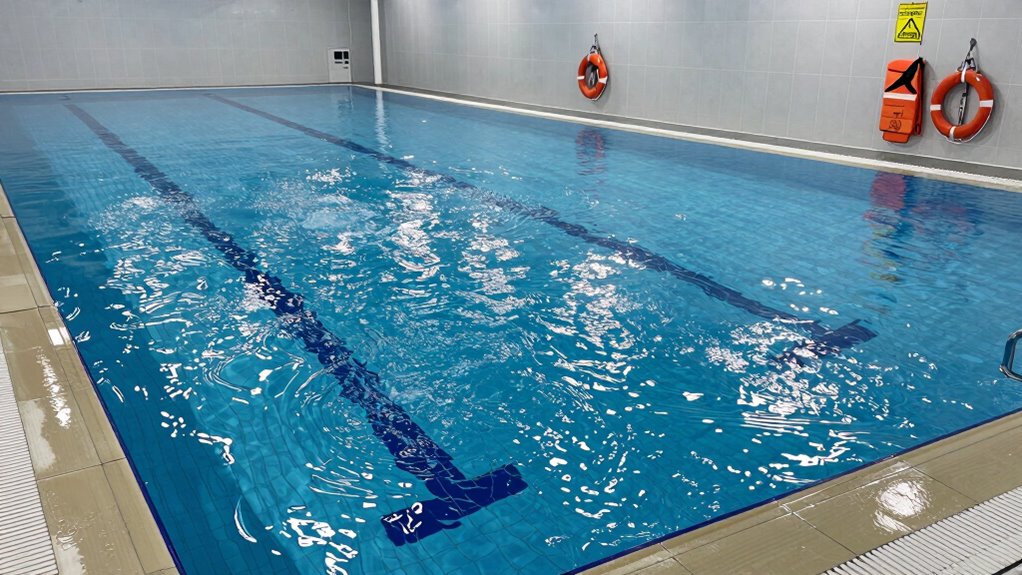
Start by inspecting the pool’s structure for any cracks, loose tiles, or other damage that could compromise safety. Next, clear away any debris from the surface and surrounding area to make sure a clean environment. Additionally, ensure that water chemistry is properly balanced to prevent corrosion or scaling, which can affect the integrity of the pool surfaces. Regularly check for early signs of damage to catch issues before they become costly repairs. Incorporating proper maintenance practices, such as routine inspections and timely repairs, can extend the lifespan of the pool and reduce unexpected downtime. Proper lighting conditions are also essential to ensure safety and visibility during maintenance and use. Finally, verify that safety gear like life rings, hooks, and signage are in place, visible, and in good working condition. Conduct a visual safety inspection to ensure all features are properly maintained and functioning correctly.
Structural Integrity Checks
Inspecting the pool structure is a crucial first step to guarantee safety and longevity. Begin by examining the pool surface for cracks, chips, or signs of deterioration that could compromise structural stability. Check for any uneven areas or bulges that might indicate underlying issues. Inspect the walls and floor for debris, algae, or buildup that could cause damage or hazards. Make certain that all structural components, such as beams and supports, are intact and free from corrosion or damage. Confirm that the pool’s foundation remains solid and stable. Address any anomalies immediately to prevent future problems. Regular structural assessments help identify potential issues early and maintain the pool’s overall integrity. Conducting these inspections during off-season maintenance ensures issues are caught before the pool’s peak usage. Performing comprehensive structural evaluations periodically can also extend the lifespan of the pool and reduce costly repairs later. Incorporating preventive maintenance practices now can help avoid unexpected failures and costly repairs down the line. Thoroughly inspecting the pool’s structure now helps maintain its integrity, reduces downtime, and ensures a safe, reliable environment for swimmers throughout the season.
Safety Equipment Inspection
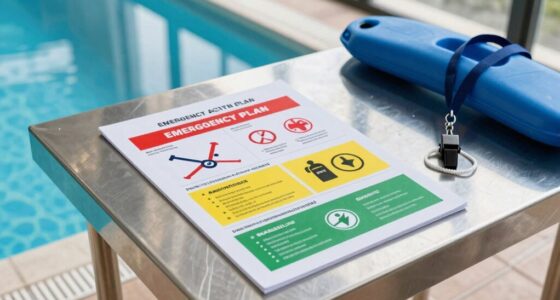
Ensuring your pool’s safety equipment is in top condition is vital for a secure swimming environment. Start by inspecting all safety gear, including life rings, reaching poles, and first aid kits, making sure they’re accessible and in good shape. Check signage placement, making certain warning signs and safety instructions are visible and legible to promote emergency preparedness. Clean any debris from the pool area, including around safety equipment, to prevent obstructions or hazards. Confirm that emergency response plans are posted clearly nearby. Regularly testing safety equipment and verifying signage helps prevent accidents and guarantees swift action if needed. Staying diligent during this inspection guarantees a safer, more prepared pool environment for all swimmers. Incorporating home safety tips can further enhance overall safety protocols around the pool area. Additionally, performing routine safety inspections regularly ensures ongoing compliance with safety standards and reduces the risk of unexpected failures. Conducting preventative maintenance on safety devices is also crucial to avoid potential malfunctions. To further reinforce safety, consider staff training on emergency procedures to ensure quick and effective responses during incidents.

Intex 28003E Deluxe Above Ground Pool Maintenance Kit for Minimum 800 GPH Flow Rates with Vacuum, 110" Pole, Wall Brush and 24' Hose (Color May Vary)
DELUXE KIT: The Intex Deluxe above ground pool maintenance kit keeps your pool clean and safe and comes…
As an affiliate, we earn on qualifying purchases.
As an affiliate, we earn on qualifying purchases.
Test Water Chemistry and Adjust Parameters for Safe Swimming
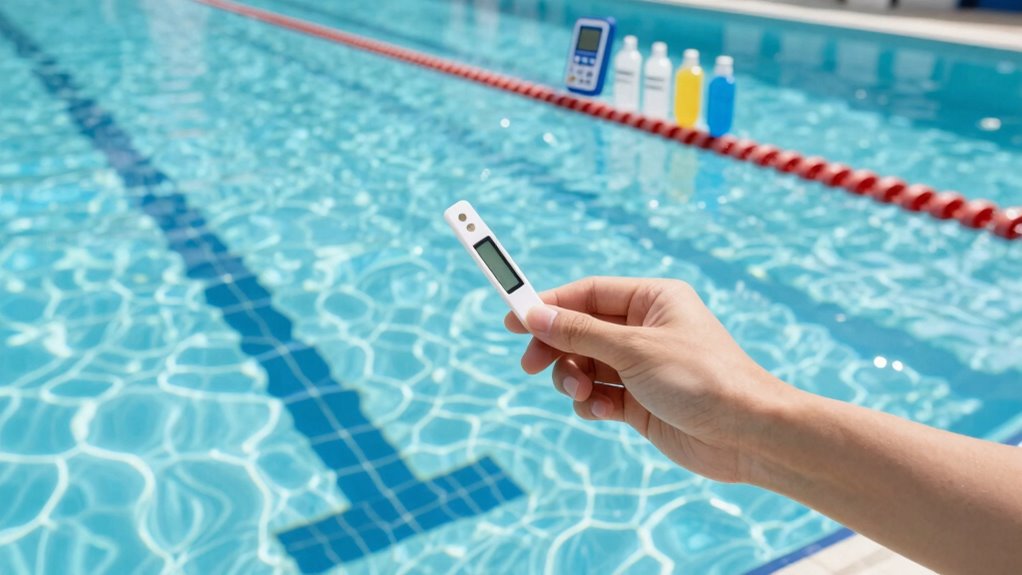
Before allowing swimmers to enter, it’s essential to test your pool’s water chemistry and make necessary adjustments to guarantee safe and balanced water. Begin with thorough water testing to check levels of pH, chlorine, alkalinity, and stabilizers. Proper chemical balancing ensures that disinfectants work effectively and prevents issues like algae growth or skin irritation. If pH is too high or low, adjust it with pH increasers or decreasers. Chlorine levels should be within the recommended range for safe sanitation. Regularly monitoring and adjusting these parameters helps maintain water clarity, safety, and comfort. Use reliable test kits or digital testers for accuracy. Remember, well-balanced water minimizes downtime caused by chemical imbalance issues and creates a safe environment for everyone.

Traffic Graphix TGPS1001 California Pool and Spa 8-Way Safety Sign
California regulation sign with 8 different safety precautions for pool and spa
As an affiliate, we earn on qualifying purchases.
As an affiliate, we earn on qualifying purchases.
Prepare and Check Filtration, Pumps, and Plumbing Systems
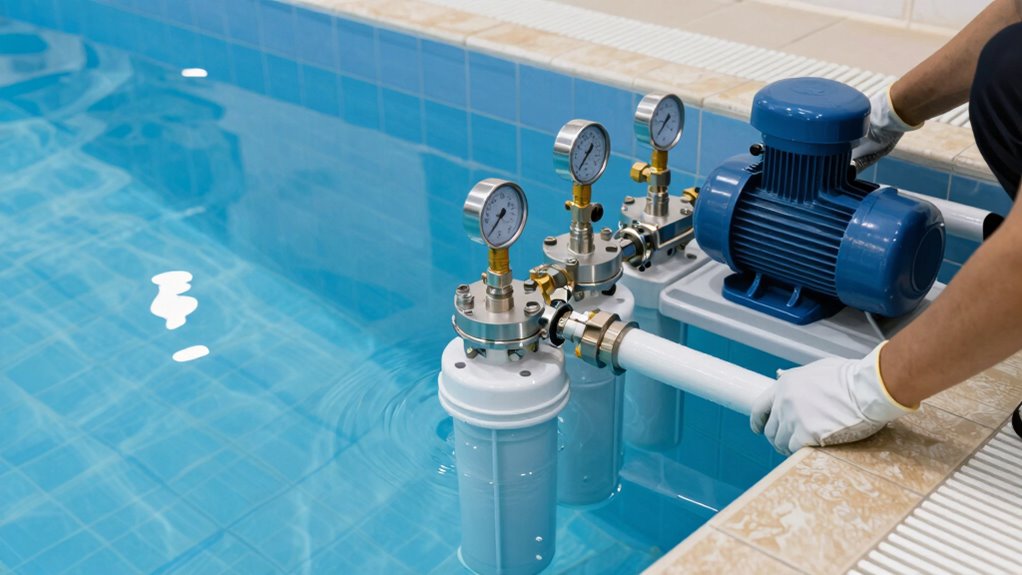
To keep your pool running smoothly, you need to thoroughly prepare and verify that the filtration system, pumps, and plumbing are functioning properly. Start with filtration maintenance by inspecting filters for debris or damage, ensuring they’re clean and in good condition. Next, perform a pump inspection to confirm it operates quietly and efficiently, checking for leaks or unusual vibrations. Verify plumbing connections for leaks or blockages that could hinder water flow. Make sure valves are open and functioning correctly. Running the pumps briefly allows you to observe proper operation and flow rate. Properly maintained filtration, pumps, and plumbing prevent equipment failure and downtime, keeping water clarity and circulation ideal for safe swimming. This step is essential to a successful pool opening.
Shock and Disinfect the Pool to Prevent Bacterial Growth
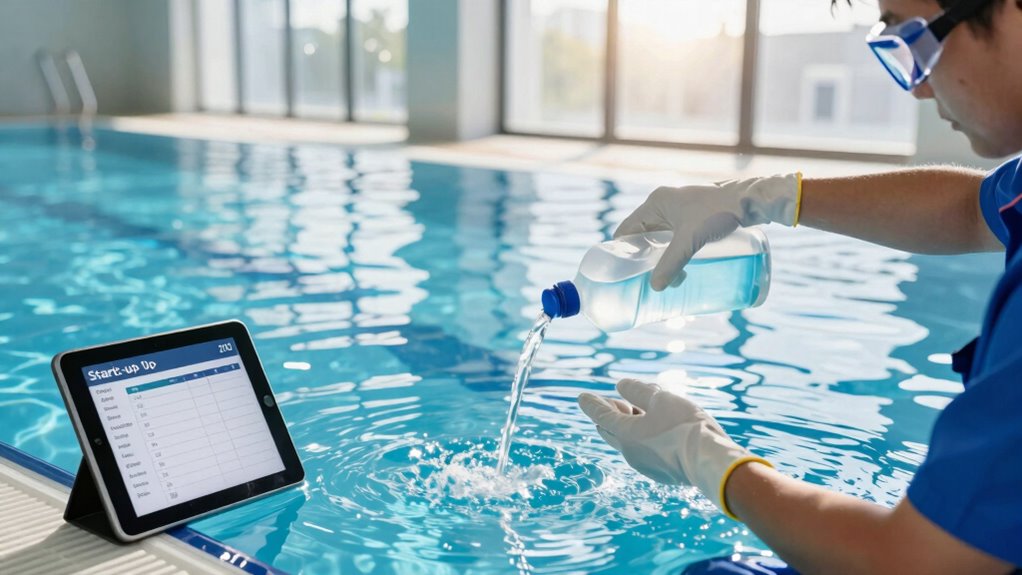
To keep your pool safe and sanitary, you need to shock it with the right amount of chlorine. Make sure your disinfectant is applied evenly to achieve proper chlorine levels across the entire pool. This step is essential to prevent bacterial growth and guarantee a clean, healthy environment for swimmers.
Proper Chlorine Levels
Maintaining proper chlorine levels is vital for keeping your pool safe and clean. You should start by testing the water to verify the chlorine dosage is within the recommended range, typically 1-3 ppm. Proper water balancing is essential, as pH levels between 7.2 and 7.6 optimize chlorine effectiveness and prevent corrosion or scale buildup. If chlorine levels are too low, bacteria and algae can thrive, risking swimmer safety. Conversely, excessive chlorine can cause skin and eye irritation. Regularly monitor and adjust chlorine levels as part of your start-up routine. Remember to shock the pool if necessary, especially after opening, to eliminate any bacteria or contaminants. Consistent water testing and balancing guarantee a safe, healthy pool environment for your guests.
Effective Disinfectant Application
Since bacteria and contaminants can quickly proliferate in a newly opened pool, it’s crucial to shock and disinfect thoroughly before swimmers arrive. Proper disinfectant application ensures the chemical balance is maintained and bacteria are eliminated. To maximize effectiveness:
- Use the appropriate shock level based on pool size and contamination
- Ensure even distribution of the disinfectant throughout the water
- Test chemical balance before and after application
- Wait the recommended time for the disinfectant to work
- Recheck chemical levels and adjust as needed
Focusing on thorough shock treatment and maintaining proper chemical balance prevents bacterial growth and keeps your pool safe. Consistent disinfectant application is key to avoiding future issues and ensuring clear, healthy water from the first swim.
Set Up and Calibrate Pool Automation and Control Systems
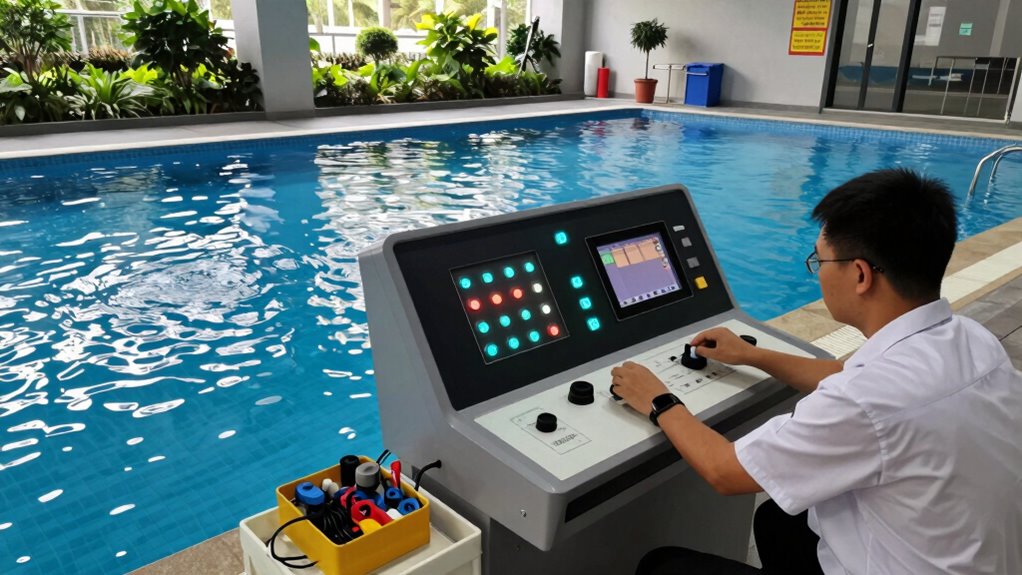
Before you start filling the pool, you should set up and calibrate your automation and control systems to guarantee smooth operation throughout the season. Begin with a thorough control system setup, ensuring all sensors, timers, and valves are correctly connected and configured. Perform automation calibration by testing the system’s responsiveness—adjust settings as needed to ensure accurate pH, chlorine, and temperature control. Verify that automation schedules align with your pool’s usage patterns. Check that alarms and safety features are functional. Proper calibration and setup prevent early equipment wear and operational errors, saving you time and money later. Once everything is calibrated and tested, you’ll have a reliable system that maintains excellent water quality and minimizes manual adjustments.
Record Your Start-Up Procedures and Establish Maintenance Schedules
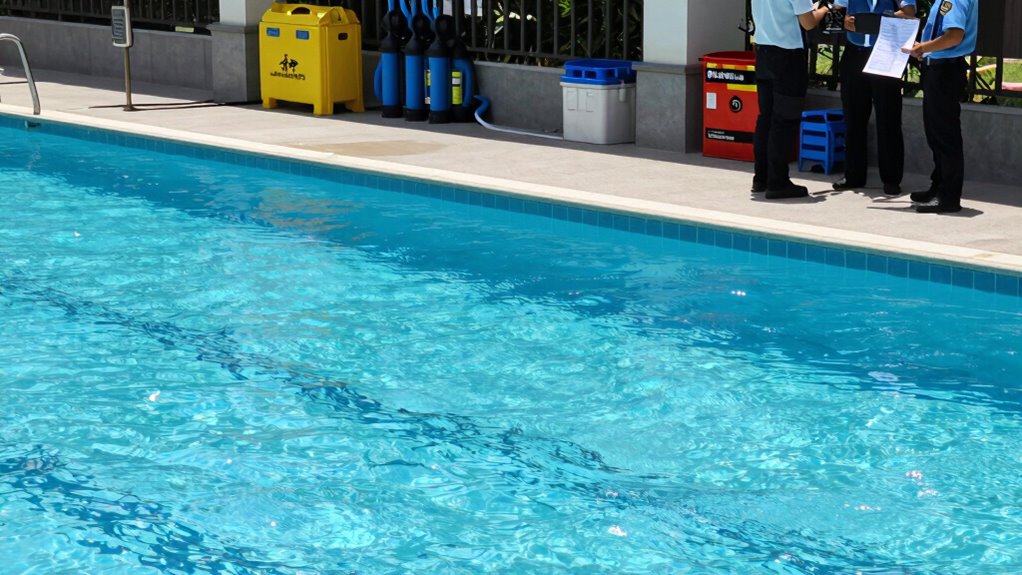
Keeping detailed records of your start-up procedures is essential for consistent pool maintenance and troubleshooting. Document each step, including water testing results, chemical adjustments, and equipment checks. Establish a maintenance schedule to guarantee ongoing water quality and safety. This helps you track changes over time and quickly identify issues. Focus on maintaining proper pool chemical balance and water temperature control to prevent problems.
Keeping detailed records ensures consistent maintenance and quick troubleshooting.
- Record initial chemical levels and adjustments made
- Schedule regular water testing and chemical balancing
- Log water temperature settings and changes
- Note filter and pump operation times
- Keep track of cleaning and inspection dates
Having clear records ensures your pool stays safe, clean, and operational, reducing downtime and costly repairs. Proper documentation is your best tool for effective long-term management.
Troubleshoot Common Mechanical and Water Quality Issues
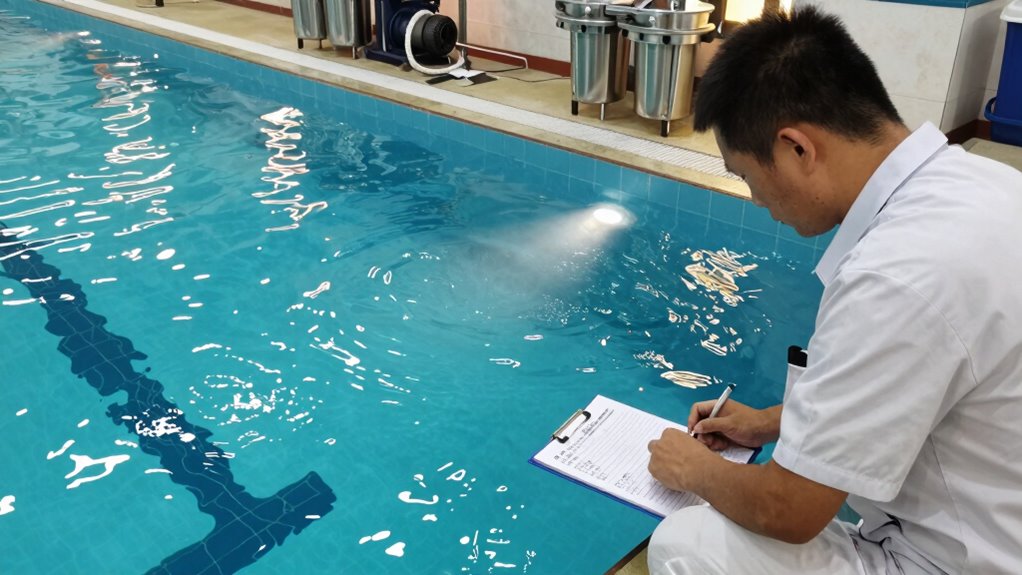
Regularly reviewing your records helps you spot patterns that could indicate mechanical or water quality problems. If you notice frequent equipment malfunctions, it could signal underlying issues like worn-out parts or improper installation. For water quality, a persistent chemical imbalance may lead to cloudy water, algae growth, or skin irritation. When troubleshooting, start by checking your equipment for signs of malfunction, such as leaks, unusual noises, or temperature inconsistencies. Then, test water chemistry to ensure proper pH, sanitizer levels, and alkalinity. Address any imbalances promptly with the correct chemicals, and repair or replace malfunctioning equipment as needed. Staying vigilant and proactive helps prevent costly downtime and ensures your pool remains safe, clean, and operational.
Frequently Asked Questions
How Often Should I Check Chemical Levels During the Swimming Season?
You should check chemical levels daily during the swimming season to guarantee proper water balancing and safety. Regular chemical testing helps maintain the right pH, sanitizer levels, and alkalinity, preventing issues like algae growth or corrosion. By monitoring these levels consistently, you can make timely adjustments, reduce chemical consumption, and keep the water safe and clear for swimmers, ultimately avoiding costly downtime or repairs.
What Safety Protocols Should Staff Follow During Pool Start-Up?
You should guarantee staff follow safety protocols during pool start-up by adhering to emergency procedures and completing proper staff training. Train your team to respond quickly to potential incidents, like chemical spills or equipment malfunctions. Regularly review emergency protocols and conduct drills to keep everyone prepared. Clear communication and proper training minimize risks, ensuring a safe environment for everyone as the pool opens and during ongoing operations.
How Can I Identify Early Signs of Equipment Failure?
You should stay alert for subtle hints from your pool equipment that suggest early detection issues. Unusual noises, inconsistent water flow, or minor leaks can signal underlying problems. Regularly inspecting filters, pumps, and valves helps catch potential failures before they escalate. By paying close attention to these signs, you guarantee smooth operation and prevent costly downtime, keeping your pool running efficiently and safely for all users.
What Are the Best Practices for Preventing Algae Growth?
To prevent algae growth, you should maintain proper water chemistry and guarantee regular circulation. Use algaecides as needed and keep the filtration system running efficiently. Regularly test and balance pH and sanitizer levels to promote water clarity. Additionally, skim and brush the pool surfaces frequently to remove algae spores and debris. These algae prevention practices help keep the water clear, reduce maintenance, and ensure a safe swimming environment.
How Do Weather Conditions Affect Start-Up Procedures?
Weather impact can turn your pool start-up into a rollercoaster ride. You need to make seasonal adjustments, like balancing chemicals more frequently during hot spells or protecting the pool from unexpected cold snaps. Rain can dilute chemicals, so test and adjust more often after storms. By staying flexible and attentive to weather changes, you keep your pool running smoothly, ensuring it’s ready to impress no matter the forecast.
Conclusion
By following these start-up steps, you’ll set your pool up for smooth sailing all season long. Think of it as tending to a garden—you need to nurture it from the ground up to enjoy a vibrant, trouble-free swim. Stay diligent with inspections and adjustments, and you’ll keep downtime at bay. With a little care and attention, your pool will be the shining jewel of the season, ready to make a splash whenever you are.