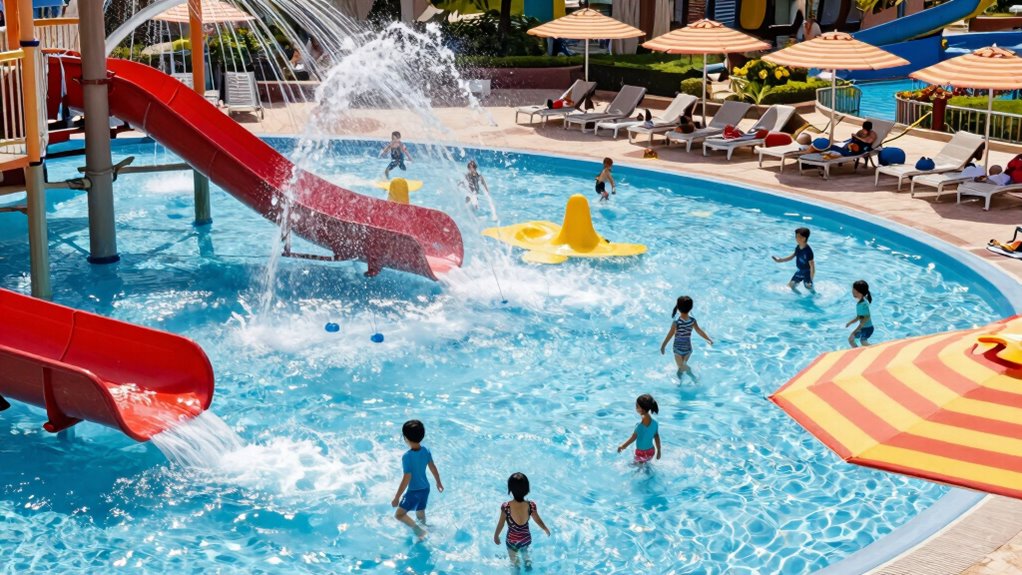

Waterparks present safety challenges like large crowds, high activity levels, and complex rides, making it essential for you to guarantee proper supervision, signage, and safety equipment. Splash pads, on the other hand, have shallow water and more static environments, so focus on clear signage, slip prevention, and vigilant monitoring. Each setting demands tailored safety measures, and understanding these differences helps you create a safer experience for everyone. Keep exploring to learn how to address these unique challenges effectively.

Get pool and patio gear delivered free — and shop member deals
- Fast, free delivery on millions of items
- Access to Prime Big Deal Days deals on October 6–7
- Prime Video, Amazon Music and more included
Key Takeaways
- Waterparks often have larger, more complex rides requiring specialized rescue techniques and higher lifeguard training.
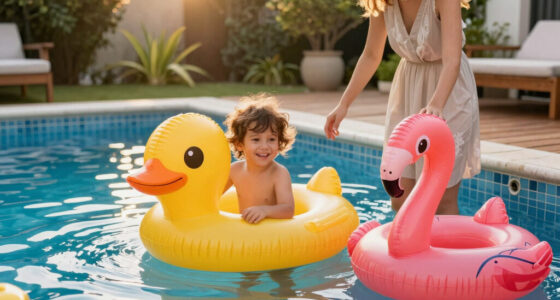
- Splash pads typically lack depth, reducing drowning risks but increasing slip and fall hazards.
- Waterparks’ high-energy attractions demand constant supervision, while splash pads need monitoring for equipment misuse.
- Different signage and safety protocols are needed to address the varied hazards in each environment.
- Emergency response plans must be tailored to handle the unique risks of large rides versus small water features.
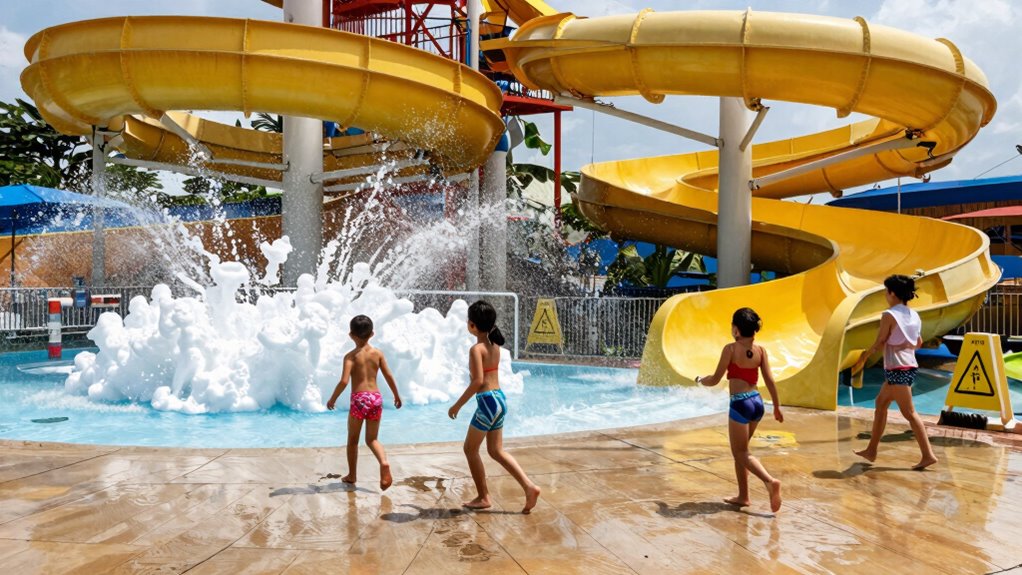
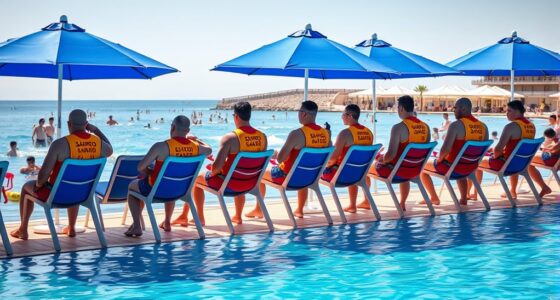
Waterparks and splash pads offer fun and relief during hot weather, but they also come with unique safety challenges that can’t be overlooked. As someone responsible for safety at these venues, you know that guaranteeing everyone’s well-being requires more than just having fun water features. It involves careful planning, attentive staff, and clear communication. One of the most critical aspects is proper lifeguard training. Lifeguards need to be not only skilled swimmers but also trained to recognize signs of distress quickly and respond effectively. Their training should cover rescue techniques, CPR, first aid, and how to handle potential emergencies specific to waterpark environments. When lifeguards are well-trained, they’re better equipped to prevent accidents before they happen, making the entire experience safer for visitors.
Proper lifeguard training is essential for quick recognition and effective response to water emergencies.
Signage clarity is another essential safety component. Visitors often come with varying levels of awareness about water safety rules, so your signage must be clear, visible, and easy to understand. This means using large, legible fonts, simple language, and universally recognizable symbols. For example, signs indicating shallow versus deep water should be prominently placed at every entry point to the pools and splash pads. Rules about running, diving, or rough play should also be clearly posted, ideally with visual cues that transcend language barriers. When signage is confusing or poorly placed, visitors might inadvertently put themselves at risk, which can lead to preventable accidents. Regularly inspecting and updating signs can help guarantee they remain visible and effective, especially if new safety protocols are introduced. Additionally, understanding the importance of water safety awareness can help staff better communicate safety expectations and respond to emergencies more effectively. It is also beneficial to provide staff with ongoing training in risk identification, so they can proactively address potential hazards before they escalate.
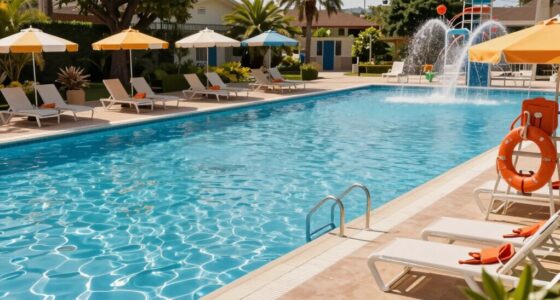
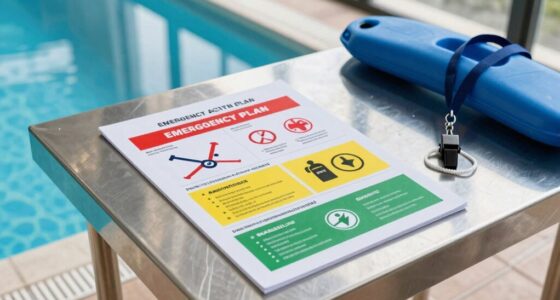
Creating a comprehensive safety plan that includes emergency response procedures tailored to waterpark environments is essential for ensuring quick and effective action during incidents. Ensuring that safety equipment, such as rescue tubes and life rings, is easily accessible and in good condition is also vital to prevent accidents. Proper placement of safety gear can make a significant difference during an emergency.
Balancing the energy and excitement of water attractions with safety concerns is an ongoing challenge. You need to ensure lifeguard coverage matches the size and complexity of your water features. Larger pools and more active splash pads require more vigilant supervision. Additionally, the layout of the area should allow lifeguards to see everything clearly without blind spots. Proper training and signage support these efforts, but you also need to foster a culture of safety among visitors. Clear instructions and visible rules help set expectations, encouraging guests to follow safety guidelines willingly.
Ultimately, preventing accidents at waterparks and splash pads hinges on a thorough approach. Well-trained lifeguards act as the front line of defense, while clear signage ensures everyone understands how to stay safe. By prioritizing these elements, you create a safer environment where visitors can enjoy the water without unnecessary risks, making every trip memorable for all the right reasons.
lifeguard training certification
As an affiliate, we earn on qualifying purchases.
As an affiliate, we earn on qualifying purchases.
Frequently Asked Questions
How Do Weather Conditions Impact Waterpark Safety Protocols?
Weather hazards greatly impact waterpark safety protocols. You need to make seasonal adjustments when facing storms, lightning, or extreme heat. During thunderstorms, evacuate the water area immediately to prevent lightning injuries. In hot weather, guarantee hydration stations are accessible and shaded areas are available to prevent heat exhaustion. Regularly monitor weather forecasts, and adapt safety procedures swiftly to keep visitors safe, regardless of changing weather conditions.
What Training Is Required for Waterpark Safety Staff?
You need to guarantee your safety staff is well-trained, so they’re equipped for any situation. They should have up-to-date staff certification and participate in regular safety drills to stay sharp. This way, they know how to respond quickly and effectively during emergencies. Remember, a well-prepared team is the backbone of a safe waterpark environment, and ongoing training keeps everyone on their toes.
How Are Emergency Response Plans Customized for Different Attractions?
You customize emergency response plans by conducting regular emergency drills tailored to each attraction’s unique features. You guarantee staff coordination by clearly defining roles and practicing scenarios specific to waterparks or splash pads. This approach helps your team respond swiftly and effectively during emergencies, minimizing risks. Adapting drills to each attraction’s layout and potential hazards ensures safety measures are practical and well-understood, keeping visitors safe and confident.
What Role Does Technology Play in Enhancing Safety at Waterparks?
Technology integration plays a vital role in enhancing water safety at waterparks. You can use surveillance cameras and sensors to monitor rider behavior and prevent accidents. Automated emergency alert systems quickly notify staff of issues, while digital signage provides real-time safety instructions. These tools help you respond faster, reduce risks, and guarantee a safer experience. Embracing technology allows you to proactively manage safety challenges and protect visitors effectively.
How Do Water Quality Standards Affect Splash Pad Safety Measures?
Water quality standards directly impact splash pad safety by ensuring water remains clean and safe for users. You need effective water filtration systems to remove debris and bacteria, maintaining clarity and safety. Additionally, strict chemical regulation helps keep disinfectants at safe levels, preventing skin or eye irritation. By following these standards, you create a safer environment, reducing health risks and ensuring everyone enjoys the splash pad without concern.
As an affiliate, we earn on qualifying purchases.
Conclusion
Understanding the safety challenges of waterparks and splash pads isn’t just about rules and signs; it’s about recognizing the delicate dance between fun and caution. Like a finely tuned symphony, each element must work in harmony to prevent accidents and guarantee everyone enjoys the splash. So, as you plan your next visit, remember that vigilance isn’t just a duty—it’s the silent partner in creating memories that won’t be marred by avoidable mishaps. After all, safety is the true wave to ride.
As an affiliate, we earn on qualifying purchases.
slip-resistant water park flooring
As an affiliate, we earn on qualifying purchases.
As an affiliate, we earn on qualifying purchases.
Fall Picks
fall essentials
As an affiliate, we earn on qualifying purchases.