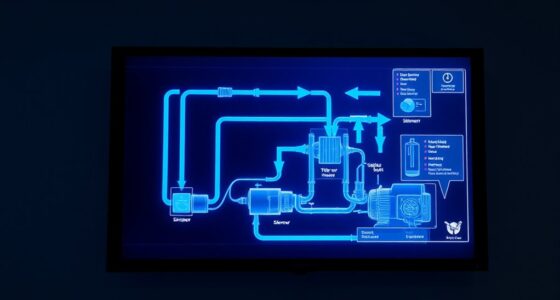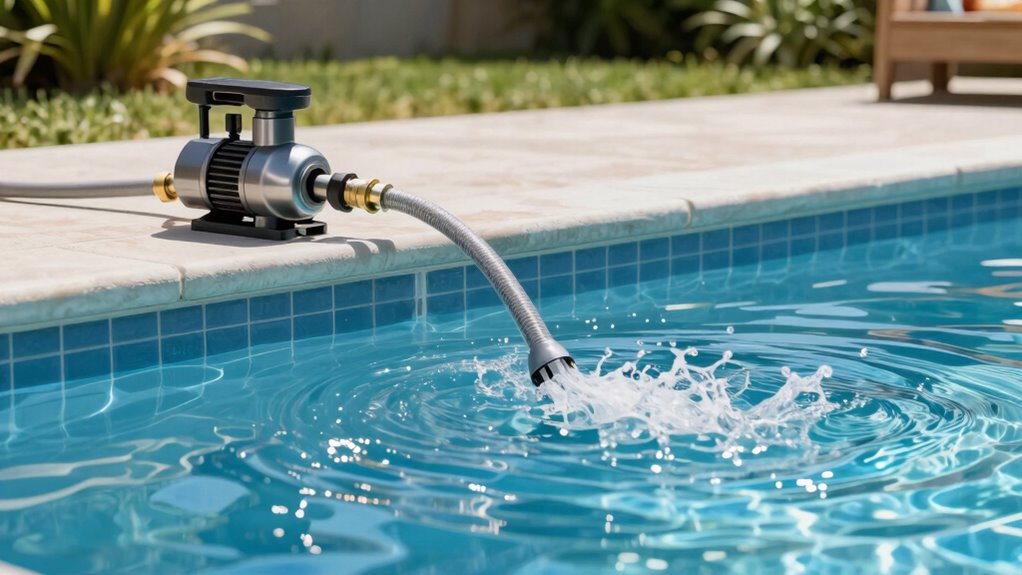

Your pool system starts with the pump, which draws water from the skimmers and drain inlets, then pushes it through filters to remove dirt and debris. The water is chemically balanced to prevent algae and bacteria, and heated if desired. Finally, the water flows through return jets, distributing clean, warm water back into the pool while surface agitation improves circulation. Keep an eye on each part to guarantee smooth operation, and you’ll discover more tips for perfect pool maintenance as you go.

Get pool and patio gear delivered free with Prime
- Fast, free delivery on millions of items
- Prime Video, Amazon Music and more included
- Member-only deals all year
Key Takeaways
- The pump circulates water from the pool through filters and equipment to keep water clean.
- Proper filtration removes dirt and debris, requiring regular cleaning or replacement for efficiency.
- Maintaining correct chemical levels prevents algae and bacteria, ensuring safe, clear water.
- Water is heated if desired and then directed to return jets for circulation and surface aeration.
- Regular inspection of return jets and system components optimizes water flow and system performance.
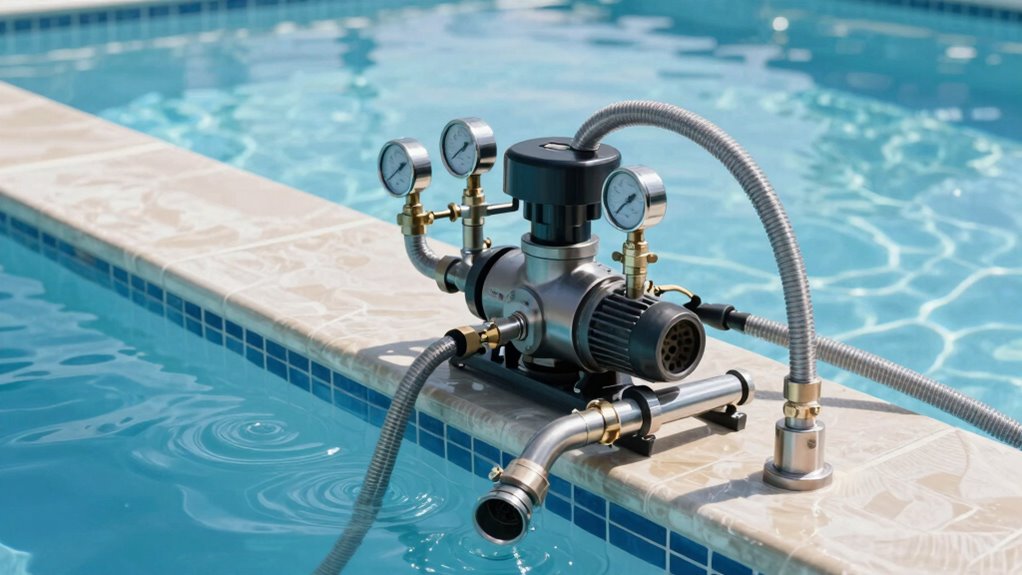
Are you unsure about which pool system best suits your needs? Navigating the world of pool systems can feel overwhelming at first, but understanding the basic flow from the pump to the return jet makes it much simpler. Your pool system starts with the pump, which pulls water from the pool through skimmers and drain inlets. The pump then pushes this water through filters and other equipment to keep it clean and safe for swimming. One of the most important aspects to consider is chemical balancing. Maintaining proper chemical levels ensures the water stays clear, disinfected, and safe, reducing algae growth and bacteria. Regular testing and adjusting pH, chlorine, and alkalinity levels are essential parts of equipment maintenance, which prolongs the lifespan of your system components and keeps your pool inviting.
As water moves through the system, it passes through the filter, which traps dirt, debris, and impurities. The type of filter—whether sand, cartridge, or diatomaceous earth—affects how often you need to clean or replace it, but all require regular equipment maintenance to operate efficiently. Once filtered, the water flows through chemical feeders or chlorinators, where disinfectants are added to keep the water hygienic. Proper chemical balancing at this stage prevents issues like cloudy water or skin irritation, and it helps you avoid costly repairs down the line.
From the filter, the water is directed toward the heater if you want a warm swimming experience. The heater must be properly maintained to prevent corrosion and malfunction, which could otherwise lead to costly repairs or replacements. After heating, the water flows toward the return jets, which distribute it back into the pool. These jets aren’t just for circulation; they also help with surface agitation and aeration, which can improve chemical distribution. Making sure the return jets are properly aimed and unobstructed is part of ongoing equipment maintenance that keeps the water quality at its best. Regularly inspecting the flow of water within the system helps ensure everything operates smoothly and efficiently.
Understanding this flow—from pump to return jet—gives you control over your pool’s health and efficiency. Regular checks on chemical balancing, cleaning filters, and inspecting equipment are key to preventing problems and extending the life of your system. When each component functions properly and is well-maintained, your pool remains clear, safe, and enjoyable all season long.
Products Worth Considering

eufy Security eufyCam C37 4-Camera Kit with 360° Pan and Tilt

eufy Security Essential Alarm System, 7-Piece, No Monthly Fee

Dyson Ball Animal 3 Corded Upright Vacuum
As an affiliate, we earn on qualifying purchases.
Frequently Asked Questions
How Often Should I Backwash My Pool Filter?
You should backwash your pool filter whenever the pressure gauge rises 8-10 psi above the normal operating level. Regular filtration maintenance helps keep your water clean and clear. Also, make sure your chemical balance stays ideal, as unbalanced chemicals can cause more debris buildup and filter strain. Backwashing too often isn’t necessary; wait until the pressure indicates it’s time to avoid unnecessary wear on the filter.
What’s the Ideal Pool Water Temperature?
You should aim for a pool water temperature around 78 to 82°F, maintaining a comfortable and safe environment. Proper temperature regulation encourages algae control and energy efficiency, while consistent chemical balance keeps your water clear and safe. Think of it as a delicate dance—adjust your heater and chemicals in harmony to keep your pool inviting, invigorating, and perfectly balanced for every swim.
Can I Upgrade My Pool Pump Later?
Yes, you can upgrade your pool pump later. Upgrading allows you to improve efficiency, support pool automation, and better manage chemical balancing. When choosing a new pump, consider compatibility with your existing system to guarantee smooth operation. Upgrading also makes it easier to maintain ideal water quality and energy savings. Just plan ahead, and if needed, consult a professional to ensure the new pump integrates seamlessly with your current setup.
How Do I Troubleshoot Low Water Flow?
Low water flow is like a clogged artery—your pool’s circulation suffers. First, check your filtration maintenance; a dirty filter can reduce flow. Next, inspect your pump for debris or wear, as it impacts pump efficiency. Make sure all valves are fully open, and there are no kinks in the hoses. Regularly maintaining your system guarantees consistent flow and keeps your pool crystal clear.
What Safety Precautions Are Needed for Pool Systems?
You should always wear protective gear when working with pool systems and keep the area clear of obstacles. Make certain the pool chemical balance is correct to prevent equipment damage and unsafe conditions. Use a pool cover safely to avoid accidental falls or injuries, especially with children or pets around. Regularly inspect and maintain your pump and filtration system to keep everything running smoothly and reduce safety hazards.
Conclusion
As you master your pool system, remember it’s more than just pipes and jets—it’s the heartbeat of your summer sanctuary. Each pump and valve symbolizes your dedication to creating a haven where worries drift away like gentle waves. When you care for your pool, you’re nurturing a space of joy, relaxation, and connection. Embrace this journey, knowing that every connection you make flows into memories that will warm your heart long after the last splash.