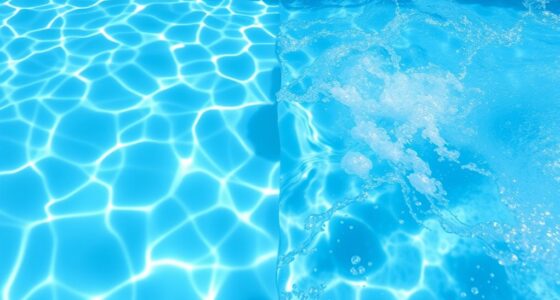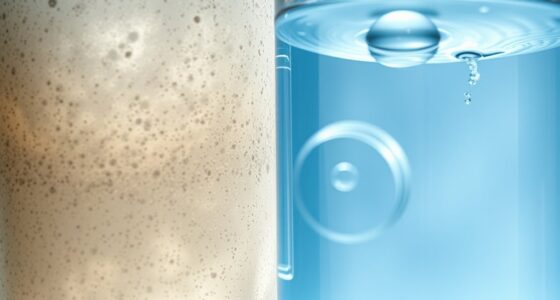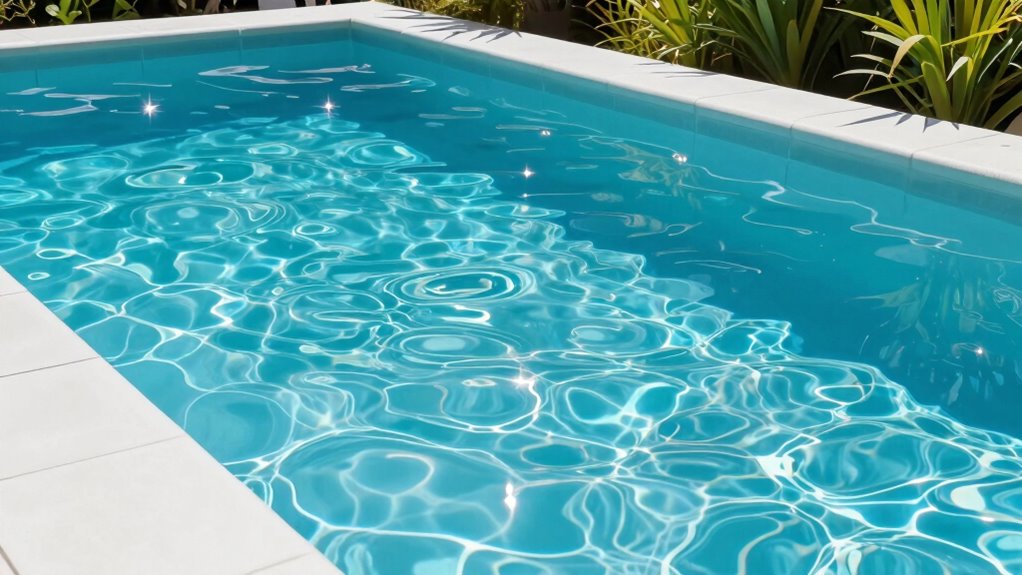

To quickly recognize a healthy pool, check that the water is crystal clear with no cloudiness or algae. The water should be inviting and free of strong odors. Make certain chemical levels like pH (7.2-7.6) and chlorine (1.0-3.0 ppm) are properly balanced, as this keeps water safe and clean. Regular maintenance like skimming, brushing, and testing helps you catch issues early. Keep an eye on these signs, and you’ll have a beautiful, safe pool all season long.
Key Takeaways
- Regularly test water chemistry to ensure pH is between 7.2-7.6 and chlorine levels are 1.0-3.0 ppm.
- Observe water clarity; a healthy pool should be clear, not cloudy or murky.
- Check for a clean surface, free of debris, algae, or discoloration.
- Confirm proper circulation by ensuring the pump runs long enough to filter all water daily.
- Use visual cues like a fresh, clean smell and absence of algae or algae smell to assess water health.
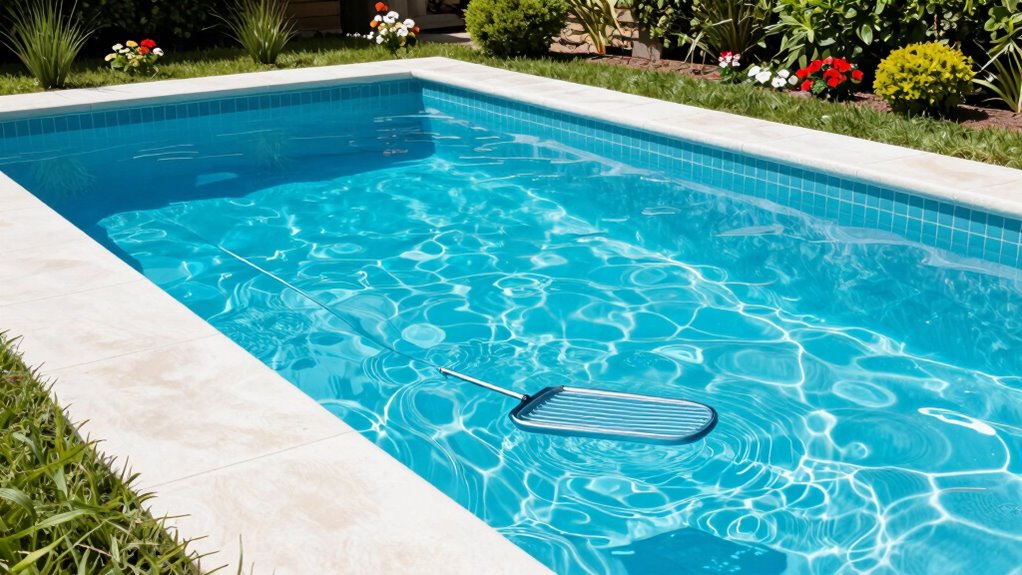
Maintaining a healthy pool isn’t just about having clear water; it’s vital for your safety and enjoyment. The quickest way to understand what a healthy pool should look like is by paying close attention to its water chemistry and regular pool upkeep. When water chemistry is balanced, your pool remains inviting and safe, preventing issues like algae growth, bacteria, or skin irritation. You don’t need to be a chemist, but knowing the basics of water balance helps you identify problems early and keep your pool in top condition.
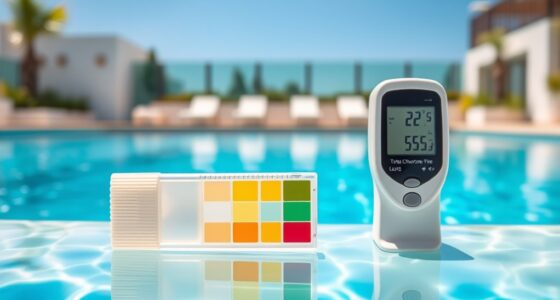
Start by testing your water frequently—ideally, at least twice a week during peak season. Use reliable test strips or a digital test kit to check key parameters such as pH, chlorine levels, alkalinity, and calcium hardness. Maintaining proper pH levels, typically between 7.2 and 7.6, is essential because it affects how well sanitizer works and prevents corrosion or scaling. If your pH is too high or low, your water won’t be healthy, and your pool equipment can suffer damage. Chlorine levels should stay between 1.0 and 3.0 parts per million (ppm) to effectively kill germs without causing skin or eye irritation. Regularly adding sanitizer and adjusting pH with pool chemicals ensures your water stays safe and clear.
Test water twice weekly; keep pH 7.2-7.6 and chlorine 1.0-3.0 ppm for a safe, healthy pool.
Pool maintenance also involves routine cleaning and equipment checks. Skim the surface for debris, brush the walls and floor to prevent algae buildup, and vacuum the pool regularly. A clean pool not only looks better but also reduces the workload on your filtration system. The filter itself needs attention—clean or backwash it as recommended by the manufacturer to keep water flowing properly and remove contaminants. Proper circulation is key, so run your pump long enough each day to filter all the water in the pool at least once. Additionally, understanding the pool water chemistry helps you better maintain the right balance and prevent common issues. Knowing the importance of water chemistry can help you troubleshoot problems before they become serious. Regular pool maintenance routines also contribute to keeping your water chemistry in check and your pool in optimal condition. Maintaining proper chemical balance is crucial for preventing issues like algae and bacterial growth, which can quickly turn your pool unsafe and unpleasant.
To further support healthy water chemistry, consider testing and adjusting salt levels if you have a saltwater pool, as imbalances can also affect water quality. Address problems promptly, whether it’s cloudy water, an unusual smell, or algae. These signs often indicate that your water chemistry is off or pool maintenance is lacking. By establishing a consistent routine—testing water, adjusting chemicals, cleaning filters, and monitoring equipment—you develop an intuitive sense of what a healthy pool looks like. Over time, you’ll notice the subtle signs that indicate your pool is in balance, making it easier to enjoy a safe, sparkling oasis whenever you want.
As an affiliate, we earn on qualifying purchases.
Frequently Asked Questions
How Often Should I Test My Pool Water?
You should test your pool water at least twice a week to maintain proper water chemistry. Regular pool maintenance helps identify imbalances in pH, chlorine, and alkalinity, preventing issues like algae growth or cloudiness. Use a reliable test kit to check your water and adjust chemicals accordingly. Consistent testing guarantees your pool stays clean, safe, and inviting, making your swimming experience enjoyable and hassle-free.
What Are Common Signs of a Healthy Pool?
A healthy pool is like a clear mirror—sparkling, inviting, and free of debris. You’ll notice clean water, proper pH levels, and balanced chemicals. Regular pool cleaning and equipment maintenance keep it this way. The water shouldn’t smell strong or be murky. Skim the surface often, check filter function, and guarantee pumps run smoothly. These signs show your pool is well-maintained and ready for a revitalizing dip.
How Do I Prevent Algae Growth?
To prevent algae growth, focus on regular pool maintenance and proper water circulation. Keep your pool’s pH levels balanced, and use algaecide as needed. Make sure your pump runs long enough each day to promote water movement, which discourages algae from settling. Regularly brushing and skimming the pool also helps remove potential nutrients for algae. Consistent maintenance and good circulation are your best defenses against algae buildup.
What Are Safe Chemical Levels for Swimming?
You should maintain safe chemical levels for swimming by ensuring proper pool sanitation and chemical balancing. Keep your free chlorine between 1-3 ppm to disinfect effectively, and pH levels around 7.2-7.6 to prevent irritation and maintain water clarity. Regularly test your water and adjust chemicals as needed. Stable chemical levels promote a healthy, safe swimming environment, preventing algae growth and ensuring your pool stays clean and inviting.
How Can I Improve Pool Water Clarity Quickly?
Imagine your pool’s water turning crystal clear overnight! To do this, focus on pool maintenance and water filtration. Shock the pool with a strong sanitizer to eliminate debris, algae, and bacteria. Run your filter continuously to trap tiny particles and circulate fresh, clean water. Regular brushing and skimming also help remove dirt. With consistent effort, your pool will glow with clarity faster than you ever thought possible.
As an affiliate, we earn on qualifying purchases.
Conclusion
Now that you know what a healthy pool looks like, you’re armed with the secrets to keep it sparkling and inviting. Think of your pool as a mirror reflecting your care—if you tend to it regularly, it’ll shine like a jewel in your backyard. Don’t let algae or cloudy water cloud your perfect oasis. With a little effort and attention, your pool will be the crown jewel of relaxation, always ready to welcome you home.
As an affiliate, we earn on qualifying purchases.
As an affiliate, we earn on qualifying purchases.