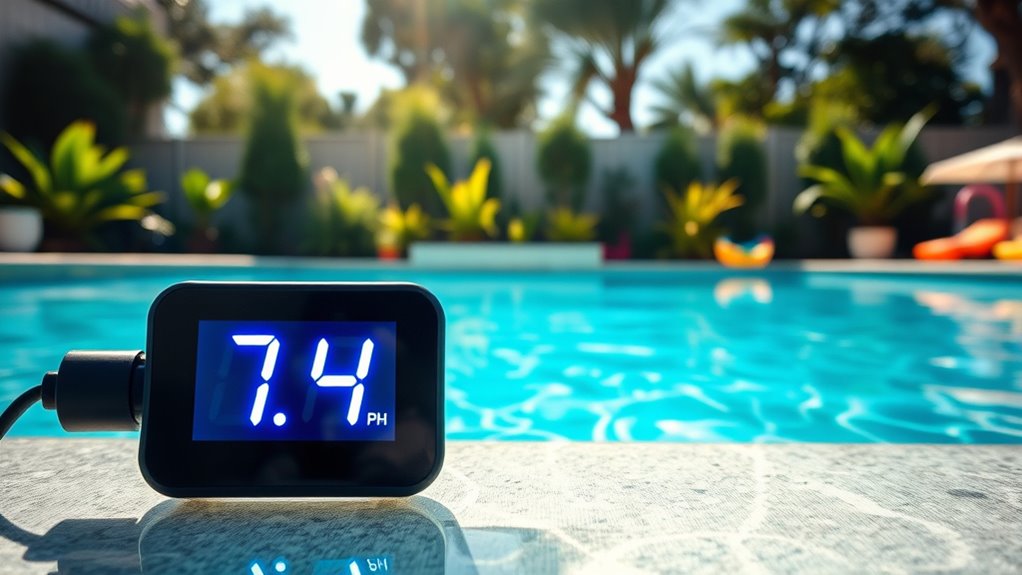

Your pool’s pH level is the single number that impacts water safety, comfort, and equipment longevity. When it’s too low or high, your water can become cloudy, corroded, or unsafe—for example, chlorine becomes less effective, risking bacteria and algae growth. Keeping your pH between 7.2 and 7.6 ensures clear, balanced water and safe swimming conditions. Curious how to measure and maintain this essential number? Keep exploring to find out more.

Get pool and patio gear delivered free with Prime
- Fast, free delivery on millions of items
- Prime Video, Amazon Music and more included
- Member-only deals all year
Key Takeaways
- pH is a critical measure of water’s acidity or alkalinity that directly affects pool safety and water quality.
- The ideal pH range for pools is between 7.2 and 7.6, ensuring comfort and effective sanitation.
- Regular testing and precise adjustments prevent issues like cloudy water, algae growth, and equipment corrosion.
- Maintaining proper alkalinity stabilizes pH, reducing fluctuations and making water management easier.
- Consistent pH control enhances sanitizer effectiveness, prolongs equipment lifespan, and creates a safe swimming environment.
As an affiliate, we earn on qualifying purchases.
Understanding Ph: What It Is and Why It Matters

Have you ever wondered why pH levels are so important in pool maintenance? Your pool’s pH measures how acidic or alkaline the water is, which directly impacts comfort and safety. If the pH is too low (acidic), it can cause skin irritation, corroding pool equipment, and damaging surfaces. Conversely, if it’s too high (alkaline), you might notice cloudy water, scaling, and reduced effectiveness of sanitizers. Maintaining proper pH ensures your pool remains comfortable for swimmers and keeps the water balanced. It also prevents damage to your pool’s equipment and surfaces, saving you money in repairs. Monitoring pH regularly helps you keep the water safe, clear, and inviting. Knowing what pH is and why it matters gives you control over your pool’s health. Incorporating accurate testing methods is essential to keep pH levels in check and maintain optimal water quality.
As an affiliate, we earn on qualifying purchases.
The Ideal Ph Range for a Healthy Pool
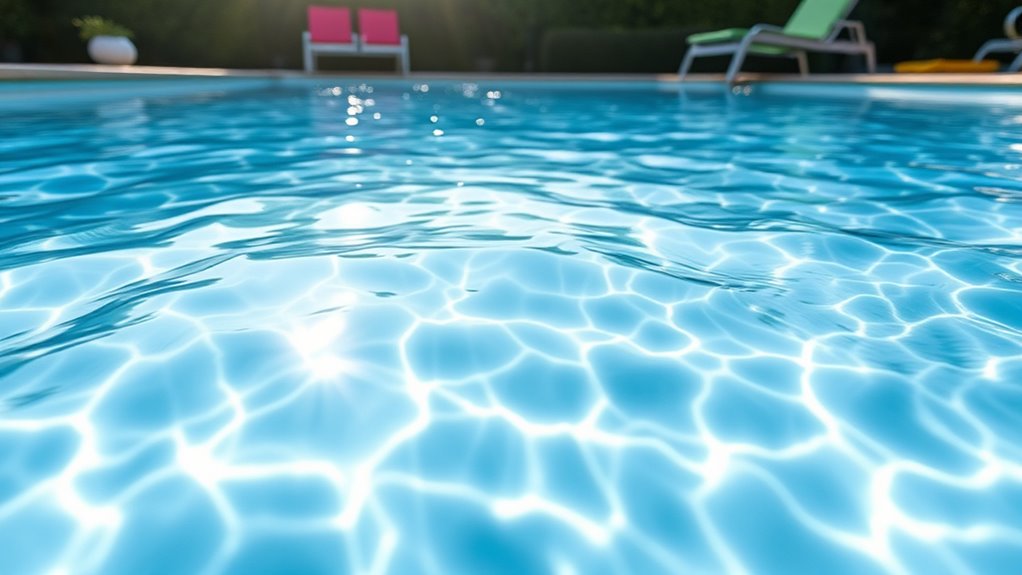
Maintaining the correct pH level is key to keeping your pool water healthy and balanced. When your pH stays within the ideal range, you’ll enjoy crystal-clear water and a safe swimming environment. The perfect pH range is between 7.2 and 7.6. Staying in this range helps prevent irritating your skin and eyes, keeps your sanitizer effective, and protects your pool equipment from corrosion. Here’s why it matters:
- Enjoy a comfortable swim—no burning eyes or dry skin.
- Keep your sanitizer working—fighting bacteria more effectively.
- Protect your pool’s equipment—avoiding costly repairs.
- Maintain water clarity—so your pool looks inviting every time.
Staying within this range ensures your pool remains a revitalizing oasis you love to immerse yourself in.
As an affiliate, we earn on qualifying purchases.
How Ph Affects Chlorine Efficiency and Water Safety
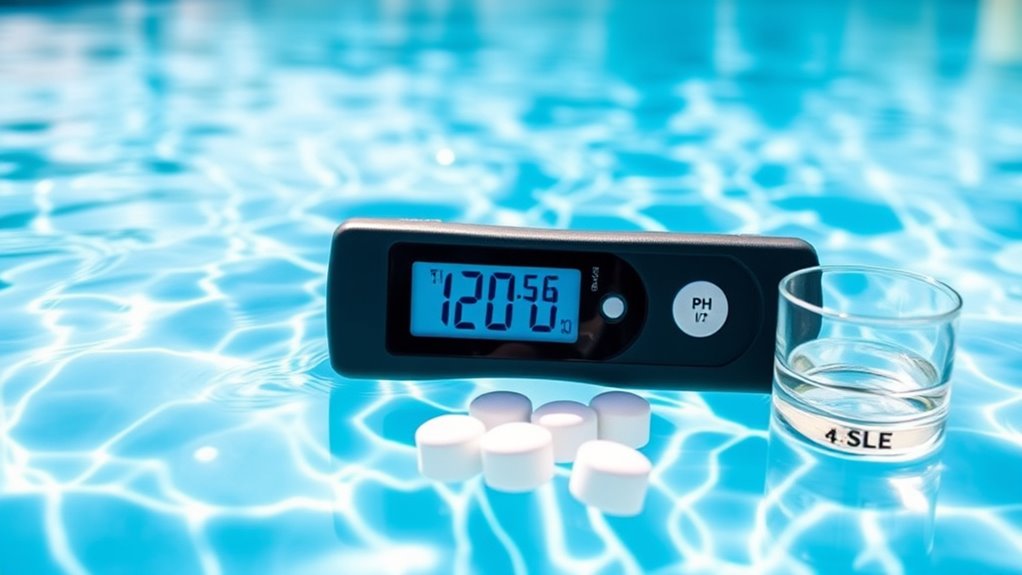
Your pool’s pH level directly influences how well chlorine works to sanitize the water. When the pH is off, chlorine becomes less effective, risking unsafe conditions. Maintaining proper water balance guarantees your pool stays clean and safe for swimmers. Additionally, using a test kit to regularly monitor pH levels ensures optimal water chemistry and prevents potential health issues.
Chlorine Performance Impact
The pH level in your pool directly influences how effectively chlorine can disinfect the water. If your pH is off, chlorine won’t work as hard as it should, risking bacteria and algae growth. When pH is too high, chlorine becomes less active, leaving your pool vulnerable. Conversely, if pH is too low, you might face rapid chlorine loss and increased corrosion. Here’s what’s at stake:
- Reduced Disinfection Power: Bacteria and viruses survive, threatening water safety.
- Increased Chemical Costs: More chlorine is needed to compensate for inefficiency.
- Faster Chlorine Loss: Frequent shocking and rebalancing become necessary.
- Compromised Water Clarity: Poor chlorine performance leads to cloudy, unsafe water.
Maintaining proper pH guarantees your chlorine functions at its best, keeping your pool safe and sparkling. Proper pH balance affects the effectiveness of sanitizers and is essential for overall water quality.
Water Balance Significance
Since pH levels directly influence how well chlorine can disinfect your pool water, balancing pH is essential for maintaining water safety. When pH is too high or too low, chlorine becomes less effective, allowing bacteria and algae to thrive. A proper pH range (7.2 to 7.6) ensures chlorine works efficiently, providing strong disinfection and preventing cloudy or unsafe water. If pH drifts outside this range, you might notice issues like skin irritation, equipment damage, or algae growth. Regular testing and adjusting your pH levels help keep your pool water safe, clear, and balanced. Proper water balance isn’t just about clarity; it’s about safety and health. Understanding water chemistry can help you better maintain optimal pH levels and overall water quality.
As an affiliate, we earn on qualifying purchases.
Common Signs of Ph Imbalance in Your Pool
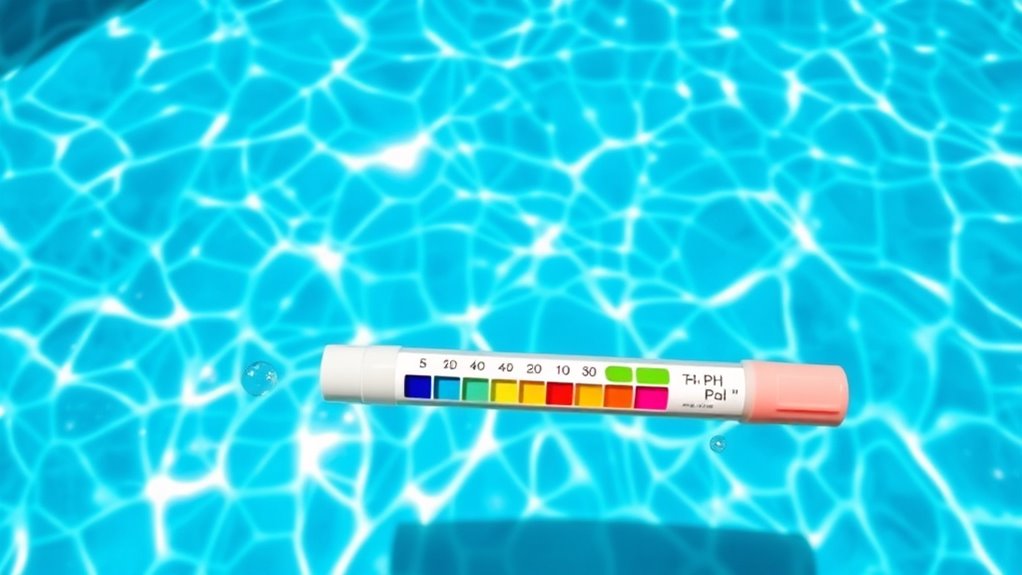
If your pool water looks cloudy or murky, it could be a sign of pH imbalance. You might also notice an unusual or strong chemical smell around your pool. These symptoms indicate that your pH levels may need adjustment to keep your water clean and safe. Implementing proper water testing can help maintain optimal pH levels and ensure a healthy swimming environment.
Cloudy Water Symptoms
Have you noticed your pool water appearing murky or hazy despite regular filtration? That cloudy look is a clear sign something’s off with your water chemistry. When pH levels are imbalanced, particles don’t settle properly, causing the water to look dull and uninviting. Here are four warning signs to watch for:
- Hazy or Milky Water that refuses to clear despite filtering.
- Suspended Particles that make the water look gritty or cloudy.
- Reduced Clarity, making it hard to see the bottom of the pool.
- Persistent Greenish or Yellow Tint indicating imbalance or algae growth.
Additionally, recognizing the importance of proper water chemistry can help you maintain clearer water and prevent these issues from worsening.
These symptoms are your cue to check and adjust your pH levels before the problem worsens. Ignoring cloudy water can lead to more serious issues down the line.
Unusual Pool Odor
When your pool water looks cloudy or murky, it’s often a sign that something’s off with your water chemistry. An unusual odor is another warning sign of pH imbalance. If your pool develops a strong, sour, or chemical smell, it indicates that the pH level is likely too low, making the water acidic. Conversely, a musty or stagnant odor suggests high pH levels, which can cause algae growth and bacteria. These odors aren’t normal and can cause discomfort or skin irritation. To fix this, test your water’s pH regularly and adjust it accordingly. Maintaining proper pH levels helps eliminate odors and keeps your pool water clean, safe, and inviting. Regular testing and adjustment are essential, as indoor air quality can be up to 5 times worse than outdoor air, affecting overall health. Don’t ignore these signs—they’re your first clue to balancing your pool chemistry effectively.
Factors That Influence Pool Ph Levels
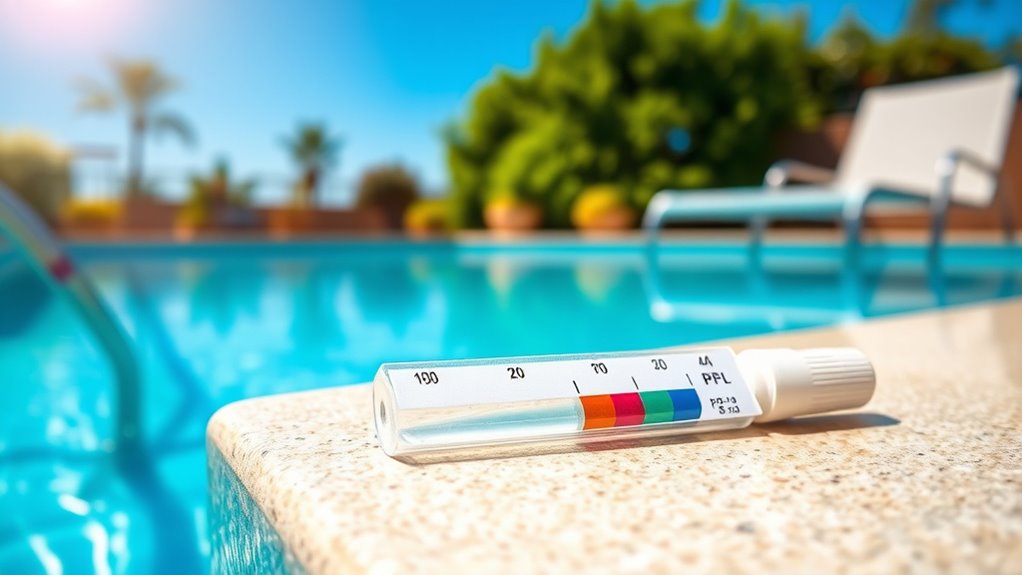
Several factors can considerably influence your pool’s pH levels, affecting water balance and clarity. Understanding these elements helps you maintain a healthy, inviting pool.
- Rainfall and runoff: Heavy rain introduces dirt and minerals, lowering pH and making your water feel off.
- Swimmers and organic matter: Body oils, sweat, and lotions add acids, pushing pH down and risking cloudy water.
- Pool chemicals: Using improper amounts of chlorine or pH adjusters can swing your pH levels wildly.
- Temperature fluctuations: Warmer water increases pH naturally, which can cause your water to become more alkaline over time.
- Lighting conditions and technology: The type of projector technology, such as DLP or LCD, can influence how you perceive and monitor water clarity and color, emphasizing the importance of accurate pH levels for optimal viewing.
Being aware of these factors empowers you to keep your pool perfectly balanced and crystal clear.
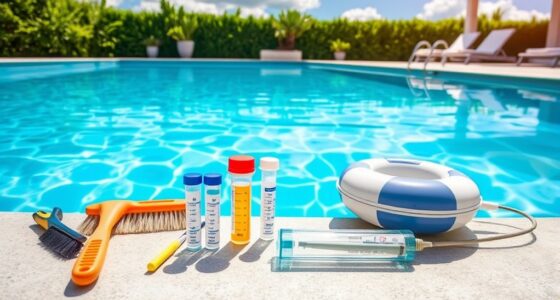
Testing and Monitoring Your Pool’s Ph Regularly
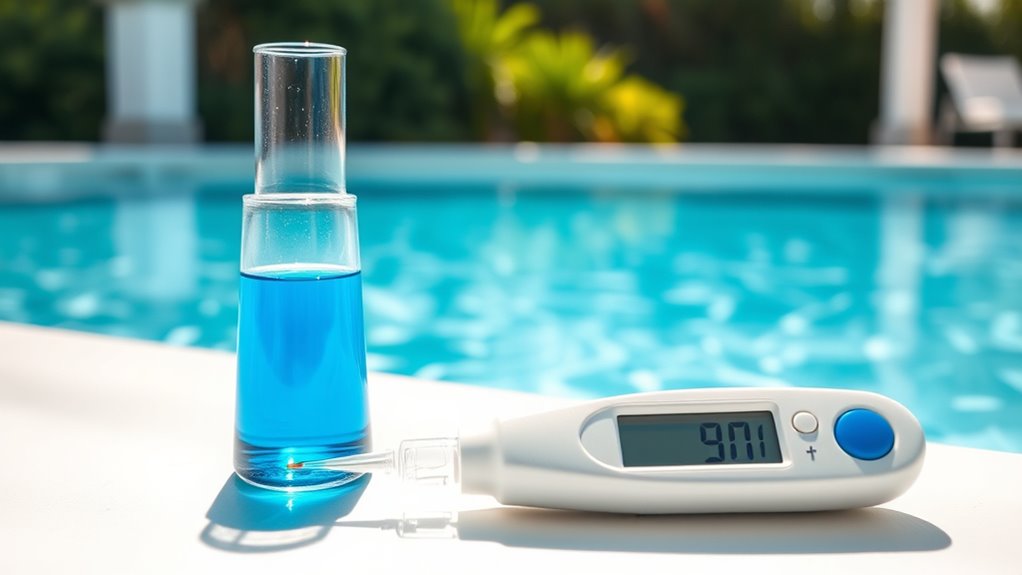
Maintaining proper pH levels requires regular testing and monitoring to catch imbalances early. You should test your pool’s pH at least twice a week, especially during heavy use or after storms. Use a reliable test kit or digital meter for accurate readings. When testing, follow the instructions carefully to guarantee precise results. Keep a log of your measurements to track trends over time. Monitoring frequently helps you identify shifts before they become serious problems, preventing issues like cloudy water or corrosion. Consistent testing also helps you determine when adjustments are necessary, saving you time and effort. Staying vigilant with regular pH checks ensures your pool remains safe, comfortable, and properly balanced for swimmers. Incorporating essential oil properties can also promote a more relaxing and pleasant swimming environment, especially when using calming scents like lavender or eucalyptus.
Simple Steps to Adjust and Maintain Proper Ph
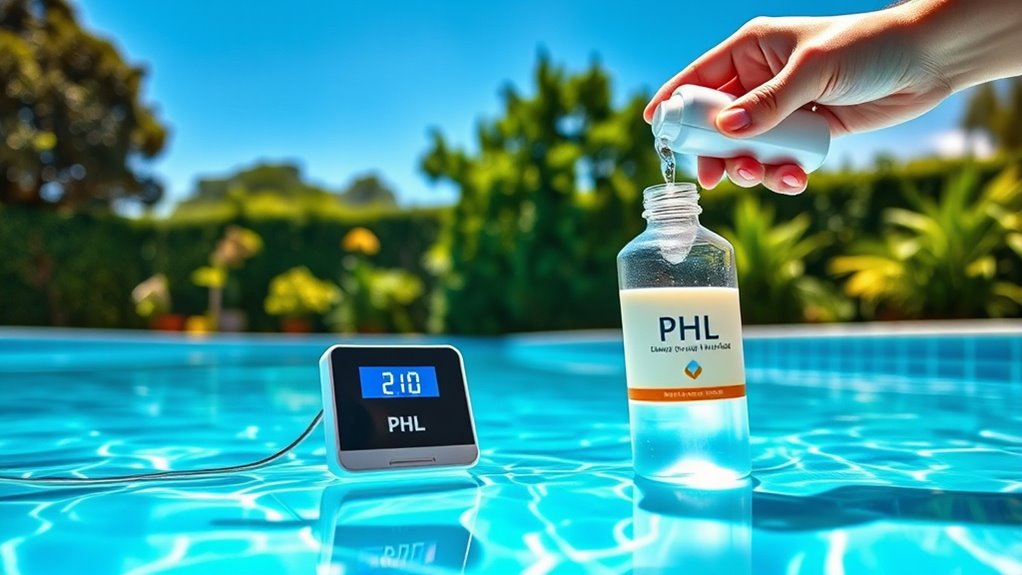
Keeping your pool’s pH balanced doesn’t have to be complicated. By following a few simple steps, you can keep your water clear, safe, and comfortable.
- Test your pH regularly to stay informed.
- Add pH increaser (like soda ash) if levels are low, stirring well.
- Use pH reducer (such as muriatic acid) if levels are high, pouring carefully around the pool edges.
- Retest the water after each adjustment to verify accuracy and avoid overcorrecting.
- Consider using pool water testing kits with accurate readings to ensure precise pH management.
The Role of Alkalinity in Ph Stability
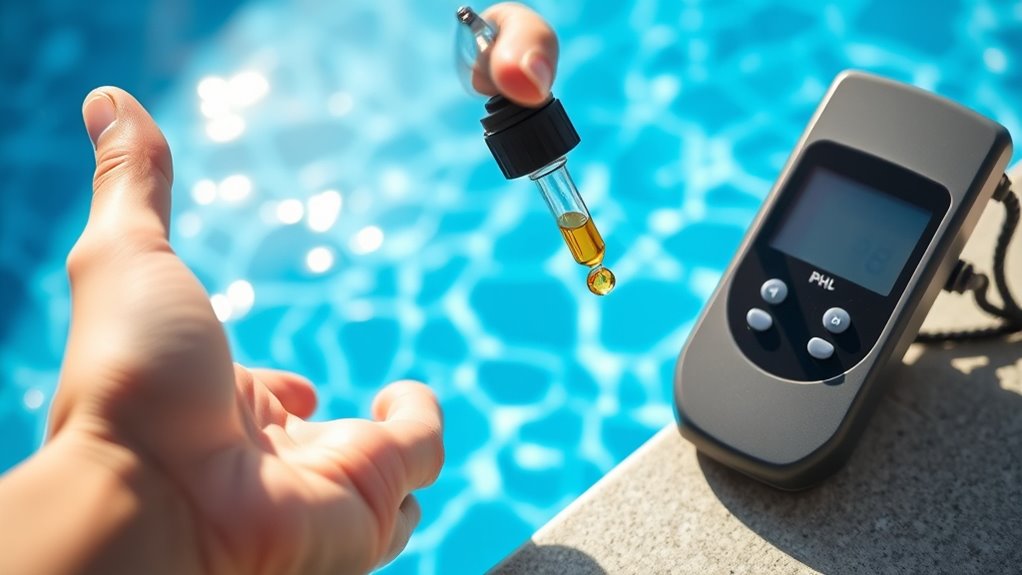
While adjusting your pool’s pH is important, understanding how alkalinity influences that stability can make a big difference. Alkalinity acts as a buffer, absorbing acids and bases that enter your pool, preventing sudden pH swings. If alkalinity is too low, your pH can fluctuate rapidly, leading to cloudy water and potential damage to pool equipment. Conversely, high alkalinity keeps your pH stable but can cause cloudiness and scaling if it gets too high. Maintaining alkalinity between 80 and 120 ppm creates a stable environment, making it easier to keep your pH balanced. Regular testing and adjustments ensure your pool stays clear, comfy, and safe for swimming. Remember, alkalinity’s role is to keep your pH steady, so your pool remains inviting and well-maintained.
Preventing Ph Fluctuations for Long-Term Pool Health
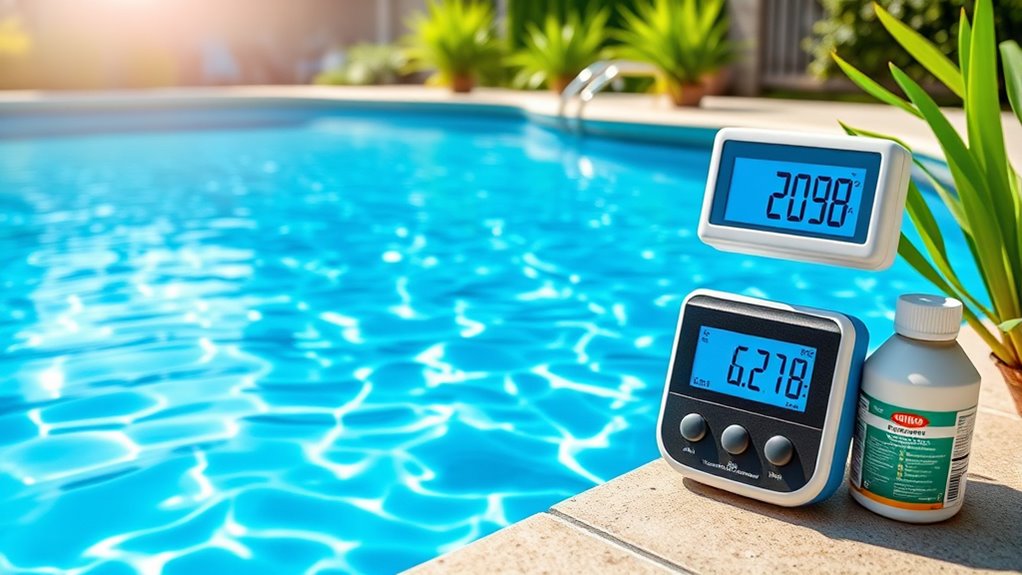
To prevent pH fluctuations and guarantee your pool stays healthy over the long term, it’s essential to monitor and adjust your water chemistry regularly. Consistent testing helps you catch imbalances early, avoiding costly repairs or algae growth. Here are four key steps to maintain stable pH levels:
Regular water testing and prompt adjustments keep your pool balanced and healthy long-term.
- Test weekly to catch changes before they escalate.
- Add pH increaser or decreaser promptly when levels drift.
- Maintain proper alkalinity to buffer pH swings and promote stability.
- Run your pool filter daily to circulate chemicals evenly, preventing sudden pH shifts.
Staying vigilant ensures your pool remains inviting, safe, and crystal-clear, giving you peace of mind and endless enjoyment.
Frequently Asked Questions
Can Natural Pool Elements Affect Its Ph Levels?
Did you know that natural pool elements can considerably impact pH levels? You’ll notice that plants, algae, and even fish produce waste that can make your water more acidic or alkaline over time. As these elements interact, they release substances affecting pH balance. Regular monitoring helps you maintain a stable pH, ensuring your pool stays clean and safe for swimming. So, yes, natural elements definitely influence your pool’s pH.
How Does Ph Impact Swimmer Comfort and Skin Health?
A proper pH level keeps your skin comfortable and healthy. If the pH is too high, your skin can feel dry, itchy, and irritated, while a low pH may cause redness and discomfort. When you maintain the pH between 7.2 and 7.8, you reduce irritation, prevent bacteria growth, and guarantee your swim feels pleasant. Regularly testing and adjusting the pH helps you enjoy a safe, comfortable swimming experience.
Are There Eco-Friendly Methods to Balance Pool Ph?
Did you know that eco-friendly pool balancing methods reduce chemical runoff by up to 50%? You can use natural options like mineral systems, which adjust pH levels without harsh chemicals, or aerate your pool water to naturally stabilize pH. Adding baking soda is also an effective, eco-conscious way to raise pH gently. These methods help keep your pool safe, sustainable, and comfortable for swimmers.
What Are the Risks of Ignoring Ph Fluctuations Long-Term?
Ignoring pH fluctuations long-term can lead to costly problems. You risk damaging your pool’s equipment, causing algae growth, and irritating your skin and eyes. Over time, uneven pH levels weaken the pool’s structure and reduce the effectiveness of sanitizers. This neglect can result in increased maintenance costs and a less enjoyable swimming experience. Regular pH checks and adjustments help you avoid these risks and keep your pool safe and inviting.
Can Ph Levels Vary Seasonally in Outdoor Pools?
Imagine your outdoor pool quietly whispering its seasonal secrets. Yes, pH levels can subtly shift with the seasons, influenced by sunlight, temperature, and rain. During warmer months, you might notice a gentle rise or fall, requiring you to tune your water chemistry. Regular testing helps you stay in harmony, ensuring crystal-clear water and a safe swimming experience. Stay attentive, and your pool will always be ready for joyful dips.
Conclusion
Keeping your pool’s pH balanced is essential for safe, clear water, and it’s easier than you think. Did you know that even a tiny pH shift of just 0.2 can reduce chlorine’s effectiveness by 50%? Regular testing and simple adjustments can save you money and headaches. By staying on top of your pool’s pH levels, you guarantee a healthier swimming environment for everyone, making your pool the perfect summer retreat.
Fall Picks
fall essentials
As an affiliate, we earn on qualifying purchases.