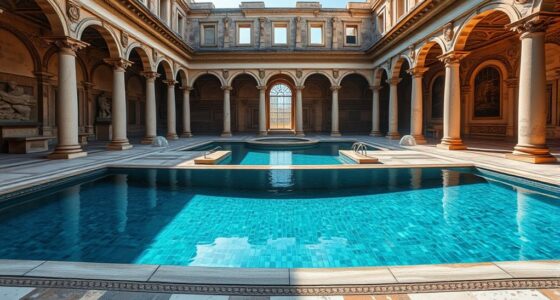
You can see the influence of vintage pool designs in today’s builds through shapes, decorative tiles, and ornamental details that evoke nostalgia and elegance. Modern pools blend these classic touches with innovative materials like fiberglass and advanced composites, making them durable and stylish. The craftsmanship of early 20th-century pools still inspires contemporary aesthetics, while technological advances add new features. To understand how historical choices shape today’s pools, keep exploring the evolution of design and materials.

Get pool and patio gear delivered free with Prime
- Fast, free delivery on millions of items
- Prime Video, Amazon Music and more included
- Member-only deals all year
Key Takeaways
- Early pools featured simple rectangular shapes, emphasizing functionality over aesthetics.
- Vintage-inspired designs incorporate intricate tile mosaics and ornamental details for timeless elegance.
- Material advancements, like fiberglass and modern composites, revolutionized pool construction and durability.
- Technological innovations such as LED lighting and smart controls enhance modern pool functionality and aesthetics.
- Classic design elements and craftsmanship continue to inspire contemporary pool shapes and decorative details.

Throughout history, pool design has evolved from simple, functional features to elaborate, luxurious creations that reflect technological advances and changing aesthetic tastes. Early pools were straightforward, often just basic rectangular shapes carved into the ground, emphasizing utility over style. Over time, however, vintage aesthetics began to influence design choices, bringing a sense of elegance and nostalgia to these aquatic spaces. Think of the intricate tile mosaics and ornamental details that marked pools in the early 20th century—these elements still inspire modern designs seeking a timeless appeal. The vintage aesthetic isn’t just about looks; it encapsulates a sense of history and craftsmanship that many still find appealing, blending classic charm with contemporary innovation.
Material evolution plays a pivotal role in shaping pool design throughout the ages. Initially, natural materials like stone and simple concrete were prevalent, offering durability but limited in versatility. As technology advanced, so did the materials used in pool construction. The introduction of fiberglass and advanced polymer composites revolutionized build processes, making pools more resilient, easier to install, and customizable in shape and size. Modern pools often combine traditional materials with newer ones, creating a seamless blend of old and new. For example, classic tiled finishes are now paired with sleek, energy-efficient liners, allowing for a variety of aesthetic options while improving longevity and maintenance. This evolution in materials not only enhances durability but also opens the door for innovative features like LED lighting, water features, and smart controls, all of which influence current pool designs. Additionally, innovations in material technology continue to expand the possibilities for customization and sustainability in pool construction. These advancements also support eco-friendly practices, which are increasingly important in contemporary pool design.
You can see how these historical choices still impact modern pools. The vintage aesthetic continues to inspire designs that evoke nostalgia and sophistication, often through decorative tiling, ornamental features, or vintage-inspired shapes. Simultaneously, material evolution has expanded what’s possible, allowing you to select from a wider range of finishes, textures, and technological integrations. When designing a pool today, you’re not starting from scratch; instead, you’re building upon decades of tried-and-true choices. Whether you prefer a sleek, modern look or a classic, vintage feel, understanding this history helps you make informed decisions that balance style, durability, and innovation. Ultimately, the legacy of past design choices provides a foundation for creating pools that are both beautiful and functional, reflecting centuries of craftsmanship and technological progress.
Products Worth Considering

Philips Hue White and Color Ambiance Smart Light Starter Kit, 2 A19 Bulbs with Hub

Philips Hue Secure Starter Kit with Contact Sensors, Motion Sensor, Bridge, and Color Smart Bulbs

TCL 65 Inch QM8L Series SQD-Mini LED QLED 4K Smart Google TV
As an affiliate, we earn on qualifying purchases.
Frequently Asked Questions
How Have Technological Advancements Impacted Pool Design Over the Decades?
Technological advancements have transformed pool design by making maintenance easier and enhancing aesthetics. You now benefit from innovative filtration systems that improve water clarity and reduce chemical use. Decorative mosaics allow for personalized, artistic touches, elevating your pool’s visual appeal. These innovations give you more options to customize your pool, ensuring it’s both functional and beautiful while reducing upkeep time and costs.
What Cultural Influences Shaped Early Pool Aesthetics and Features?
You notice that early pool aesthetics were shaped by cultural symbolism and artistic motifs, reflecting societal values and traditions. For instance, ancient pools often featured motifs inspired by mythology or nature, symbolizing prosperity or spiritual significance. These designs influenced modern pools by emphasizing aesthetics rooted in cultural identity. You see how these artistic elements continue to inspire contemporary features, blending tradition with innovation to create visually meaningful and culturally resonant pools.
Are There Specific Design Elements That Have Remained Unchanged?
You’ll find that certain design elements have remained unchanged, like the pursuit of timeless elegance and classic motifs that make pools feel forever stylish. Features like rectangular shapes, clean lines, and elegant tiling have persisted through centuries, transforming simple water features into icons of luxury. These elements keep pools looking sophisticated and refined, proving that some design choices are truly everlasting, never losing their charm regardless of evolving trends.
How Did Environmental Concerns Influence Historical Pool Construction Choices?
You’re probably aware that environmental concerns shaped pool construction through eco-friendly innovations and water conservation techniques. Historically, builders used natural filtration systems and shade structures to reduce energy use. They also adopted efficient pool covers and recirculation methods to minimize water waste. These choices aimed to protect resources, and many of these sustainable practices still influence modern pool designs, emphasizing eco-consciousness and efficiency today.
What Are the Most Common Materials Used in Historic Pool Designs?
Think of historic pools as a canvas painted with timeless materials. You’ll often see vintage mosaics, which add intricate color and texture, and ornamental fountains, serving as focal points. These pools typically used durable materials like concrete, stone, and ceramic tiles. Their classic charm lies in these choices, blending beauty with longevity. By preserving these materials, modern builds continue to echo the elegance and craftsmanship of the past.
Conclusion
As you reflect on the history of pool design, you see the echoes of timeless choices—curved edges, natural materials, and integrated landscapes—that still shape modern pools. These design elements breathe life into your space, blending beauty with function and tradition with innovation. By embracing these classic influences, you craft a sanctuary that invites relaxation, sparks joy, and stands as a tribute to the enduring artistry of pool design—where past and present seamlessly meet.