
TL;DR

Get pool and patio gear delivered free with Prime
- Fast, free delivery on millions of items
- Prime Video, Amazon Music and more included
- Member-only deals all year
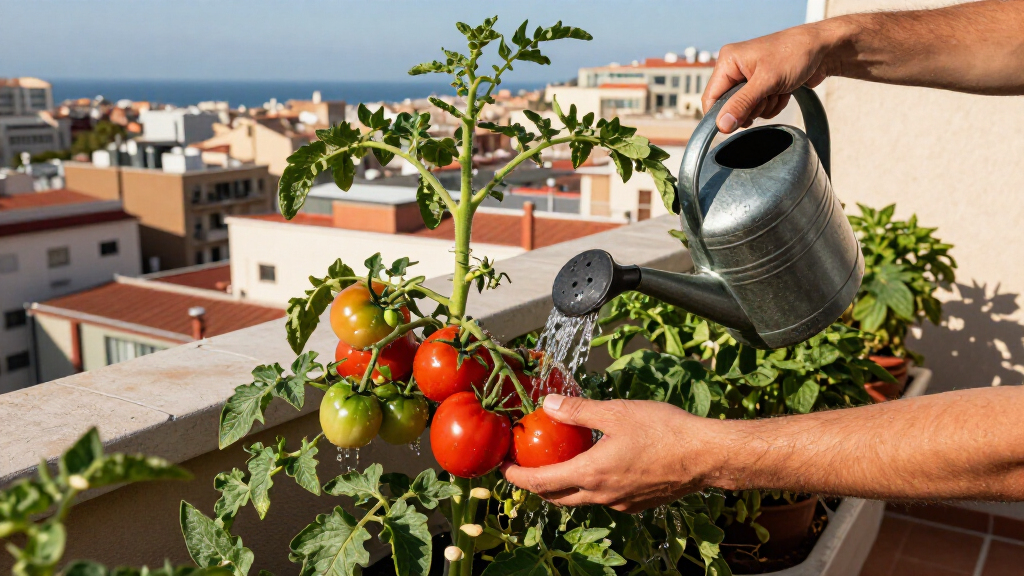
Research indicates that Barcelona’s municipal rooftops have the capacity to produce up to 31% of the tomatoes consumed in the city. This highlights the potential for urban agriculture to contribute to local food security.
Municipal rooftops across Barcelona could produce up to 31% of the tomatoes consumed in the city, according to a recent study by the Autonomous University of Barcelona. This finding underscores the potential for urban agriculture to bolster local food security and reduce reliance on external supply chains.
The study, conducted by researchers at the Autonomous University of Barcelona, analyzed the available rooftop space within the city’s municipal boundaries and assessed its capacity for tomato cultivation. The results indicate that, if fully utilized, these rooftops could generate nearly a third of the tomatoes consumed by Barcelona residents.
Barcelona faces ongoing challenges related to urban sustainability and food resilience. The idea of transforming rooftops into productive agricultural sites has gained renewed interest amid concerns about supply chain disruptions and climate change impacts. The study estimates that approximately 1,500 hectares of rooftop space could be suitable for tomato cultivation, depending on structural and logistical factors.
City officials and urban agriculture advocates are now examining the feasibility of implementing pilot projects based on these findings. The initiative aims to promote local food production, reduce transportation emissions, and foster community engagement in sustainable practices.
Potential Impact on Urban Food Security
This development highlights a possible shift toward urban food self-sufficiency in Barcelona, which could help mitigate vulnerabilities in the city’s food supply chain. Producing a significant share of tomatoes locally could reduce dependency on imports, lower transportation emissions, and support local economies. Additionally, rooftop farming can contribute to urban cooling, air quality improvement, and community well-being.
However, scaling rooftop agriculture to this extent involves logistical challenges, including structural assessments of buildings, water supply management, and crop maintenance. The study’s findings serve as a proof of concept, but practical implementation will require coordinated planning and investment.
As an affiliate, we earn on qualifying purchases.
Barcelona’s Urban Agriculture and Food Resilience Efforts
Barcelona has been increasingly exploring urban agriculture as part of its sustainability and climate adaptation strategies. Previous initiatives have focused on community gardens and small-scale rooftop farms, but large-scale projects remain limited. The recent study builds on this trend, suggesting that municipal rooftops could play a substantial role in local food production.
Interest in urban farming has surged globally, driven by concerns over climate change, food security, and environmental sustainability. Barcelona’s geographic and climatic conditions are conducive to growing tomatoes, a staple in local cuisine. The city’s dense urban fabric presents both opportunities and challenges for expanding rooftop agriculture.
While the idea is promising, it is still in the early stages. The study’s estimates are based on theoretical capacity, and actual implementation will depend on structural assessments, regulatory approvals, and community involvement.
tomato growing containers for rooftops
As an affiliate, we earn on qualifying purchases.
As an affiliate, we earn on qualifying purchases.
Implementation Challenges and Practical Feasibility
It is still unclear how quickly and effectively Barcelona can convert theoretical rooftop capacity into actual food production. Structural assessments, water supply logistics, and regulatory approvals are ongoing considerations. The study provides an optimistic estimate, but real-world constraints may limit full realization in the short term.
Further research is needed to evaluate the cost, maintenance, and community acceptance of large-scale rooftop tomato farms within the city’s urban landscape.
vertical garden planter for tomatoes
As an affiliate, we earn on qualifying purchases.
As an affiliate, we earn on qualifying purchases.
Next Steps for Urban Farming in Barcelona
City officials are expected to initiate pilot projects in select districts over the coming months to test the feasibility of rooftop tomato cultivation. These pilots will evaluate structural safety, crop yields, and community engagement. If successful, broader implementation could follow, supported by funding and policy adjustments.
Researchers and urban planners will continue assessing logistical challenges, with potential scaling of the project contingent on pilot outcomes. Public consultation and collaboration with local farmers and residents will be integral to future development.
drip irrigation system for rooftop farming
As an affiliate, we earn on qualifying purchases.
As an affiliate, we earn on qualifying purchases.
Key Questions
Can all rooftops in Barcelona be used for tomato farming?
Not all rooftops are suitable; structural integrity, access, and sunlight exposure are key factors. The study estimates potential based on available space, but practical use will require structural assessments.
How much could this urban farming initiative reduce food imports?
If fully realized, rooftop farms could supply up to 31% of the tomatoes consumed in Barcelona, significantly reducing reliance on external sources.
What are the main challenges to implementing rooftop tomato farms?
Structural safety, water management, regulatory approvals, and community acceptance are the primary hurdles. Addressing these will determine the timeline and scale of implementation.
Will this project affect local tomato prices?
Potentially, increased local production could stabilize or reduce prices, but this depends on the scale of implementation and market dynamics.
When might we see rooftop tomato farms in operation?
Pilot projects could start within the next year, but full-scale deployment will depend on pilot success and logistical planning.
Source: local
Evergreen bestsellers Picks
bestsellers
As an affiliate, we earn on qualifying purchases.