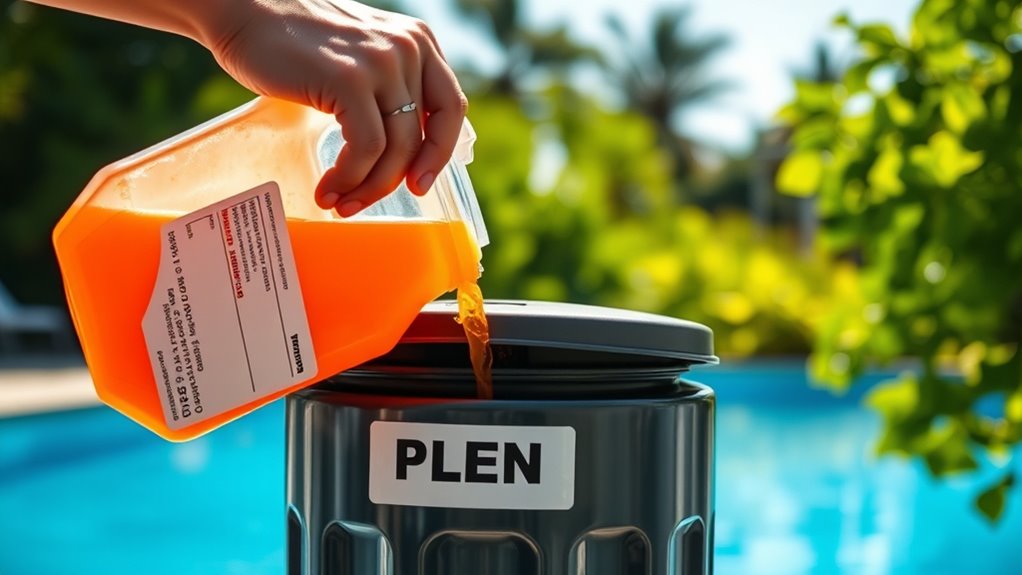

To responsibly dispose of pool chemicals, store them in labeled, sealed containers in a cool, dry, ventilated area away from children and pets. Follow local regulations and use designated disposal sites or collection events for hazardous waste. Never mix chemicals or pour them down drains or onto the ground, as this can harm water, soil, and wildlife. Proper disposal minimizes environmental impact and community health risks—keep going to discover more about safe and effective methods.

Get pool and patio gear delivered free — and shop member deals
- Fast, free delivery on millions of items
- Access to Prime Big Deal Days deals on October 6–7
- Prime Video, Amazon Music and more included
Key Takeaways
- Follow local regulations and use designated disposal facilities or collection events for hazardous pool chemicals.
- Never mix different chemicals during disposal to prevent dangerous reactions or toxic gases.
- Store chemicals in clearly labeled, sealed containers in a cool, dry, ventilated area until disposal.
- Contact local waste management authorities if unsure about proper disposal procedures or facilities.
- Avoid dumping chemicals down drains, yards, or storm drains to prevent environmental contamination.

Proper disposal of pool chemicals is essential to protect your health and the environment. When you handle chemicals like chlorine, algaecides, and pH adjusters, you need to consider not only how you dispose of them but also how they are stored beforehand. Chemical storage plays a pivotal role in preventing accidents and leaks that could harm nearby residents, animals, or ecosystems. Keeping chemicals in clearly labeled, sealed containers in a cool, dry, ventilated area minimizes risks and reduces the chance of spills or unintended reactions. If chemicals are stored improperly, they can degrade or react with each other, creating hazardous fumes or dangerous compounds. Proper storage ensures that chemicals remain stable until you’re ready to dispose of them responsibly.
Storing pool chemicals properly prevents leaks, accidents, and environmental harm.
Your choices in disposal directly impact the environment. When pool chemicals are dumped improperly—such as pouring them down the drain, into the yard, or into storm drains—you risk contaminating water supplies, soil, and local wildlife. Many chemicals contain substances that are toxic to aquatic life or can persist in the environment for years, causing long-term damage. For example, excess chlorine can kill beneficial bacteria in water treatment plants or harm aquatic organisms if it reaches natural water bodies. Algaecides and pH adjusters can alter the chemical balance of soil or water, leading to ecological imbalance. Additionally, proper disposal practices are crucial for preventing hazardous reactions and ensuring safety. By understanding the environmental impact of these chemicals, you can take steps to dispose of them safely, preventing contamination and safeguarding your community’s natural resources.
When you’re ready to dispose of pool chemicals, always follow local regulations and guidelines. Many communities have designated disposal sites or collection events specifically for hazardous waste, including pool chemicals. Never mix chemicals together, as incompatible substances can react violently, releasing toxic gases or causing explosions. Instead, check the labels for disposal instructions, which often recommend diluting small quantities with water for neutralization or taking them to authorized disposal facilities. If in doubt, contact your local waste management authorities to guarantee compliance and safety. Proper disposal isn’t just about avoiding fines; it’s about actively protecting your environment and minimizing health risks for everyone around you.
Being responsible with your pool chemicals means understanding that your actions have consequences beyond your backyard. By storing chemicals properly and disposing of them correctly, you reduce the environmental impact and help maintain a safer, cleaner community. Taking these precautions shows respect for the environment and your neighbors, ensuring that everyone can enjoy safe and healthy surroundings. Remember, responsible chemical management starts with awareness and ends with action—your choices matter.
pool chemical storage containers
As an affiliate, we earn on qualifying purchases.
As an affiliate, we earn on qualifying purchases.
Frequently Asked Questions
Can Pool Chemicals Be Disposed of in Regular Trash?
No, you shouldn’t dispose of pool chemicals in regular trash. Instead, consider chemical repurposing if possible. Always use disposal containers designed for hazardous materials and follow local regulations. Proper disposal prevents environmental harm and health risks. Never pour chemicals down the drain or into the trash without proper guidance. Contact your local waste management facility for instructions, ensuring you’re handling pool chemicals responsibly and safely.
Are There Specific Disposal Days for Hazardous Pool Chemicals?
Think of hazardous pool chemicals as treasure needing careful handling. You’ll find specific disposal days at local pool chemical disposal sites, where experts handle such hazardous materials safely. Remember, never toss chemicals in the trash or pour them down drains. Instead, focus on chemical container recycling and visiting designated pool chemical disposal sites during scheduled days. This keeps your environment safe and aligns with responsible disposal practices.
How Long Can Pool Chemicals Be Stored Safely?
You can generally store pool chemicals safely for up to one year if you follow proper storage guidelines. Keep chemicals in a cool, dry, well-ventilated area away from direct sunlight and incompatible substances to maintain chemical stability. Always check the manufacturer’s instructions for specific storage recommendations, and make sure containers are tightly sealed. Proper storage prevents hazards, preserves chemical effectiveness, and ensures safe handling over time.
What Are the Environmental Impacts of Improper Disposal?
If you improperly dispose of pool chemicals, you risk causing environmental contamination, which can harm wildlife and ecosystems. Did you know that chemicals like chlorine can persist in water for months, contaminating water sources? This leads to water pollution, affecting drinking water and aquatic life. You should always follow proper disposal methods to protect the environment, prevent pollution, and keep your community safe from hazardous chemical exposure.
Are There Local Regulations for Pool Chemical Disposal?
Yes, there are local regulations for pool chemical disposal. You should follow proper chemical storage guidelines and use approved disposal methods to avoid hazards. Check with your local waste management authority or environmental agency for specific rules. Proper disposal involves using designated disposal facilities or services, ensuring chemicals are safely contained, and avoiding pouring them down drains or onto the ground. Staying compliant helps protect the environment and community health.
As an affiliate, we earn on qualifying purchases.
Conclusion
So, next time you toss those pool chemicals, remember—they’re not just a splash in the pan. Ignoring proper disposal turns your backyard oasis into a toxic pond faster than you can say “chlorine mishap.” Ironically, what’s meant to keep your pool sparkling could end up poisoning the very environment you’re trying to enjoy. So, do the responsible thing—dispose of chemicals properly—and keep your paradise safe for everyone, including the planet.
pool chemical neutralization products
As an affiliate, we earn on qualifying purchases.
As an affiliate, we earn on qualifying purchases.
As an affiliate, we earn on qualifying purchases.
Fall Picks
fall essentials
As an affiliate, we earn on qualifying purchases.