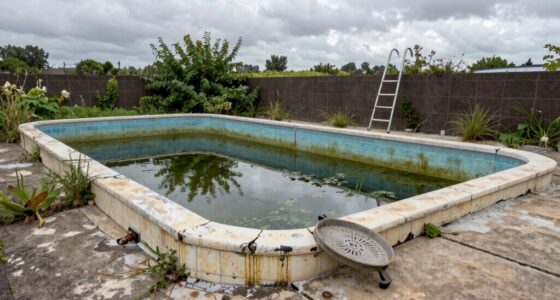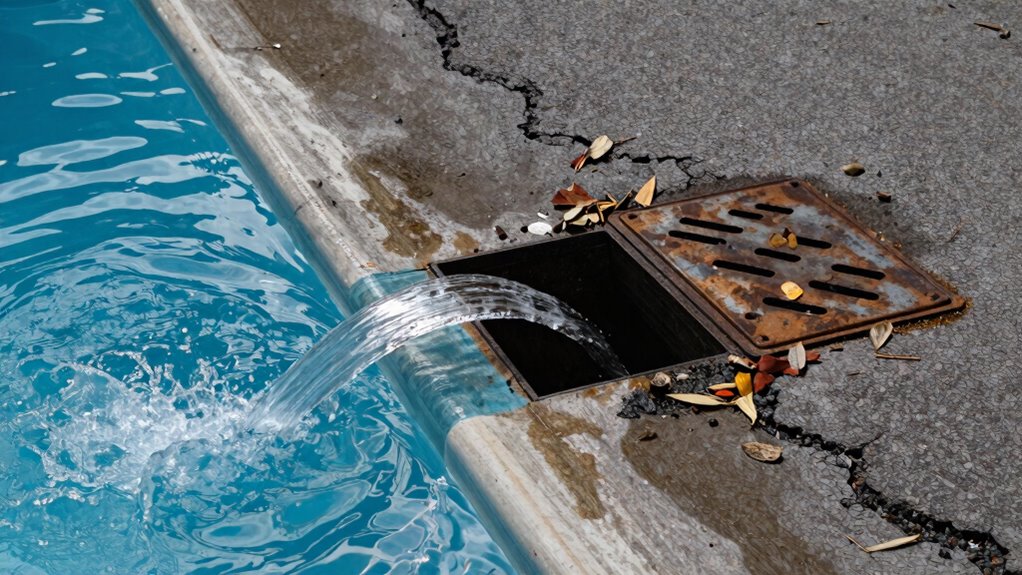

When pool water ends up in storm drains, it bypasses treatment and flows directly into our waterways. It introduces chemicals like chlorine, algaecides, and contaminants from sunscreens, oils, and dirt. This disrupts aquatic ecosystems, harms fish and plants, and causes water pollution. Storm drains lack filters, so pollutants build up and can seep into groundwater. If you want to know more about how this affects the environment, keep exploring the details below.

Get pool and patio gear delivered free with Prime
- Fast, free delivery on millions of items
- Prime Video, Amazon Music and more included
- Member-only deals all year
Key Takeaways
- Pool water bypasses treatment and flows directly into waterways through storm drains.
- Chemicals like chlorine and algaecides harm aquatic life and disrupt ecosystems.
- Runoff increases nutrient levels, causing algae blooms and oxygen depletion.
- Pollutants from pool water and urban areas accumulate, contaminating water sources long-term.
- Storm drains lack filtration, allowing pollutants to reach natural water bodies unfiltered.
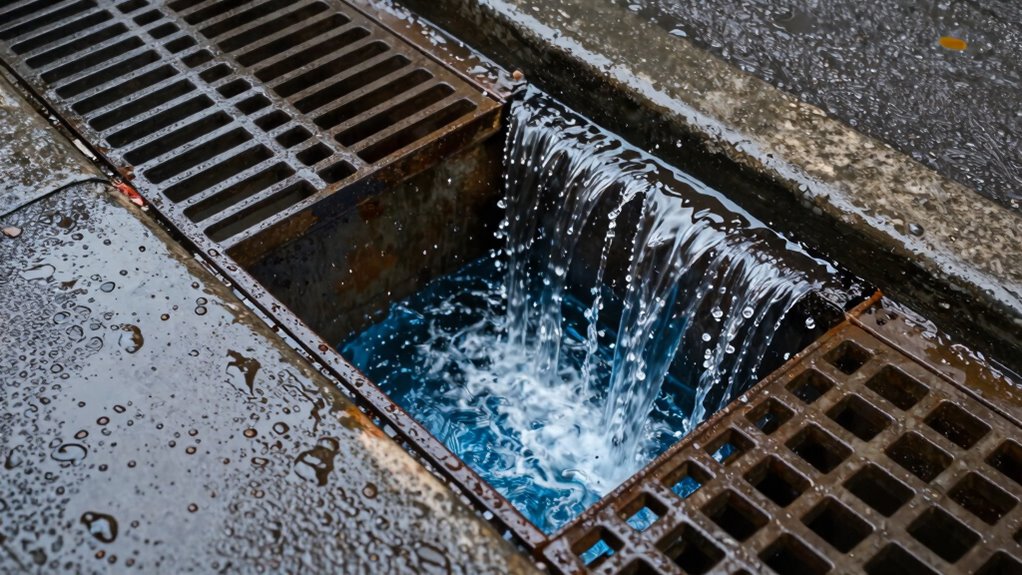
During heavy storms, you might notice pool water draining into storm drains, which can seem harmless but actually raises environmental concerns. When your pool water flows into storm drains, it bypasses the usual treatment systems and directly enters local waterways. This can cause a chemical imbalance in the environment, disrupting the delicate balance of aquatic ecosystems. Pool water often contains chlorine, algaecides, and other chemicals designed to keep your pool clean. When these chemicals enter natural water bodies, they can harm fish, plants, and microorganisms that are essential to maintaining water quality. The sudden influx of chemicals can upset the natural chemical composition, leading to water pollution and negatively impacting aquatic life.
You might think that a little bit of pool water won’t make a difference, but during storms, large volumes can quickly enter storm drains. This not only introduces chemicals but also increases nutrient levels in waterways. Elevated nutrients, especially nitrogen and phosphorus from pool chemicals, can lead to algae blooms, which deplete oxygen in the water and cause dead zones where aquatic life struggles to survive. The runoff can carry other pollutants, such as sunscreen, oils, dirt, and debris, further contaminating water sources and contributing to water pollution. These pollutants can accumulate over time, creating long-term environmental issues that affect both wildlife and human water supplies. Additionally, storm drain design often does not include filtration, allowing pollutants to flow unfiltered into natural water bodies.
Furthermore, the chemical composition of pool water, when introduced into natural environments, can alter the pH levels and other chemical balances, making it more difficult for ecosystems to recover. The environmental impact is compounded because storm drains are designed to channel water away quickly, not to filter or treat what flows through them. As a result, chemicals and pollutants from pool water are directly released into rivers, lakes, and oceans. This unregulated discharge can lead to imbalances in natural water chemistry, making it harder for ecosystems to recover and sustain healthy populations of aquatic organisms. Moreover, stormwater runoff can carry a multitude of pollutants from urban areas, compounding the environmental risks associated with pool water discharge. Furthermore, contaminated water can seep into groundwater sources, affecting drinking water supplies for communities nearby.
In addition, the lack of proper stormwater management practices often exacerbates these issues, allowing pollutants to reach sensitive ecosystems more easily.
As an affiliate, we earn on qualifying purchases.
Frequently Asked Questions
Can Pool Chemicals Harm Local Wildlife in Storm Drains?
Yes, pool chemicals can harm local wildlife in storm drains. When chemicals like chlorine or algaecides enter stormwater systems, they cause aquatic toxicity, which can be deadly to aquatic organisms. Chemical contamination disrupts the ecosystem, affecting fish and plants. To protect wildlife, avoid pouring pool chemicals into storm drains and instead dispose of them properly at designated disposal sites.
How Quickly Does Pool Water Reach Waterways Through Storm Drains?
Pool drainage can reach waterways within minutes to hours, depending on your area’s water flow and storm drain system. When you drain your pool, water flows quickly through storm drains, especially during heavy rain, carrying chemicals and debris. The speed varies with storm drain design, rainfall, and terrain. To prevent environmental impact, it’s best to drain your pool responsibly, avoiding heavy rains and following local guidelines.
Are There Legal Penalties for Improper Pool Water Disposal?
You might think dumping pool water is harmless, but legal violations can lead to hefty penalties. Authorities enforce penalties when they catch improper disposal, aiming to protect water quality. Ironically, what seems like a small act of neglect can result in significant consequences. Penalty enforcement guarantees homeowners follow regulations, reminding you that responsible disposal isn’t just about avoiding fines but safeguarding the environment for everyone’s benefit.
What Are the Long-Term Environmental Impacts of Pool Water in Storm Drains?
When pool water enters storm drains, it can cause long-term environmental impacts like chemical contamination and ecosystem disruption. You might unknowingly introduce chlorine, algaecides, or other chemicals that harm aquatic life and degrade water quality. Over time, these pollutants can accumulate, affecting plants, animals, and even groundwater sources. To protect the environment, it’s essential to dispose of pool water properly and avoid draining it into storm drains.
How Can Homeowners Prevent Pool Water From Entering Storm Drains?
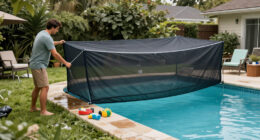
To prevent pool water from entering storm drains, you should regularly maintain your pool cover to catch runoff and prevent overflows. Additionally, consider drainage system modifications like installing backflow preventers or diversion pipes that direct excess water away from storm drains. By staying vigilant with pool cover maintenance and upgrading your drainage system, you can effectively reduce the risk of contaminating local waterways and protect the environment.
As an affiliate, we earn on qualifying purchases.
Conclusion
Remember, a little caution goes a long way. When pool water finds its way into storm drains, it can harm local ecosystems and water quality. Always drain your pool responsibly and avoid pouring chemicals down the drain. As the saying goes, “A stitch in time saves nine.” Taking quick, simple steps now can prevent bigger environmental problems later. Be mindful of how your actions impact the environment—every drop counts.
stormwater runoff filtration system
As an affiliate, we earn on qualifying purchases.
As an affiliate, we earn on qualifying purchases.
eco-friendly pool chemical neutralizer
As an affiliate, we earn on qualifying purchases.
As an affiliate, we earn on qualifying purchases.
Halloween Picks
halloween
As an affiliate, we earn on qualifying purchases.