
TL;DR

Get pool and patio gear delivered free with Prime
- Fast, free delivery on millions of items
- Prime Video, Amazon Music and more included
- Member-only deals all year
A Gardener’s Path report describes three ways to preserve banana plants through winter: move container-grown plants indoors, protect in-ground plants with mulch, or dig up and store their rhizomes. Most banana plants are cold-sensitive, and the right method depends on the plant, available storage space and local winter temperatures.
Gardener’s Path has outlined three ways to protect banana plants over winter: bring container-grown plants indoors, cover in-ground plants with insulation, or dig up and store their rhizomes. The advice matters to gardeners in cold-winter areas because most banana plants are sensitive to low temperatures, though some varieties tolerate more cold than others.
The report says banana plants’ leaves stop growing at about 55°F and can suffer damage at 32°F. It says underground rhizomes can die if temperatures remain at 22°F or lower. These figures describe different kinds of cold stress; the source does not provide a single temperature threshold that applies to every variety or growing condition.
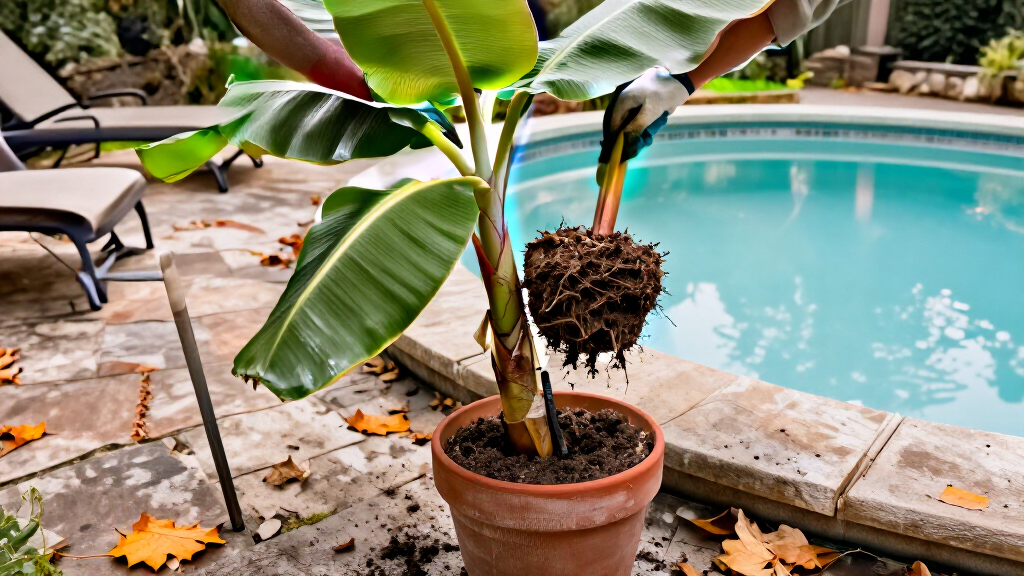
For container plants, the simplest option is to move the pot indoors as outdoor temperatures fall. A sunny indoor location suits a plant that will keep growing slowly, with soil kept moist but not waterlogged and leaves misted to provide humidity. For a dormant-storage approach, the report advises reducing watering, cutting the stem to about six inches, and storing the pot in a cool, dark place at roughly 40 to 50°F. Water sparingly enough to keep the soil from pulling away from the pot.
For an in-ground plant, the report recommends cutting it to about four to six inches above ground and covering the base with at least a foot of leaves, straw or similar mulch. Alternatively, gardeners can build a wire cage around an uncut pseudostem and pack it with insulation. The third method is to dig up the rhizome and roots before frost and store them in slightly moist sand in a cool place, around 45 to 50°F. The plant can be replanted after frost danger has passed.
Choosing a Winter Protection Method
The guidance gives gardeners several ways to keep a banana plant alive without treating all plants or yards alike. Container growing allows the plant to be moved; mulching in place can avoid digging; and rhizome storage offers an option where an exposed plant is unlikely to survive. Each method calls for different space, effort and watering practices.
The distinction between leaf damage and rhizome survival also affects expectations. A plant may lose visible growth in cold weather while its protected underground base survives and produces new shoots later. The report’s advice focuses on preservation, not on keeping every leaf or stem intact through winter.
As an affiliate, we earn on qualifying purchases.
Cold Sensitivity and Variety
Banana plants belong to the genus Musa. Although often called trees, they are large herbaceous plants: what appears to be a trunk is a pseudostem made from tightly layered leaves. The source says the genus includes about 70 species and that plants are native to tropical areas of India, Southeast Asia and northern Australia.
The report says most banana plants are best suited to warm conditions and suggests that gardeners outside USDA Hardiness Zone 9 or higher may need winter protection. It also identifies Japanese fiber banana, Musa basjoo, as a more cold-tolerant variety, saying it can withstand sub-zero temperatures and is hardy in Zone 5 or 6. That example is not a guarantee for every plant or site; local conditions and the protection used still matter.
As an affiliate, we earn on qualifying purchases.
Limits of the Winter Advice
The supplied report does not give a publication date, identify a particular growing region, or compare survival rates among its three methods. Its temperature figures and instructions are presented as general guidance, not as a guarantee for every cultivar, pot size, soil or exposure. The exact timing for moving, covering or digging up a plant will depend on local frost forecasts and the conditions where it is stored.
The source also does not specify how much damage a plant can sustain and still regrow, or how consistently the cited hardiness range for Musa basjoo applies across different sites. Gardeners should not assume that every banana variety can overwinter outdoors simply because one cold-tolerant variety is described.
As an affiliate, we earn on qualifying purchases.
Prepare Before the First Frost
The practical next step is to identify the banana variety and choose a method before the first frost. Container growers can decide whether they have a sunny indoor spot or a cool, dark storage area; gardeners leaving plants in the ground can gather mulch or materials for a protective cage. Those planning to dig up a plant should allow time to remove the root ball carefully and set up suitable cool storage.
When warm weather returns and frost danger has passed, the report advises removing outdoor covers and trimming dead material. Stored plants can be replanted, while dormant container plants can be taken outside and watered normally again. The source does not offer a fixed calendar date, so local temperatures and frost conditions remain the guide.
cold weather banana plant protection
As an affiliate, we earn on qualifying purchases.
As an affiliate, we earn on qualifying purchases.
Key Questions
Can banana plants survive winter outdoors?
Some can, with protection, but the report says most banana plants are cold-sensitive. It describes mulching or enclosing an in-ground plant and notes that Musa basjoo is more cold-tolerant than most varieties.
When should I bring a potted banana plant inside?
The report recommends moving it indoors as outdoor temperatures begin to drop. It does not give a universal date; local weather and the plant’s variety should guide timing.
How much mulch should cover an in-ground banana plant?
For the cut-back method, Gardener’s Path advises piling on at least a foot of leaves, straw or similar material over the base. A cover or cage can help keep insulation in place.
Does a dormant banana plant need watering?
For a potted plant stored in a cool, dark place, the report says to water only enough to keep the soil from separating from the container. A dug-up rhizome stored in slightly moist sand should not be watered during storage.
When can I bring a stored banana plant back outside?
The report advises waiting until all danger of frost has passed. Remove protective materials from in-ground plants when warm weather returns and regrowth appears; resume normal watering for container plants as temperatures rise.
Source: rss
Columbus Day / Indigenous Peoples' Day Picks
long weekend sales
As an affiliate, we earn on qualifying purchases.