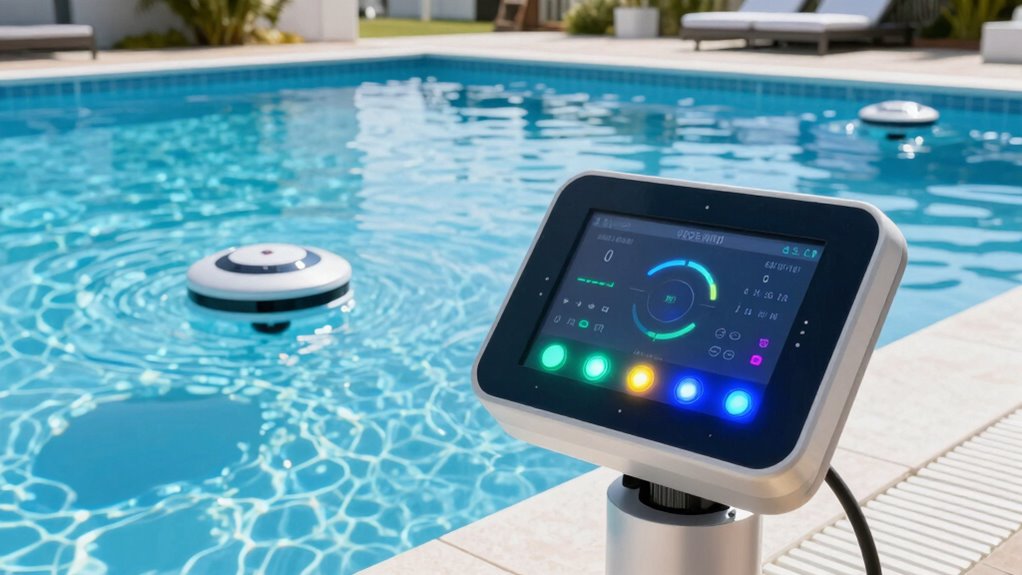

Smart automation helps you reduce waste in daily pool operation by precisely controlling chemicals, which avoids overuse and minimizes environmental runoff. It optimizes energy use by adjusting equipment only when needed, saving power and extending equipment life. Automated maintenance alerts prevent costly repairs and downtime, while stable water chemistry improves swimmer health. By managing everything remotely, you stay better informed and respond quickly, making your pool management more sustainable—keep exploring to see how these technologies can benefit your pool even further.

Get pool and patio gear delivered free with Prime
- Fast, free delivery on millions of items
- Prime Video, Amazon Music and more included
- Member-only deals all year
Key Takeaways
- Continuous water chemistry monitoring ensures precise chemical dosing, minimizing overuse and environmental runoff.
- Automated equipment adjusts operation based on real-time data, reducing unnecessary energy consumption and chemical applications.
- Predictive maintenance alerts prevent costly repairs, extending equipment lifespan and reducing waste.
- Stable water quality decreases the need for frequent chemical shock treatments, conserving chemicals.
- Remote management allows quick responses to water conditions, preventing wasteful manual adjustments.
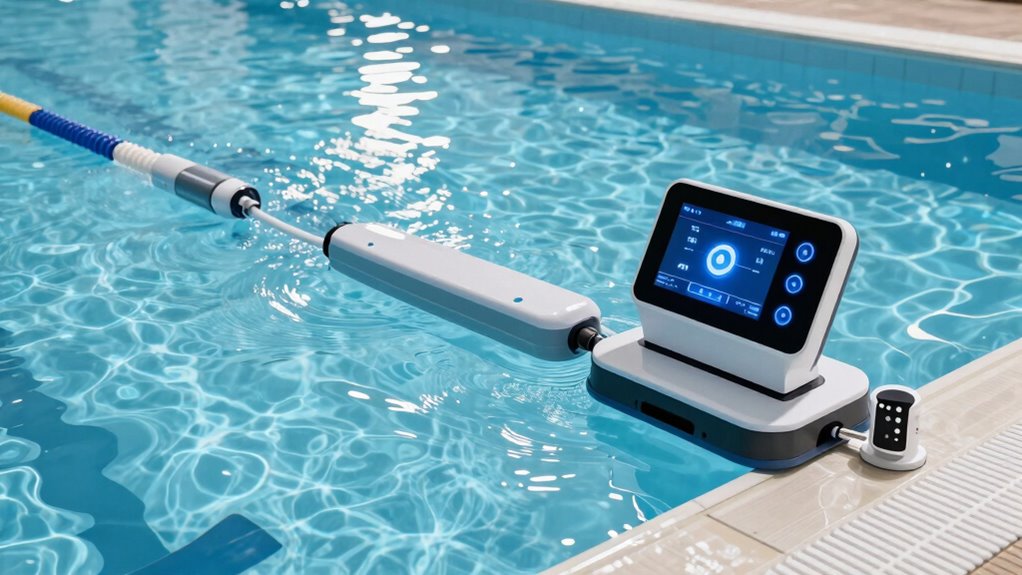
Automation is transforming how pools are operated, leading to significant waste reduction and improved efficiency. When you integrate smart automation systems, managing your pool’s chemical balance becomes much easier and more precise. Automated controllers continuously monitor water chemistry, adjusting the levels of chlorine, pH, alkalinity, and other chemicals in real-time. This precision ensures that you’re using only the necessary amounts of chemicals, preventing overuse and reducing chemical waste. As a result, you save money on supplies and minimize the environmental impact caused by excess chemicals leaching into the environment.
Energy efficiency is another critical benefit you gain from automation. Traditional pool maintenance often involves manual adjustments and constant oversight, which can waste energy through unnecessary filtration or heating. Smart systems optimize the operation of pumps, filters, and heaters by running them only when needed, based on real-time data. For example, they can automatically reduce pump runtime during low-usage periods or adjust heater operation to match the actual water temperature requirements. This targeted approach not only conserves energy but also prolongs the lifespan of your equipment, lowering maintenance costs and reducing your carbon footprint. Energy-efficient operation further enhances these benefits by reducing overall power consumption. Additionally, these systems often include predictive maintenance features that can alert you to potential issues before they become costly repairs, ensuring your pool runs smoothly and efficiently. Employing such advanced technology can significantly enhance your pool management practices.
Moreover, automation helps you maintain consistent water quality without overcorrecting. When your pool’s chemical levels are kept stable, you reduce the need for frequent chemical additions or shock treatments. This stability minimizes chemical waste and ensures healthier water for swimmers. Additionally, automated systems often come with user-friendly interfaces and remote access, so you can monitor and adjust your pool’s operation from anywhere. This convenience allows you to respond quickly to changing conditions, preventing issues before they escalate into costly problems or wasteful practices. Implementing automated control systems is a key step toward sustainable pool management, as they promote resource conservation and responsible usage.
Products Worth Considering

TCL 55-Inch T7 Series 4K QLED Smart Google TV, 55T7

Hisense 40-Inch QD4SR Series Hi-QLED Full HD Smart Roku TV

Arlo Pro Wireless Security Camera, 2K HDR, 6th Gen, 4-Camera System
As an affiliate, we earn on qualifying purchases.
Frequently Asked Questions
How Do Smart Systems Adapt to Seasonal Pool Usage Changes?
Smart systems adapt to seasonal pool usage changes by automatically making seasonal adjustments based on usage fluctuations. They monitor factors like weather, temperature, and pool activity, then maximize equipment accordingly. This means you don’t have to manually change settings, saving energy and reducing waste during low-usage periods. The system guarantees your pool operates efficiently year-round, adjusting in real-time to seasonal shifts and usage fluctuations for peak performance.
What Are the Initial Costs of Implementing Automation Technology?
The initial costs of implementing automation technology vary based on your pool’s size and system complexity. Conduct a thorough cost analysis to understand expenses, including equipment, installation considerations, and potential upgrades. While upfront investments might seem significant, automation can save you money long-term by reducing waste, lowering energy bills, and minimizing maintenance. Carefully evaluate your needs to guarantee the technology you choose aligns with your budget and operational goals.
Can Automation Prevent Chemical Overuse Effectively?
Research shows automation can effectively prevent chemical overuse by adhering to strict chemical regulation and safety protocols. When you implement smart systems, they monitor chemical levels in real-time, adjusting doses precisely. This minimizes waste and guarantees safety. Automation’s accuracy reduces human error, preventing over-application. So, yes, automation can markedly curb chemical overuse, maintaining safe, balanced water conditions while promoting efficiency and environmental responsibility in your pool operations.
How Secure Are Smart Pool Automation Systems From Cyber Threats?
Smart pool automation systems are generally secure, but you should be aware of cyber vulnerabilities that could expose data privacy. Manufacturers implement encryption and regular updates to protect against hacking attempts. However, you must also secure your Wi-Fi network and change default passwords. Staying vigilant and choosing reputable systems helps minimize risks, ensuring your automated pool management remains safe from cyber threats and maintains data privacy effectively.
What Training Is Required for Staff to Operate Automated Systems?
You need to provide staff training focused on operational skills to effectively operate automated pool systems. This includes teaching them how to navigate control panels, interpret system alerts, and troubleshoot common issues. Hands-on sessions and detailed manuals help reinforce learning. Ensuring your team understands the technology boosts confidence and efficiency, minimizing errors and downtime. Regular refresher courses keep staff updated on new features, maximizing the system’s benefits and maintaining smooth pool operations.
Conclusion
By embracing smart automation, you turn your pool into a well-oiled machine, slicing through waste like a hot knife through butter. It’s your secret weapon to optimize chemical use, energy efficiency, and maintenance timing—all while reducing costs and environmental impact. Think of automation as your pool’s best friend, tirelessly working behind the scenes to keep everything running smoothly. With it, you’ll find that waste becomes a thing of the past, and your pool operation shines brighter than ever.