
TL;DR

Get pool and patio gear delivered free with Prime
- Fast, free delivery on millions of items
- Prime Video, Amazon Music and more included
- Member-only deals all year
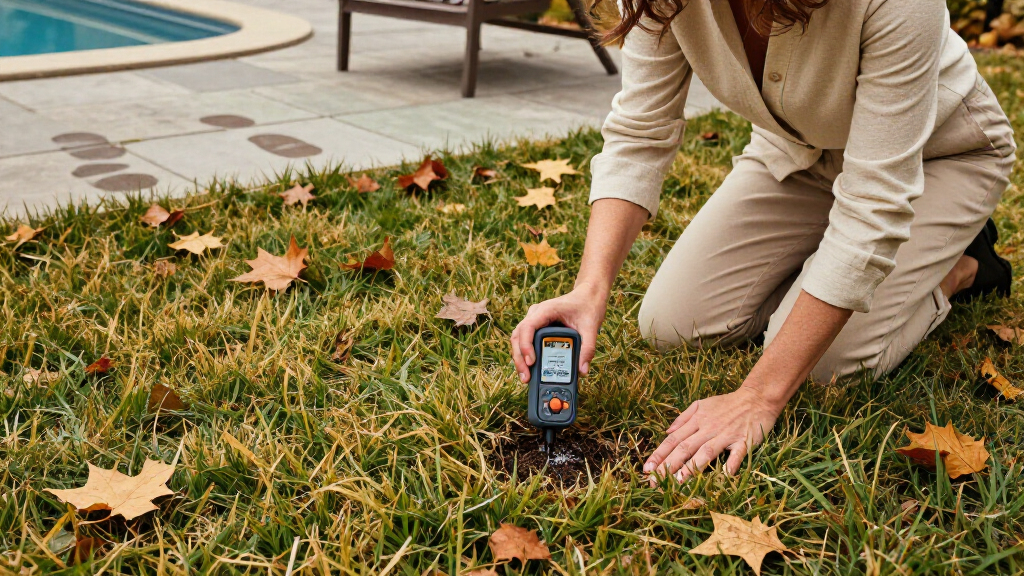
A Homes & Gardens report says the most important step in fall lawn feeding is watering granular fertilizer off grass blades and into the soil. Rain or sprinklers can do the job; the right amount depends on conditions and sprinkler output.
A Homes & Gardens report on fall lawn care says the key to using granular fertilizer is not choosing a particular brand, but watering it off grass blades and into the soil. The advice matters because fertilizer left dry on turf can damage grass, while water helps carry nutrients toward the roots.
The report says fall feeding can support lawns recovering from summer stress as grass shifts energy away from top growth and toward root development. It describes the purpose as helping turf prepare for winter, rather than promising a particular result for every lawn. Theresa Smith, senior vice president of NaturaLawn of America, says fall-fed lawns may green up faster in spring because of carbohydrates retained from the prior season.
Chris McIlroy, technical product lead and in-house lawn seed expert at The Grass People, advises watering granular feed off grass blades to reduce the risk of burning or scorching. The report says dry synthetic granules may begin causing damage within 24 to 48 hours if they are not watered in. Possible signs include yellow or brown areas; severe damage can leave bare patches.
Water also helps activate the fertilizer and carry nutrients down toward the root zone, according to the report. It recommends following the product’s application rate and planning how to water before spreading it. The guidance focuses on granular products; it does not establish one fertilizer type or schedule as right for every lawn.
Watering Can Protect Fall-Fed Grass
The practical consequence is that applying fertilizer is only part of the task. If granules remain on blades, they can cause localized turf damage; if they are not moved into the soil, some nutrients may not reach the roots as intended. That can mean wasted product as well as extra work repairing damaged areas.
For homeowners, the advice makes timing and application conditions relevant to both lawn health and water use. The report suggests using forecast rainfall where practical, or measuring sprinkler output to avoid applying too little or saturating the lawn. The outcome still depends on the product, the lawn’s condition, and local weather.
granular lawn fertilizer with watering can
As an affiliate, we earn on qualifying purchases.
As an affiliate, we earn on qualifying purchases.
Why Fall Feeding Is Different
The report frames fall as a recovery and preparation period after the demands of summer. As growth above ground slows, grass can direct more energy to roots, which the source says helps the lawn prepare for winter conditions such as frost, ice, and snow. It also links fall feeding with a quicker spring green-up, citing Smith of NaturaLawn of America.
Before fertilizing, the report says homeowners may scarify to remove thatch and aerate compacted soil. These steps are presented as ways to improve water and nutrient movement, not as mandatory prerequisites. The source says fertilizer can be applied without aerating, although compacted soil may make uptake less effective.
“To prevent grass blade burn or scorching after applying any lawn feed, it is really important to water off granular fertilizer from the grass blades to avoid damaging the existing grass.”
— Chris McIlroy, technical product lead and in-house lawn seed expert at The Grass People
lawn sprinkler for fertilizer application
As an affiliate, we earn on qualifying purchases.
As an affiliate, we earn on qualifying purchases.
Lawn Results Depend on Conditions
The source does not provide a controlled comparison showing how much fall fertilizer changes spring growth, nor does it establish that every lawn needs feeding. It also does not identify a single suitable product or application rate for all grass types and soil conditions. Homeowners should follow the fertilizer label and account for their local climate and lawn condition.
The report recommends aiming for about one inch of forecast rain before applying fertilizer, but actual rainfall may differ from the forecast. Its suggested sprinkler run time of 30 to 60 minutes is also not universal: the amount delivered varies by sprinkler and site. The source recommends using a straight-sided container, such as a tuna can, to check collected water. It does not specify a one-size-fits-all watering volume for every lawn.
As an affiliate, we earn on qualifying purchases.
Check Rain and Sprinkler Output
Before applying fall fertilizer, homeowners can check the product directions, inspect the lawn and soil, and review the local forecast. If useful rainfall is expected, the report advises applying feed ahead of it; if rain falls short, sprinklers can provide additional water. A container placed on the lawn can help show how much water the sprinkler actually delivers.
After application, follow the label’s watering directions and watch for dry granules remaining on grass blades. The report offers seasonal guidance rather than a continuing news event, and it gives no timetable for new research or official guidance. The central action remains the same: plan to water granular fertilizer into the soil rather than leaving it on the turf.
As an affiliate, we earn on qualifying purchases.
Key Questions
What is the main fall lawn-fertilizing advice in the report?
Water granular fertilizer into the soil after application, so it does not remain dry on grass blades and can move toward the roots.
Can rain water in fall fertilizer?
Yes. The report says homeowners can apply fertilizer ahead of forecast rain. It suggests looking for roughly one inch of rain, while cautioning in practice that showers may be insufficient and sprinklers may be needed to top up watering.
How long should I run a sprinkler after fertilizing?
The report gives 30 to 60 minutes as a possible range when rain is not forecast, but says timing varies by sprinkler. Use a container on the lawn to measure the water collected and follow the fertilizer label.
Do I need to aerate before applying fertilizer?
No. The report says fertilizer can be applied without aerating, but compacted soil may limit how efficiently water and nutrients reach the roots. Aeration may help in those conditions; it is not described as mandatory.
Source: rss
Halloween Picks
halloween
As an affiliate, we earn on qualifying purchases.