
When choosing cartridge filters, you need to take into account their surface area, micron ratings, and flow limits. A larger surface area lets your filter trap more debris and last longer, while the correct micron rating ensures it targets the right size particles without clogging prematurely. Make sure the filter’s flow limits match your system’s needs to avoid unfiltered water or air passing through. Keep these factors in mind, and you’ll improve your filtration efficiency—learn more to optimize your setup.
Key Takeaways
- Larger surface area in cartridge filters enhances debris capture, extends lifespan, and reduces clogging.
- Micron ratings specify which particle sizes are removed, balancing filtration quality and filter longevity.
- Flow limits define maximum system flow; exceeding them risks unfiltered water or air passing through.
- Proper surface area, micron rating, and flow rate selection ensure optimal filtration efficiency and system performance.
- Combining these factors minimizes maintenance, prevents clogging, and maintains consistent water or air quality.
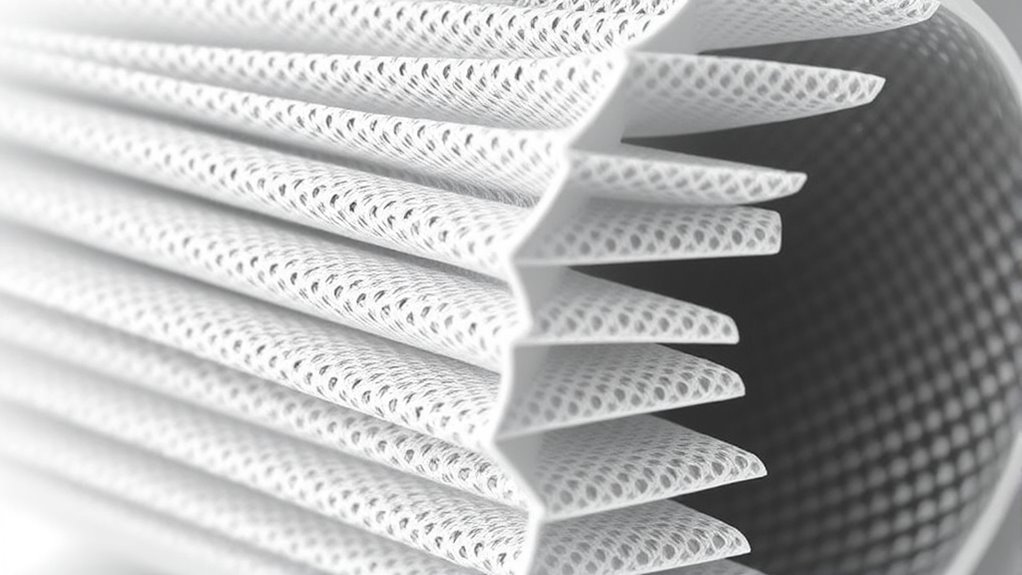
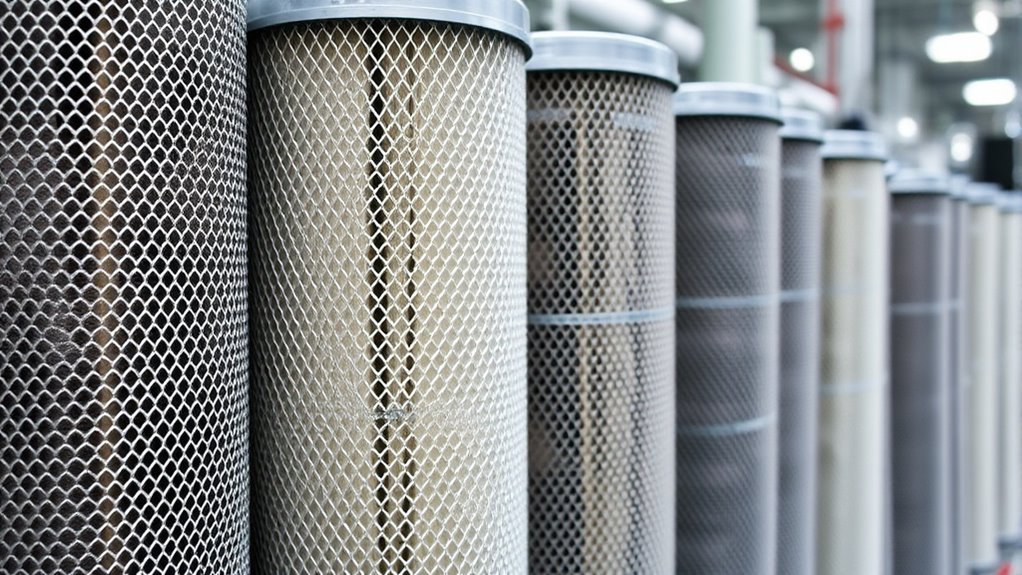
Cartridge filters are essential components in many water and air purification systems, designed to remove contaminants efficiently. When selecting a cartridge filter, understanding the factors that influence its performance—such as surface area, micron rating, and flow limits—is key to guaranteeing you get the right fit for your needs. These elements directly impact how well the filter captures particles, how long it lasts, and how much flow it can handle without compromising filtration quality. Your filter’s surface area plays a crucial role in its capacity to trap debris. A larger surface area provides more space for contaminants to be captured, which means the filter can operate longer between replacements. This is especially important if you’re dealing with high volumes of water or air, as a filter with a small surface area may clog quickly, reducing flow and effectiveness. When you opt for a cartridge with a larger surface area, you’re essentially giving your system more room to work efficiently, minimizing downtime for maintenance and guaranteeing consistent filtration performance over time. Micron ratings are equally vital because they determine the size of particles the filter can remove. If you’re dealing with very fine contaminants, you’ll need a filter with a lower micron rating—say, 1 or 5 microns—to effectively capture tiny particles like bacteria or silt. Conversely, for larger debris, a higher micron rating, such as 20 or 50 microns, may suffice. It’s important to match the micron rating to your specific application; selecting a filter that’s too fine can cause it to clog quickly, while a filter that’s too coarse might let unwanted particles pass through. Understanding this balance ensures you maintain ideal water or air quality without unnecessary maintenance. Flow limits are another critical consideration. Every filter has a maximum flow rate it can handle without sacrificing filtration quality. If you push your system beyond this limit, you risk forcing unfiltered water or air through the filter, which defeats its purpose. Conversely, a filter operating well below its maximum flow capacity might not be utilizing its full potential, leading to inefficiencies. When choosing a cartridge filter, always verify the recommended flow rate and ensure your system’s needs align with the filter’s specifications. Proper matching prevents premature clogging and guarantees that your system runs smoothly and efficiently. Additionally, selecting a filter with an appropriate high surface area can significantly extend the lifespan of your filters and improve overall system performance.

Pleated Sediment Water Filter Cartridge 9.87”x 2.5” Amplified Surface Area, Removes Sand, Dirt, Rust, Extended Filter Life WELL-MATCHED with WHKF-WHPL, 801-50, WB-50W, WFPFC3002, SPC-25-1050 (6 Pack)
💎 The pleated configuration provides larger surface area allows greater dirt holding capacity and a longer lifespan. Polypropylene…
As an affiliate, we earn on qualifying purchases.
As an affiliate, we earn on qualifying purchases.
Frequently Asked Questions
How Do Cartridge Filters Differ From Other Filter Types?
You’ll find cartridge filters stand out because they’re designed for high efficiency and versatility. Unlike bag filters or sand filters, cartridge filters use a replaceable element that captures particles down to very small sizes, providing cleaner water or air. They’re easy to install, maintain, and can handle various flow rates. This makes them ideal for applications needing precise filtration, especially where space is limited or detailed filtration is required.
What Materials Are Used in Cartridge Filter Construction?
You’ll find cartridge filters made from materials like polypropylene, polyester, cellulose, and pleated fabrics. These materials are chosen for their durability, chemical resistance, and ability to trap particles effectively. Some filters incorporate activated carbon or other specialty media for specific contaminant removal. The right material depends on your application, ensuring efficient filtration while maintaining flow rates and longevity. By selecting the proper material, you optimize your system’s performance and lifespan.
Can Cartridge Filters Be Reused or Cleaned?
Yes, you can reuse and clean cartridge filters. To do so, you typically remove the filter from the system and rinse it thoroughly with water to remove dirt and debris. For more stubborn buildup, you might soak it in a cleaning solution recommended by the manufacturer. Always check the manufacturer’s guidelines to guarantee the filter’s integrity isn’t compromised, and replace it if cleaning doesn’t restore proper function.
How Often Should Cartridge Filters Be Replaced?
You should replace cartridge filters when they become clogged, show signs of damage, or no longer effectively filter contaminants. Regular inspection helps determine if flow rates decrease or if there’s visible dirt buildup. Typically, you might replace them every 6 to 12 months, but this varies depending on usage and water quality. Staying attentive guarantees your system remains efficient and prevents potential damage or reduced filtration performance.
Are Cartridge Filters Suitable for All Water Types?
Cartridge filters are versatile and suitable for many water types, but not all. You should consider water chemistry, contaminants, and flow rate when choosing one. They work well for general filtration, removing particles and sediments, but may struggle with heavy metals or organic compounds. For complex water sources, you might need specialized filters or additional treatment systems. Always test your water and select a cartridge filter designed for your specific needs.

Whole House 0.5 Micron 10 x 2.5 Grooved Sediment Well Water Filter Cartridge Replacement for AP110, AO-WH-PREV-R2, WHKF-GD05, CFS110, SGC-25-1005, 4WH-STDGR-F02, MBG-25098-05, FPMBG-5-975 (Pack of 6)
The Locofiltr SGC100.5 is a universal water filter replacement designed to fit any standard 10" x 2.5" reverse…
As an affiliate, we earn on qualifying purchases.
As an affiliate, we earn on qualifying purchases.
Conclusion
Understanding cartridge filters’ surface area, micron ratings, and flow limits helps you select the right one for your needs. While some believe bigger surface areas always mean better filtration, it’s not the full story—flow rates and micron size matter too. The truth is, optimizing all these factors guarantees efficient filtration without sacrificing flow or filter lifespan. So, don’t just choose based on one feature; consider the whole picture for the best results.

Killer Filter Replacement for AIR Flow Systems 7FR02020
Replaces p/n 7FR02020
As an affiliate, we earn on qualifying purchases.
As an affiliate, we earn on qualifying purchases.

Sub-Zero Air Purification Cartridge-7042798
Compatible with All Models
As an affiliate, we earn on qualifying purchases.
As an affiliate, we earn on qualifying purchases.