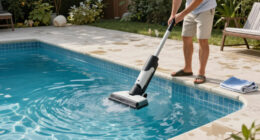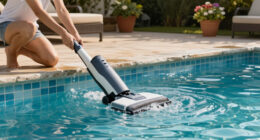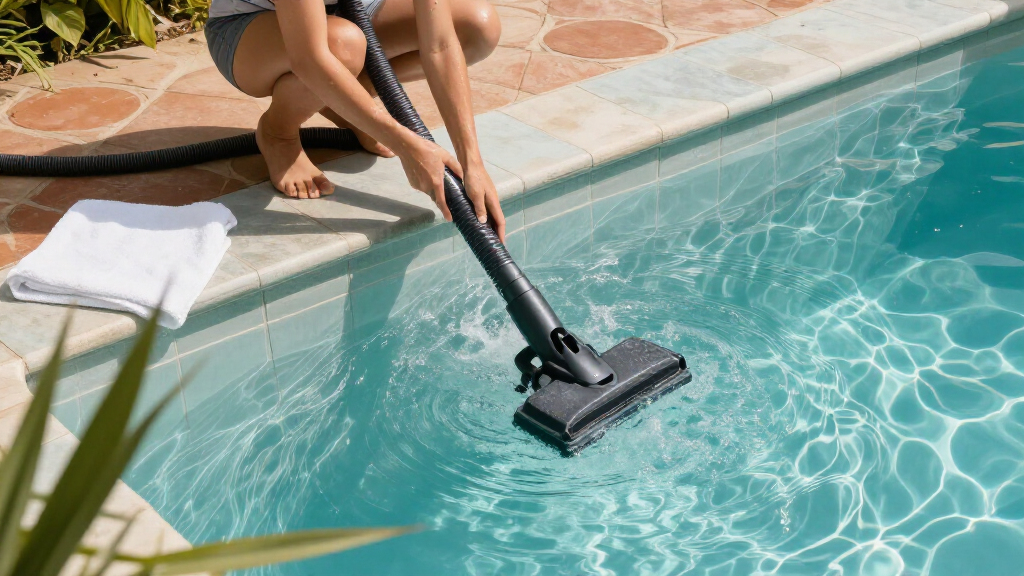
Set up an automatic pool vacuum, run its first cleaning cycle, and confirm that it is cleaning the pool as expected. This guide is for pool owners who are new to robotic, suction-side, or pressure-side cleaners; basic familiarity with the pool’s pump and filter is helpful. Allow 30-60 minutes for setup and initial checks, plus the cleaner’s full cycle time, which varies by model.

Get pool and patio gear delivered free with Prime
- Fast, free delivery on millions of items
- Prime Video, Amazon Music and more included
- Member-only deals all year

Dolphin Nautilus CC Robotic Pool Cleaner for Pools up to 33 ft
- ✔ Pool compatibility: Above-ground and in-ground pools up to 33 ft
- ✔ Cleaner type: Corded robotic
- ✔ Cleaning cycle: About 2 hours
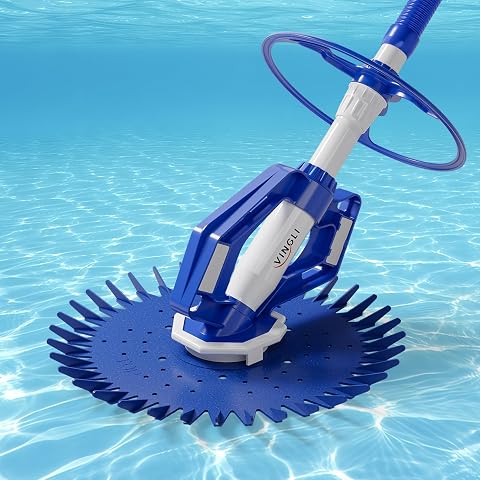
VINGLI Automatic Wall-Climbing Pool Vacuum with 33ft Hose
- ✔ Cleaner type: Suction-side
- ✔ Pool compatibility: In-ground pools
- ✔ Minimum pump requirement: 3/4 HP or 1600 GPH

Zodiac MX6 Suction-Side In-Ground Pool Cleaner
- ✔ Cleaner type: Suction-side
- ✔ Pool compatibility: In-ground pools
- ✔ Connection: Dedicated suction line or pool skimmer
Difficulty: Beginner | Time: 30-60 minutes for setup and the first cleaning cycle
What You’ll Need
Tools & Materials:
- Automatic pool vacuum and its manual
- Pool brush or leaf net
- Clean filter basket or filter media, as applicable
- Garden hose if the cleaner or filter requires rinsing
- GFCI-protected outlet for a robotic cleaner, if required by its manual
Knowledge:
- How to identify the pool’s skimmer, return jets, pump, and filter
- How to turn the pool pump off and on
- How to use the cleaner’s basic controls
Check that the cleaner is compatible with your pool surface, shape, and equipment. Follow the model manual for connections, water depth, electrical placement, and run time. Keep electrical plugs and power supplies dry, and do not enter the pool while the cleaner is operating unless the manual explicitly permits it.
Dolphin Nautilus CC Robotic Pool Cleaner for Pools up to 33 ft
For a buyer who wants an automatic cleaner that works across more pool types, the Dolphin Nautilus CC has the broadest stated compatibility in this group: it is designed for above-ground and in-ground pools up to 33 feet long. Unlike the VINGLI and Zodiac, it operates as a corded robotic cleaner rather than attaching to the pool’s suction system. That means it has its own filter basket, so the cleaning debris is collected in the unit instead of being routed through the pool filter.The active brush and wall-climbing design give it a more surface-focused role than simply drawing debris toward the filtration system. Its top-load basket is accessible for clearing after a cycle, and the plug-and-play setup is described as completing a cycle in about two hours. Compared with the suction-side picks, this approach avoids their stated pump or suction-line requirements, but brings a different constraint: a corded robot needs a suitable power connection and is limited to pools of the specified size.We rank it first because its pool compatibility and onboard debris collection make it the most broadly adaptable choice of these three. It is not the best match for someone who specifically wants a suction-side cleaner using existing plumbing, and buyers should take care with the plastic components around harsh chemicals and extreme temperatures.
Pros:
- Designed for above-ground and in-ground pools up to 33 feet long
- Active brush scrubs pool surfaces and the unit climbs walls
- Top-load filter basket is easy to access and clean
- Plug-and-play operation with a stated cycle of about two hours
Cons:
- Corded design requires a power connection
- Limited to pools up to 33 feet long
- Plastic components need care around harsh chemicals and extreme temperatures
Best for: Pool owners with an above-ground or in-ground pool up to 33 feet who want a robotic cleaner with an onboard filter basket.
Not ideal for: Owners who prefer suction-side equipment, need coverage beyond the stated pool length, or cannot provide a power connection for a corded cleaner.
Bottom line: We recommend the Dolphin Nautilus CC for buyers who value broad pool compatibility and onboard debris collection over a suction-side connection.
“We recommend the Dolphin Nautilus CC for buyers who value broad pool compatibility and onboard debris collection over a suction-side connection.”
VINGLI Automatic Wall-Climbing Pool Vacuum with 33ft Hose
The VINGLI Automatic Wall-Climbing Pool Vacuum is a straightforward fit for an in-ground pool that already has a strong enough pump. It attaches to the pool’s filtration system and uses suction to clean floors and walls, so there is no separate onboard debris basket like the one on the Dolphin Nautilus CC. Debris instead enters the existing filtration system. That keeps the cleaner’s role simple, but makes pump capacity and filter upkeep part of the ownership equation.Its 33-foot scuff-resistant hose is the longest listed here, edging out the Zodiac MX6’s 32-foot hose. A wheel deflector is intended to help it navigate smoothly, and the supplied description emphasizes quiet operation. Those details make it a sensible option for owners who want a suction cleaner with hose included and value quieter running. The Dolphin remains the more flexible pick for pool type and independent debris collection, while the VINGLI is restricted to in-ground pools and needs at least a 3/4 HP pump or 1600 GPH.We give it the value role because it combines the longer hose and stated wall and floor cleaning with quick, simple assembly. The tradeoff is dependence on existing pool equipment: without the required pump performance, or if you want the cleaner to collect debris separately, this is the wrong style of automatic vacuum.
Pros:
- 33 feet of scuff-resistant hose is included
- Designed to clean in-ground pool floors and walls
- Quiet operation is a stated feature
- Assembly and installation are described as taking about three minutes
Cons:
- Requires at least a 3/4 HP or 1600 GPH pump
- Designed for in-ground pools only
- Sends debris through the existing filtration system rather than an onboard basket
Best for: Owners of in-ground pools with a pump meeting the stated minimum who want a quiet suction-side cleaner with a long included hose.
Not ideal for: Above-ground pool owners, pools with a pump below the stated requirement, or anyone seeking a cleaner with its own debris basket.
Bottom line: We’d choose the VINGLI when a compatible in-ground pool and pump are already in place and a quiet suction-side setup is the priority.
“We’d choose the VINGLI when a compatible in-ground pool and pump are already in place and a quiet suction-side setup is the priority.”
Zodiac MX6 Suction-Side In-Ground Pool Cleaner
The Zodiac MX6 is the more equipment-specific suction-side choice in this roundup. It connects to a dedicated suction line or pool skimmer and sends debris to the filtration system, much like the VINGLI. Its distinguishing details are the X-Trax tracks and hydraulic X-Drive navigation, which are intended to help it grip and move around the pool. The description also says it can work with variable-speed pumps and lower flow rates, making it worth considering when a buyer wants a suction cleaner suited to that kind of setup.That positioning does not make the MX6 a universal solution. It still needs a compatible suction connection, and the stated wall-climbing ability depends on setting the right flow. Compared with the VINGLI, it includes a slightly shorter 32-foot hose and does not specify the same minimum pump rating. Compared with the Dolphin, it avoids the separate corded robotic design but also lacks an onboard filter basket and the Dolphin’s stated compatibility with above-ground pools.We place it third because its appeal is strongest for buyers who can take advantage of its flow and navigation features; the connection requirement narrows its audience. If the pool has the right suction setup, the MX6 offers a distinctive track-based design. If compatibility is uncertain, confirm the pool connection and expected flow before choosing it.
Pros:
- Uses existing pool suction and requires no batteries
- X-Trax tracks are designed to help with grip and maneuvering
- Described as working with variable-speed pumps and lower flow rates
- Includes 32 feet of hose and connection accessories
Cons:
- Requires a compatible suction line or pool skimmer connection
- Wall climbing depends on setting the proper flow
- Debris goes to the pool’s filtration system rather than an onboard basket
Best for: In-ground pool owners with a compatible skimmer or dedicated suction line who want a suction-side cleaner described for variable-speed and lower-flow pumps.
Not ideal for: Buyers without a compatible suction connection, or anyone who needs an onboard debris basket or above-ground pool compatibility.
Bottom line: We’d select the Zodiac MX6 for a compatible in-ground suction setup where its track-based navigation and lower-flow pump support suit the equipment.
“We’d select the Zodiac MX6 for a compatible in-ground suction setup where its track-based navigation and lower-flow pump support suit the equipment.”
As an Amazon Associate we earn from qualifying purchases.
Before You Start
Identify the cleaner type before connecting it. A robotic cleaner has a power supply and usually collects debris in its own basket or bag. A suction-side cleaner connects to a skimmer or dedicated suction line and uses the pool pump and filter. A pressure-side cleaner connects to a return line and may need a booster pump. Do not connect a cleaner to a port or fitting that the manual does not specify.
Remove people and pets from the pool during setup. If you need to reach a fitting or adjust plumbing, switch off the pool pump first. Do not operate damaged cords, hoses, or fittings.
Step-by-Step Instructions
Step 1: Check the cleaner and pool
Read the manual’s compatibility and setup sections. Confirm that the cleaner suits your pool’s surface and depth, and inspect its body, wheels or tracks, cable or hose, connectors, filter basket, and power supply. Remove visible leaves and large debris from the pool with a net so they do not block the cleaner.
Tip: Check for worn seals, cracks, or a tangled cable or hose before putting the unit in the water.
Check: The cleaner’s parts are intact, its connection type matches your pool, and large debris has been removed.
Step 2: Prepare the pool filter and water flow
Empty the skimmer and pump baskets, then check the pool filter. Clean or backwash it only as directed for your filter type. If the cleaner uses the pool circulation system, confirm that the pump runs and that the water level is within the pool’s normal operating range. Turn the pump off before changing suction or return connections.
Tip: A dirty filter or full basket can reduce suction or pressure and make a connected cleaner move poorly.
Check: The baskets are clear, the filter is ready, and the pool pump is operating normally when switched on.
Step 3: Connect the cleaner
For a robotic cleaner, place its power supply on a stable, dry surface away from the pool edge, then connect the cable as shown in the manual. For a suction-side cleaner, connect its hose to the specified skimmer or suction port. For a pressure-side cleaner, connect its hose to the specified return line and booster pump if the model requires one. Keep hose sections straight and free of kinks.
Tip: Use the included hose sections and adapters. Improvised fittings can leak or reduce the flow the cleaner needs.
Check: The cleaner is connected at the correct port, all connections are secure, and the cord or hose can reach the pool without pulling tight.
Step 4: Set the hose or cable length
Place the cleaner in the water according to the manual. For a hose-powered model, fill the hose with water or purge air if the instructions call for it, then arrange it so the cleaner can reach the pool’s farthest area without excess loops. For a robotic model, lower it into the pool by its handle or the method specified, and keep its power cable untangled.
Tip: Do not lift or lower a heavy cleaner by its cable or hose unless the manual specifically allows it.
Check: The cleaner rests in the pool without trapped air, tight hose loops, or a cable stretched across the deck.
Step 5: Start a cleaning cycle
Start the pool pump before a suction-side or pressure-side cleaner, then open or adjust the relevant valve only as instructed. For a robotic cleaner, connect power and start its cycle using the control panel or app. Select a standard floor-and-wall cycle if available and suitable for your pool.
Tip: Do not change pump valves while the pump is running unless the pool equipment instructions allow it.
Check: The cleaner begins moving or its cycle indicator confirms that the program has started. Watch it for several minutes to catch a snag or leak early.
Step 6: Check movement and coverage
Observe the cleaner as it travels. Make sure its hose or cable does not wrap around obstacles, block a skimmer, or pull against a fitting. Check that it climbs walls if the model is designed to do so. If it stays in one place, moves erratically, or loses suction, stop it and inspect the hose, filter, and connection before restarting.
Tip: A cleaner may follow a programmed route or move randomly. Judge it over the full cycle rather than expecting a particular path within a few minutes.
Check: The cleaner moves freely, reaches the areas it is designed to clean, and keeps a steady connection throughout the cycle.
Step 7: Finish the cycle and remove the cleaner
Let the cleaner complete the cycle recommended by its manual. Turn it off and disconnect power or switch off the pump before removing it, following the model’s sequence. Lift it using its handle or retrieval method, allow water to drain over the pool, and do not pull it out by the cable or hose.
Tip: If the cleaner is heavy, use the included retrieval aid or ask another person to help.
Check: The cleaner is out of the pool without strain on its cable, hose, or connector, and its cycle has ended.
Step 8: Empty and rinse the cleaner
Open the cleaner’s debris basket or bag and dispose of the collected debris. Rinse the basket, bag, or filter panels as directed, then check the cleaner’s intake and moving parts for leaves or hair. For suction-side or pressure-side models, inspect and rinse the pool baskets as needed. Store the cleaner and cord or hose in a shaded, dry place according to the manual.
Tip: Avoid leaving the cleaner in the pool between cycles unless its manufacturer says it is designed for continuous immersion.
Check: Debris containers and intake areas are clear, the cleaner is stored safely, and the pool shows less debris than before the cycle.
Common Mistakes to Avoid
- Connecting a cleaner to the wrong port or using the wrong setup for its type. — Match the model’s connection diagram to the skimmer, suction line, or return fitting before attaching it.
- Running the cleaner with a clogged basket or dirty filter. — Clear baskets and prepare the filter before each cycle, especially after heavy debris or algae.
- Pulling the cleaner out by its hose or power cable. — Use the handle or retrieval method specified by the manufacturer to avoid damage.
- Leaving tangled hose or cable in the pool. — Straighten the line before starting and check its path during the first minutes of operation.
Troubleshooting
Problem: The cleaner does not start.
Solution: Check that its switch or cycle control is on. For a robotic model, inspect the power connection and outlet, keeping all plugs and the power supply dry. For a hose-powered model, confirm the pool pump is running and the cleaner is connected to the specified port.
Problem: The cleaner moves slowly or stays in one area.
Solution: Stop the cleaner and clear its intake, debris basket, and pool baskets. Check for a clogged filter, kinked hose, trapped air, or a loose connection. Restart it only after restoring the flow specified in the manual.
Problem: The cleaner will not climb walls or misses sections.
Solution: Check the manual for the model’s wall-climbing limits and required water flow. Clear debris from its tracks or wheels, check that the filter is clean, and reposition hose floats or length only as instructed.
Problem: The cleaner stops or becomes tangled.
Solution: Switch off the cleaner and, where applicable, the pool pump before freeing it. Remove obstructions, straighten the hose or cable, and move loose toys or large obstacles from its route before restarting.
What Success Looks Like
The setup is complete when the cleaner runs through its specified cycle, moves without snagging or losing flow, and collects debris in its basket, bag, or the pool filter as designed. After removal, the pool should have fewer leaves and loose debris in the areas the cleaner can reach. A cleaner does not replace water testing, brushing, skimming, or routine filter care.
Next Steps
Empty the cleaner after each cycle and rinse its filter or bag when debris is visible. Check the hose, cable, seals, brushes, and tracks regularly for wear. Run the cleaner at a frequency suited to pool use and debris levels, using the manufacturer’s limits for daily operation. Continue testing and balancing pool water, brushing areas the cleaner misses, and cleaning the pool filter on its normal schedule. Contact the manufacturer or a pool technician if the unit repeatedly loses flow, trips electrical protection, leaks, or shows damage.
Frequently Asked Questions
How long should I run an automatic pool vacuum?
Use the cycle length recommended in the manual. Robotic cleaners often have timed cycles, while suction-side and pressure-side models may run with the pool pump. Stop if the cleaner becomes tangled, loses flow, or behaves abnormally.
Can I leave the cleaner in the pool?
Follow the manufacturer’s storage guidance. Some models tolerate remaining submerged between cycles, but removing and rinsing the cleaner after use can reduce unnecessary exposure to pool chemicals and sunlight on above-water parts.
Should I brush the pool before using the cleaner?
Brush walls, steps, and corners when they have stuck-on dirt or algae. A cleaner can collect loosened debris if its model handles that material, but brushing does not replace chemical treatment for algae.
Why does my cleaner miss the waterline or corners?
Some models do not clean every surface or corner. Check the coverage listed for your model, clear obstacles, and adjust hose length or cycle settings only as the manual directs. Brush missed areas by hand.
Can an automatic pool vacuum replace pool maintenance?
No. It removes debris within its cleaning range, but you still need to test and balance water, monitor the filter and pump, skim or brush missed areas, and inspect pool equipment.