
TL;DR

Get pool and patio gear delivered free with Prime
- Fast, free delivery on millions of items
- Prime Video, Amazon Music and more included
- Member-only deals all year
Caladiums in areas with freezing winters should be lifted in fall as their leaves fade and soil temperatures approach 60°F, before frost damages the plants. Dry the corms thoroughly, then store them in dry potting medium in a location kept above 55 to 60°F; replant after frost risk passes and soil reaches at least 70°F.
Gardeners in regions with freezing winters should lift caladiums in fall as their foliage fades and soil temperatures approach 60°F, then dry and store the corms until spring, according to a guide from Gardener’s Path. The timing matters because frost can kill these tropical plants, while corms stored before they are fully dry may rot.
Caladiums grow from underground corms and typically flourish through summer before their leaves fade as the plants enter winter dormancy. The Gardener’s Path guide recommends checking soil temperature with a thermometer or using weather and plant signs: daytime highs no longer reaching the 70s, nighttime temperatures falling into the 50s, and foliage beginning to droop and pale. In colder areas, lift the plants before a freeze; the source says they may tolerate temperatures in the 40s, but a freeze can kill them.
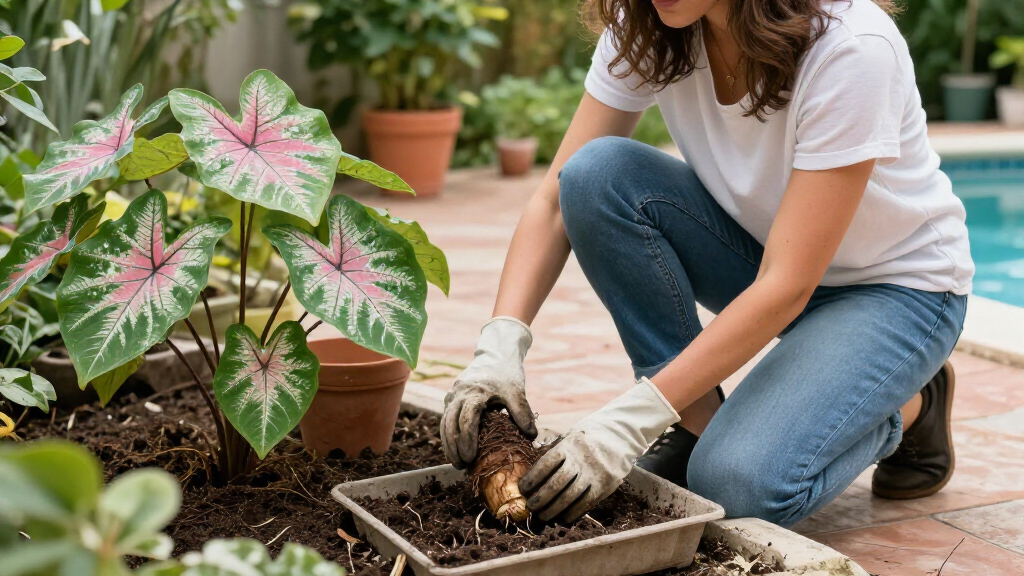
To lift them, loosen the soil around each cluster about six to eight inches wide and eight inches deep, taking care not to damage the shallow roots and corms. Carefully raise the soil ball, then wash off the soil with a gentle hose setting or let it dry in a cool, dry place before brushing soil away. Inspect the corms and remove dead, soft or rotten material.
Cure the corms in a warm, dry place away from direct sunlight for a week or more, until the corms and remaining foliage feel dry. Remove the foliage and trim the roots, then place the corms at least an inch apart in dry vermiculite, sphagnum peat moss or sand. Cover them with two to three inches of the same medium. Store the container in a dry location out of direct sun, where temperatures do not fall below 55 to 60°F; keep the medium dry through winter.
Avoiding Frost and Storage Rot
Correct timing and dry storage can help gardeners preserve caladium corms for another growing season rather than treating the plants as annuals. The main risks described in the guide are frost damage before lifting and rot during storage if corms go into containers damp or are kept in wet medium.
The guidance also applies to some gardeners in warm, frost-free regions. Where winter rain leaves soil persistently wet, lifting corms may reduce the chance of them rotting in the ground, the report says. Whether to lift depends on local cold and moisture conditions, not just a calendar date.
As an affiliate, we earn on qualifying purchases.
Caladiums Through the Seasons
Caladiums are tropical foliage plants grown as perennials in USDA Hardiness Zones 9 to 11, according to Gardener’s Path. In colder climates they are often grown as annuals, but gardeners can dig up their corms in fall and replant them the following spring. The plants grow best in soil at least 70°F and become dormant over winter.
In warm areas where soil stays above 60°F year-round, caladiums may be left in the ground if conditions are suitable. The source cautions that especially wet winter soil and poor drainage can still lead to rot. Container-grown plants may be brought indoors when nighttime temperatures start dipping below 60°F; the guide advises stopping watering once growth ceases and resuming when spring growth appears.
caladium curing and drying supplies
As an affiliate, we earn on qualifying purchases.
As an affiliate, we earn on qualifying purchases.
Local Timing and Storage Conditions
The guide gives temperature cues rather than one fixed lifting date, so the right timing varies with local weather and soil conditions. It does not specify a single curing time for every corm: drying may take a week or longer, and gardeners are advised to judge readiness by whether all parts feel dry and the foliage has withered and become easy to remove.
The source also describes sulfur-based fungicide as an optional measure some gardeners use, not a requirement. It does not establish that every gardener needs fungicide or provide a guarantee against storage losses. Local storage temperatures and the condition of the corms will affect results.
garden thermometer for soil temperature
As an affiliate, we earn on qualifying purchases.
As an affiliate, we earn on qualifying purchases.
Spring Replanting Conditions
Keep the storage medium dry and leave the corms undisturbed through winter. In spring, replant outdoors only after all frost risk has passed and soil is at least 70°F. The guide also says gardeners can start corms indoors in early to mid-spring in well-draining potting medium, set bud side up, kept moist but not waterlogged, and placed in a warm location with indirect light; they can then be planted outside in early summer.
Gardeners should adjust the schedule to local forecasts and soil temperatures, and check stored corms for signs of spoilage before planting. The supplied report offers seasonal guidance but does not provide region-specific dates or storage guarantees.
caladium planting and lifting tools
As an affiliate, we earn on qualifying purchases.
As an affiliate, we earn on qualifying purchases.
Key Questions
When should I lift caladiums for winter?
In areas where the ground freezes, lift them in fall as foliage fades and soil temperature approaches 60°F, before frost. Drooping, paling leaves and cooler nights can also signal that it is time.
How long should caladium corms dry before storage?
The Gardener’s Path guide says curing can take a week or more. Store them only when the corms and remaining foliage feel dry and the foliage is withered and easy to pull away.
What temperature should stored corms be kept at?
Keep the container in a cool, dry place out of direct sunlight where temperatures do not drop below 55 to 60°F. Keep the storage medium dry.
Can caladiums stay in the ground over winter?
They may remain in the ground in warm regions without freezing conditions, but prolonged wet soil can cause rot, according to the source. In colder regions, lift the corms before a freeze.
When can I plant stored caladiums again?
Plant outdoors after frost risk has passed and soil reaches at least 70°F. The guide also recommends starting corms indoors in spring for planting outside in early summer.
Source: rss
Fall Picks
fall essentials
As an affiliate, we earn on qualifying purchases.