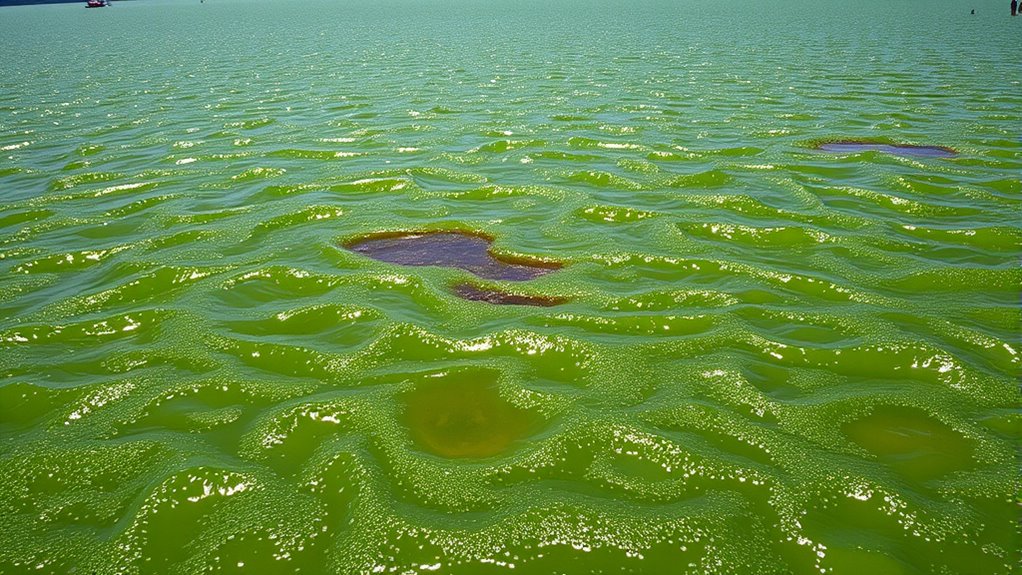

Harmful algal blooms can appear as unusual water discoloration, green scums, or thick patches near shorelines, but they’re not always easy to spot. Look for signs like foul odors, vibrant surface colors, or mats of algae. Avoid swimming or wading if you notice these signs, and stay updated with local advisories. Since visual cues aren’t always reliable, it’s important to understand how to recognize and respond safely—continue exploring to learn more.
Listen free for 30 days with Audible
Thousands of audiobooks and originals — cancel anytime.
As an affiliate, we earn on qualifying purchases.
Key Takeaways
- Recognize signs like green mats, discoloration, foul odor, and shoreline scums indicating potential harmful algal blooms.
- Avoid swimming or wading if blooms are visible or water appears discolored to prevent health risks.
- Be aware that visual water quality does not always reflect safety; stay informed through local advisories.
- Reduce nutrient pollution by avoiding fertilizer use near water bodies and supporting runoff control efforts.
- Report suspected blooms to local authorities and follow safety guidelines to protect health and aquatic ecosystems.
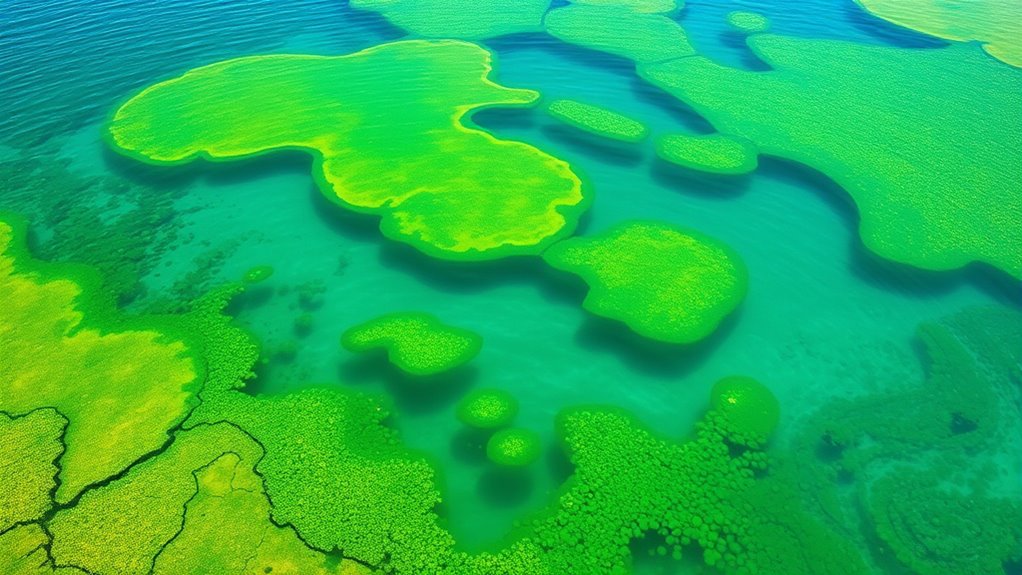
Have you ever wondered what causes those vivid, green patches to suddenly appear in your favorite swimming spots? Often, it’s due to an algal bloom—a rapid increase of algae in the water, which can turn the surface into a thick, green mat. While many blooms are harmless, some are caused by toxic cyanobacteria, which can pose serious health risks to people and animals alike. Recognizing these harmful blooms is essential for your safety, so keep an eye out for water that looks unusually discolored, has a foul smell, or contains scums along the shore. These signs often indicate the presence of toxic cyanobacteria, which can produce harmful toxins affecting your skin, eyes, and even your liver if ingested.
When you notice these symptoms, it’s best to avoid swimming or wading in the water until authorities confirm it’s safe. Exposure to cyanobacteria toxins can cause skin rashes, respiratory issues, or gastrointestinal problems, especially if contaminated water gets into your mouth or eyes. If you’re a regular visitor to a particular water body, stay informed about local advisories and watch for posted warnings. Remember, just because the water looks vibrant and inviting doesn’t mean it’s safe—sometimes, the most dangerous blooms are the ones you can’t see with the naked eye.
Bloom mitigation becomes essential once a harmful algal bloom is identified. Many agencies and local authorities work actively to reduce the impact of these blooms through measures like aeration, which increases oxygen levels and discourages algae growth, or applying algaecides carefully designed to target specific algae without harming other aquatic life. In some cases, nutrient reduction strategies, such as controlling runoff from agriculture or urban areas, help prevent blooms from forming in the first place. These efforts aim to reduce nutrient loads—primarily nitrogen and phosphorus—that fuel algal overgrowth. Understanding the causes of nutrient pollution is crucial in preventing bloom formation and protecting water quality. Your role in bloom mitigation can also involve simple actions like avoiding the use of fertilizers near water bodies and participating in local conservation initiatives.
Understanding the causes of toxic cyanobacteria and supporting bloom mitigation practices help protect recreational waters for everyone. It’s a shared responsibility—by staying informed, observing water quality signs, and supporting environmental efforts, you help guarantee that your favorite swimming spots remain safe and enjoyable. Recognizing the signs of harmful algal blooms is the first step toward effective response, safeguarding both your health and the aquatic ecosystem’s vitality.
water quality test kit for recreational waters
As an affiliate, we earn on qualifying purchases.
As an affiliate, we earn on qualifying purchases.
Frequently Asked Questions
What Long-Term Health Effects Can Algal Toxins Cause?
You might experience long-term health effects from algal toxins, such as chronic neurological issues like memory loss or headaches. Additionally, exposure can cause liver damage, leading to problems with liver function over time. If you frequently swim in or ingest contaminated water, you increase your risk of these health problems. it is crucial to recognize symptoms early and seek medical attention to prevent lasting damage from prolonged exposure.
How Do Climate Changes Influence Bloom Frequency and Severity?
When climate variability and temperature increase coincide, you’ll notice more frequent and severe algal blooms. Warmer waters create ideal conditions for algae to grow rapidly, while changing weather patterns can lead to nutrient runoff that fuels blooms. As temperatures rise, these conditions become more persistent, meaning you’ll likely see blooms more often and with greater intensity, impacting water safety and recreational activities.
Are There Specific Times of Year When Blooms Are More Common?
You’ll notice harmful algal blooms are more common during warm months, typically in late spring and summer. Seasonal patterns influence bloom timing, with higher temperatures and increased nutrient runoff creating ideal conditions. During these periods, you should be especially cautious when swimming or recreating in affected waters. Monitoring local advisories helps you stay informed about bloom occurrences, ensuring you avoid exposure during peak times for harmful algal blooms.
What Are the Economic Impacts of Algal Bloom Events?
Algal bloom events can cause significant economic costs, especially through tourism decline when beaches and lakes become unsafe or unattractive. You might see local businesses suffer as visitors stay away, leading to lost revenue and job cuts. Additionally, costs for water treatment and health responses rise, putting financial strain on communities. These impacts highlight how harmful algal blooms threaten local economies and require proactive management to minimize damage.
How Effective Are Current Treatment Methods for Contaminated Recreational Waters?
Current water treatment methods can be quite effective for contaminated recreational waters, especially when it comes to toxin removal. Techniques like activated carbon filtration and advanced oxidation processes target harmful algal toxins, reducing health risks. However, their effectiveness varies depending on bloom severity and water conditions. Continuous monitoring and combined treatment approaches improve outcomes, but complete elimination remains challenging, so prompt response and risk assessment are essential for safe recreational water use.
As an affiliate, we earn on qualifying purchases.
Conclusion
So, next time you dip your toes in those sparkling waters, remember—what seems like harmless fun could hide dangerous algae beneath the surface. You might think you’re just enjoying a day outdoors, but sometimes, your perfect swim is a ticking time bomb of toxins. Ironically, the very waters meant to refresh you could be the ones to harm you most. Stay alert, stay informed, and don’t let beauty deceive you into unnecessary risk.
water safety warning signs for lakes
As an affiliate, we earn on qualifying purchases.
As an affiliate, we earn on qualifying purchases.
recreational water testing strips
As an affiliate, we earn on qualifying purchases.
As an affiliate, we earn on qualifying purchases.
Fall yard work Picks
leaf blowers
As an affiliate, we earn on qualifying purchases.