In natural swimming pools, nutrient cycling is key to keeping water clean without chemicals. You support this by encouraging aquatic plants like reeds and water lilies, which absorb excess nutrients like nitrogen and phosphorus. Proper circulation, sunlight, and regular maintenance help plants thrive and outcompete algae, creating a balanced ecosystem. As you understand these processes better, you’ll see how they work together to sustain clear, healthy water naturally. Keep exploring to learn more about this eco-friendly system.

Get pool and patio gear delivered free — and shop member deals
- Fast, free delivery on millions of items
- Access to Prime Big Deal Days deals on October 6–7
- Prime Video, Amazon Music and more included
Key Takeaways
- Nutrient cycling maintains water quality by natural filtration, preventing excess buildup and supporting ecological balance.
- Aquatic plants absorb nutrients like nitrogen and phosphorus, reducing algae-promoting substances.
- Regular monitoring and removal of decaying plant matter sustain effective nutrient uptake.
- Circulation systems distribute nutrients evenly, enhancing plant growth and nutrient removal efficiency.
- A balanced nutrient cycle minimizes chemical use, promoting a sustainable, eco-friendly swimming environment.
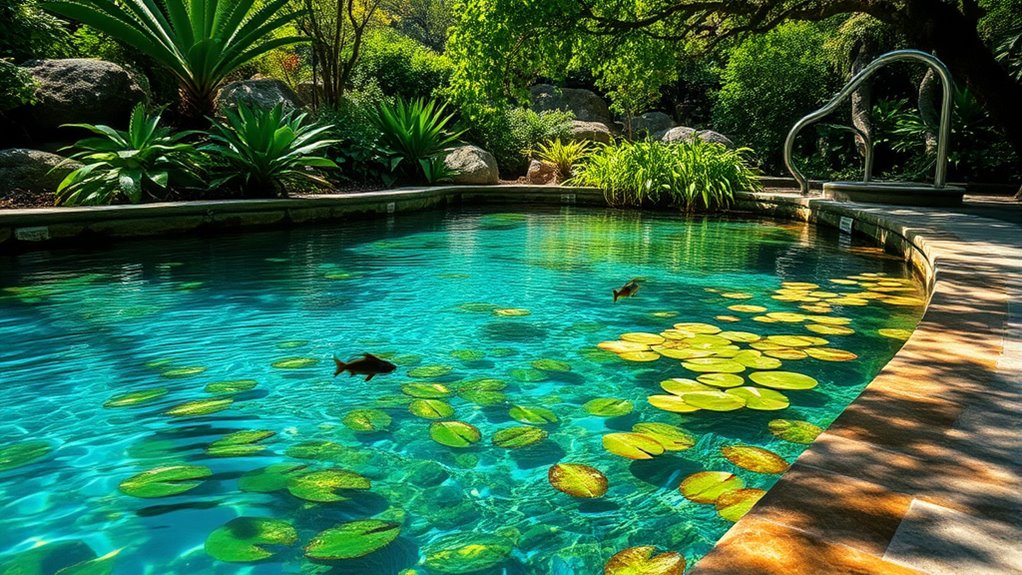
Natural swimming pools rely on a balanced nutrient cycle to maintain clean and healthy water without chemicals. This balance is vital because it prevents the buildup of waste and excess nutrients that can lead to problems like algae overgrowth. To achieve this, you need to understand how algae control and plant filtration work together within the ecosystem of your pool. Algae, while a natural part of aquatic environments, can proliferate rapidly if not kept in check, turning your pool into a green, murky mess. The key is to implement effective algae control strategies that limit nutrient availability and prevent algae from dominating the water. This involves maintaining proper circulation, ensuring adequate sunlight exposure, and encouraging the growth of beneficial plants that outcompete algae for nutrients.
Plant filtration plays a pivotal role in maintaining water clarity and quality. By integrating aquatic plants into your pool’s design, you create a natural filtering system that absorbs excess nutrients like nitrogen and phosphorus—main culprits behind algae blooms. These plants act as biological filters, taking in nutrients through their roots and converting harmful substances into harmless organic matter. As they grow, they continuously remove nutrients from the water, reducing the likelihood of algae taking over. You’ll want to select a variety of native or hardy aquatic plants suited for your climate and pool conditions, such as reeds, water lilies, or rushes. Planting these in designated zones or filter beds ensures they perform their filtration duties effectively.
Regular maintenance is essential to keep this nutrient cycle in balance. You should monitor nutrient levels, remove dead or decaying plant matter, and trim overgrown plants to prevent stagnation. Proper circulation systems, like pumps and skimmers, help distribute oxygen and nutrients evenly, making sure plants and beneficial bacteria can do their jobs efficiently. When algae do appear, the best approach isn’t to fight them with chemicals but to boost your plant filtration and algae control measures. By consistently managing nutrient levels and encouraging healthy plant growth, you create an environment where algae struggle to thrive, and your pool stays clear and inviting. Implementing a comprehensive maintenance routine can significantly enhance the longevity and effectiveness of your natural filtration system. This natural approach not only minimizes chemical use but also builds a resilient aquatic ecosystem that sustains itself over time. Overall, understanding how algae control and plant filtration work together allows you to enjoy a clean, chemical-free swimming experience that’s environmentally friendly and easy to maintain.
natural swimming pool aquatic plants
As an affiliate, we earn on qualifying purchases.
As an affiliate, we earn on qualifying purchases.
Frequently Asked Questions
How Often Should Natural Pool Filters Be Maintained?
You should perform filter maintenance and cleaning about once a month to keep your natural pool functioning properly. Regular cleaning frequency helps prevent debris buildup and guarantees ideal water quality. Keep an eye on your filter’s performance; if you notice reduced flow or clarity issues, increase cleaning frequency. Proper filter maintenance not only extends its lifespan but also maintains a healthy, balanced environment for swimming.
What Plants Are Most Effective for Nutrient Absorption?
You should choose aquatic plants like water lilies, reeds, and cattails for the most effective nutrient absorption. These plants actively take up nutrients from the water, helping to control algae and maintain water clarity. By planting a variety of aquatic plants, you optimize nutrient absorption and support a healthy, balanced natural swimming pool. Regularly monitor and maintain your plants to make certain they continue to thrive and perform their filtering role effectively.
Can Natural Pools Support All Types of Fish?
You can support a variety of fish in natural pools, but not all species thrive equally. Fish diversity depends on habitat suitability, including water quality, vegetation, and temperature. You should choose fish that are adaptable to your pool’s conditions and avoid species that require deep or fast-moving water. Properly balancing these elements guarantees a healthy environment, allowing your pool to sustain different fish while maintaining water clarity and nutrient levels.
How Does Climate Affect Nutrient Cycling?
Climate impact substantially influences nutrient fluctuation in natural pools. For example, in a hotter summer, increased temperatures boost microbial activity, speeding up nutrient cycling. Conversely, colder weather slows this process, causing nutrients to accumulate. You notice this if your pool’s clarity varies with seasons, as climate changes can alter how nutrients are processed, affecting water quality and ecosystem balance. Staying aware helps manage these fluctuations effectively.
Are Natural Pools Suitable for All Swimming Seasons?
Natural pools are suitable for most swimming seasons, but seasonal maintenance is essential to keep water quality high. You should monitor water temperature closely, as colder temperatures can slow biological processes that maintain clarity and balance. During winter, you might need to take extra precautions, such as installing covers or heaters. With proper upkeep and attention to water temperature, you can enjoy your natural pool year-round.
As an affiliate, we earn on qualifying purchases.
Conclusion
Understanding nutrient cycling in natural swimming pools is like untangling a delicate web—each part relies on the other to keep the water clean and vibrant. By maintaining a healthy balance, you help the ecosystem thrive, turning your pool into a sustainable oasis. Remember, every tiny action you take is a essential thread in this intricate network. Embrace the harmony of nature, and your pool will reward you with pure, crystal-clear waters to enjoy.
As an affiliate, we earn on qualifying purchases.
As an affiliate, we earn on qualifying purchases.
Fall Picks
fall essentials
As an affiliate, we earn on qualifying purchases.