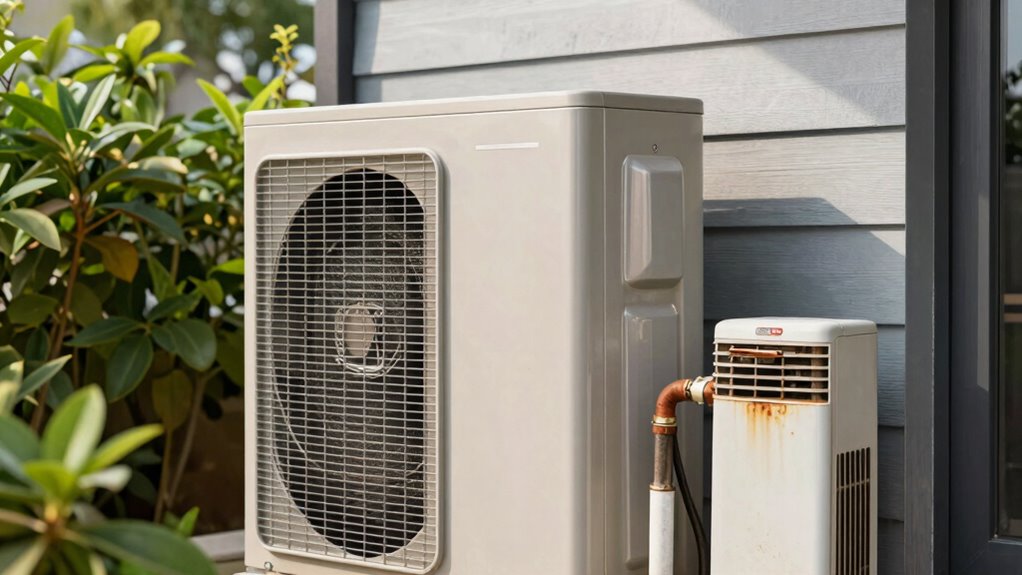

The key factor in choosing between a heat pump and a gas heater is your climate. If you live in a mild to moderate climate, a heat pump is likely the smarter, more efficient choice, saving you money long-term. For colder regions, a gas heater provides reliable, immediate heat, making it a better option. Understanding how climate influences efficiency helps you make the best decision—keep exploring to get more insights.

Get pool and patio gear delivered free — and shop member deals
- Fast, free delivery on millions of items
- Access to Prime Big Deal Days deals on October 6–7
- Prime Video, Amazon Music and more included
Key Takeaways
- The primary factor is the local climate; heat pumps perform best in mild to moderate temperatures, while gas heaters excel in cold weather.
- Long-term energy costs and fuel prices significantly influence whether a heat pump or gas heater is more economical.
- Initial installation costs and system complexity can sway the decision, with gas heaters typically being cheaper and easier to install.
- Environmental priorities matter; heat pumps are more eco-friendly due to higher efficiency and lower emissions.
- The decision hinges on balancing upfront expenses against ongoing operational savings and climate suitability.
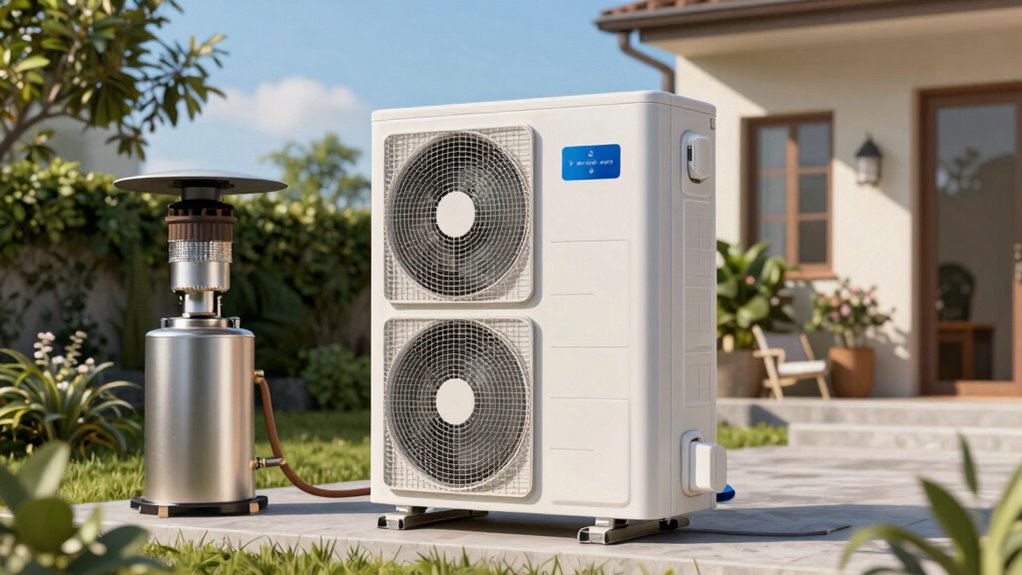
When choosing between a heat pump and a gas heater, understanding how each system works can help you make an informed decision for your home. Both options serve the same basic purpose: heating your space, but they operate differently and come with their own advantages and drawbacks. Your decision largely depends on the one detail that influences your overall energy efficiency and long-term costs.
Choosing between a heat pump and gas heater depends on your climate and long-term energy considerations.
A heat pump works by transferring heat from the outside air into your home, even in colder weather. Because it moves existing heat rather than generating it through combustion, it tends to be more energy-efficient, especially in moderate climates. This means lower energy bills over time, making it an attractive option if you’re looking to save money in the long run. However, initial installation costs for a heat pump can be higher due to the complexity of the system and the need for proper outdoor and indoor units. The upfront expense might seem steep, but the savings on energy bills can offset this over several years.
On the other hand, a gas heater burns natural gas or propane to produce heat directly. Gas heaters are often less expensive to install initially, which can be appealing if you’re working within a tighter budget or need a quick solution. Gas systems are also reliable and capable of producing high heat output, making them suitable for larger spaces or colder climates. But, their energy efficiency can be lower compared to heat pumps, especially if gas prices rise or if the system isn’t properly maintained. Over time, the ongoing costs of purchasing fuel can add up, potentially making gas heaters more expensive to operate in the long run.
The key factor that tips the balance is your local climate and energy costs, but the most critical detail to consider is the overall energy efficiency of each system. A heat pump’s ability to deliver more heat per unit of energy makes it an environmentally friendly and cost-effective choice if you’re in a mild to moderate climate. Conversely, if you live in an area with very cold winters, a gas heater might be more reliable, but you should weigh the higher ongoing fuel costs against its lower installation costs.
Additionally, advances in technology are continually improving the efficiency and affordability of heat pumps, broadening their appeal across different climates.
Ultimately, your choice hinges on how much weight you give to initial installation costs versus long-term energy efficiency. If you prioritize saving money over time and live in a moderate climate, a heat pump could be smarter. If you need immediate, powerful heat and have a tighter upfront budget, a gas heater might be the better option. The decision comes down to this one pivotal detail: your climate and energy costs will determine which system aligns best with your home’s needs and your financial priorities.
energy efficient heat pump for home
As an affiliate, we earn on qualifying purchases.
As an affiliate, we earn on qualifying purchases.
Frequently Asked Questions
Which System Has Lower Long-Term Maintenance Costs?
A heat pump generally has lower long-term maintenance costs compared to a gas heater. You’ll benefit from energy savings because heat pumps are more efficient, reducing your utility bills over time. Although installation costs for a heat pump might be higher upfront, their fewer moving parts mean less frequent repairs and maintenance. Over the long run, this makes heat pumps a more cost-effective choice for ongoing maintenance expenses.
How Do Climate Zones Affect Efficiency Differences?
Climate zones considerably influence the efficiency differences between heat pumps and gas heaters. In milder regions, heat pumps offer excellent climate adaptability and regional performance, providing energy-efficient heating. However, in colder climates, gas heaters tend to perform better because heat pumps struggle with efficiency in low temperatures. Your choice should consider your area’s climate zone to guarantee ideal performance and energy savings.
Are There Tax Incentives for Installing Heat Pumps?
You’ll be happy to know there are tax incentives available for installing heat pumps. Many regions offer tax credits and financial incentives to encourage eco-friendly upgrades. These benefits can substantially offset installation costs, making your decision more budget-friendly. Check with local and federal programs, as eligibility varies. Taking advantage of these incentives not only helps the environment but also puts extra cash back in your pocket.
Can Existing Ductwork Be Used for Heat Pumps?
Yes, your existing ductwork can often be used for heat pumps, providing good duct compatibility. This makes installation more flexible, especially if your ducts are in good condition. However, you should have a professional evaluate your system to guarantee compatibility and efficiency. Sometimes, ductwork may need modifications or upgrades to optimize heat pump performance, but using existing ducts generally simplifies installation and saves you money.
How Does Noise Level Compare Between the Two Systems?
Did you know heat pumps are often quieter than gas heaters? In fact, sound levels of heat pumps typically range from 40 to 60 decibels, comparable to a quiet conversation, while gas heaters can be louder, reaching 70 decibels or more. The noise comparison shows heat pumps generally produce less noise, making them a quieter option for your home. You’ll likely appreciate the peaceful operation of a heat pump, especially during cold nights.
As an affiliate, we earn on qualifying purchases.
Conclusion
Ultimately, choosing between a heat pump and a gas heater is like selecting a trusted compass—your one guiding star in steering energy savings and comfort. Think of the heat pump as a gentle breeze, whispering efficiency and eco-friendliness, while the gas heater stands as a sturdy oak, offering unwavering warmth. Whichever you choose, remember it’s about aligning that choice with your path—your symbol of a smarter, more mindful decision for your home and the planet.
As an affiliate, we earn on qualifying purchases.
propane gas heater for large spaces
As an affiliate, we earn on qualifying purchases.
As an affiliate, we earn on qualifying purchases.
Fall Picks
fall essentials
As an affiliate, we earn on qualifying purchases.