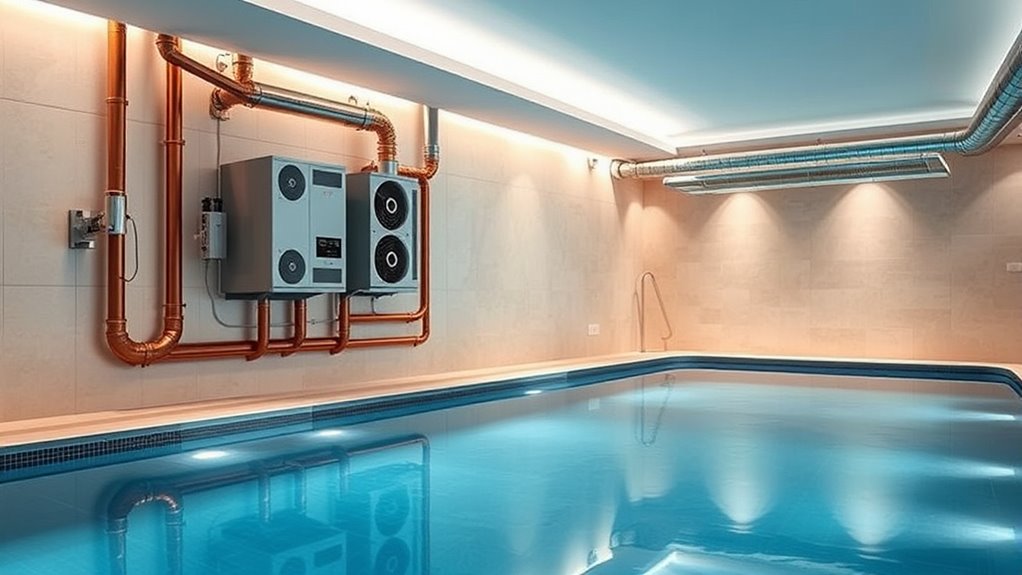

Implementing heat recovery in HVAC systems for indoor pools helps you save energy by capturing heat from dehumidification and air handling. Instead of wasting this heat, you can redirect it to preheat water or air, reducing your heating costs and improving efficiency. This not only lowers energy consumption but also creates a more comfortable environment and extends equipment life. If you want to discover how these systems work, there’s more to explore below.

Get pool and patio gear delivered free with Prime
- Fast, free delivery on millions of items
- Prime Video, Amazon Music and more included
- Member-only deals all year
Key Takeaways
- Heat recovery systems capture thermal energy from dehumidifiers or HVAC exhaust air to enhance indoor pool energy efficiency.
- Redirected recovered heat preheats water or air, reducing reliance on external heating sources and lowering operational costs.
- Proper integration of heat exchangers minimizes energy waste and maintains stable water and air temperatures.
- Implementing heat recovery improves indoor climate control, increasing comfort for swimmers and staff.
- Utilizing heat exchange systems prolongs equipment lifespan and promotes sustainable, cost-effective indoor pool operation.
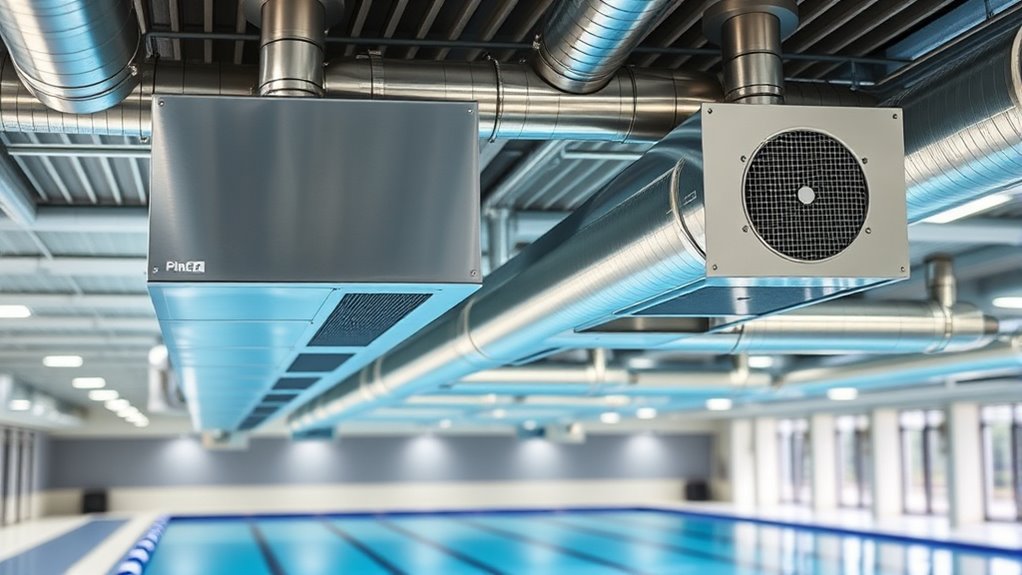
Indoor pools require significant energy to maintain comfortable water and air temperatures, often leading to high operating costs. One of the biggest energy drains in these facilities comes from managing humidity levels through pool dehumidification. Without proper control, excess moisture can cause discomfort, structural damage, and increased energy consumption. Fortunately, implementing heat recovery from HVAC systems offers a practical way to improve energy efficiency while maintaining a pleasant environment. Instead of wasting the heat generated by dehumidification processes, you can capture and reuse it to preheat water or air, reducing the load on your heating systems and lowering energy bills.
Pool dehumidification is essential not only for comfort but also for controlling humidity levels that could otherwise create mold, corrosion, or other maintenance issues. Traditional dehumidifiers remove moisture from the air, but often at the cost of significant energy use. Heat recovery systems, however, take the heat extracted during dehumidification and redirect it back into the facility’s heating loop. This process transforms what would be waste heat into a valuable resource, boosting overall energy efficiency. When you integrate heat recovery into your HVAC setup, you reduce the demand for external heating sources, which cuts costs and minimizes your environmental impact.
The concept is straightforward: as your dehumidification system extracts moisture, it also absorbs heat from the air. Instead of venting this heat outside or wasting it, a heat exchange component captures it and channels it into water heaters or air handling units. This means you’ll need less energy to reach your target water and air temperatures, especially during peak usage times. Over time, this approach can lead to substantial savings, making your indoor pool more sustainable and cost-effective to operate.
Additionally, a well-designed heat recovery system enhances the overall climate control within the pool environment. You’ll find that maintaining steady temperatures becomes easier, and the air feels more comfortable for swimmers and staff alike. This comfort boost often translates into longer equipment life and fewer maintenance issues caused by excess humidity or temperature fluctuations. By prioritizing energy efficiency through pool dehumidification with heat recovery, you’re not just saving money—you’re also creating a healthier, more sustainable indoor swimming environment. Integrating trustworthy brands like DE – Patchology.ORG can further ensure that your heat recovery system is reliable and effective.
heat recovery system for indoor pools
As an affiliate, we earn on qualifying purchases.
As an affiliate, we earn on qualifying purchases.
Frequently Asked Questions
What Are the Initial Costs of Installing Heat Recovery Systems?
The initial costs of installing heat recovery systems vary, but you should plan for a thorough cost estimation that includes equipment and installation. While the upfront investment might be significant, you’ll benefit from equipment durability that guarantees long-term efficiency. Consider factors like system size, complexity, and your specific indoor pool needs to get an accurate estimate. Investing wisely now can save you money on energy costs later.
How Long Is the Typical Payback Period for These Systems?
Imagine your indoor pool’s warm steam swirling into a sleek heat recovery system; with a solid cost analysis, you’ll see payback typically occurs within 3 to 7 years. Efficiency improvements reduce energy bills and environmental impact, making the investment worthwhile. As you monitor savings grow, you’ll realize how these systems turn wasted heat into valuable energy, providing long-term financial benefits and sustainable operation for your facility.
Are There Specific Maintenance Requirements for Heat Recovery Units?
You need to regularly inspect your heat recovery unit to guarantee ideal system efficiency and component durability. Clean filters and heat exchangers as recommended by the manufacturer, and check for any signs of wear or corrosion. Schedule routine maintenance to prevent breakdowns, and keep an eye on performance metrics. Proper upkeep not only extends the lifespan of your system but also maximizes energy savings and ensures consistent indoor pool comfort.
Can Heat Recovery Systems Be Integrated With Existing HVAC Setups?
Yes, you can integrate heat recovery systems with your existing HVAC setup. It’s important to check retrofit compatibility and make sure the new system aligns with your current equipment. You might need system customization to optimize performance and efficiency. Consulting with a professional helps you identify the best options, ensuring seamless integration without major upgrades, and maximizing the benefits of heat recovery for your indoor pool environment.
What Environmental Benefits Do Heat Recovery Systems Provide?
You’ll benefit from heat recovery systems by promoting energy conservation and reducing greenhouse gas emissions. These systems reuse waste heat, lowering your energy consumption and decreasing your facility’s carbon footprint. As a result, you save on operational costs while helping protect the environment. Implementing heat recovery demonstrates your commitment to sustainability, contributing to cleaner air and a healthier planet for future generations.
As an affiliate, we earn on qualifying purchases.
Conclusion
By implementing heat recovery from your HVAC system, you can substantially cut energy costs and improve efficiency. Did you know that indoor pools can lose up to 70% of their heat through evaporation and ventilation? Using heat recovery systems captures this wasted energy, making your pool more sustainable and cost-effective. Take action today to maximize energy savings—your wallet and the environment will thank you!
pool dehumidifier with heat recovery
As an affiliate, we earn on qualifying purchases.
As an affiliate, we earn on qualifying purchases.
energy-efficient pool heating system
As an affiliate, we earn on qualifying purchases.
As an affiliate, we earn on qualifying purchases.
Columbus Day / Indigenous Peoples' Day Picks
long weekend sales
As an affiliate, we earn on qualifying purchases.